Ordering Ready Mix Concrete in Potters Bar: Scenario & Grade Guide
Match the right ready mix concrete in Potters Bar to your project. Explore grade selection, London clay foundation specs, and EN6 access logistics.
The EN6 Context: Why Local Conditions Dictate Your Mix
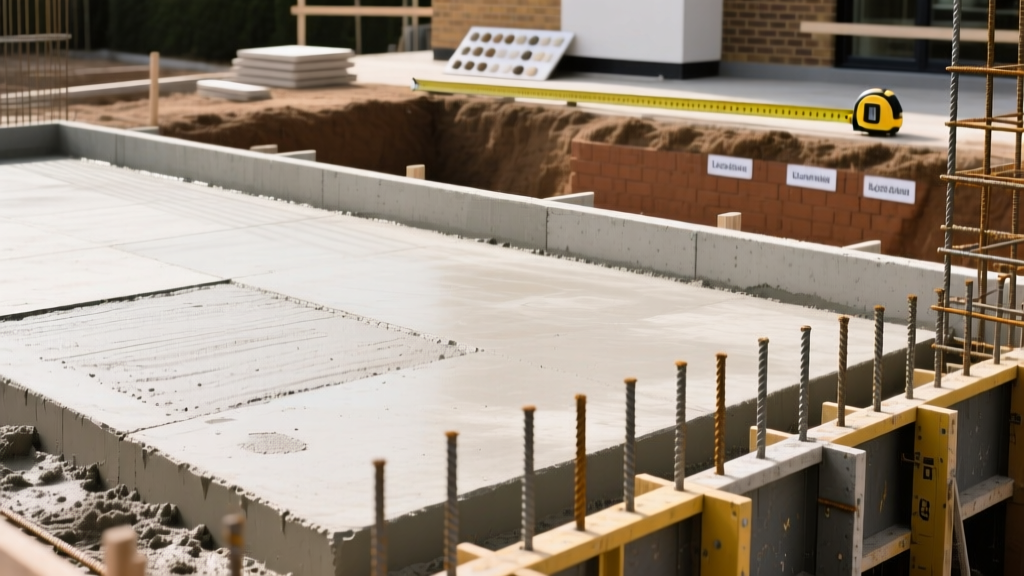
Ordering ready mix concrete in Potters Bar requires more than selecting a generic strength grade from a supplier's brochure. The EN6 postcode area presents a specific matrix of geological and logistical variables that directly impact mix design, delivery methodology, and long-term structural integrity. Potters Bar sits predominantly on London Clay, a highly shrinkable soil with variable sulfate content that demands precise chemical resistance in below-ground applications. Furthermore, the mix of narrow Victorian terraced streets near the High Street and sprawling post-war detached homes around Darkes Lane means that access constraints frequently dictate whether a standard 8-wheeler mixer or a specialized mini-mix fleet is required.
This guide moves beyond basic definitions to provide a scenario-matching framework for contractors and homeowners. By aligning your specific application with the correct British Standard (BS 8500-2) designation, slump class, and delivery logistics, you can prevent catastrophic curing failures, avoid costly minimum-load surcharges, and ensure compliance with local Hertfordshire building control requirements.
Scenario Matching Matrix: Grade, Slump, and Aggregate
Selecting the wrong slump or aggregate size is the most common cause of placement failure in residential projects. A mix that is too dry (low slump) will leave honeycombing in reinforced trenches, while a mix that is too wet (high slump) will segregate and lose its designed compressive strength. Below is a decision matrix tailored to the most common construction scenarios in the Potters Bar area.
| Project Scenario | BS 8500-2 Grade | Traditional UK Designation | Target Slump Class | Max Aggregate Size |
|---|---|---|---|---|
| Residential Driveway (Unreinforced) | C28 / XC3, XF1 | GEN 3 | S2 (50-90mm) | 20mm |
| Garage Slab (Light Reinforcement) | C20 / XC2 | GEN 1 | S2 (50-90mm) | 20mm |
| Trench Fill Foundations (London Clay) | C28 / DC-2 (Sulfate Resisting) | GEN 3 (SRPC) | S3 (100-150mm) or S4 | 20mm |
| Garden Footpaths & Shed Bases | C20 / XC1 | ST 2 | S1 (20-40mm) | 10mm or 20mm |
| Suspended Floor Beams & Block | C25 / XC3 | GEN 2 | S2 (50-90mm) | 10mm (for tight gaps) |
Deep Dive: Foundation Mixes for London Clay
The geological reality of Potters Bar is that London Clay underlies much of the residential zones. This soil type is notorious for two things: high volumetric shrinkage during dry summers (causing subsidence) and the presence of ground sulfates. When excavating trenches for strip or trench-fill foundations, the exposed clay can react chemically with standard Ordinary Portland Cement (OPC), leading to sulfate attack—a process where the concrete expands, cracks, and ultimately loses structural cohesion.
Before ordering foundation concrete, review your site investigation report. If the ground is classified as Design Class DC-2 or higher for sulfate presence, you must specify Sulfate Resisting Portland Cement (SRPC) or a blended cement like CEM II/B-V (which incorporates Ground Granulated Blast-furnace Slag). Standard C28 GEN 3 mixed with OPC will fail Building Regulations in these specific EN6 micro-zones. Always cross-reference with BRMCA guidelines on aggressive soil environments.
For trench-fill applications in this clay, workability is paramount. Because trenches are often narrow (450mm to 600mm wide) and heavily reinforced with steel cages or utility ducting, an S3 or S4 slump (100mm to 210mm) is required to ensure the concrete flows around obstructions without requiring excessive mechanical vibration, which can cause aggregate segregation.
Navigating Access Constraints in the EN6 Postcode
A standard 8-wheeler ready-mix truck carries up to 6 cubic meters of concrete, weighs up to 32 tonnes fully loaded, and requires a minimum clearance width of 2.8 meters and a height clearance of 4.0 meters. In Potters Bar, particularly in older developments off Baker Street or the tighter mews courts near the railway station, these physical dimensions frequently result to blocked access, damaged kerbs, or outright delivery refusal.
Logistical Solutions for Restricted Sites
- Mini-Mix Trucks (4-Wheelers): These carry between 1m³ and 3m³. They are roughly 2.2 meters wide and can navigate standard residential driveways. However, they carry a strict payload limitation and incur higher per-cubic-meter surcharges.
- Line Pumps (Trailer Mounted): If the truck can park on the public highway (requiring a permit from Hertsmere Borough Council) but the pour site is 50+ meters away or through a narrow side gate, a line pump is mandatory. The pump feeds concrete through flexible steel or rubber hoses directly to the formwork.
- Boom Pumps: Required for multi-story infill projects or rear-garden pours where overhead obstructions (like mature oak trees or power lines) prevent standard chute placement. A 24-meter boom pump can reach over most standard Potters Bar detached homes.
2026 Pricing & Surcharges for Hertfordshire Deliveries
Concrete pricing in the South East and Hertfordshire region has stabilized following the energy market fluctuations of the early 2020s, but carbon compliance costs and HGV driver shortages keep baseline rates firm. Below is the current market rate structure for ready mix concrete in Potters Bar as of early 2026.
| Cost Category | Estimated 2026 Rate | Notes & Conditions |
|---|---|---|
| C20 / GEN 1 (Standard) | £115 - £125 per m³ | Standard 6m³ load, 20mm aggregate. |
| C28 / GEN 3 (Standard) | £130 - £140 per m³ | Higher cement content for structural use. |
| Sulfate Resisting Additive | +£10 to +£15 per m³ | Applied when SRPC or GGBS blends are specified. |
| Short Load Surcharge | £45 - £60 per missing m³ | Charged for any order under the 6m³ truck maximum. |
| Mini-Mix Premium | £160 - £180 per m³ | Includes the short-load penalty inherently. |
| Wait Time (Demurrage) | £3.50 - £5.00 per minute | Starts after the first 30 minutes on site. |
| Line Pump Hire (Half Day) | £350 - £450 flat rate | Excludes the cost of the concrete itself. |
Note: Prices exclude VAT (currently 20%). Always confirm exact routing surcharges with your batching plant, as some local plants apply a 'congestion fee' for deliveries scheduled during peak school-run hours near Potters Bar's primary schools.
Pre-Delivery Site Checklist: Avoiding the 30-Minute Penalty
Ready-mixed concrete is a perishable product. According to UK Concrete technical specifications, the hydration process begins the moment water meets cement at the batching plant. You typically have a maximum of two hours from batching to final placement, but in practical terms, you want the truck emptied within 45 minutes of arrival to avoid demurrage charges and ensure optimal workability. Follow this strict preparation sequence:
- Verify Formwork Integrity: Wet concrete exerts immense hydrostatic pressure. Ensure all timber or steel formwork is braced with kickers and stakes driven at least 300mm into the sub-base. A blown formwork on a C28 trench-fill pour will cost thousands in wasted material and cleanup.
- Prepare the Sub-Base: For driveways, ensure the MOT Type 1 sub-base is compacted, blinded with sharp sand, and covered with a 1200-gauge polythene damp proof membrane (DPM). Do not pour directly onto dry, uncompacted soil, as it will draw moisture out of the mix, causing rapid surface cracking.
- Stage Your Tools and Manpower: Have a minimum of three people on site for a standard 4m³ driveway pour: one operating the truck chute, one raking/screeding, and one floating. Ensure aluminum straight edges, bull floats, and trowels are laid out and clean.
- Plan the Washout Zone: Truck drivers must wash their chutes before leaving. Designate a specific, contained area (like an old wheelbarrow lined with a builder's bag) for washout water. It is an environmental offense to allow cementitious washout to enter the public drainage system or local watercourses.
- Arrange Curing Materials: Have polythene sheeting or a chemical curing compound (like a spray-applied resin) ready. In the UK climate, exposed concrete must be protected from rapid moisture loss for at least 5 days to achieve its design strength and prevent plastic shrinkage cracking.
Final Considerations for Local Compliance
When executing structural works in Potters Bar, particularly extensions or new foundations, Hertsmere Borough Council Building Control will require proof of the concrete grade used. Always request a delivery docket from the truck driver upon arrival. This docket contains the unique batch number, the exact time of batching, the BS 8500-2 grade, the slump test results, and the specific cement type used. Keep this document in your site file; it is your primary evidence of compliance should any structural warranty provider (such as the NHBC or LABC) require material traceability in the future.