Asphalt vs Concrete Parking Lot: 2026 Cost & Durability Guide
Compare asphalt vs concrete parking lot costs, lifespan, and maintenance in 2026. Find out which paving material delivers the best ROI for your project.

The Core Dilemma: Upfront Cost vs. Lifecycle Value
Choosing between asphalt and concrete for a commercial or municipal parking lot is fundamentally an exercise in capital allocation versus long-term operational expenditure. While asphalt traditionally wins the initial bidding war due to lower surface material costs, concrete's extended lifespan and minimal maintenance requirements frequently yield a superior Life Cycle Cost Analysis (LCCA) over a 40-year horizon. In 2026, fluctuating crude oil markets continue to impact asphalt binder pricing, while advancements in supplementary cementitious materials (SCMs) have stabilized concrete costs, narrowing the initial installation gap.
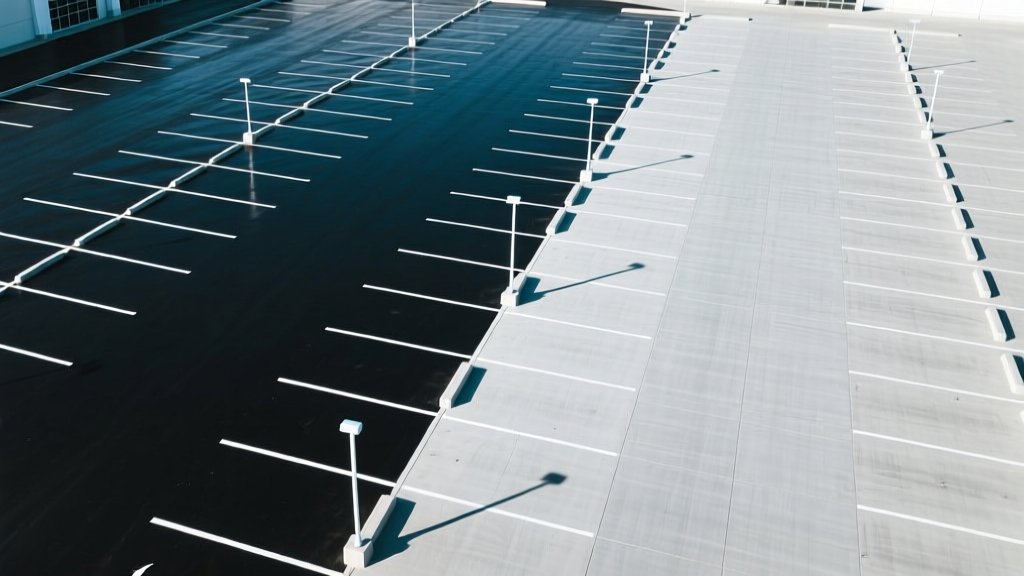
2026 Installation Cost Breakdown: Asphalt vs Concrete Parking Lot
Evaluating the true cost of a parking lot requires looking beyond the surface layer. Asphalt requires a significantly thicker aggregate base to distribute loads, whereas concrete's inherent rigidity allows it to bridge minor subgrade variations. Below is the 2026 national average cost matrix for a standard 50,000 square foot commercial parking lot.
| Cost Component | Asphalt (Per Sq Ft) | Concrete (Per Sq Ft) | Technical Notes |
|---|---|---|---|
| Subgrade Prep & Earthwork | $1.10 - $1.80 | $0.90 - $1.50 | Asphalt requires stricter compaction testing. |
| Aggregate Base Layer | $1.50 - $2.20 | $0.80 - $1.20 | Asphalt needs 6-8" base; Concrete needs 4-6". |
| Surface Material & Paving | $2.40 - $3.50 | $5.50 - $8.50 | Concrete includes forming, pouring, and finishing. |
| Striping & Curing/Sealing | $0.30 - $0.50 | $0.40 - $0.60 | Concrete requires 7-14 day cure before heavy use. |
| Total Installed Cost | $5.30 - $8.00 | $7.60 - $11.80 | Varies by regional labor and material indices. |
Structural Design & Material Specifications
To ensure longevity, both materials demand precise engineering. A common failure mode in parking lots is specifying a residential driveway mix for a commercial application.
Concrete Mix & Reinforcement Standards
For commercial parking lots, the Concrete Pavement Technology Center recommends a minimum compressive strength of 4,000 PSI. In regions with severe freeze-thaw cycles, the mix must include 5% to 7% air entrainment to prevent surface scaling. Slab thickness should be a minimum of 6 inches for passenger vehicles, increasing to 8 inches in designated truck loading zones. Joint spacing is critical; transverse joints should be spaced at 15-foot intervals, and dowel baskets must be installed at joints to ensure load transfer and prevent faulting.
Asphalt Binder & Base Requirements
According to the National Asphalt Pavement Association (NAPA), a standard commercial lot requires a 2.5 to 3-inch hot mix asphalt (HMA) surface layer placed over a 6-inch crushed aggregate base. For areas subjected to static loads (like dumpsters) or heavy turning movements, specify a polymer-modified binder (such as PG 70-22) to resist rutting and shoving. Tack coat application between the base and surface layer is non-negotiable to prevent delamination.
Maintenance Schedules & Long-Term Upkeep
The divergence in lifecycle costs becomes apparent in years 3 through 15. Asphalt is a flexible pavement that oxidizes when exposed to UV radiation and petroleum drips, requiring a strict preservation schedule. Concrete is a rigid pavement that essentially maintains itself if the joints are properly sealed.
- Years 1-3: Asphalt requires an initial sealcoat to protect the binder. Concrete requires a walk-through to ensure joint sealant adhesion and clear drainage paths.
- Years 3-5: Asphalt demands a second sealcoat application ($0.15 - $0.25 per sq ft) and crack filling. Concrete requires zero surface maintenance.
- Years 10-15: Asphalt will likely require a 1.5-inch structural overlay to correct rutting and fatigue cracking. Concrete may require joint resealing, but the slab surface remains intact.
- Years 25-30: Asphalt reaches the end of its functional life and requires full-depth reclamation or complete removal and replacement. Concrete is typically only halfway through its 50-year lifecycle.
Climate Performance & Environmental Impact
Local climate dictates material performance. Asphalt's dark color and bituminous composition make it highly susceptible to the Urban Heat Island effect. In high-temperature environments, asphalt surfaces can reach 140°F, softening the binder and accelerating rutting under heavy tires. Furthermore, the Environmental Protection Agency (EPA) notes that dark pavements significantly increase ambient nighttime temperatures in commercial districts.
Concrete's high albedo (solar reflectance) reduces surface temperatures by up to 20°F compared to asphalt. This not only mitigates the heat island effect but also reduces the need for high-mast lighting in parking lots at night, lowering electrical operational costs by 15% to 25% over the facility's lifespan.
Conversely, in extreme cold climates, asphalt's flexibility allows it to withstand minor frost heave without catastrophic cracking, whereas concrete slabs can fracture if the subgrade drainage is inadequate and frost boils occur.
Decision Framework: Which Should You Choose?
Use this practical matrix to finalize your paving specification based on your project's specific constraints and operational goals.
Specify Asphalt If:
- Your capital budget is strictly capped and cannot accommodate the 30-40% premium of concrete.
- The lot is designated for overflow or seasonal use with low daily traffic volumes.
- You require immediate use of the facility (asphalt can handle traffic as soon as it cools to ambient temperature, typically within 24 hours).
- The site is located in a region with severe, prolonged freezing temperatures and poor natural soil drainage.
Specify Concrete If:
- You are building a long-term hold asset (25+ years) and want to minimize lifecycle maintenance costs.
- The lot includes heavy truck traffic, loading docks, or areas where vehicles will idle or turn sharply.
- You want to reduce long-term lighting costs and mitigate Urban Heat Island effects for LEED or sustainability certifications.
- Vehicle oil and fuel drips are expected frequently (petroleum products dissolve asphalt binders but do not harm concrete).
Ultimately, the asphalt vs concrete parking lot debate is resolved by aligning the material's physical properties with the financial timeline of the property owner. While asphalt offers speed and initial savings, concrete delivers structural permanence and predictable operational costs.
Written by
Sarah WhitfieldSarah Whitfield is a chartered quantity surveyor (MRICS) and construction cost analyst with 15 years of experience in material pricing, procurement strategy, and project budgeting. She earned her degree in Construction Management from the University of Reading (UK) and has worked on projects ranging from $2M custom homes to $180M mixed-use developments across North America and Europe. Sarah currently leads cost estimating for BuildMat Insight, maintaining a proprietary database of 4,000+ material price points updated quarterly. She is a frequent contributor to RSMeans cost data panels and has presented at the International Cost Engineering Council (ICEC) congress. Based in Denver, CO, Sarah is an avid trail runner and volunteer mentor for Women in Construction.
More from Sarah Whitfield
View all
Wood & Lumber
What Are the Different Types of Wood? A Builder's Guide
Compare structural softwoods, finish hardwoods, and engineered lumber. Analyze Janka ratings, MOE values, and 2026 pricing for construction.
Aug 4, 2026

Walls & Panels
Steel Framing vs Wood Framing: Corrosion and Moisture Defense
Compare steel framing vs wood framing for moisture resistance. Learn about galvanized coatings, condensation risks, and corrosion protection strategies.
Jul 21, 2026

Stone & Masonry
How to Cut Stone Veneer: Wet Saw vs Grinder Comparison
Compare the best tools for cutting stone veneer. We review wet saws, angle grinders, and chop saws to help you achieve clean, chip-free cuts.
Jul 21, 2026