Stamp Concrete Scenarios: How to Match Patterns to Your Project
Discover how to match stamp concrete patterns to specific outdoor scenarios. Learn mix designs, slip-resistance tips, and application-fit guidelines.
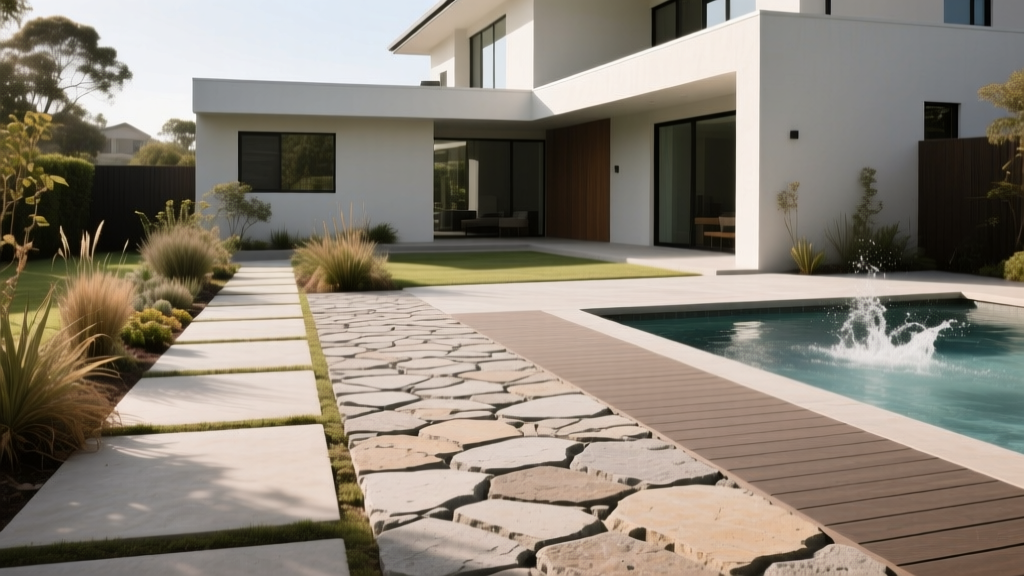
The Application-Fit Matrix for Stamp Concrete
Stamp concrete is not a monolithic solution. The success of a stamped slab depends entirely on aligning the pattern profile, mix design, and surface treatment with the specific mechanical and environmental demands of the site. A deep-grout European cobblestone pattern that looks stunning on a low-traffic garden path will rapidly spall and degrade under the shear friction of vehicle tires on a driveway. Similarly, a high-gloss sealed slate pattern becomes a severe slip hazard around a swimming pool.
To ensure structural longevity and aesthetic performance, contractors and homeowners must evaluate stamp concrete through the lens of application-fit. Below is the foundational matrix for matching stamp concrete variables to outdoor scenarios.
| Application Scenario | Ideal Stamp Pattern Profile | Required Mix Design (PSI) | Coloring Method | Slip-Risk Factor |
|---|---|---|---|---|
| Driveways & Load Zones | Seamless Texture, Ashlar Slate (shallow grout) | 4,000 - 4,500 PSI | Color Hardener (surface density) | Low to Moderate |
| Pool Decks & Wet Zones | Seamless Texture, Light Stone | 3,500 - 4,000 PSI | Integral Color (full depth) | High (requires anti-skid) |
| Patios & Entertainment | Wood Plank, Deep Slate, Cobblestone | 3,500 PSI | Color Hardener or Integral | Moderate |
| Walkways & Garden Paths | European Cobblestone, Brick | 3,000 - 3,500 PSI | Integral Color | Low |
Driveways and High-Traffic Load Zones
Driveways subject concrete to dynamic point loads, tire shear, and in northern climates, the mechanical scraping of snowplows. The primary failure mode in stamped driveways is the fracturing of high-relief pattern ridges.
Pattern Selection and Structural Specs
Avoid high-relief patterns like deep cobblestone or heavy rustic stone for driveways. The raised ridges act as stress concentrators. Instead, specify Ashlar Slate or Seamless Texture mats, which provide a natural stone aesthetic with a relatively flat profile. The concrete mix must be a minimum of 4,000 PSI with a 6-inch nominal thickness. Reinforcement should include #4 rebar on 24-inch centers, supplemented by synthetic fiber mesh to control micro-cracking. The subgrade requires a minimum of 6 to 8 inches of compacted aggregate base course (ABC) to prevent differential settling, which will telegraph through the stamp pattern as unsightly cracks.
The Case for Color Hardener
For driveways, broadcast color hardener is superior to integral color. Color hardener is a dry-shake mixture of cement, fine aggregates, and iron-oxide pigments applied to the surface before stamping. It increases the surface compressive strength by up to 2,000 PSI, creating a dense, abrasion-resistant wearing course that withstands tire friction and deicing salts far better than standard concrete. According to the Portland Cement Association's decorative concrete guidelines, surface hardeners significantly reduce the permeability of the top layer, limiting water ingress that leads to freeze-thaw spalling.
Pool Decks and Wet Environments
Pool decks present a unique triad of challenges: constant moisture, barefoot traffic, and intense solar exposure. Application-fit here is dictated by safety and thermal comfort rather than pure load-bearing capacity.
Slip Resistance and Sealer Modifications
Standard acrylic sealers used to enhance the color of stamp concrete create a highly slippery, plastic-like film when wet. For pool decks, you must broadcast an anti-skid polymer grit (such as Matcrete Anti-Slip or SureCrete SureGrip) directly into the sealer during the final roll-on coat. The standard application rate is 1 pound of anti-skid additive per 5 gallons of sealer. This creates a micro-texture that maintains the coefficient of friction required for wet, barefoot traffic without ruining the visual depth of the stamp pattern.
Thermal Management and Integral Color
Dark-colored stamp concrete can reach surface temperatures exceeding 140°F in direct summer sunlight, making it unusable for bare feet. Specify lighter integral colors—such as sand, light gray, or terra cotta—to improve the Solar Reflectance Index (SRI). Unlike driveways, pool decks benefit from integral color (pigment mixed directly into the truck) rather than color hardener. Because pool decks are frequently exposed to acidic pool chemicals and constant pressure washing, the surface layer can slowly erode over a decade. Integral color ensures the pigment extends through the entire slab depth, meaning minor surface wear will not expose raw gray concrete.
If your pool deck is in a climate with freezing winters, the concrete must be air-entrained (typically 5% to 7% air content). The Portland Cement Association notes that microscopic air bubbles provide essential expansion chambers for freezing water. Never use a stamped, non-air-entrained mix in freeze-thaw zones, regardless of the PSI rating, or the surface will scale and delaminate within three winters.
Patios, Walkways, and Aesthetic Integration
Patios and walkways operate under lower structural loads, allowing for a wider variety of aggressive, high-relief stamp patterns. This is where aesthetic integration and control joint planning take priority.
Disguising Control Joints
All concrete slabs crack; control joints dictate where that cracking occurs. The standard rule for control joint spacing is 24 to 30 times the slab thickness (meaning a 4-inch slab needs joints every 8 to 10 feet). In stamp concrete applications, these saw-cut lines can ruin the visual illusion of natural stone or wood. Skilled installers use specialized zipper strips or hand-tool groovers to embed control joints directly into the faux 'grout lines' of the stamp pattern. When planning a patio layout, the stamping contractor must map the control joint grid before selecting the stamp mat size, ensuring the grout lines align perfectly with the structural relief cuts.
Wood Plank Stamps for Covered Patios
For covered patios or pergola bases, wood plank stamp patterns (like Butterfield Color PermaBark) offer the warmth of timber without the rot and termite vulnerabilities. Because these areas are shielded from direct UV and heavy rain, UV-stable water-based sealers can be used instead of solvent-based acrylics, reducing VOC emissions and maintaining a matte, realistic wood finish.
When Stamp Concrete is the Wrong Choice
Recognizing when not to use stamp concrete is a critical component of application-fit. Avoid stamp concrete in the following scenarios:
- Utility Access Zones: If a slab is poured over main water shut-offs, sewer cleanouts, or electrical vaults, stamp concrete is a poor choice. Cutting and patching a stamped slab to access a utility will result in an unhideable, mismatched scar.
- Steep Gradients (>15% slope): Stamping tools require even, downward pressure to transfer the pattern. On steep inclines, the wet concrete tends to slump before the stamping crew can finish, and the physical act of stepping on the mats on a slope creates uneven, distorted pattern edges.
- Active Tree Root Zones: While all concrete is susceptible to root heave, the rigid, continuous nature of a stamped slab means that when a root lifts one section, the differential settlement will snap the slab, destroying the continuous pattern flow. Use permeable pavers in heavy root zones instead.
Cost Expectations by Application Tier
Pricing for stamp concrete varies heavily based on the structural requirements and pattern complexity dictated by the scenario. Below are the baseline commercial and residential installation ranges:
| Application Tier | Pattern Complexity | Estimated Cost per Sq. Ft. | Key Cost Drivers |
|---|---|---|---|
| Tier 1: Basic Walkways | Single color, seamless texture | $12 - $15 | Minimal forming, 4-inch slab, basic integral color. |
| Tier 2: Standard Patios | Slate/Stone, 2-color antiquing | $16 - $21 | Color hardener, release agent, detailed saw-cutting. |
| Tier 3: Driveways | Heavy-duty mix, rebar reinforcement | $18 - $24 | 6-inch depth, 4000+ PSI mix, rebar tying, thickened base. |
| Tier 4: Custom Pool Decks | Multi-color, custom borders, anti-skid | $22 - $30+ | Complex forming for curves, specialized sealers, drainage integration. |
Proper scenario matching ensures that your investment in stamp concrete yields a surface that is not only visually striking on day one but remains structurally sound and safe for decades. Always consult with a contractor who understands the National Ready Mixed Concrete Association's guidelines on environmental concreting to ensure the mix design matches the physical reality of your site.