Abstract Thinker vs Concrete Thinker: Concrete vs Alternatives
Explore how the abstract thinker vs concrete thinker cognitive styles influence architectural decisions when comparing structural concrete to steel and timber.
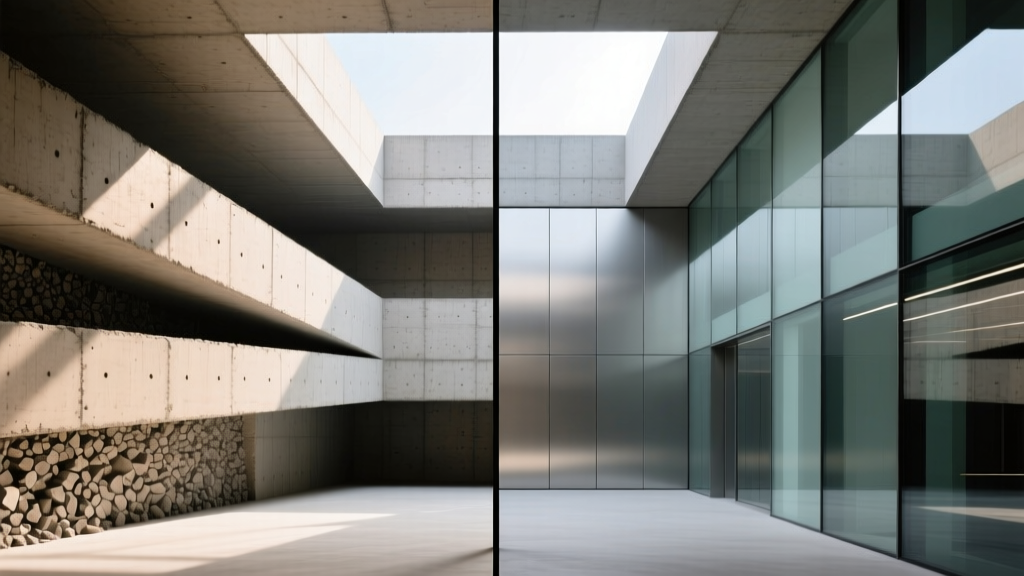
The Cognitive Divide in Architectural Material Specification
In architectural design and structural engineering, material selection is rarely just a mathematical exercise; it is deeply influenced by cognitive processing styles. Navigating the abstract thinker vs concrete thinker paradigm is essential for project managers, architects, and material specifiers who must balance visionary aesthetics with pragmatic structural realities. An abstract thinker conceptualizes space, fluidity, and the emotional resonance of a structure, often gravitating toward materials that allow for sculptural, non-linear forms. Conversely, a concrete thinker (in the psychological sense) processes information sequentially, focusing on load paths, thermal mass, cost-per-square-foot, and constructability.
When comparing literal concrete—the building material—against primary alternatives like structural steel and mass timber, understanding this cognitive divide dictates how a project evolves from a schematic concept to a poured foundation. This guide dissects how these distinct cognitive approaches evaluate building materials and provides a technical framework for bridging the gap between conceptual design and structural execution.
How an Abstract Thinker Evaluates Concrete vs. Alternatives
For the abstract thinker, materials are evaluated by their capacity to manifest conceptual geometry and manipulate light. When assessing concrete against alternatives, the abstract mind focuses on plasticity and monolithic continuity.
- Sculptural Fluidity: Abstract thinkers favor Glass Fiber Reinforced Concrete (GFRC) and Ultra-High Performance Concrete (UHPC) because these mixes can be cast into complex, double-curved geometries that rigid steel frames or orthogonal Cross-Laminated Timber (CLT) panels cannot easily replicate without exorbitant CNC milling costs.
- Monolithic Aesthetics: The desire for seamless, continuous surfaces leads abstract thinkers to specify architectural cast-in-place (CIP) concrete with custom form liners, eliminating the visible bolted connections inherent in steel framing or the exposed lamination lines of mass timber.
- Light and Shadow Play: Abstract thinkers prioritize the tactile finish of the material. They will specify acid-etching, sandblasting, or exposed aggregate finishes to interact with ambient light, viewing the material as a dynamic canvas rather than a static structural skeleton.
The Concrete Thinker’s Approach to Material Specification
The psychological concrete thinker grounds the project in empirical data, risk mitigation, and lifecycle performance. When the abstract thinker vs concrete thinker dynamic plays out in design meetings, the concrete thinker acts as the anchor, evaluating materials through strict quantitative lenses.
From a structural standpoint, the concrete thinker relies on established empirical standards. According to the Portland Cement Association, standard Type I/II Portland cement mixes reliably yield 3,000 to 4,000 psi compressive strength, providing predictable load-bearing metrics that simplify foundation sizing compared to the complex node-connection engineering required for timber or steel.
Material Comparison Matrix: Concrete vs. Steel vs. Mass Timber
To reconcile the abstract thinker vs concrete thinker perspectives, project teams must rely on hard data. The following matrix compares standard cast-in-place concrete against its primary structural alternatives for mid-rise commercial construction (4-8 stories) in 2026.
| Material System | Approx. Shell Cost (2026) | Compressive / Yield Strength | Fire Resistance (Unprotected) | Design Flexibility |
|---|---|---|---|---|
| Cast-in-Place Concrete | $14.00 - $19.00 / sq ft | 4,000 - 6,000 psi (Standard) | 2 to 4 Hours (Inherent) | High (Fluid forms, monolithic) |
| Structural Steel Frame | $18.00 - $26.00 / sq ft | 50,000 psi (Yield, e.g., A992) | Fails at 1,000°F (Requires coating) | Moderate (Orthogonal, long spans) |
| Mass Timber (CLT/Glulam) | $22.00 - $30.00 / sq ft | 2,500 - 3,500 psi (Parallel to grain) | 1 to 2 Hours (Char rate dependent) | Low (Strictly modular/panelized) |
Deep Dive: UHPC vs. Structural Steel in Facade Applications
The friction between abstract and concrete thinking is most visible in facade specification. Consider a modern museum project requiring a delicate, lace-like exterior screen. The abstract thinker envisions a floating, intricate lattice. The concrete thinker must determine how to build it without the structure collapsing under its own weight or wind loads.
The Steel Approach
Using structural steel (such as hollow structural sections or HSS) to create a lattice requires extensive welding, galvanization to prevent rust, and intumescent fireproofing if exposed. According to the American Institute of Steel Construction, while steel offers immense tensile strength, creating complex, non-repeating geometric nodes requires expensive multi-axis CNC cutting and highly skilled field welders, driving facade costs past $85 per square foot.
The UHPC Approach
Ultra-High Performance Concrete (UHPC), such as Ductal®, bridges the cognitive divide. With compressive strengths exceeding 21,000 psi and the inclusion of micro-steel fibers, UHPC possesses enough flexural tensile capacity to be cast into 1-inch thick, highly detailed lattice panels. The abstract thinker achieves the delicate, stone-like aesthetic and complex geometry, while the concrete thinker approves the material because it requires zero secondary fireproofing, eliminates corrosion risks associated with exposed steel, and reduces the dead load on the primary structure by 60% compared to traditional precast concrete.
"The best architectural outcomes occur when the abstract vision of form is disciplined by the concrete reality of material physics. UHPC is currently the closest bridge between these two cognitive extremes."
Bridging the Gap: Communicating Material Trade-offs to Clients
When presenting material alternatives to stakeholders, specifiers must tailor their communication to the client's cognitive style. Understanding the abstract thinker vs concrete thinker dynamic prevents design rejection and budget overruns.
Client Communication Framework
- For the Abstract Client: Lead with 3D renderings, physical material mock-ups, and discussions of spatial experience. When proposing concrete over timber, emphasize the acoustic dampening properties and the monumental, timeless permanence of the aesthetic.
- For the Concrete Client: Lead with Gantt charts, lifecycle cost analyses, and structural grids. When proposing concrete over steel, highlight the elimination of fireproofing subcontractors, the reduction in insurance premiums due to non-combustible materials, and the local availability of ready-mix suppliers.
Sustainability and Embodied Carbon Considerations
In 2026, the environmental impact of materials is a critical metric for both cognitive styles. The abstract thinker may gravitate toward mass timber due to its biophilic design qualities and perceived "green" status. However, the concrete thinker will scrutinize the embodied carbon data. While organizations like WoodWorks champion the carbon-sequestering properties of timber, the concrete thinker points out that modern concrete mixes utilizing Supplementary Cementitious Materials (SCMs) like fly ash, slag cement, and calcined clays can reduce the carbon footprint of a concrete mix by up to 50%. Furthermore, concrete's high thermal mass passively regulates interior temperatures, reducing operational HVAC energy loads over a 75-year building lifecycle—a long-term metric that satisfies the pragmatic mind.
Frequently Asked Questions
Can a single project team successfully balance abstract and concrete thinking?
Yes, and it is highly recommended. The most successful firms pair conceptual design architects (abstract) with structural engineers and construction managers (concrete) from the schematic design phase. This prevents the "value engineering" phase from stripping away the core aesthetic vision due to material incompatibility.
Is decorative concrete more expensive than alternative flooring materials?
Polished concrete slabs typically cost between $4.00 and $8.00 per square foot, which is highly competitive compared to commercial-grade porcelain tile ($9.00 - $15.00/sq ft) or engineered hardwood ($12.00 - $20.00/sq ft), making it a rare material that satisfies both the abstract desire for minimalism and the concrete need for budget efficiency.
How do building codes impact the choice between concrete and steel?
International Building Code (IBC) guidelines heavily favor concrete for Type I (fire-resistive) construction in high-rise buildings. While steel can achieve these ratings, the required spray-applied fire-resistive materials (SFRM) add significant cost and schedule time, often tipping the pragmatic decision toward cast-in-place or precast concrete systems.
Written by
Sarah WhitfieldSarah Whitfield is a chartered quantity surveyor (MRICS) and construction cost analyst with 15 years of experience in material pricing, procurement strategy, and project budgeting. She earned her degree in Construction Management from the University of Reading (UK) and has worked on projects ranging from $2M custom homes to $180M mixed-use developments across North America and Europe. Sarah currently leads cost estimating for BuildMat Insight, maintaining a proprietary database of 4,000+ material price points updated quarterly. She is a frequent contributor to RSMeans cost data panels and has presented at the International Cost Engineering Council (ICEC) congress. Based in Denver, CO, Sarah is an avid trail runner and volunteer mentor for Women in Construction.
More from Sarah Whitfield
View all
Wood & Lumber
What Are the Different Types of Wood? A Builder's Guide
Compare structural softwoods, finish hardwoods, and engineered lumber. Analyze Janka ratings, MOE values, and 2026 pricing for construction.
Aug 4, 2026

Walls & Panels
Steel Framing vs Wood Framing: Corrosion and Moisture Defense
Compare steel framing vs wood framing for moisture resistance. Learn about galvanized coatings, condensation risks, and corrosion protection strategies.
Jul 21, 2026

Stone & Masonry
How to Cut Stone Veneer: Wet Saw vs Grinder Comparison
Compare the best tools for cutting stone veneer. We review wet saws, angle grinders, and chop saws to help you achieve clean, chip-free cuts.
Jul 21, 2026