Top Cement Patio Pavers: Brand Deep-Dive & Cost Guide 2026
Compare top cement patio pavers from Belgard, Techo-Bloc, and Pavestone. Deep-dive into PSI ratings, 2026 pricing, and freeze-thaw durability specs.
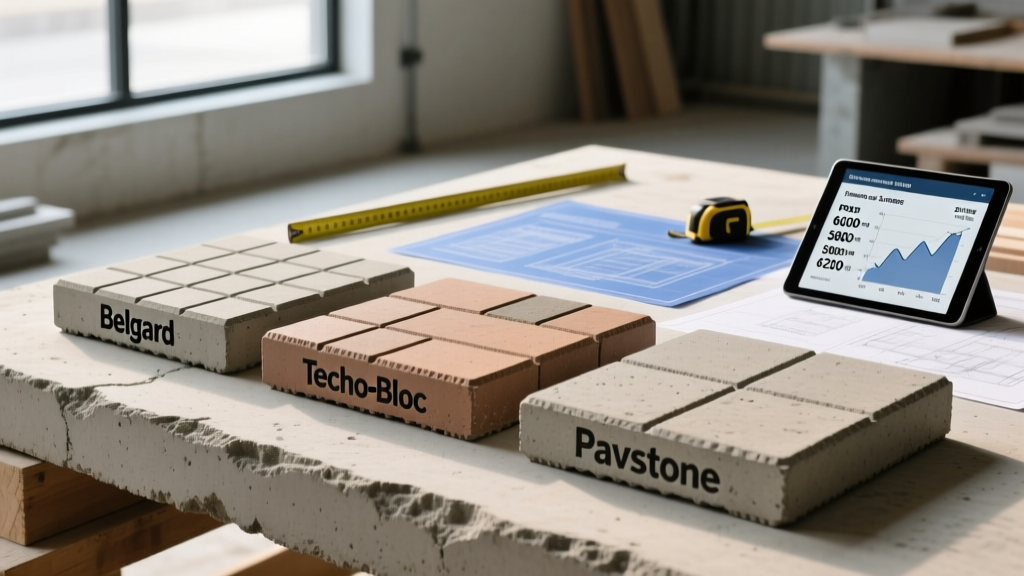
The Reality of Cement Patio Pavers: Beyond the Big Box Store
While consumers frequently search for 'cement patio pavers,' industry professionals know these architectural units are technically high-density concrete pavers manufactured under extreme hydraulic pressure. The distinction matters because the manufacturing process, compressive strength (PSI), and water absorption rates dictate whether your patio will survive a decade of freeze-thaw cycles or spall and crumble by year three. In 2026, the market is dominated by three primary manufacturers, each offering distinct product lines tailored to different structural and aesthetic demands.
Choosing the right brand is not merely about color selection; it is an engineering decision. A budget paver with a 5,000 PSI rating and 7% water absorption will wick moisture, freeze, and fracture in northern climates. Conversely, premium lines engineered to 8,500+ PSI and sub-4% absorption provide structural integrity that rivals poured concrete slabs, but with superior drainage and flexibility. This deep-dive analyzes the flagship lines from Belgard, Techo-Bloc, and Pavestone to help you procure the exact materials your project requires.
Flagship Product Line Comparison Matrix
To evaluate these materials objectively, we must look past marketing brochures and examine the technical data sheets. The following matrix compares the premier architectural lines from the top three North American manufacturers against standard utility pavers.
| Brand & Model | Compressive Strength | Water Absorption | Thickness | 2026 Avg Cost / Sq Ft | Best Application |
|---|---|---|---|---|---|
| Belgard Mega-Arbel | 8,000+ PSI | < 4.5% | 60mm (2 3/8') | $7.50 - $9.20 | Premium residential, natural stone mimicry |
| Techo-Bloc Blu 60mm | 8,500+ PSI | < 4.0% | 60mm (2 3/8') | $5.80 - $7.10 | Modern landscapes, high-traffic pedestrian |
| Pavestone Holland Stone | 5,500 PSI | < 6.0% | 60mm (2 3/8') | $2.90 - $3.60 | Budget patios, utility areas, DIY projects |
| Generic Big-Box Utility | 4,000 PSI | 7.0% - 9.0% | 50mm - 60mm | $1.80 - $2.50 | Temporary paths, non-freeze climates only |
Technical Deep-Dive: Freeze-Thaw and Efflorescence
The primary failure mode for cement patio pavers in temperate and northern climates is freeze-thaw spalling. According to Techo-Bloc's technical resources, manufacturing units with a water absorption rate below 5% is critical for meeting ASTM C931 standards for freeze-thaw durability. When water penetrates the capillary network of a high-absorption paver and freezes, it expands by 9%, creating internal micro-fractures that eventually cause the face of the paver to pop off (spalling).
All cementitious products experience primary efflorescence—a white, powdery calcium carbonate deposit that migrates to the surface as moisture evaporates. Never use muriatic acid or unbuffered hydrochloric acid to clean new pavers. Acid strips the cement paste from the surface aggregate, permanently altering the color and weakening the structural face. Instead, wait 30 to 60 days for the pavers to naturally off-gas moisture, then treat with a proprietary, non-acidic efflorescence cleaner (such as Techniseal or SRW products) specifically formulated for high-density concrete.
Secondary Efflorescence and Joint Sand Selection
Secondary efflorescence occurs when moisture from the base layer wicks up through the joints. This is heavily influenced by your joint sand choice. Traditional silica sand allows water to pool in the joints, prolonging the evaporation cycle and increasing efflorescence blooms. In 2026, high-performance polymeric sands containing advanced acrylic binders are the mandatory standard for premium installations. These sands lock the joints at a microscopic level while remaining flexible enough to accommodate thermal expansion, drastically reducing the moisture ingress that drives secondary efflorescence.
Base Systems: Traditional Sand-Set vs. Open-Graded
The longevity of your cement patio pavers relies 80% on the sub-base preparation. The industry is currently shifting from traditional sand-set bases to open-graded (permeable) bases, driven by stricter municipal stormwater runoff regulations and superior structural performance.
- Traditional Sand-Set Base: Utilizes a compacted crushed stone sub-base (ASTM No. 57) containing fine particles, topped with a 1-inch layer of coarse concrete sand (ASTM C33). While cost-effective, the fine particles can trap water, leading to frost heave in cold climates if drainage is inadequate.
- Open-Graded (Permeable) Base: Recommended by the EPA's Green Infrastructure guidelines, this system uses clean, washed crushed stone (ASTM No. 57 and No. 8) with zero fine particles. The absence of fines creates a void space of roughly 40%, allowing the entire base to act as a subterranean reservoir. Water drains instantly through the joints and base, virtually eliminating frost heave and hydrostatic pressure.
'Transitioning to an open-graded base adds roughly $1.50 to $2.00 per square foot in material costs, but it reduces base failure callbacks by over 90% in regions with heavy clay soils and high water tables.' — Senior Geotechnical Engineer, National Concrete Masonry Association (NCMA)
2026 Regional Pricing & Supply Chain Realities
Cement patio pavers are incredibly heavy, weighing approximately 11 to 14 pounds per square foot. Because freight costs dictate final retail pricing, regional availability heavily impacts your budget. The pricing matrix below reflects 2026 average retail costs, including a standard 10% waste factor and regional freight surcharges.
| Region | Dominant Brand Availability | Freight Surcharge Impact | Avg Premium Line Cost (Installed) |
|---|---|---|---|
| Northeast US | Techo-Bloc, Belgard | Low (High plant density) | $22.00 - $28.00 / sq ft |
| Southeast US | Belgard, Pavestone | Low to Moderate | $19.00 - $25.00 / sq ft |
| Midwest US | Pavestone, County Materials | Moderate | $20.00 - $26.00 / sq ft |
| Pacific Northwest | Belgard, Expocrete | High (Limited local plants) | $26.00 - $34.00 / sq ft |
The Edge Restraint Imperative
A common failure point in DIY and low-bid contractor installations is edge creep. Without proper perimeter restraint, the lateral forces of foot traffic and thermal expansion will push the outer course of pavers outward, causing the joint sand to wash out and the field to unzip.
For residential pedestrian patios, heavy-duty plastic edge restraints (such as SnapEdge or Perma-Edge) secured with 10-inch galvanized steel spikes every 12 inches are sufficient, provided the base material is compacted to 98% Standard Proctor density. However, if your patio borders a driveway or will support vehicular loads (like a hot tub delivery or service truck), you must abandon plastic restraints and pour a 6-inch wide by 8-inch deep concrete curb directly against the perimeter pavers.
Final Procurement Framework: Which Line Fits Your Project?
Do not select cement patio pavers based solely on aesthetic preference. Use this decision framework to align your procurement with your site conditions and budget:
- The Premium Architectural Build (Budget: $8,000+ for materials): Choose Belgard Mega-Arbel or Techo-Bloc Blu. Specify an open-graded base system and high-performance polymeric sand. These lines offer the sub-4% absorption required for harsh winters and the 8,000+ PSI strength to resist point-loads from heavy outdoor furniture.
- The High-Value Residential Build (Budget: $4,000 - $7,000): Choose Techo-Bloc's standard series or Belgard's Old World series. Utilize a traditional sand-set base but upgrade to premium polymeric joint sand to mitigate efflorescence and weed growth.
- The Budget or DIY Utility Build (Budget: Under $3,000): Choose Pavestone Holland Stone. Its simple rectangular geometry makes it forgiving for novice installers to cut and lay. However, if you live in a climate with hard freezes, you must seal the pavers with a penetrating silane/siloxane water repellent every two years to artificially lower the water absorption rate and prevent spalling.
By understanding the compressive strength, absorption metrics, and base requirements of these specific product lines, you transition from a passive consumer to an informed project manager. Procure your cement patio pavers based on engineering data, and your hardscape will remain structurally sound and visually pristine for decades.