Walk Behind Concrete Saw Lifespan: Durability & Maintenance Guide
Discover how to maximize your walk behind concrete saw lifespan. Expert analysis on durability, blade wear rates, maintenance schedules, and component care.
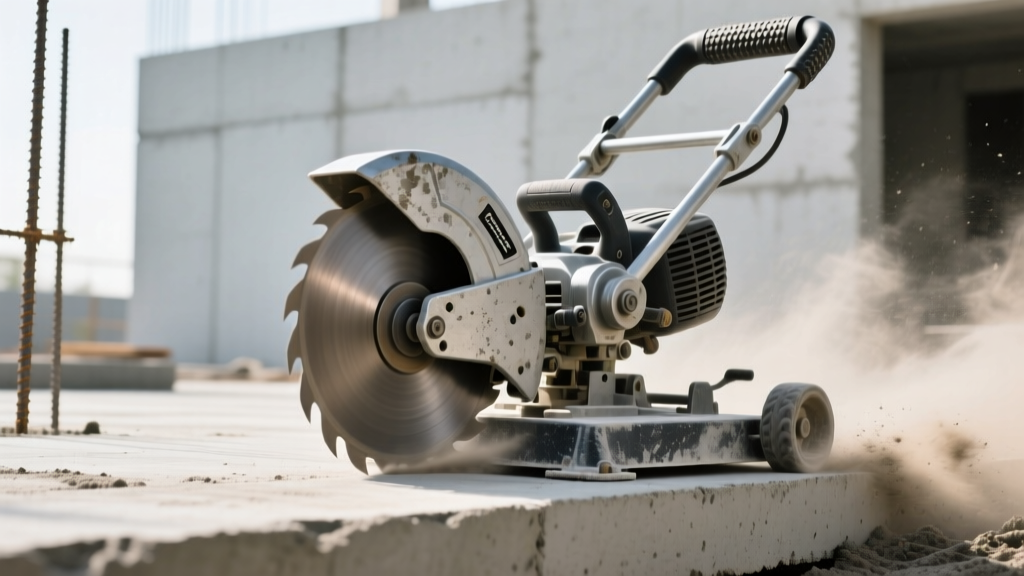
A heavy-duty walk behind concrete saw (often called a flat saw or slab saw) represents a significant capital investment, with modern 35HP to 65HP gas-powered rigs costing between $18,000 and $32,000 in 2026. However, the initial purchase price is only a fraction of the total cost of ownership. The true profitability of a concrete cutting operation hinges on the machine's operational lifespan, component durability, and the wear rate of its consumable diamond blades. When maintained correctly, a commercial-grade walk behind saw can remain in active rotation for 10 to 15 years, but neglect can lead to catastrophic spindle failure or engine seizure in under 1,000 operating hours.
The Anatomy of Saw Degradation: What Fails First
Contrary to popular belief, the engine is rarely the first major component to fail on a well-maintained flat saw. Industrial engines like the Honda GX690 or Kohler Command PRO series are designed for 3,000 to 5,000 hours of heavy load operation. The actual weak points lie in the power transmission and cutting assembly.
Concrete slurry—a highly abrasive mixture of water, cement dust, and fine aggregate—is the primary enemy of saw longevity. When the spindle water seals degrade, slurry infiltrates the spindle bearings. This creates a grinding paste that destroys the bearing races within 50 to 100 hours, leading to blade wobble, uneven cuts, and ultimately a seized spindle shaft that requires a $2,500+ rebuild.
Secondary failure points include the drive belts and engine isolator mounts. The intense vibration generated by pushing a 400-pound machine through 6,000 PSI cured concrete causes standard rubber isolators to compress and crack over time. Once the mounts fail, harmonic vibration transfers directly to the engine block and the saw frame, accelerating metal fatigue and loosening critical pulley alignments.
Component Lifespan & Wear Matrix
The following matrix outlines the expected operational lifespan of critical components under standard commercial use (cutting 4,000 PSI cured concrete with proper water cooling). These figures assume adherence to manufacturer maintenance schedules.
| Component | Expected Lifespan (Hours/Usage) | Primary Failure Cause |
|---|---|---|
| Industrial Gas Engine (35-65HP) | 3,000 - 5,000 Hours | Air filter clogging, oil starvation on inclines |
| Spindle Bearings & Housing | 800 - 1,500 Hours | Slurry intrusion, lack of daily greasing |
| Heavy-Duty V-Belts (Drive) | 150 - 300 Hours | Misalignment, excessive blade pushing (RPM drop) |
| Engine Isolator Mounts | 1,000 - 2,000 Hours | Harmonic vibration, ozone/UV degradation |
| Diamond Blade (36-inch, Segmented) | 2,500 - 4,000 Linear Feet | Wrong bond matrix, dry cutting, RPM mismatch |
Diamond Blade Wear Rates vs. Concrete PSI
The durability of your cutting operation is inextricably linked to matching the diamond blade's bond matrix to the concrete's compressive strength (PSI) and aggregate hardness. Using an incorrect bond will not only destroy a $600 blade in a fraction of its expected life but will also overstress the saw's engine and drive belts.
The Bond Hardness Paradox
Novice operators often assume that cutting hard concrete requires a hard diamond blade. The opposite is true. When cutting high-PSI, fully cured concrete (6,000+ PSI) or concrete with hard quartz aggregate, you must use a soft bond. The soft metal matrix wears away quickly, constantly exposing fresh, sharp diamond crystals to the hard aggregate. If you use a hard bond on hard concrete, the matrix will not wear away, the diamonds will polish flat (glazing), and the blade will bounce across the surface while generating massive friction heat.
- Green Concrete (Under 48 hours old, < 2,000 PSI): Requires a hard bond. The soft, sandy aggregate acts like sandpaper, stripping away soft bonds almost instantly.
- Standard Cured (3,000 - 4,500 PSI): Requires a medium/universal bond. This is the baseline for most highway and commercial slab work.
- High-Strength/Bridge Decks (6,000+ PSI): Requires a soft bond with specialized diamond grit to prevent glazing and segment loss.
The Critical RPM Rule: Surface Feet Per Minute (SFPM)
Every diamond blade has an optimal Surface Feet Per Minute (SFPM) rating, typically between 9,500 and 12,500 SFPM for wet flat saws. Operators frequently make a catastrophic error by running the saw engine at its maximum governed RPM (e.g., 3,600 RPM) without calculating the pulley ratio.
For a 36-inch blade, the optimal shaft speed is roughly 1,200 RPM, which yields approximately 11,300 SFPM. If the pulley ratio spins that same 36-inch blade at 2,400 RPM, the SFPM jumps to over 22,600. This extreme overspeeding will melt the silver solder holding the diamond segments, causing segments to fly off at lethal velocities, while simultaneously warping the steel core. Always verify the arbor shaft RPM with a laser tachometer before engaging the blade.
Preventative Maintenance Intervals for Maximum Durability
To push a walk behind saw toward the 15-year mark, maintenance must shift from reactive repairs to strict interval-based servicing. Adhering to OSHA's respirable crystalline silica standards requires continuous water flow, which inadvertently provides the necessary blade cooling but accelerates rust and slurry buildup on the machine itself.
🛠️ The 50 / 250 / 1000 Hour Protocol
Daily (Pre-Shift):
- Grease the spindle bearings with high-temp, water-resistant lithium complex grease until clean grease purges from the seals (flushes out microscopic slurry).
- Inspect the water spray bars for clogged nozzles. Uneven water flow causes localized thermal shock to the blade core, leading to tension cracks.
50-Hour Interval:
- Change engine oil and replace the paper air filter element. Concrete dust is exceptionally fine; a compromised air filter will score the engine cylinder walls in less than 20 hours.
- Check drive belt tension. A slipping belt generates heat that glazes the belt sidewalls, permanently reducing its grip and lifespan.
1000-Hour Interval (Major Teardown):
- Drop the spindle housing. Inspect the shaft for scoring and replace the primary water seals and bearings regardless of perceived play. Re-shim the bearing stack to factory tolerances to prevent blade wobble.
- Inspect the frame rails for micro-fractures, particularly around the blade guard hinge points and the engine mounting plate.
Environmental Factors That Destroy Saws
Beyond mechanical wear, the environment dictates the saw's structural lifespan. Operating in coastal or high-humidity environments without daily post-washdowns leads to rapid oxidation of the blade guard and water tanks. Furthermore, cutting heavily reinforced concrete (such as bridge decks with #8 rebar on 6-inch centers) introduces severe shock loads. When a 36-inch blade strikes thick rebar, the sudden deceleration transfers kinetic energy backward through the spindle to the drive belts and engine crankshaft. Saws equipped with automatic belt-tensioners or hydraulic blade shafts absorb this shock far better than manual crank-down models, significantly extending the life of the drivetrain.
Repair vs. Replace Decision Framework
When a major component fails, contractors must weigh the cost of rehabilitation against purchasing new equipment. According to industry data from the Portland Cement Association and equipment manufacturers, the decision should be based on the structural integrity of the mainframe.
When to Repair: If the engine blows or the spindle seizes, but the mainframe is straight and the axle bearings are tight, repair is the obvious choice. A replacement Honda GX690 engine costs roughly $2,800, and a complete spindle rebuild kit is under $600. This is a fraction of the $25,000+ cost of a new rig.
When to Replace: If the saw has been involved in a drop or collision that warped the frame, or if the blade guard hinge points are elongated and cracked, the machine must be retired. A warped frame prevents the blade from tracking perfectly straight. This forces the operator to steer against the cut, creating side-loading on the blade core. Side-loading a spinning diamond blade will inevitably result in core cracking, segment loss, and severe safety hazards that no amount of maintenance can mitigate.