Concrete vs Clay Tile Roofing: Load, Cost, and Climate Match
Compare concrete vs clay tile roofing for your next build. Explore structural loads, current pricing, climate durability, and ASTM standards.

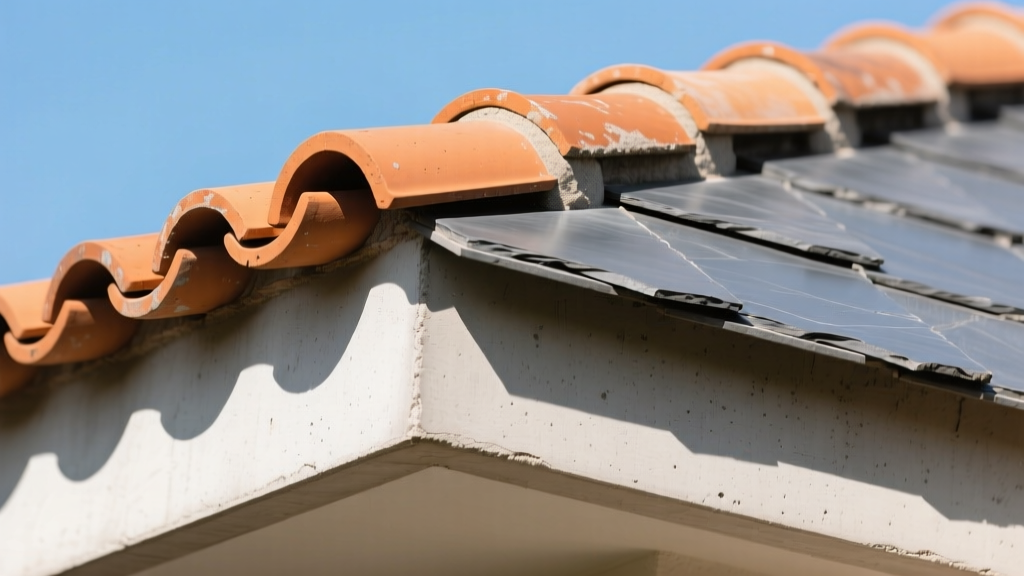
Selecting between concrete and clay tile roofing is rarely just an aesthetic choice; it is a fundamental structural and environmental engineering decision. While both materials offer Class A fire ratings, exceptional wind resistance, and lifespans exceeding 50 years, their distinct physical properties dictate vastly different framing requirements, installation methodologies, and lifecycle maintenance protocols. This application showcase dissects the technical realities of the concrete vs clay tile debate, providing the exact specifications, current cost metrics, and industry standards required to make an informed architectural choice for your next project.
The Core Engineering Divide: Dead Load and Structural Framing
The most immediate differentiator between concrete and clay roofing is the dead load imposed on the structural framing. Roofing materials are measured in 'squares' (100 square feet), and the weight disparity between these two materials fundamentally alters truss engineering.
Quick Load Summary
- Concrete Tile: Averages 900 to 1,100 lbs per square. High-profile barrel styles can push 1,200 lbs.
- Clay Tile: Averages 600 to 800 lbs per square. Flat interlocking profiles can drop to 550 lbs.
- Standard Asphalt Shingles (for context): 200 to 350 lbs per square.
Because concrete tiles are significantly heavier, specifying them often requires upgrading the roof framing. While standard asphalt or lightweight clay might be supported by 2x4 trusses spaced 24 inches on-center (OC), concrete tiles frequently mandate 2x6 trusses at 24 inches OC, or even 2x4 trusses at 16 inches OC, depending on local snow load requirements. In the current construction market, upgrading from standard 2x4 to heavy-duty engineered trusses to support concrete adds a structural premium of roughly $1.50 to $2.50 per square foot of roof area. If you are retrofitting an existing structure designed for composition shingles, clay is often the only viable tile option without requiring extensive and costly structural reinforcement.
Material Science: ASTM Standards and Inherent Failure Modes
Both materials are governed by strict testing protocols, but their chemical compositions lead to entirely different degradation pathways over a 50-year lifecycle.
Concrete Tile: The Efflorescence Factor (ASTM C1492)
Concrete roof tiles are manufactured under ASTM C1492, utilizing a mixture of Portland cement, sand, water, and iron oxide pigments. The primary failure mode for concrete is not structural crumbling, but aesthetic degradation via efflorescence. As water permeates the porous concrete matrix, it dissolves calcium hydroxide and carries it to the surface, where it reacts with carbon dioxide to form a white, chalky calcium carbonate deposit. While efflorescence does not compromise the tile's structural integrity, it severely impacts curb appeal. To mitigate this, modern manufacturers apply acrylic or silane/siloxane penetrating sealers during production. However, these sealers require reapplication every 10 to 15 years, adding to the long-term maintenance budget.
Clay Tile: Thermal Shock and Spalling (ASTM C1167)
Clay tiles are governed by ASTM C1167, which classifies them into three grades based on freeze-thaw resistance. Grade 1 clay tiles have a water absorption rate of less than 3%, making them virtually impervious to moisture and suitable for severe freeze-thaw climates. Grade 3 tiles, with higher absorption, are restricted to southern, frost-free regions. The primary failure mode for clay is thermal shock and impact brittleness. While clay's color is fired into the material at 2,000°F (meaning it will never fade or effloresce), a dropped tree branch or severe hail can shatter a clay tile, whereas a concrete tile of the same profile might merely chip or crack without failing completely.
Climate-Specific Application Matrix
Matching the material to the microclimate is critical for maximizing the roof's lifespan. The following matrix outlines optimal applications based on environmental stressors.
| Environmental Stressor | Concrete Tile Performance | Clay Tile Performance | Recommended Choice |
|---|---|---|---|
| Coastal Salt Spray | Good, but steel reinforcement in some profiles can corrode if exposed. | Excellent. Inorganic material is completely immune to salt degradation. | Clay |
| Severe Freeze-Thaw | Fair to Good. Requires high-density mix and regular sealing to prevent water ingress and spalling. | Excellent (if Grade 1 specified). Sub-3% absorption prevents internal ice expansion. | Clay (Grade 1) |
| High-Wind / HVHZ | Excellent. Heavier mass resists uplift; easily passes Miami-Dade NOA with screw-and-clip fastening. | Very Good. Requires specialized interlocking profiles and heavy adhesives for HVHZ compliance. | Concrete |
| Wildfire / WUI Zones | Excellent. Class A fire rating, non-combustible. | Excellent. Class A fire rating, non-combustible. | Tie (Both) |
Installation Nuances: Underlayment and Batten Systems
According to guidelines published by the Tile Roofing Institute, the tile itself is only the primary water barrier; the underlying system does the heavy lifting for waterproofing. When installing either concrete or clay, the choice of underlayment and batten system is paramount.
For both materials, a minimum 43-pound organic felt or a high-performance synthetic underlayment (like GAF FeltBuster or TigerPaw) is required. However, in climates with driving rain or ice dams, a self-adhering ice and water shield (such as Grace Ice & Water Shield) should be applied at the eaves, valleys, and penetrations.
Furthermore, tile roofs should rarely be direct-nailed to the deck. A counter-batten and batten system is highly recommended. By laying vertical counter-battens over the underlayment, followed by horizontal battens, you create a ventilated air channel. This 'cold roof' assembly allows air to flow from the eave to the ridge, drastically reducing thermal transfer into the attic and allowing any condensation or driven moisture to drain freely down the underlayment without touching the tile's underside.
Current Cost Analysis: Material, Labor, and Lifecycle
When budgeting for a tile roof, contractors and architects must look beyond the per-tile material cost. The following breakdown reflects average national pricing for a standard 2,500 square foot roof (25 squares) with a 6:12 pitch.
- Concrete Tile Material: $250 to $450 per square ($2.50 - $4.50 per sq. ft.). Premium flat profiles and custom colors push the upper limit.
- Clay Tile Material: $700 to $1,400 per square ($7.00 - $14.00 per sq. ft.). Hand-molded or imported European clay commands the highest premiums.
- Installation Labor (Both): $450 to $700 per square. Clay labor is typically 10-15% higher due to the fragility of the material and the precision required for cutting and fitting around valleys and hips.
- Structural Framing Upgrade (Concrete Only): $1,500 to $3,500 total project cost to upgrade trusses for the additional dead load.
Over a 50-year lifecycle, clay often proves more cost-effective despite the higher initial investment. Concrete tiles will likely require a chemical wash and resealing every 15 years to combat efflorescence and maintain color vibrancy, adding roughly $1.50 per square foot per maintenance cycle. Clay requires virtually zero aesthetic maintenance, as its color is permanently fired into the ceramic body.
The Verdict: Specification Framework
The decision between concrete and clay ultimately hinges on three project parameters: structural capacity, aesthetic longevity requirements, and budget constraints.
Specify Concrete Tile When: You are working with a strict material budget, designing for high-wind hurricane zones where the extra mass provides inherent uplift resistance, or when the architectural design calls for modern, large-format flat profiles that are more economically manufactured in concrete. Ensure the structural engineer has accounted for the 1,000+ lb per square dead load.
Specify Clay Tile When: The project is located in a coastal salt-air environment or a severe freeze-thaw region (using Grade 1 clay). Clay is also the mandatory choice for historical restorations, luxury builds where zero color-fade is expected over 75 years, or retrofit projects where the existing roof framing cannot be economically upgraded to support the weight of concrete.
By aligning the material's physical properties with the specific structural and environmental demands of the build, architects and builders can ensure a roof system that performs flawlessly for generations.
Written by
Priya KapoorPriya Kapoor is a real estate market analyst and construction economics researcher with expertise in housing affordability, development feasibility, and infrastructure investment. She holds a Master of Regional Planning from Cornell University and previously worked as a senior analyst at CBRE's Investment Properties group, where she modeled returns for $4B in mixed-use development pipelines. Priya now runs an independent research practice advising developers, municipalities, and REITs on construction cost forecasting and market timing. She publishes the quarterly "BuildMat Market Pulse" report tracking material price indices across 12 commodity categories. Based in Austin, TX, Priya serves on the board of Habitat for Humanity Austin and is a marathon runner.
More from Priya Kapoor
View all
Construction Cost
Cost to Build a 1600 Sq Ft Home in 2026: Full Breakdown
Accurate 2026 cost to build a 1600 sq ft home—material, labor, and regional pricing breakdowns included. Plan your budget with real-time estimates.
Aug 11, 2026

Wood & Lumber
Name the Types of Wood for Pressure Treatment and Preservation
Learn how to name the types of wood best suited for pressure treatment. Compare species treatability, chemical retention levels, and 2026 preservation costs.
Aug 4, 2026

Stone & Masonry
Stone Veneer Suppliers Lindenhurst: 2026 Cost Analysis
Analyze 2026 stone veneer costs in Lindenhurst, NY. Compare local supplier pricing, delivery fees, and Suffolk County installation labor rates.
Aug 4, 2026