Alligator Alcatraz Cost to Build: Regional Price Analysis
Discover the alligator alcatraz cost to build across different US regions, covering reinforced concrete, steel mesh, and climate control expenses.

Decoding the Maximum-Security Crocodilian Enclosure
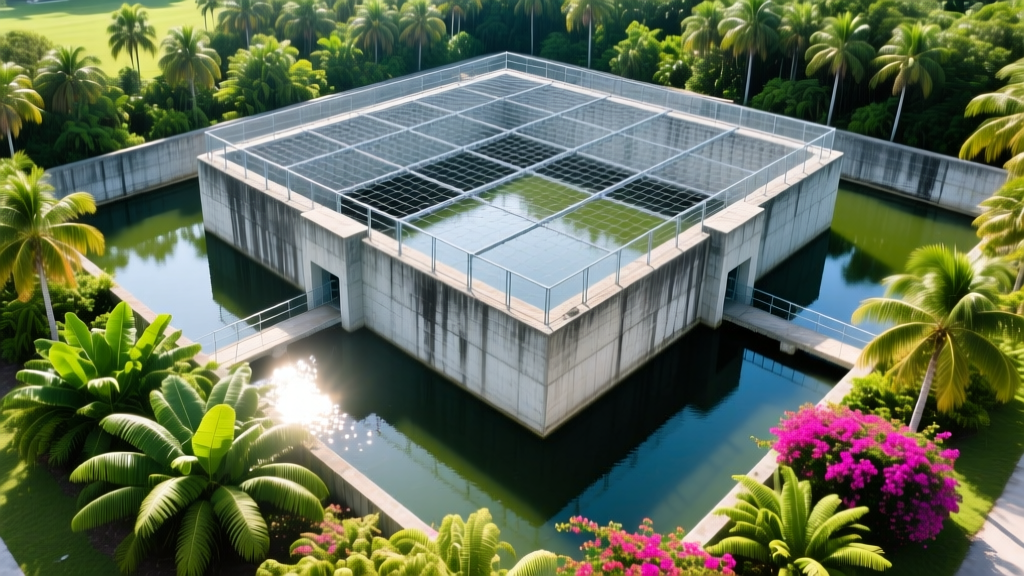
Calculating the exact alligator alcatraz cost to build requires moving far beyond standard commercial pool or zoo enclosure estimates. In the specialized field of exotic animal construction, an "Alligator Alcatraz" refers to a maximum-security, escape-proof crocodilian containment facility designed to house large, highly dangerous species such as saltwater crocodiles, Nile crocodiles, or massive American alligators. These structures demand extreme material resilience against corrosive waste, complex aquatic life support systems (LSS), and rigorous anti-escape perimeter security.
As of 2026, the national average cost to construct a mid-sized, 5,000-square-foot fortified crocodilian enclosure ranges from $850,000 to $1.4 million. However, regional variables—specifically the local water table, soil bearing capacity, and ambient climate—dictate whether a project lands on the lower end of that spectrum or exceeds $2 million. This regional price analysis breaks down the specific engineering and material costs required to build these high-security biospheres across different United States climate zones.
Core Structural Requirements for Containment
Before analyzing regional price fluctuations, it is critical to establish the baseline engineering standards required for any facility housing apex reptilian predators. Standard chain-link fencing and poured residential concrete will fail rapidly under the physical stress and highly acidic biological waste produced by large crocodilians.
- Concrete Specifications: Minimum 5,000 PSI compressive strength using Type V Sulfate Resisting Portland Cement to prevent degradation from uric acid and ammonia.
- Mesh Roofing: 316L marine-grade stainless steel woven wire (4-gauge, 2-inch aperture maximum) to prevent snout insertion and subsequent prying.
- Coatings: 60-mil polyurea elastomeric liner applied to all submerged and splash-zone concrete surfaces to create an impermeable, chemical-resistant barrier.
Regional Price Analysis: Sunbelt vs. Northern Climate Zones
The most significant variable in the alligator alcatraz cost to build is geographic location. Constructing an outdoor, open-air enclosure in the subtropical Sunbelt presents entirely different engineering hurdles compared to building a fully enclosed, climate-controlled indoor biosphere in northern or transitional zones.
| Cost Category | Zone 1: Sunbelt (FL, LA, TX) | Zone 2: Northern/Transitional (CO, OH, NY) |
|---|---|---|
| Excavation & Dewatering | $45,000 - $80,000 | $15,000 - $30,000 |
| Foundation & Footings | $120,000 - $180,000 (Helical piers) | $60,000 - $90,000 (Standard spread) |
| Superstructure & Roofing | $85,000 (Steel mesh canopy) | $350,000+ (Insulated ETFE dome) |
| HVAC & Climate Control | $25,000 (Misting & shade) | $220,000 (Dehumidification & UV) |
| Total Estimated Baseline | $850,000 - $1,100,000 | $1,250,000 - $1,800,000 |
Zone 1: The Sunbelt (Florida, Louisiana, Texas)
Building in the Sunbelt allows for open-air designs, eliminating the need for massive structural roofing and continuous winter heating. However, the primary cost drivers here are subsurface conditions. In coastal Florida and Louisiana, the water table is often less than three feet below the surface, and the soil consists of compressible muck or peat.
Excavating a 6-foot deep pool in these conditions requires continuous wellpoint dewatering systems, which can cost $15,000 to $25,000 per week to operate during the build. Furthermore, the poor soil bearing capacity necessitates deep foundation support. Engineers typically specify helical piers or driven friction piles driven 40 to 60 feet down to stable limestone or sand layers to support the immense dead load of the concrete and water, adding upwards of $100,000 to the foundation budget compared to building on stable bedrock.
Zone 2: Northern and Transitional Zones
In regions with freezing winters, an Alligator Alcatraz must be a fully enclosed, heated biosphere. The cost shifts dramatically from ground-work to superstructure and mechanical systems. Standard glass or polycarbonate roofing blocks the UV-B radiation necessary for crocodilian calcium metabolism and degrades under heavy snow loads.
Modern facilities utilize ETFE (Ethylene Tetrafluoroethylene) foil cushion roofing. ETFE transmits up to 90% of full-spectrum light, is self-cleaning, and handles heavy snow loads, but it costs between $45 and $70 per square foot installed. Additionally, the HVAC system must handle 100% ambient humidity without corroding standard galvanized ductwork. Facilities must invest in fiberglass-reinforced plastic (FRP) or 316 stainless steel ductwork, alongside commercial desiccant dehumidifiers, pushing the mechanical budget past $200,000.
Material Breakdown: Concrete, Epoxies, and Steel Alloys
The hostile chemical environment inside a crocodilian enclosure dictates strict material selection. Reptile waste, combined with warm water, creates highly concentrated ammonia and uric acid. Standard ASTM A615 carbon steel rebar will corrode and cause concrete spalling within five years if the waterproofing membrane is even slightly compromised.
"For environmental engineering concrete structures subjected to severe chemical exposure, the use of epoxy-coated rebar or GFRP (Glass Fiber Reinforced Polymer) rebar is strongly recommended to prevent oxidative jacking and structural failure." — Adapted from ACI 350 Environmental Engineering Concrete Structures guidelines.
To mitigate this, premium facilities are increasingly utilizing GFRP rebar in the splash zones and submerged retaining walls. While GFRP rebar costs approximately 20% to 30% more upfront than epoxy-coated steel, it is completely immune to chloride and acid-induced corrosion, drastically reducing lifecycle maintenance costs. For the enclosure roofing and perimeter overhangs, 316L stainless steel is non-negotiable. The "L" denotes low carbon, which prevents weld decay and ensures the mesh retains its structural integrity when exposed to constant moisture and biological acids.
Aquatic Life Support Systems (LSS) and Bio-Security
An Alligator Alcatraz is essentially a heavily fortified, high-bio-load aquatic system. Large crocodilians produce massive amounts of solid waste and shed skin/scutes, which can rapidly overwhelm standard sand filters. The LSS must maintain water clarity and control pathogens like Aeromonas and Pseudomonas bacteria.
Required LSS Components:
- Regenerative Media Filters (RMF): Unlike rapid sand filters, RMFs use diatomaceous earth or perlite coated on septums, providing polishing-level filtration down to 1-5 microns. Cost: $35,000 - $60,000 per unit.
- UV Sterilization Arrays: High-output, medium-pressure UV reactors are required to neutralize waterborne pathogens without the use of harsh chemicals like chlorine, which can damage the reptiles' eyes and respiratory systems. Cost: $15,000 - $25,000.
- Protein Skimmers (Foam Fractionators): Essential for removing dissolved organic compounds (DOCs) before they break down into toxic ammonia. Cost: $12,000 - $18,000.
The total LSS package for a 50,000-gallon enclosure typically ranges from $110,000 to $160,000, excluding the complex PVC plumbing manifolds and automated backwash valves.
Regulatory and Permitting Cost Variables
Construction costs must also account for the rigorous regulatory oversight governing dangerous captive wildlife. Facilities must comply with federal, state, and private accreditation standards, all of which dictate specific architectural dimensions and security features that directly impact the budget.
At the federal level, the USDA Animal and Plant Health Inspection Service (APHIS) enforces the Animal Welfare Act, which mandates specific perimeter fencing heights, double-door entry vestibules (sally ports), and lock specifications to prevent unauthorized human access and animal escape. State-level regulations, such as those enforced by the Florida Fish and Wildlife Conservation Commission (FWC), often require additional structural redundancies for Category I venomous and dangerous reptiles.
Furthermore, institutions seeking Association of Zoos and Aquariums (AZA) accreditation must meet even stricter guidelines regarding animal welfare, keeper safety, and visual barriers. Designing AZA-compliant keeper access corridors, remote-operated hydraulic shift doors, and specialized veterinary hoisting systems can add $75,000 to $120,000 to the final construction ledger.
Summary Cost Matrix by Facility Scale
When budgeting for an alligator alcatraz cost to build, facility directors should use the following 2026 matrix as a baseline for capital expenditure planning, assuming a fully compliant, AZA-standard facility.
| Facility Scale | Water Volume | Land Area | Estimated Turnkey Cost |
|---|---|---|---|
| Small (Single Specimen / Rescue) | 15,000 Gallons | 1,500 Sq Ft | $350,000 - $500,000 |
| Medium (Breeding Pair / Display) | 45,000 Gallons | 5,000 Sq Ft | $850,000 - $1,400,000 |
| Large (Colony / Multi-Species) | 120,000+ Gallons | 15,000+ Sq Ft | $2,200,000 - $3,500,000+ |
Ultimately, attempting to value-engineer an Alligator Alcatraz by substituting marine-grade steel for galvanized alternatives or skipping the subterranean anti-dig apron will result in catastrophic structural failure or animal escape. Precision in material selection and adherence to regional geotechnical realities are the only ways to ensure a secure, long-lasting crocodilian containment facility.
Written by
David NakamuraDavid Nakamura is a licensed architect (AIA) and construction technology writer focused on sustainable building methods, mass timber engineering, and high-performance building envelopes. He holds a Master of Architecture from the University of Washington and is a certified Passive House Consultant (CPHC). David spent eight years at the Seattle firm Mithun, where he led the design of three LEED Platinum projects, before founding his own practice specializing in net-zero residential design. He serves on the editorial advisory board of GreenBuilder Magazine and has authored peer-reviewed papers on cross-laminated timber (CLT) connections for the Journal of Structural Engineering. In his spare time, David teaches woodworking at Pratt Fine Arts Center and kayaks the Puget Sound.
More from David Nakamura
View all
Construction Cost
Labor Cost to Build a Deck Per Sq Ft: 2026 Installation Guide
Discover the exact labor cost to build a deck per sq ft in 2026. This installation guide breaks down contractor rates, complexity factors, and hidden fees.
Aug 4, 2026

Construction Cost
How Much Does It Cost to Build a 3 Bedroom House? Financing Guide
Learn exactly how much it costs to build a 3 bedroom house and explore 2026 financing options, construction loan types, and budget frameworks for your build.
Aug 4, 2026

Construction Cost
Cost to Build a Tennis Court: 2026 Guide
How much does it cost to build a tennis court in 2026? Breakdowns for asphalt, concrete, and synthetic surfaces plus fencing and lighting.
Jul 30, 2026