Average Cost to Build a Self Storage Facility: 2026 Finance Guide
Discover the average cost to build a self storage facility in 2026, plus expert financing strategies, loan structures, and lender underwriting metrics.
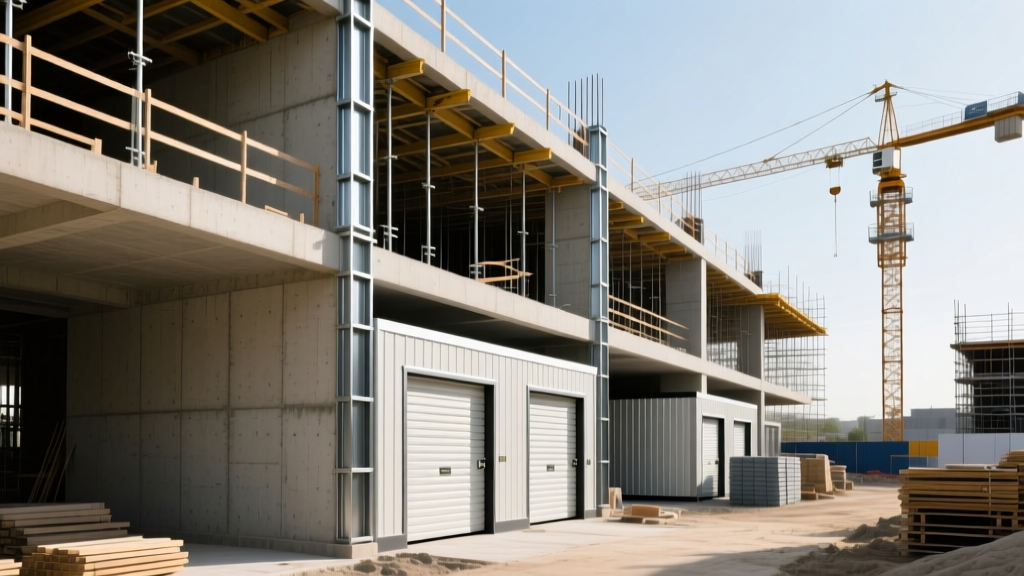
The Real Average Cost to Build a Self Storage Facility in 2026
Calculating the average cost to build a self storage facility requires moving beyond generic square-foot estimates and analyzing the specific asset class you intend to develop. In 2026, material volatility has stabilized, but labor premiums for specialized trades (HVAC, electrical, and concrete) remain elevated. The total project cost is heavily dictated by the building type: single-story non-climate, single-story climate-controlled, or multi-story climate-controlled.
For a standard ground-up development, the average cost to build a self storage facility ranges from $45 to $75 per rentable square foot (RSF) for single-story non-climate buildings, and $90 to $145 per RSF for multi-story climate-controlled structures. These figures represent hard construction costs and exclude land acquisition, which typically adds another 15% to 25% to the total capital requirement depending on municipal zoning and utility access.
| Facility Type | Average Cost per RSF | Primary Material Specifications | Typical Timeline |
|---|---|---|---|
| Single-Story Non-Climate | $45 - $65 | Pre-engineered metal building (PEMB), 26-gauge standing seam roof, uninsulated partitions | 6 - 9 Months |
| Single-Story Climate-Controlled | $70 - $95 | Tilt-up concrete or insulated metal panels (IMPs), commercial HVAC zoning, vapor barriers | 9 - 12 Months |
| Multi-Story Climate-Controlled | $105 - $145 | Steel frame with concrete decking, elevators, advanced fire suppression (ESFR), high-efficiency VRF HVAC | 14 - 18 Months |
The SBA Loan Trap: Navigating the Passive Investment Rule
Many first-time developers assume they can leverage the SBA 504 Loan Program to secure a low-down-payment construction loan. This is one of the most costly misconceptions in self-storage financing. The SBA strictly prohibits financing for "passive real estate investments." Because pure self-storage is classified as a passive lease of space rather than an active operating business, it is generally ineligible for SBA 504 or SBA 7(a) loans.
Structuring Conventional Construction Debt for Storage
Since SBA routes are typically closed to pure storage developers, the primary financing vehicle is a conventional commercial construction loan sourced from regional community banks, credit unions, or specialized commercial real estate (CRE) lenders. In the 2026 interest rate environment, lenders are highly scrutinized on their CRE exposure, meaning storage developers must present pristine underwriting packages.
Essential Underwriting Metrics Lenders Demand
To secure a conventional construction loan, your pro forma must satisfy strict financial covenants. Lenders will evaluate your project against the following benchmarks:
- Loan-to-Cost (LTC) Ratio: Expect maximum LTCs of 65% to 75%. This means you must bring 25% to 35% of the total project cost as equity. If land is already owned free and clear, it can often be credited toward your equity requirement.
- Debt Service Coverage Ratio (DSCR): According to standard Debt Service Coverage Ratio (DSCR) underwriting, lenders require a stabilized DSCR of at least 1.25x to 1.35x. This proves that the facility's projected net operating income (NOI) will exceed the annual debt service by 25% to 35%.
- Debt Yield: Many institutional lenders now require a minimum debt yield of 10% to 12%, calculated as Stabilized NOI divided by the Loan Amount. This metric protects the lender against interest rate fluctuations and inflated property appraisals.
- Interest Reserves: Lenders will require an interest reserve built into the loan to cover monthly debt payments during the 12- to 18-month construction and lease-up phases before the property generates sufficient cash flow.
Phased Construction: A Risk-Mitigation Financing Strategy
One of the most effective ways to manage the average cost to build a self storage facility and satisfy cautious lenders is through phased construction. Instead of securing debt for a 100,000-square-foot facility upfront, developers secure land entitlements for the full site but finance and build only Phase 1 (e.g., 50,000 square feet).
This strategy offers three distinct financial advantages:
- Lower Initial Equity Requirement: By reducing the initial hard cost by 50%, your required 30% equity injection is similarly halved, preserving liquidity for marketing and operational runway.
- Matching Absorption Rates: Self-storage absorption (the rate at which units are leased) typically averages 4,000 to 6,000 net square feet per month in healthy markets. A 100,000 SF facility might take 24 months to stabilize, during which you are paying interest on empty space. Phasing aligns supply with actual market absorption.
- Refinancing Leverage: Once Phase 1 reaches 85% to 90% occupancy, the stabilized asset can be refinanced into a permanent commercial mortgage. The cash-out from this refinance, combined with the proven operational history, provides the equity and lender confidence needed to fund Phase 2 without bringing new outside capital to the table.
Hidden Soft Costs That Derail Storage Budgets
When calculating the average cost to build a self storage facility, novice developers frequently underestimate soft costs. While hard costs cover concrete, steel, and Janus roll-up doors, soft costs encompass the professional services, municipal fees, and regulatory hurdles required to break ground. In 2026, soft costs routinely consume 18% to 25% of the total project budget.
| Soft Cost Category | Estimated Cost Range | Notes & Edge Cases |
|---|---|---|
| Architectural & Engineering | $80,000 - $140,000 | Includes civil, structural, MEP, and site drainage plans. |
| Geotechnical & Environmental | $15,000 - $35,000 | Phase I ESA and soil boring tests. Rock excavation can add $50k+. |
| Municipal Impact & Permit Fees | $40,000 - $120,000 | Highly variable. Some municipalities charge per-square-foot traffic impact fees. |
| Loan Origination & Legal | $30,000 - $60,000 | Includes lender origination fees (1-2%), appraisals, and borrower counsel. |
| Insurance & Taxes (Carrying) | $25,000 - $50,000 | Builder's risk insurance and property taxes during the 12-month build. |
Actionable Steps to Secure Your Construction Loan
Securing financing for a self-storage facility requires a methodical approach. Follow this sequence to present a bankable package to commercial lenders:
- Conduct a Hyper-Local Feasibility Study: Do not rely on national averages. Commission a site-specific feasibility study that analyzes the supply pipeline within a 3-to-5-mile radius. Lenders will reject your application if they see permitted but unbuilt competitors in your immediate trade area.
- Finalize Entitlements Before Applying: Banks rarely issue term sheets for unentitled land. Secure your zoning approvals, site plan approvals, and utility will-serve letters before approaching construction lenders. This shifts the project from "speculative development" to "shovel-ready," drastically improving your LTC terms.
- Assemble the Sponsor Team Resume: Lenders underwrite the sponsor as much as the dirt. If you lack direct self-storage development experience, partner with a third-party management company (e.g., CubeSmart, Extra Space Storage, or a strong regional operator) and include their management agreement in your loan package to guarantee operational execution.
- Pre-Sell or Pre-Lease: While difficult for ground-up storage, launching a digital marketing campaign 90 days before groundbreaking to build a waitlist demonstrates market demand. Presenting a list of 100+ verified reservations to your loan committee can be the deciding factor in securing the final credit approval.
Written by
David NakamuraDavid Nakamura is a licensed architect (AIA) and construction technology writer focused on sustainable building methods, mass timber engineering, and high-performance building envelopes. He holds a Master of Architecture from the University of Washington and is a certified Passive House Consultant (CPHC). David spent eight years at the Seattle firm Mithun, where he led the design of three LEED Platinum projects, before founding his own practice specializing in net-zero residential design. He serves on the editorial advisory board of GreenBuilder Magazine and has authored peer-reviewed papers on cross-laminated timber (CLT) connections for the Journal of Structural Engineering. In his spare time, David teaches woodworking at Pratt Fine Arts Center and kayaks the Puget Sound.
More from David Nakamura
View all
Construction Cost
Labor Cost to Build a Deck Per Sq Ft: 2026 Installation Guide
Discover the exact labor cost to build a deck per sq ft in 2026. This installation guide breaks down contractor rates, complexity factors, and hidden fees.
Aug 4, 2026

Construction Cost
How Much Does It Cost to Build a 3 Bedroom House? Financing Guide
Learn exactly how much it costs to build a 3 bedroom house and explore 2026 financing options, construction loan types, and budget frameworks for your build.
Aug 4, 2026

Construction Cost
Cost to Build a Tennis Court: 2026 Guide
How much does it cost to build a tennis court in 2026? Breakdowns for asphalt, concrete, and synthetic surfaces plus fencing and lighting.
Jul 30, 2026