How Much Does It Cost to Build a Bugatti? Facility & Unit Breakdown
Discover how much it costs to build a Bugatti. We break down the Molsheim facility construction, cleanroom specs, and hypercar unit manufacturing costs.
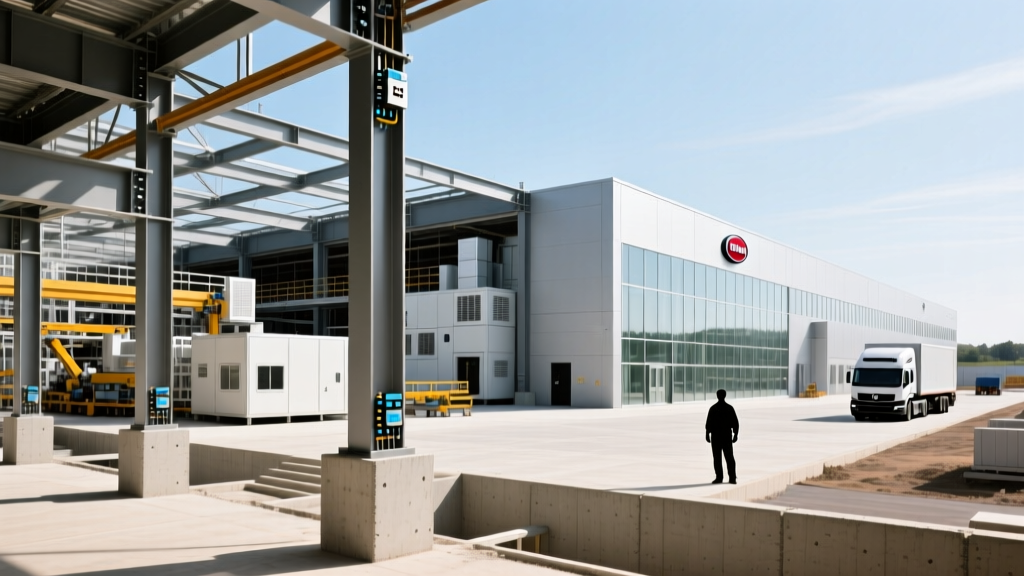
Deconstructing the Hypercar: Two Distinct Cost Models
When automotive enthusiasts ask, "how much does it cost to build a bugatti," they are typically inquiring about the Bill of Materials (BOM) and assembly labor for a single vehicle. However, from a professional construction and cost estimating perspective, "building a Bugatti" encompasses two massive capital expenditures: the physical construction of the assembly facility (the Molsheim Atelier) and the unit manufacturing cost of the hypercar itself.
With the automotive industry shifting toward electrified hybrid architectures for the 2026 production run of the Bugatti Tourbillon, the facility requirements and unit BOM have evolved drastically. This detailed breakdown applies rigorous bottom-up cost estimating methodologies to both the architectural build of the factory and the mechanical assembly of the vehicle.
CapEx Breakdown: Constructing the Molsheim Atelier
Bugatti does not use a traditional high-volume stamping and assembly plant. The Molsheim Atelier is a boutique, cleanroom-style assembly hall measuring roughly 1,000 square meters (10,760 sq ft). Constructing a facility capable of housing multi-million-dollar inventory and precision assembly requires specialized architectural and MEP (Mechanical, Electrical, and Plumbing) engineering.
Specialized Flooring and Substructure
Standard industrial concrete polishing is insufficient for hypercar assembly. The Atelier requires a 100% solids, anti-static epoxy flooring system applied at a minimum of 20 mils thickness to prevent electrostatic discharge (ESD) from damaging sensitive ECU modules during installation. Furthermore, the subfloor must be laser-leveled to a tolerance of 1/8 inch over 10 feet to ensure precision alignment jigs remain perfectly calibrated.
- Material Cost: $14 to $22 per square foot for ESD-rated epoxy.
- Preparation & Leveling: $8 to $12 per square foot for diamond grinding and self-leveling underlayment.
- Total Flooring CapEx: ~$250,000 for the main assembly hall.
HVAC and Cleanroom Pressurization
Dust mitigation is critical when mating the engine block to the transmission and during the final interior fitting. While not a semiconductor-grade cleanroom, the assembly zones must meet ISO 14644-1 Class 8 standards for particulate matter. This requires a dedicated HVAC system with HEPA filtration, positive air pressure to push contaminants out of doorways, and strict humidity control (maintained at 45-50% RH) to prevent carbon fiber resin blooming and leather warping.
Unit Manufacturing Cost: The Bill of Materials (BOM)
The retail price of a modern Bugatti (ranging from $3.2 million for the Chiron to over $4.2 million for the 2026 Tourbillon) heavily obscures the actual physical build cost. In low-volume manufacturing (capped at 250 to 500 units), the raw BOM is exceptionally high, but it does not account for the total unit cost. Below is an estimated parametric BOM for a modern quad-turbo or hybrid V16 hypercar.
| Component Category | Specifications & Materials | Estimated BOM Cost |
|---|---|---|
| Powertrain | 8.0L W16 / Hybrid V16, 4 turbos, titanium intake | $550,000 |
| Chassis & Monocoque | T800 Carbon fiber tub, structural aluminum subframes | $210,000 |
| Transmission & Drivetrain | 7-speed DSG, AWD system, carbon-ceramic brakes | $115,000 |
| Aerodynamics & Suspension | Active hydraulics, adaptive dampers, carbon wings | $130,000 |
| Interior & Electronics | Bespoke leather, solid aluminum switchgear, telemetry | $145,000 |
| Wheels & Tires | Forged magnesium, bespoke Michelin Pilot Sport Cup 2 | $35,000 |
| Total Estimated Unit BOM | $1,185,000 | |

Labor, Tooling, and Assembly Overhead
Unlike mass-market vehicles that roll off a line in under 30 hours, assembling a Bugatti is a meticulous, manual process. According to production data detailed by Car and Driver, it takes a team of highly specialized technicians approximately six months to assemble, test, and certify a single hypercar.
The Labor Matrix
The Molsheim facility employs roughly 20 master technicians dedicated to final assembly. The labor cost per vehicle is not calculated by standard hourly wages, but by the burden rate of elite engineering talent, facility overhead, and extensive testing protocols.
- Engine Assembly: 2 technicians, 6 days. (Includes cold-testing and dynamometer break-in).
- Chassis Mating: 3 technicians, 4 days. (Requires specialized overhead crane rigs and laser alignment).
- Interior Fitting: 2 artisans, 14 days. (Hand-stitching and fitting of custom hides without visible fasteners).
- Dyno & Track Testing: 1 test driver, 5 days. (Including 300km of real-world road testing and final fluid flushes).
Factoring in European skilled labor rates, facility overhead, and the depreciation of custom assembly jigs, the direct labor and overhead cost allocated to each vehicle is approximately $285,000.
R&D Amortization: The Hidden Multiplier
The most critical factor in hypercar cost estimating is Research & Development amortization. Developing a clean-sheet 1,800-horsepower hybrid powertrain, crash-testing a carbon fiber tub, and tuning active aerodynamics in a wind tunnel costs upwards of $150 million.
When production is strictly limited to 250 units (as with the Tourbillon), the R&D amortization alone adds $600,000 to the cost basis of every single car that leaves the factory floor.
This is why the physical BOM ($1.18M) plus labor ($285k) equals roughly $1.46M, yet the vehicle costs over $4 million to purchase. The remaining margin covers R&D recoupment, global homologation compliance, bespoke client servicing (including flying engineers to client locations for maintenance), and corporate profitability.
Summary: The True Build Cost
If you were to contract a firm to reverse-engineer and build a single, one-off Bugatti hypercar without the benefit of economies of scale or existing R&D, the non-recurring engineering (NRE) and facility setup costs would push the price of that single unit well past $45 million. However, at full production capacity within the Molsheim Atelier, the fully burdened manufacturing cost (BOM + Labor + Amortization) settles at approximately $2.07 million per unit, leaving a healthy gross margin to fund the next generation of automotive engineering.
Written by
Elena RodriguezElena Rodriguez is a civil engineer and technical writer specializing in concrete technology, masonry systems, and ASTM/ACI compliance. She earned her B.S. in Civil Engineering from Texas A&M University and spent a decade at a materials testing laboratory, performing over 2,000 concrete compressive strength tests and masonry prism evaluations. Elena is an ACI-certified Field Testing Technician (Grade I) and a member of ASTM Committee C12 on Natural Building Stone. She currently consults on forensic engineering cases involving concrete failures and moisture intrusion. Based in San Antonio, TX, Elena is a proud member of the Society of Women Engineers (SWE) and coaches her daughter's FIRST Robotics team.
More from Elena Rodriguez
View all
Walls & Panels
Cost Analysis: Light Gauge Steel Framing Advantages and Disadvantages
Evaluate light gauge steel framing advantages and disadvantages through a strict cost analysis lens, comparing material, labor, and lifecycle expenses.
Aug 4, 2026

Walls & Panels
Gypsum Board Types: Exact Specifications, Thickness & Dimensions
Compare standard, Type X, and moisture-resistant gypsum board types. Get exact specifications, thicknesses, dimensions, and ASTM standards for your project.
Aug 4, 2026

Fire Resistance
Best Fire-Resistant Outdoor Decking Materials: 2026 Buyer Guide
Discover the best fire-resistant outdoor decking materials for 2026. Compare Class A PVC, aluminum, and hardwood options for WUI compliance and safety.
Aug 4, 2026