Cost to Build a Sports Complex: 2026 Comparison Guide
Compare the cost to build a sports complex in 2026. Break down pricing for outdoor turf, indoor arenas, and site work to plan your budget.
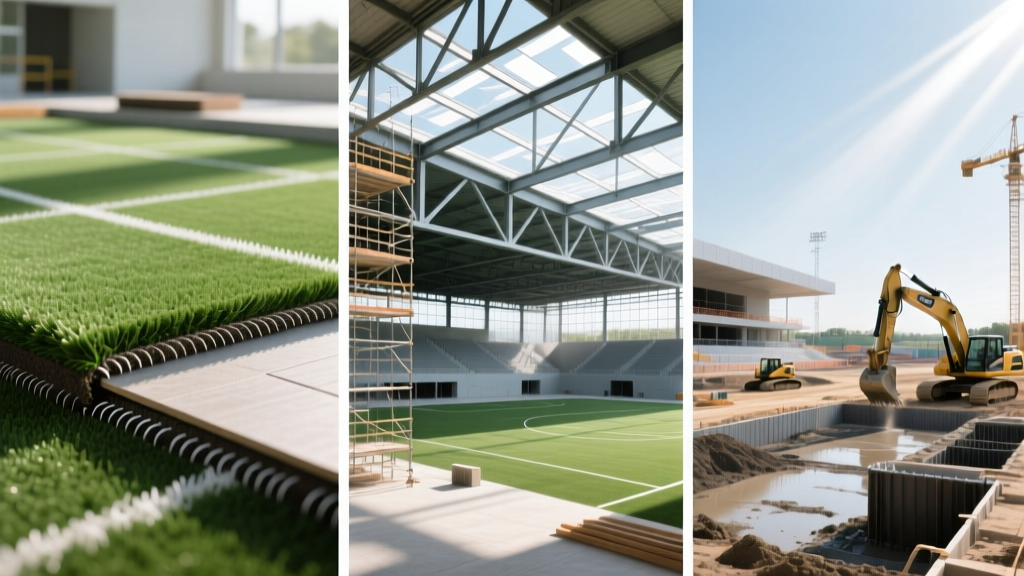
The Anatomy of Sports Complex Pricing
Estimating the cost to build a sports complex requires moving beyond simple square-footage multipliers. Unlike standard commercial real estate, athletic facilities demand highly specialized surfacing, extreme structural clearances, and heavy-duty utility infrastructure. In 2026, supply chain stabilization has normalized material costs, but the shift toward sustainable building practices and advanced athlete-safety technologies has introduced new premium line items.
Whether you are developing a regional tournament hub or a municipal recreation center, the budget is generally split into three distinct phases: site development (20-30%), vertical construction and enclosure (40-50%), and specialized athletic surfacing and equipment (20-30%). Understanding the cost variance between facility types is critical for securing accurate financing and projecting return on investment.
2026 Baseline Financial Metrics
- Average Land Requirement: 15 to 40 acres for outdoor multi-field complexes.
- Typical ROI Timeline: 7 to 12 years for tournament-driven regional hubs.
- Peak Revenue Generator: Weekend field/court rentals averaging $150 to $350 per hour.
- Annual Maintenance Reserve: Budget 2% to 4% of total construction costs annually.
Facility Type Cost Comparison Matrix
The total project cost fluctuates wildly based on the primary use case. Below is a comparative matrix of the four most common sports complex archetypes being developed in 2026. These figures encompass site work, construction, and basic athletic equipment, excluding land acquisition.
| Facility Archetype | Typical Size / Scope | Estimated Total Cost | Cost per Sq. Ft. / Unit |
|---|---|---|---|
| Outdoor Multi-Field (4 Turf Fields) | ~320,000 sq ft of play area | $4.8M - $8.5M | $15 - $26 per sq ft |
| Indoor Multi-Court Arena (Steel Frame) | 40,000 - 60,000 sq ft | $7.5M - $14.2M | $185 - $235 per sq ft |
| Air-Supported Dome (Seasonal/Year-Round) | 60,000 - 90,000 sq ft | $1.8M - $3.5M | $22 - $38 per sq ft |
| Aquatic & Wellness Center | 25,000 sq ft (50m pool + leisure) | $14.0M - $28.0M | $560 - $1,100+ per sq ft |
Deep Dive: Indoor Enclosure Systems
For indoor sports complexes, the building envelope represents the largest single capital expenditure. Developers must choose between permanent pre-engineered structures and temporary or semi-permanent tensioned systems. The decision hinges on local climate, zoning laws, and the required lifespan of the asset.
Pre-Engineered Steel Buildings (PEB)
PEBs are the gold standard for permanent indoor sports arenas. Utilizing rigid steel frames with 25-gauge standing seam metal roofs and insulated metal panels (IMPs), these structures offer clear-span interiors up to 300 feet wide without intermediate support columns.
- Cost Range: $150 to $250 per square foot for the shell and basic MEP (Mechanical, Electrical, Plumbing).
- Key Advantage: 40+ year lifespan, high wind/snow load ratings, and easy integration of heavy HVAC systems and overhead rigging for scoreboards.
- 2026 Trend: Integration of building-integrated photovoltaics (BIPV) on south-facing roof slopes to offset the massive electrical load of indoor sports lighting.
Air-Supported Structures (Domes)
Air-supported domes utilize a continuous internal air pressure system to keep the fabric roof elevated. They are ideal for covering existing outdoor fields during winter months or creating low-cost year-round facilities in mild climates.
- Cost Range: $18 to $35 per square foot.
- Key Advantage: Rapid deployment (6-9 months from grading to inflation) and massive clear-span volumes.
- Hidden Costs: Requires 24/7 HVAC operation to maintain positive pressure and melt snow loads. Backup diesel generators are mandatory by code to prevent catastrophic collapse during power outages.
Hidden Cost Drivers in Site Development
According to facility planning guidelines referenced by the National Recreation and Park Association (NRPA), site work is where sports complex budgets most frequently experience overruns. Moving dirt and managing water are complex engineering challenges.
- Cut and Fill Balancing: Athletic fields require laser-precise grading (typically a 0.5% to 1% slope for surface drainage). If your site lacks suitable fill material, importing engineered select fill can cost $25 to $45 per cubic yard delivered and compacted.
- Soil Stabilization: Sites with expansive clay require chemical stabilization. Lime or fly-ash stabilization typically adds $3.50 to $6.00 per square yard but prevents catastrophic sub-base heaving that can destroy synthetic turf warranties.
- Stormwater Detention: Large impervious surfaces (parking lots, field sub-bases) require massive water management. Underground detention systems using modular plastic crates cost roughly $45 to $70 per cubic foot of storage, whereas surface bioswales are cheaper but consume valuable developable acreage.
- Utility Upgrades: A 4-field complex with stadium lighting and a concession building often requires a dedicated 2000-amp electrical service and a 6-inch municipal water main extension, which can cost $150,000 to $400,000 depending on proximity to existing infrastructure.
Turf and Flooring Material Breakdown
The athletic surface is the product your end-users interact with directly. The American Sports Builders Association (ASBA) maintains strict tolerances for field planarity and shock absorption, meaning you cannot cut corners on the base or the face fiber. Furthermore, recent 2025/2026 environmental regulations regarding microplastics have accelerated the shift away from traditional SBR (crumb rubber) infill.
| Surfacing System | Installed Cost (per sq. ft.) | Lifespan | Best Application |
|---|---|---|---|
| Monofilament PE Turf + TPE Infill | $9.50 - $12.50 | 8 - 10 Years | High-school & collegiate football/soccer |
| Slit-Film Turf + Sand/Rubber Blend | $7.50 - $9.50 | 8 - 10 Years | Multi-use municipal fields (high durability) |
| MFMA Northern Hard Maple (Hardwood) | $14.00 - $19.00 | 40+ Years (with sanding) | Indoor basketball & volleyball arenas |
| Poured Polyurethane (Beynon/Tartan) | $11.00 - $16.00 | 15 - 20 Years | Indoor tracks & multi-purpose field houses |
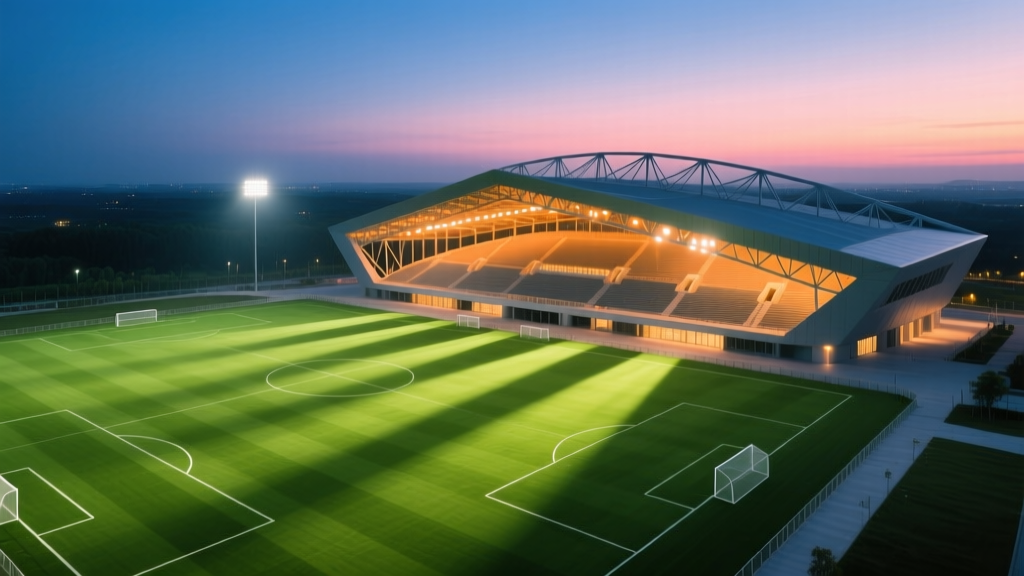
Phased Development Framework
Rarely is a massive sports complex built all at once. Data from the Sports and Fitness Industry Association (SFIA) indicates that phased development mitigates financial risk and allows operators to calibrate future phases based on actual market demand. Here is a standard capital allocation framework for a 3-phase regional hub:
- Phase 1 (Core Infrastructure & Outdoor Fields): 60% of total budget. Focus on mass grading, utility stub-outs for the entire master plan, and the construction of 2 to 4 premium synthetic turf fields with basic LED sports lighting. This generates immediate weekend tournament revenue.
- Phase 2 (Amenities & Concessions): 15% of total budget. Construct the central plaza, permanent restroom/concession buildings, and shaded spectator pavilions. This increases the per-capita spending of visiting families.
- Phase 3 (Indoor Enclosure or Aquatic): 25% of total budget. Once cash flow is established and local hotel tax revenues (if applicable) are proven, finance the indoor fieldhouse or aquatic center to capture the lucrative winter and shoulder-season tournament market.
FAQ: Sports Complex Budgeting
How much does LED stadium lighting cost compared to metal halide?
Upgrading to a modern LED sports lighting system (such as Musco or Ephesus) costs between $120,000 and $200,000 per field for poles, fixtures, and controls. While the upfront cost is 15-20% higher than legacy metal halide, LEDs eliminate the 15-minute warm-up time, reduce energy consumption by 60%, and feature a 10-year warranty with zero lamp replacement costs, resulting in a 3-to-5-year payback period.
Do I need an architect or a design-build firm?
For specialized sports complexes, a design-build firm with a dedicated sports architecture division is highly recommended. Traditional architects often lack the niche expertise required for field drainage profiles, acoustic treatment for indoor arenas, and specialized HVAC destratification systems needed to prevent condensation from dripping onto indoor playing surfaces.
What is the biggest mistake developers make when budgeting?
Underestimating the cost of parking and traffic management. A 4-field complex hosting a weekend soccer tournament can easily draw 3,000 visitors simultaneously. Failing to budget for 800+ parking spaces, dedicated bus drop-off zones, and municipal traffic signal upgrades at the site entrance can lead to severe zoning denials or post-construction operational failures.
Written by
Elena RodriguezElena Rodriguez is a civil engineer and technical writer specializing in concrete technology, masonry systems, and ASTM/ACI compliance. She earned her B.S. in Civil Engineering from Texas A&M University and spent a decade at a materials testing laboratory, performing over 2,000 concrete compressive strength tests and masonry prism evaluations. Elena is an ACI-certified Field Testing Technician (Grade I) and a member of ASTM Committee C12 on Natural Building Stone. She currently consults on forensic engineering cases involving concrete failures and moisture intrusion. Based in San Antonio, TX, Elena is a proud member of the Society of Women Engineers (SWE) and coaches her daughter's FIRST Robotics team.
More from Elena Rodriguez
View all
Walls & Panels
Cost Analysis: Light Gauge Steel Framing Advantages and Disadvantages
Evaluate light gauge steel framing advantages and disadvantages through a strict cost analysis lens, comparing material, labor, and lifecycle expenses.
Aug 4, 2026

Walls & Panels
Gypsum Board Types: Exact Specifications, Thickness & Dimensions
Compare standard, Type X, and moisture-resistant gypsum board types. Get exact specifications, thicknesses, dimensions, and ASTM standards for your project.
Aug 4, 2026

Fire Resistance
Best Fire-Resistant Outdoor Decking Materials: 2026 Buyer Guide
Discover the best fire-resistant outdoor decking materials for 2026. Compare Class A PVC, aluminum, and hardwood options for WUI compliance and safety.
Aug 4, 2026