How Much Does It Cost to Build a Pool? 2026 Budget Guide
Discover how much it costs to build a pool in 2026. Breakdowns for vinyl, fiberglass, and concrete, plus hidden excavation and equipment costs.
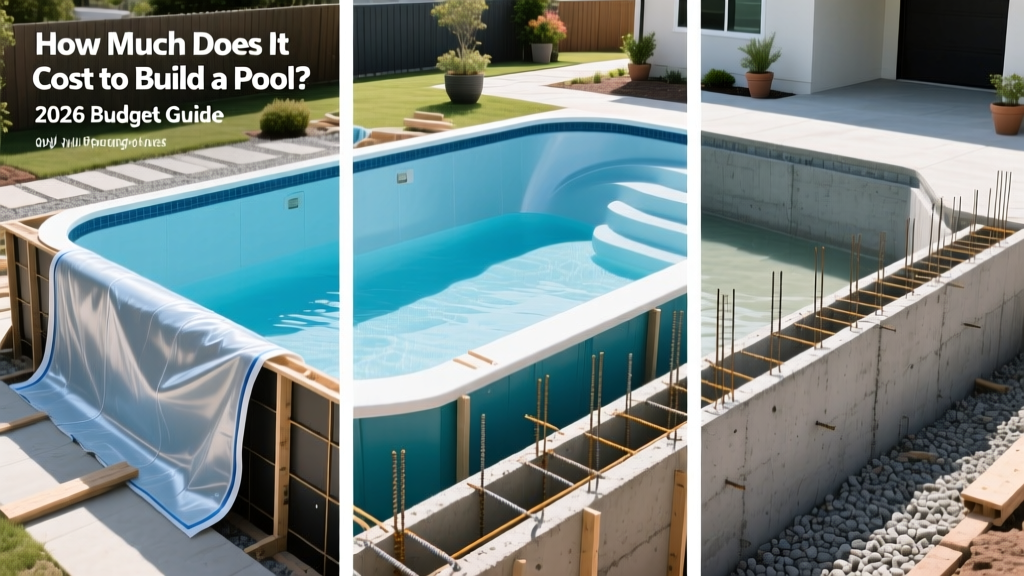
The True Cost to Build a Pool: 2026 Baseline
When calculating how much does it cost to build a pool, homeowners must look beyond the base shell price advertised by contractors. In 2026, the national average for a complete inground pool installation ranges from $65,000 to $110,000, with high-end custom shotcrete projects frequently exceeding $150,000. This variance is driven by site topography, material selection, plumbing specifications, and equipment tiers. Budget planning requires a line-item approach to prevent the 20% to 30% cost overruns that plague under-scoped projects.
- National Average: $82,500
- Entry-Level (Vinyl Liner): $45,000 - $60,000
- Mid-Range (Fiberglass): $65,000 - $85,000
- High-End (Shotcrete/Gunite): $95,000 - $150,000+
Material Breakdown: Shell Construction Costs
The primary cost driver is the structural shell material. Each material dictates not only the initial capital expenditure but also the long-term maintenance trajectory and installation timeline.
| Material Type | Base Cost Range | Installation Timeline | Lifespan & Maintenance |
|---|---|---|---|
| Vinyl Liner | $45,000 - $60,000 | 4 - 6 weeks | Liner replacement required every 7-10 years ($4,500-$6,000). |
| Fiberglass | $65,000 - $85,000 | 3 - 5 weeks | 30+ years. Low chemical demand, but size/shape options are limited. |
| Shotcrete/Gunite | $95,000 - $150,000+ | 8 - 14 weeks | 50+ years. Requires resurfacing every 15-20 years ($10,000-$15,000). |
Excavation and Site Preparation Variables
The dirt dictates the budget. Standard excavation quotes assume 'Type A' or 'Type B' soil (cohesive soils like clay or sand). If your geotechnical report indicates bedrock, caliche, or a high water table, your budget must absorb significant overages.
Soil and Rock Excavation Realities
- Standard Soil Haul-Away: $150 to $220 per dump truck load (approx. 10-12 cubic yards).
- Rock Blasting/Milling: $500 to $1,500 per cubic yard. Hitting solid limestone or granite can add $10,000+ to the project instantly.
- High Water Table Mitigation: Requires a well-point dewatering system during construction, adding $2,000 to $4,000 to site prep costs.
Plumbing, Equipment, and Automation
Do not accept single-speed pumps or standard 1.5-inch Schedule 40 PVC plumbing in a 2026 build. To minimize long-term operational costs and ensure adequate flow for modern sanitation systems, specify 2-inch Schedule 40 or Schedule 80 PVC for all main drain and skimmer lines. This reduces friction loss and allows variable speed pumps to operate at lower, more efficient RPMs.
Essential Equipment Upgrades
- Variable Speed Pump: The Pentair IntelliFlo3 VSF pump costs $2,200 to $2,800 installed. It adjusts flow rates dynamically, saving up to 90% on pumping energy compared to single-speed models.
- Filtration: Upgrade from standard cartridge filters to a Hayward Pro-Grid Diatomaceous Earth (DE) filter ($1,400 - $1,800 installed) for superior water clarity and less frequent backwashing.
- Sanitation: Saltwater chlorine generators (e.g., Hayward AquaRite) cost $1,800 to $2,400 but eliminate the need to purchase and store liquid chlorine, reducing annual chemical spend by roughly 40%.
- Automation: Systems like the Pentair IntelliConnect allow remote monitoring and scheduling via smartphone, costing $1,200 to $1,600 for the hardware and integration.
Interior Finishes and Coping
For concrete pools, the interior finish is a major cost and aesthetic variable. Standard white marcite (plaster) costs $4 to $6 per square foot but requires acid washing upon startup, is prone to calcium scaling, and typically lasts 7 to 10 years.
Upgrading to an exposed aggregate finish like PebbleTec PebbleFina costs $11 to $15 per square foot. This extends the lifespan to 15-20 years, provides superior slip resistance, and masks chemical staining. Coping—the capstone edge of the pool—also varies wildly. Poured-in-place cantilevered concrete coping is economical ($12-$18 per linear foot), while natural bluestone or travertine coping pushes the price to $35-$55 per linear foot.
Decking, Hardscaping, and Safety Barriers
The pool shell is only half the project. Coping and decking complete the functional perimeter. Broom-finished concrete remains the most economical choice at $9 to $14 per square foot. For a premium look and cooler surface temperature, tumbled travertine pavers cost $28 to $38 per square foot installed, offering the added benefit of individual replaceability if ground settling occurs.
Mandatory Safety Fencing
Most municipalities and insurance providers require a 4-foot to 5-foot barrier with self-closing, self-latching gates that open outward. Budgeting for this is non-negotiable.
- Aluminum Ornamental: $35 - $50 per linear foot.
- Wrought Iron: $45 - $65 per linear foot.
- Removable Mesh (for toddlers): $15 - $25 per linear foot.
Permitting, Engineering, and HOA Fees
Administrative costs frequently catch first-time pool owners off guard. Before breaking ground, you must account for the following soft costs:
- Geotechnical/Soils Report: $1,500 - $3,000 (Required in regions with expansive soils or seismic activity).
- Structural Engineering Stamp: $800 - $1,500.
- Municipal Building Permits: $500 - $1,500 depending on local valuation metrics.
- HOA Architectural Review: $250 - $500 processing fee, plus potential landscaping restoration deposits.
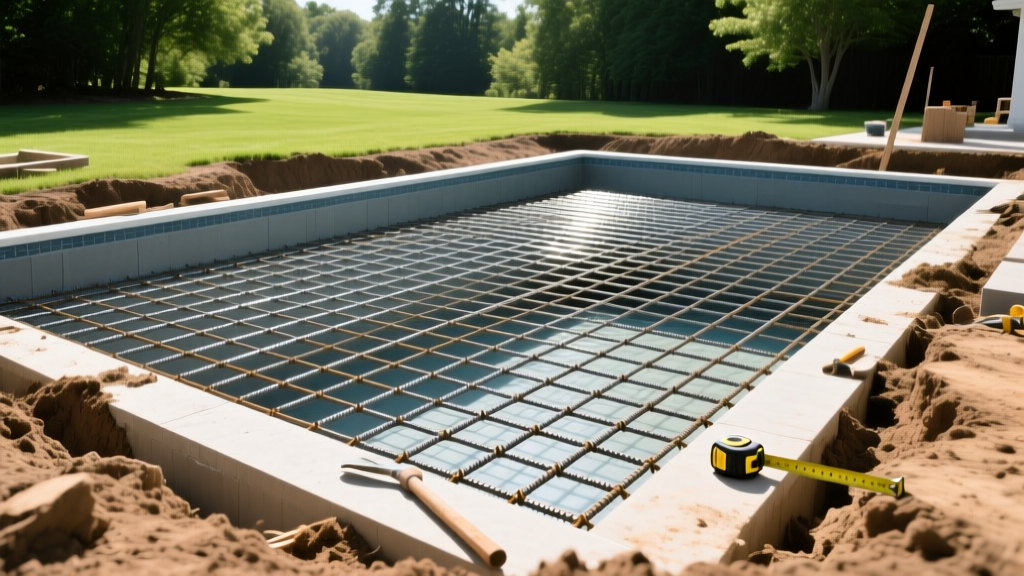
Long-Term Operational Budgeting
Building the pool is the initial hurdle; maintaining it is the ongoing commitment. According to the U.S. Environmental Protection Agency's ENERGY STAR program, upgrading to a certified variable speed pool pump can save homeowners up to $450 annually in utility costs compared to single-speed models.
Furthermore, the Pool & Hot Tub Alliance (PHTA) recommends budgeting $1,200 to $1,800 annually for chemicals, water top-offs, and routine maintenance. If you opt for a professional weekly cleaning service, add $1,500 to $2,400 per year to your operational ledger.
Budget Planning Decision Framework
Use this matrix to align your pool type with your financial and temporal constraints:
- The Strict Budget & Timeline Constraint: If your hard cap is $60,000 and you need the pool operational within 45 days, select a pre-engineered vinyl liner pool with a standard 16x32 rectangular footprint and broom-finished concrete decking.
- The Low-Maintenance & Medium Budget Constraint: If your budget is $80,000 and you want to minimize weekly chemical balancing and brushing, select a fiberglass shell. Ensure your property has at least 10 feet of side-yard access to avoid crane surcharges.
- The Custom Design & Long-Term Asset Constraint: If your budget exceeds $110,000, you have a complex sloped lot, or you require custom features like integrated tanning ledges, beach entries, and negative edges, shotcrete is the only viable structural option. Pair it with a PebbleTec interior and 2-inch plumbing for maximum longevity.
Accurate budget planning requires securing three detailed, line-item bids from licensed contractors. Ensure each bid explicitly lists the plumbing diameter, equipment model numbers, and cubic yardage of dirt haul-away to make an apples-to-apples financial comparison.
Written by
Elena RodriguezElena Rodriguez is a civil engineer and technical writer specializing in concrete technology, masonry systems, and ASTM/ACI compliance. She earned her B.S. in Civil Engineering from Texas A&M University and spent a decade at a materials testing laboratory, performing over 2,000 concrete compressive strength tests and masonry prism evaluations. Elena is an ACI-certified Field Testing Technician (Grade I) and a member of ASTM Committee C12 on Natural Building Stone. She currently consults on forensic engineering cases involving concrete failures and moisture intrusion. Based in San Antonio, TX, Elena is a proud member of the Society of Women Engineers (SWE) and coaches her daughter's FIRST Robotics team.
More from Elena Rodriguez
View all
Walls & Panels
Cost Analysis: Light Gauge Steel Framing Advantages and Disadvantages
Evaluate light gauge steel framing advantages and disadvantages through a strict cost analysis lens, comparing material, labor, and lifecycle expenses.
Aug 4, 2026

Walls & Panels
Gypsum Board Types: Exact Specifications, Thickness & Dimensions
Compare standard, Type X, and moisture-resistant gypsum board types. Get exact specifications, thicknesses, dimensions, and ASTM standards for your project.
Aug 4, 2026

Fire Resistance
Best Fire-Resistant Outdoor Decking Materials: 2026 Buyer Guide
Discover the best fire-resistant outdoor decking materials for 2026. Compare Class A PVC, aluminum, and hardwood options for WUI compliance and safety.
Aug 4, 2026