Car Wash Cost to Build: 2026 Budget Planning Guide
Discover the true car wash cost to build in 2026. Break down budgets for self-serve, in-bay automatic, and express tunnel models with equipment pricing.
The Economics of Car Wash Development
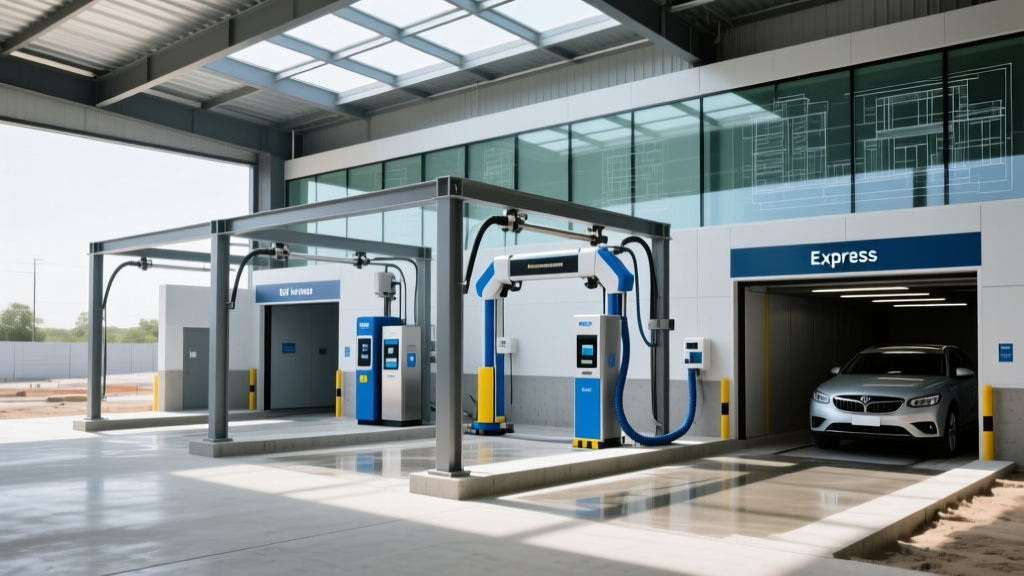
Estimating the car wash cost to build requires moving beyond basic equipment brochures and into the realities of commercial site development. The car wash industry continues to show resilience, with express tunnel models yielding cap rates between 7% and 9% in high-traffic corridors. However, capital expenditure (CapEx) varies wildly based on the chosen wash model, local utility tap fees, and soil conditions. A realistic budget must account for land acquisition, heavy-duty concrete infrastructure, water reclamation systems, and modern point-of-sale (POS) automation.
Car Wash Cost to Build by Model Type
The three primary car wash models dictate your baseline equipment and real estate requirements. Below is a comparative breakdown of the estimated 2026 turnkey costs, excluding land acquisition.
| Wash Model | Typical Footprint | Equipment Cost | Total Build Cost (Excl. Land) | Avg. Cars Per Hour |
|---|---|---|---|---|
| Self-Serve (3 Bays) | 10,000 - 15,000 sq ft | $120,000 - $160,000 | $450,000 - $700,000 | 12 - 18 |
| In-Bay Automatic (2 Bays) | 15,000 - 20,000 sq ft | $300,000 - $450,000 | $850,000 - $1.3M | 20 - 30 |
| Express Tunnel (100ft) | 30,000 - 45,000 sq ft | $1.2M - $2.5M | $3.5M - $6.5M+ | 80 - 120 |
Self-Serve Bays: The Low-Barrier Entry
Self-serve bays rely on wand and foam brush systems. Brands like PDQ and Coleman Hanna dominate this space. Budget approximately $40,000 to $50,000 per bay for the pumping unit, booms, and bay hardware. The primary cost driver here is the building shell and plumbing. Because customers control the time, revenue per bay is capped, making this model highly dependent on low operational overhead and unattended automation via Nayax or DRB payment terminals.
In-Bay Automatic (IBA): The Middle Ground
IBAs are ideal for locations with 15,000 to 25,000 Average Daily Traffic (ADT) counts. You must choose between touchless (high-pressure water and chemicals) and friction (cloth brushes). MacNeil Wash Systems and Ryko are industry standards. A single friction IBA unit costs between $140,000 and $180,000, while touchless systems push $180,000 to $220,000 due to the requirement for high-capacity RO (Reverse Osmosis) water systems and heavier chemical dosing pumps.
Express Exterior Tunnel: High Volume, High Capital
The express tunnel is the dominant model for new developments. A standard 100-foot to 130-foot tunnel utilizing Sonny's The CarWash Factory equipment requires a massive upfront investment. You are not just buying the wash; you are buying 100HP regenerative blowers, heavy-duty conveyor chains, and sophisticated PLC (Programmable Logic Controller) systems. Expect to allocate $15,000 to $25,000 per linear foot of tunnel for equipment and installation alone.
Novice developers often underestimate site preparation. If your parcel requires rock blasting, soil remediation from previous gas station tenants, or off-road traffic light installations, your site work budget can easily double from $150,000 to over $400,000. Always secure a Phase I Environmental Site Assessment and comprehensive geotechnical report before closing on land.
Critical Infrastructure and Concrete Specifications
A car wash is essentially a water-handling facility disguised as a retail building. The concrete and drainage infrastructure must be over-engineered to withstand constant water exposure and heavy vehicle point-loads.
- Slab Specifications: Do not use standard commercial 3000 PSI concrete. Specify 4000 PSI concrete with fiber-mesh reinforcement and a hard-trowel finish sealed with a penetrating silane/siloxane water repellent. The slab should be a minimum of 6 inches thick, thickened to 12 inches at equipment anchor points.
- Trench Drainage: Avoid HDPE (plastic) trench drains in high-traffic drive lanes; they will crack under the dynamic load of wet SUVs and trucks. Specify stainless steel or heavy-duty cast iron trench drains with traffic-rated grates capable of handling H-20 highway loading.
- Electrical Service: Express tunnels require massive power for blowers and pumps. You will need a 480V, 3-phase electrical service, often requiring a dedicated transformer pad and trenching from the local utility, which can add $40,000 to $80,000 to your budget.
Water Reclamation and EPA Compliance
Modern municipalities strictly enforce wash water runoff regulations. According to the EPA National Pollutant Discharge Elimination System (NPDES), car wash runoff cannot be discharged directly into storm drains; it must be routed to the sanitary sewer or reclaimed.
Budget $40,000 to $85,000 for a commercial water reclamation system. Brands like WaterTec and Aqua Chem provide multi-stage clarifiers, ozone injection systems, and bio-filtration units that allow you to reclaim up to 85% of your wash water. This not only ensures compliance with local environmental mandates but drastically reduces your monthly municipal water and sewer bills, yielding a typical ROI of 18 to 24 months.
Budget Planning Decision Framework
Use this site-specific framework to determine which model fits your capital and real estate constraints:
- Evaluate ADT (Average Daily Traffic): If your site has <15,000 ADT, build Self-Serve or a single IBA. If >30,000 ADT, an Express Tunnel is mandatory to capture market share and prevent stacking.
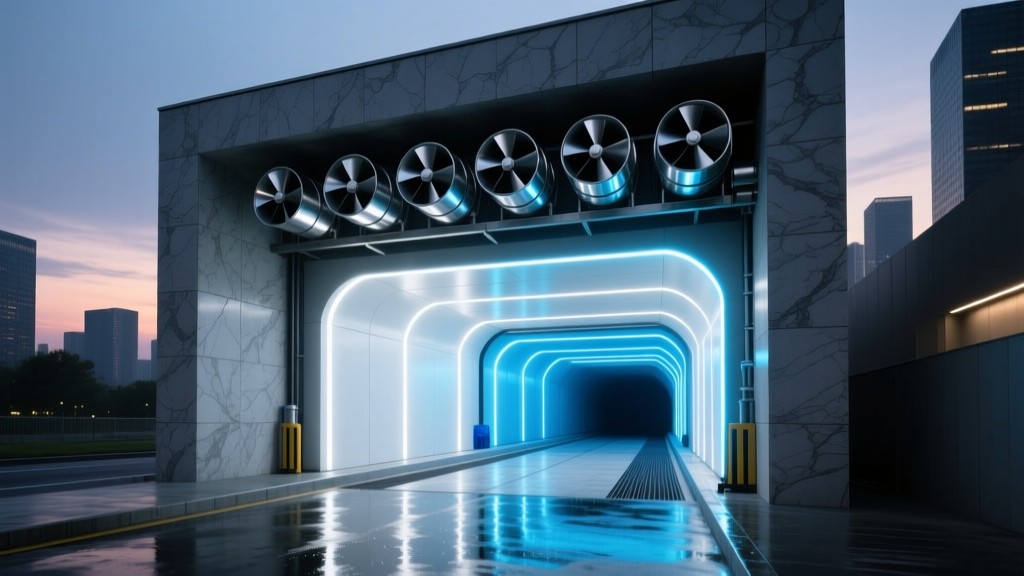
- Measure Frontage and Depth: Express tunnels require a minimum of 250 feet of depth to accommodate the queuing stack (minimum 15-20 cars), the tunnel building, and the exit merge lane without spilling into the public right-of-way.
- Assess Utility Capacity: Confirm with the local water authority that the municipal sewer line can handle the peak discharge rate (often 50-100 gallons per minute during reclamation back-flushing). Upgrading municipal sewer mains is a cost the developer usually bears.
Financing Your Build
Because car washes are considered 'special purpose' commercial real estate, traditional banks often require higher down payments (25% to 35%). However, the SBA 7(a) loan program remains a highly viable route for owner-operators, allowing for lower equity injections (10% to 15%) and longer amortization periods (up to 25 years for real estate). To secure favorable terms, your pro forma must demonstrate a Debt Service Coverage Ratio (DSCR) of at least 1.35x, backed by feasibility studies from the International Carwash Association (ICA) or certified industry appraisers.
Frequently Asked Questions
How long does it take to build a car wash?
From groundbreaking to grand opening, an In-Bay Automatic typically takes 6 to 9 months. A full Express Tunnel, due to complex equipment installation, electrical integration, and extensive paving, generally requires 10 to 14 months of active construction, not including the 6-12 months required for zoning and permitting.
What is the most expensive part of building a car wash?
Excluding land acquisition, the most expensive single line item for an express tunnel is the wash equipment and conveyor system, followed closely by site work (grading, utility tapping, and heavy-duty concrete paving). For self-serve models, the physical building shell and concrete aprons represent the largest percentage of the budget.
Do I need a water reclamation system?
While not universally mandated by every rural municipality, over 85% of urban and suburban jurisdictions now require closed-loop water reclamation or strict oil/grit interceptor systems before granting sewer tap permits. Furthermore, building without one in 2026 is a poor financial decision, as municipal water/sewer rates continue to outpace inflation.
Written by
James ThorntonJames Thornton is a construction industry veteran with 25 years of hands-on experience in wood framing, lumber grading, and residential building codes. He started as a framing carpenter in rural Oregon, earned his ICC Residential Building Inspector certification, and eventually became a senior plan reviewer for the City of Portland Bureau of Development Services. James holds a B.S. in Wood Science & Technology from Oregon State University and is a certified lumber grader through the West Coast Lumber Inspection Bureau (WCLIB). He has inspected over 3,000 residential construction sites and authored the city's internal guide on advanced framing techniques (2x6 at 24" O.C.). James lives in Bend, OR, where he builds custom timber-frame cabins and competes in lumberjack sports.
More from James Thornton
View all
Insulation
Best Home Insulation Materials: Complete 2026 Guide
Compare top home insulation materials for 2026. Find R-values, installed costs per square foot, and best uses for fiberglass, spray foam, and mineral wool.
Aug 4, 2026

Sustainable Building
Certify Your Green Building Material for LEED and WELL
Step-by-step guide to certifying a green building material for LEED v5 and WELL v2. Master EPDs, HPDs, and VOC limits for 2026 project specifications.
Aug 4, 2026

Stone & Masonry
Veneer Stacked Stone Panels: Interior Design & Style Showcase
Discover how veneer stacked stone panels transform interiors. Explore modern design profiles, material pairings, and technical installation specs.
Aug 4, 2026