Cost to Build a New ADU in Los Altos: 2026 Breakdown
Discover the true cost to build a new ADU in Los Altos in 2026. Get detailed breakdowns of local permit fees, site prep, and high-end construction costs.

The Financial Reality of Silicon Valley ADUs
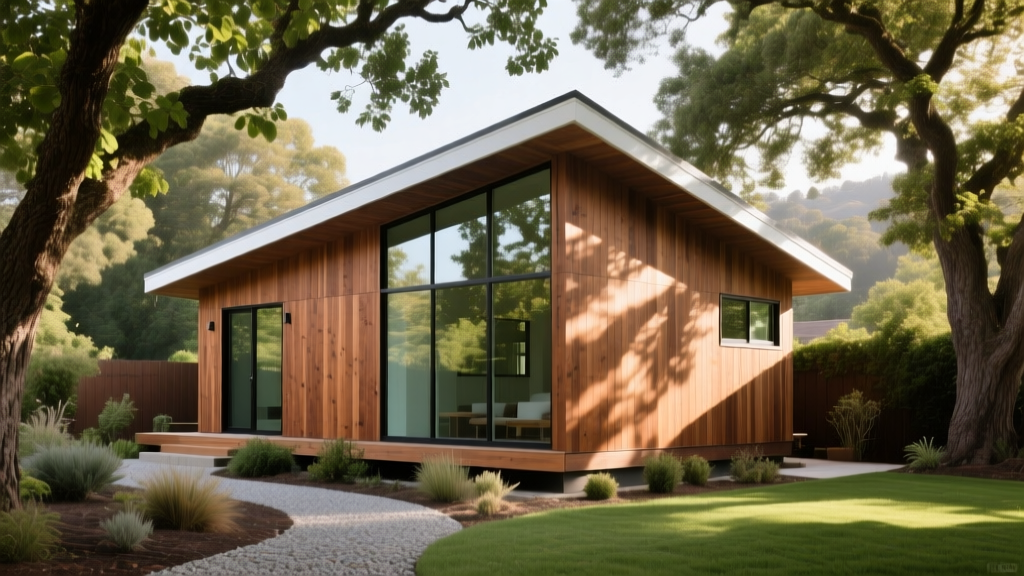
Building an Accessory Dwelling Unit (ADU) in Los Altos is fundamentally different from constructing one in other parts of California. Situated in the heart of Silicon Valley, the 94022 and 94024 zip codes command premium labor rates, stringent local planning overlays, and complex site conditions. While state laws have streamlined the approval process, the actual cost to build a new ADU in Los Altos in 2026 reflects the city's high-end real estate market and unique geological constraints.
Homeowners should anticipate total project costs ranging from $480,000 to $750,000+ for a fully finished, detached 600-square-foot unit. This equates to $800 to $1,250 per square foot. Understanding where these funds are allocated is critical for avoiding budget overruns during the 12-to-18-month construction cycle.
2026 Hard Cost Breakdown: 600 Sq. Ft. Detached ADU
The following table outlines the anticipated hard construction costs for a custom, site-built 600 sq. ft. detached ADU in Los Altos, assuming standard finishes (e.g., luxury vinyl plank flooring, quartz countertops, and standard Bosch appliances). Upgrading to premium architectural finishes will push the upper bounds of these estimates.
| Construction Phase | Cost Range (2026) | % of Total Budget |
|---|---|---|
| Site Prep & Demolition | $25,000 - $40,000 | 6% - 8% |
| Foundation (Slab/Raised) | $35,000 - $55,000 | 8% - 11% |
| Framing & Exterior Shell | $90,000 - $130,000 | 20% - 25% |
| Roofing & Insulation | $25,000 - $35,000 | 5% - 7% |
| MEP (Mechanical, Electrical, Plumbing) | $85,000 - $115,000 | 18% - 22% |
| Interior Finishes & Cabinetry | $110,000 - $160,000 | 25% - 30% |
| Total Hard Costs | $370,000 - $535,000 | 100% |
Soft Costs and the 750 Sq. Ft. School Fee Threshold
Hard costs only tell half the story. Soft costs—which include architectural design, structural engineering, Title 24 compliance, and city permits—typically add 15% to 25% to your total budget. In Los Altos, architectural and engineering fees for a custom ADU generally range from $35,000 to $55,000.
A critical financial trigger in Los Altos is the school impact fee. According to the California Department of Housing and Community Development (HCD), ADUs that are 750 square feet or less are exempt from local impact fees, including school district fees. However, if your design is 751 square feet or larger, you will be assessed fees by the Los Altos School District (LASD) and the Mountain View-Los Altos High School District (MVLA). These fees currently hover around $4.50 to $5.50 per square foot, meaning a 1,000 sq. ft. ADU could incur an unexpected $5,000+ fee upon permit issuance.
State law mandates a maximum 4-foot side and rear setback requirement for ADUs to promote housing. However, Los Altos enforces a strict Heritage Tree Ordinance. If your proposed 4-foot setback zone intersects with the root protection zone of a protected oak or redwood, the city arborist will halt the design. You must budget $3,000 to $5,000 for a certified arborist report and potentially redesign the footprint to avoid root trenching.
Site Constraints: Adobe Soils and Utility Trenching
Los Altos is notorious for its expansive Adobe clay soils, particularly in the flatlands near the valley floor. These soils swell significantly during wet winters and shrink during dry summers, which can crack standard concrete slabs. To mitigate this, structural engineers will likely specify a post-tensioned slab or deepened continuous footings with grade beams, adding $10,000 to $18,000 to your foundation budget compared to standard soils.
Furthermore, utility trenching requires navigating established, heavily landscaped neighborhoods. Trenching 100 feet from the main house to the ADU for sewer, water, and electrical lines often requires hand-digging to avoid existing irrigation and root systems, driving labor costs up to $120 per linear foot.
Utility Connections: Navigating PG&E and Local Sewer
Connecting your ADU to the grid requires coordination with PG&E and local water authorities. According to PG&E's official ADU guidelines, a new ADU is typically treated as an addition to the existing residential service rather than requiring a completely new commercial drop, provided the main panel can handle the load.
- Electrical Panel Upgrade: Most older Los Altos homes have 150-amp panels. Adding an all-electric ADU (heat pump, induction stove, EV charger) usually necessitates upgrading the main house to a 200-amp or 400-amp service. Budget $8,000 to $14,000 for this upgrade.
- Sewer Lateral: The ADU must tie into the main house's private sewer lateral. If the existing lateral is cast iron or clay and over 40 years old, the city may require a camera inspection and potential replacement before granting final sign-off, costing an additional $5,000 to $9,000.
Construction Method Matrix: Custom vs. Prefabricated
Given the high labor rates in Santa Clara County (where prevailing framing wages exceed $90/hour), many homeowners explore prefabricated or modular ADUs. Research from the UC Berkeley Terner Center for Housing Innovation indicates that while prefab can reduce on-site construction time by 40%, the total savings are often offset by crane rentals, heavy transport permits, and local site-work requirements.
| Feature | Custom Site-Built | Prefab / Modular |
|---|---|---|
| Base Cost per Sq. Ft. | $800 - $1,250 | $650 - $900 (Factory only) |
| Total Turnkey Cost (600 sq ft) | $480,000 - $750,000 | $450,000 - $650,000 |
| On-Site Construction Time | 9 - 14 Months | 4 - 6 Months |
| Design Flexibility | Unlimited | Restricted to Manufacturer Catalog |
| Site Access Requirements | Standard driveway access | Requires crane staging & wide road access |
ROI and Rental Market in the 94022/94024 Zip Codes
Los Altos boasts one of the most expensive rental markets in the state. A well-appointed, 1-bedroom ADU in this area can command $3,800 to $4,500 per month in long-term rental income. Alternatively, homeowners frequently utilize these units for multi-generational living, which indirectly saves $6,000+ monthly in local assisted living or independent senior housing costs.
"In Los Altos, an ADU rarely appraises at its exact construction cost on a standalone basis, but it consistently increases the primary property's overall valuation by 15% to 22% due to the scarcity of multi-generational and rental-capable lots in top-tier school districts."
Actionable Next Steps for Los Altos Homeowners
- Order a Topographic and Boundary Survey: Do not rely on county GIS maps. Spend $3,500 for a licensed surveyor to map exact property lines, easements, and existing tree canopies.
- Design to 749 Square Feet: Keep the exterior footprint strictly under 750 sq. ft. to legally bypass local school impact fees and utility capacity charges.
- Consult an Arborist Early: Before hiring an architect, have an arborist map the protected trees on your lot to define the actual 'buildable envelope' based on root protection zones.
- Verify Sewer Depth: Hire a plumber to scope your main sewer lateral to ensure gravity flow is possible; if the ADU site is lower than the main lateral, you will need to budget $6,000 for a sewage ejector pump system.
Written by
Elena RodriguezElena Rodriguez is a civil engineer and technical writer specializing in concrete technology, masonry systems, and ASTM/ACI compliance. She earned her B.S. in Civil Engineering from Texas A&M University and spent a decade at a materials testing laboratory, performing over 2,000 concrete compressive strength tests and masonry prism evaluations. Elena is an ACI-certified Field Testing Technician (Grade I) and a member of ASTM Committee C12 on Natural Building Stone. She currently consults on forensic engineering cases involving concrete failures and moisture intrusion. Based in San Antonio, TX, Elena is a proud member of the Society of Women Engineers (SWE) and coaches her daughter's FIRST Robotics team.
More from Elena Rodriguez
View all
Walls & Panels
Cost Analysis: Light Gauge Steel Framing Advantages and Disadvantages
Evaluate light gauge steel framing advantages and disadvantages through a strict cost analysis lens, comparing material, labor, and lifecycle expenses.
Aug 4, 2026

Walls & Panels
Gypsum Board Types: Exact Specifications, Thickness & Dimensions
Compare standard, Type X, and moisture-resistant gypsum board types. Get exact specifications, thicknesses, dimensions, and ASTM standards for your project.
Aug 4, 2026

Fire Resistance
Best Fire-Resistant Outdoor Decking Materials: 2026 Buyer Guide
Discover the best fire-resistant outdoor decking materials for 2026. Compare Class A PVC, aluminum, and hardwood options for WUI compliance and safety.
Aug 4, 2026