Cost to Build a Picnic Table: Wood vs Composite Materials
Discover the exact cost to build a picnic table. Compare pressure-treated pine, cedar, and composite materials with detailed lumber and hardware pricing.

Material Selection: The Biggest Cost Driver
The cost to build a picnic table ranges from $120 for a basic pressure-treated pine kit to over $850 for a premium composite build. While labor is a factor if you hire a contractor (typically $300 to $600), the material choice accounts for 80% of the total variance in DIY builds. Beyond the initial price tag, material selection dictates the table's structural lifespan, maintenance requirements, and fastener compatibility.
- Pressure-Treated Pine: $120 - $160
- Western Red Cedar: $280 - $380
- Composite (Trex/TimberTech): $650 - $900
Detailed Cost Breakdown by Material Type
1. Pressure-Treated Southern Yellow Pine (The Budget Option)
Pressure-treated (PT) pine remains the most common choice for outdoor furniture due to its low upfront cost and high structural strength. An 8-foot table requires approximately 14 to 16 pieces of 2x6x8 lumber and a few 2x4x8 braces. In the current market, PT 2x6x8 boards average $11 to $14 each.
The Hidden Cost: Modern PT lumber is treated with Micronized Copper Azole (MCA-C) or Alkaline Copper Quaternary (ACQ). According to the American Wood Council, these copper-heavy preservatives are highly corrosive to standard zinc and electroplated fasteners. You must upgrade to hot-dipped galvanized (HDG) or stainless steel hardware, adding $25 to $40 to your hardware budget. Furthermore, PT pine is prone to severe warping and checking as it dries; it requires 3 to 6 months of weathering before a penetrating oil sealant can be applied.
2. Western Red Cedar (The Premium Wood)
Cedar is the gold standard for wooden picnic tables. It contains natural thujaplicins, which act as organic fungicides and insect repellents, providing inherent decay resistance without chemical treatments. The USDA Forest Products Laboratory notes that cedar's low density and low shrinkage factor make it exceptionally dimensionally stable, meaning your table joints will not pull apart as the seasons change.
Pricing: Clear or select-grade 2x6x8 cedar boards cost between $24 and $32 each. While the upfront cost is roughly double that of pine, cedar accepts finishes immediately and can last 15 to 25 years with minimal maintenance. Standard zinc or ceramic-coated screws are safe to use with cedar, keeping hardware costs low.
3. Composite Decking Boards (The Zero-Maintenance Route)
Building a picnic table from capped composite boards (like Trex Transcend or TimberTech AZEK) eliminates sanding, staining, and splinter hazards. However, composite material introduces unique structural engineering challenges.
Composite boards lack the tensile stiffness of natural wood. If you build a standard 8-foot composite tabletop with bracing spaced 24 inches on-center (OC), the boards will sag under the weight of plates and elbows. You must reduce the cross-bracing spacing to 12 inches OC, which requires purchasing 30% more 2x4 substructure lumber and significantly more fasteners.
Pricing: 16-foot composite boards cost $90 to $130 each. You will need roughly 8 to 10 boards for the tabletop and seats, pushing the material cost alone past $700. Additionally, composite requires specialized hidden fastener systems or color-matched composite screws to prevent the "mushrooming" effect around the screw heads.
Hardware and Fastener Costs: The Structural Weak Point
The most common failure point in DIY picnic tables is the lateral shear load on the leg joints. When an adult sits heavily on the edge of a bench, the leverage applies immense shear force to the fasteners holding the A-frame legs together. Standard #9 or #10 decking screws are brittle and will snap under this specific load.
To build a table that lasts, you must use structural fasteners for the primary joints:
- Leg-to-Apron Joints: Use 3/8-inch x 3.5-inch hot-dipped galvanized carriage bolts with washers and nuts. (Cost: ~$1.50 per set).
- Tabletop and Seat Attachment: Use 2.5-inch exterior structural screws. The Simpson Strong-Tie structural screw line features a thicker shank designed specifically to resist shear forces that snap standard decking screws. (Cost: ~$25 for a box of 50).
Comprehensive Bill of Materials (BOM) & Pricing
The following table outlines the exact material requirements for a standard, heavy-duty 8-foot picnic table, comparing the three primary material paths.
| Item / Component | PT Pine Cost | Cedar Cost | Composite Cost |
|---|---|---|---|
| Tabletop (7x 2x6x8) | $84 | $196 | $450 (using 16' boards cut in half) |
| Seats (4x 2x6x8) | $48 | $112 | $260 |
| Aprons & Braces (4x 2x4x8) | $20 | $48 | $60 (PT substructure required) |
| Legs (4x 2x6x8) | $48 | $112 | $120 (PT substructure required) |
| Hardware (Bolts & Structural Screws) | $45 (HDG required) | $25 | $65 (Composite screws + HDG bolts) |
| Total Material Cost | $245 | $493 | $955 |
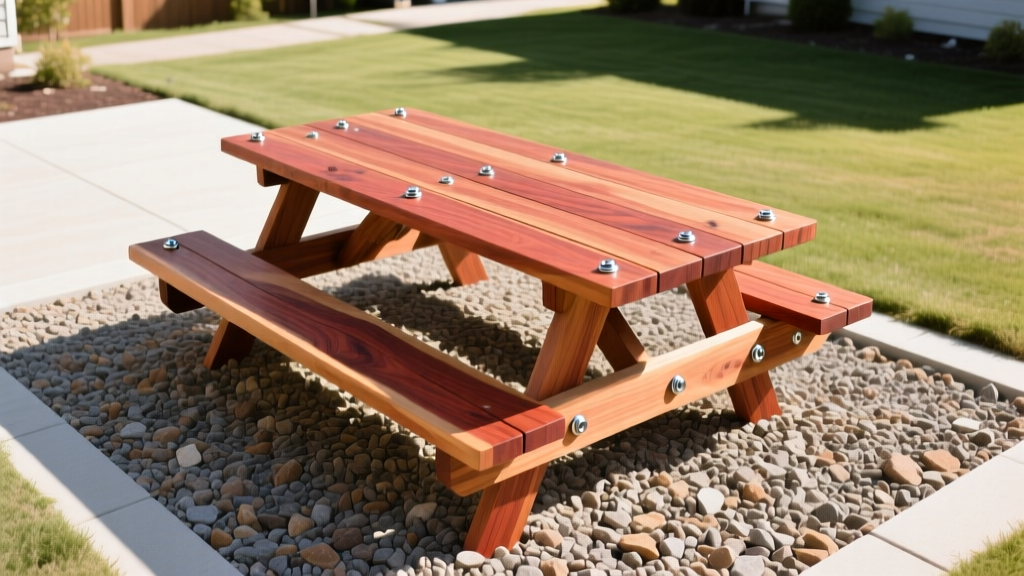
Tool Requirements and Hidden Costs
If you do not already own a woodworking toolkit, factor in the cost of acquiring or renting the necessary tools. A miter saw is essential for cutting the 30-degree angles on the A-frame legs and the 60-degree bevels on the seat edges to prevent water pooling.
- 10-inch Miter Saw: $150 - $250 (or $45/day rental).
- Impact Driver & Drill: Essential for driving 3-inch structural screws and boring 3/8-inch holes for carriage bolts. ($120 - $200 for a reliable 20V combo kit).
- Speed Square & Clamps: 4-inch speed square for marking angles and at least two 24-inch bar clamps to hold the tabletop boards flush during assembly. ($35 total).
- Router (Optional but Recommended): Rounding over the sharp edges of the tabletop and seats with a 1/4-inch round-over bit prevents splinters and makes the table comfortable to lean against. ($60 for a compact trim router).
Finishing: Protecting Your Investment
The biggest mistake DIYers make with wood picnic tables is applying a film-forming finish like polyurethane or exterior varnish. These finishes trap moisture inside the wood and will peel, flake, and blister within two years, requiring a complete chemical stripping to fix.
"Always use a penetrating alkyd-oil or semi-transparent exterior stain on horizontal outdoor wood surfaces. These products soak into the wood fibers and fade gradually over time, allowing you to simply clean and re-coat the table without sanding or stripping."
High-quality penetrating oils (such as TWP or Armstrong Clark) cost between $55 and $75 per gallon. One gallon is sufficient for two coats on an 8-foot picnic table. Plan to reapply a maintenance coat every 18 to 24 months for pine, and every 2 to 3 years for cedar.
FAQ: Common Picnic Table Building Questions
Is it cheaper to buy or build a picnic table?
Building your own is almost always cheaper if you already own the tools. A commercially built, heavy-duty cedar picnic table from a specialty outdoor furniture retailer typically costs between $800 and $1,500. By sourcing the lumber from a local home center and building it yourself, you cut the cost by 50% to 70%. However, if you are buying a cheap, mass-produced pine table from a big-box store (usually $150 to $200), it is cheaper to buy than to build, though the retail version will likely wobble and degrade within three years due to undersized lumber and staple construction.
What is the standard height and width for a picnic table?
The ergonomic standard for outdoor picnic tables is a tabletop height of 29.5 to 30 inches from the ground. The seats should be 17 to 18 inches high. The standard tabletop width is 28 to 30 inches, which allows for place settings on both sides with a 6-inch gap in the middle for serving dishes. The seats are typically 10 to 12 inches wide.
Do I need to anchor my picnic table to the ground?
In most residential settings, the sheer weight of an 8-foot wood picnic table (150 to 200 lbs) is sufficient to keep it grounded. However, if you live in a high-wind area, or if you are building a lightweight composite table, you should anchor it. You can do this by attaching galvanized hurricane ties from the inside leg braces to surface-mounted concrete deck blocks, or by driving 24-inch galvanized earth anchors into the soil and securing them to the table legs with aircraft cable.
Written by
Elena RodriguezElena Rodriguez is a civil engineer and technical writer specializing in concrete technology, masonry systems, and ASTM/ACI compliance. She earned her B.S. in Civil Engineering from Texas A&M University and spent a decade at a materials testing laboratory, performing over 2,000 concrete compressive strength tests and masonry prism evaluations. Elena is an ACI-certified Field Testing Technician (Grade I) and a member of ASTM Committee C12 on Natural Building Stone. She currently consults on forensic engineering cases involving concrete failures and moisture intrusion. Based in San Antonio, TX, Elena is a proud member of the Society of Women Engineers (SWE) and coaches her daughter's FIRST Robotics team.
More from Elena Rodriguez
View all
Walls & Panels
Cost Analysis: Light Gauge Steel Framing Advantages and Disadvantages
Evaluate light gauge steel framing advantages and disadvantages through a strict cost analysis lens, comparing material, labor, and lifecycle expenses.
Aug 4, 2026

Walls & Panels
Gypsum Board Types: Exact Specifications, Thickness & Dimensions
Compare standard, Type X, and moisture-resistant gypsum board types. Get exact specifications, thicknesses, dimensions, and ASTM standards for your project.
Aug 4, 2026

Fire Resistance
Best Fire-Resistant Outdoor Decking Materials: 2026 Buyer Guide
Discover the best fire-resistant outdoor decking materials for 2026. Compare Class A PVC, aluminum, and hardwood options for WUI compliance and safety.
Aug 4, 2026