Average Cost to Build a Swimming Pool: 2026 Pricing Guide
Discover the true average cost to build a swimming pool in 2026. We break down concrete, fiberglass, and vinyl prices, plus hidden excavation fees.

The 2026 Pool Construction Cost Matrix
Calculating the average cost to build a swimming pool requires moving beyond national averages, which often obscure the reality of modern material and labor rates. In 2026, supply chain stabilization has normalized some material costs, but skilled labor shortages and stringent local building codes continue to drive baseline prices upward. The table below outlines the current base construction costs for a standard 14x28 foot (392 sq. ft.) inground pool, excluding premium landscaping and complex hardscaping.
| Pool Type | Average Base Cost (2026) | Cost Per Sq. Ft. | Typical Install Time | Expected Lifespan |
|---|---|---|---|---|
| Shotcrete / Gunite (Concrete) | $75,000 - $125,000+ | $190 - $320 | 3 - 6 Months | 50+ Years (Shell) |
| Fiberglass Shell | $60,000 - $95,000 | $155 - $245 | 3 - 6 Weeks | 30+ Years (Shell) |
| Vinyl Liner | $50,000 - $80,000 | $125 - $205 | 4 - 8 Weeks | 25+ Years (Walls) |
Deep Dive: Inground Pool Material Breakdown
The choice of structural material dictates not only your initial capital outlay but also your long-term maintenance trajectory. Each material requires specific engineering and installation protocols.
Shotcrete and Gunite: The Custom Standard
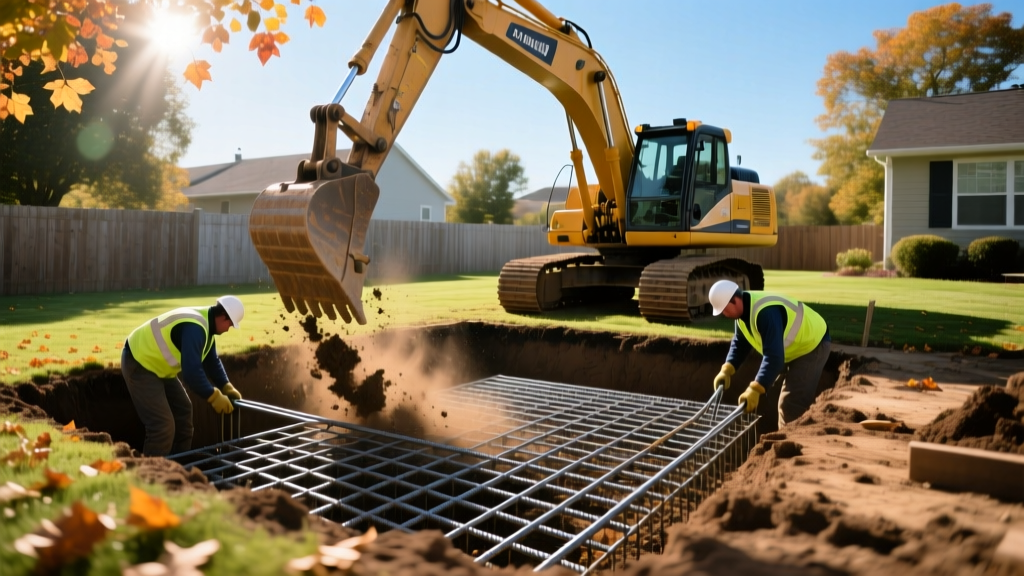
Concrete pools remain the gold standard for custom designs. True cost estimation must account for the structural engineering of the shell. A properly built concrete pool utilizes wet-mix shotcrete applied at a minimum thickness of 6 to 8 inches over a #4 (1/2-inch) steel rebar grid tied at 10-inch centers. The concrete must achieve a compressive strength of at least 4,000 PSI at 28 days. Interior finishes have shifted heavily toward exposed aggregate (like PebbleTec Mini Pebble or quartz blends), which cost $8,000 to $15,000 more than traditional white marcite plaster but last 15 to 20 years before requiring resurfacing, compared to plaster's 7 to 10 years.
Fiberglass Shells: The Speed Option
Fiberglass pools are manufactured off-site using CNC-milled molds and delivered in a single piece. The shell features a gelcoat surface typically 30 to 35 mils thick, providing a non-porous finish that resists algae growth and drastically reduces chemical consumption. The hidden cost here is logistics: crane rigging fees range from $800 to $2,500 depending on the reach required to clear your house. Furthermore, proper installation mandates backfilling with clean, 3/8-inch crushed gravel (chip stone) rather than native dirt, which prevents hydrostatic pressure from bulging the pool walls.
Vinyl Liner: The Budget Inground
Vinyl pools utilize prefabricated wall panels (galvanized steel or structural polymer) supported by concrete collars. The interior is a custom-cut virgin vinyl liner. For 2026 builds, specify a 27-mil to 30-mil thickness with UV inhibitors and antimicrobial backing. The floor must be troweled smooth using a vermiculite-Portland cement mix or specialized pool bottom mix to prevent abrasion. While the upfront cost is lowest, budget for a $4,500 to $7,000 liner replacement every 7 to 12 years.
⚠️ Hidden Site Prep & Excavation Gotchas
Soil testing is a non-negotiable first step. If your geotechnical report reveals bedrock within the top 4 feet of the excavation zone, standard digging equipment will fail. Rock blasting or hydraulic hammering can add $5,000 to $20,000 to your project. Similarly, a high water table requires a permanent gravel sump and hydrostatic relief valves in the pool floor to prevent the empty shell from floating out of the ground during heavy rains—a repair that costs upwards of $30,000 if neglected.
Mechanical Systems: Plumbing, Filtration, and Heating
The equipment pad is the heart of your pool. Undersizing these systems to save $2,000 upfront will result in thousands in excess utility bills and premature equipment failure.
- Plumbing: Mandate Schedule 40 PVC with a minimum 2-inch diameter for all suction lines. This is critical for maintaining proper flow rates and complying with the Virginia Graeme Baker Pool and Spa Safety Act (VGB Act) to prevent drain entrapment.
- Pumps: Variable-speed pumps (e.g., Pentair IntelliFlo3 VSF or Hayward TriStar VS) are now code-mandated in most jurisdictions. They cost $1,800 to $2,500 installed but reduce pumping energy costs by up to 80% compared to single-speed models.
- Filtration: Oversize your cartridge filter by 25% to 50% above the minimum required square footage for your pool volume. A 400-sq-ft cartridge filter on a 20,000-gallon pool requires cleaning only twice a season, whereas a correctly sized 200-sq-ft filter requires monthly teardowns.
Heating Systems Comparison
| Heater Type | Upfront Cost (Installed) | Monthly Operating Cost | Best Application |
|---|---|---|---|
| Electric Heat Pump (140k BTU) | $4,500 - $6,500 | $150 - $300 | Year-round climates, maintaining steady temps |
| Natural Gas Heater (400k BTU) | $3,500 - $5,000 | $400 - $800+ | Weekend heating, rapid temperature recovery |
| Solar Thermal Panels | $6,000 - $10,000 | $10 - $30 (Pump only) | Sunbelt states, high roof-to-pool proximity |
Mandatory Add-Ons & Code Requirements
Local municipalities enforce strict safety codes that directly impact your final invoice. According to the U.S. Consumer Product Safety Commission (CPSC), residential pools must be surrounded by a barrier that completely isolates the water from the house and yard.
Code Checklist for 2026: Fencing must be a minimum of 48 inches high with no horizontal climbable members. Gates must be self-closing and self-latching, with the latch release mechanism located at least 54 inches from the bottom of the gate. Many municipalities now also mandate door alarms on any house door leading directly to the pool area, or ASTM F2286-compliant mesh safety covers.
Furthermore, the Pool & Hot Tub Alliance (PHTA) sets the industry standards for electrical bonding and grounding. All metal components within 5 feet of the pool (including rebar, ladders, and diving stands) must be bonded together with a solid #8 AWG copper wire to prevent stray voltage shocks. Ensure your electrician is specifically licensed for aquatic environments; standard residential electricians frequently fail pool bonding inspections.
Long-Term Operational Costs (The 10-Year View)
The average cost to build a swimming pool is only the entry fee. To accurately budget, you must factor in the 10-year total cost of ownership (TCO). Concrete pools demand the highest chemical and maintenance budget due to the porous nature of the plaster and the alkalinity leaching from the cement. Fiberglass pools offer the lowest TCO due to their inert gelcoat surface.
| Cost Category | Concrete (Annual) | Fiberglass (Annual) | Vinyl Liner (Annual) |
|---|---|---|---|
| Chemicals & Sanitizers | $800 - $1,200 | $350 - $550 | $500 - $800 |
| Electricity (Pump/Lights) | $400 - $700 | $300 - $500 | $350 - $600 |
| Professional Maintenance | $1,500 - $3,000 | $1,200 - $2,400 | $1,200 - $2,400 |
| Water (Refilling/Backwashing) | $150 - $300 | $50 - $100 | $100 - $200 |
Expert Decision Framework: Which Pool Fits Your Budget?
Do not base your decision solely on the initial quote. Use this framework to align your pool choice with your financial and lifestyle parameters:
- Choose Shotcrete if: You require a highly customized shape (freeform, negative edge, integrated spas), have a sloped lot requiring complex retaining wall integration, and plan to stay in the home for 15+ years to amortize the higher maintenance and eventual resurfacing costs.
- Choose Fiberglass if: You want a rapid installation (under 45 days), desire the lowest weekly maintenance footprint, and your backyard has adequate overhead clearance and street access for a 40-foot flatbed truck and a 100-ton crane.
- Choose Vinyl if: You are working with a strict initial budget, live in a region with severe freeze-thaw cycles (the flexible walls handle ground heaving better than rigid concrete), and are comfortable budgeting for a $6,000 liner replacement in year 10.
Finally, always secure three itemized bids that separate excavation, structural shell, plumbing/electrical, and decking. This prevents contractors from hiding substandard equipment or omitting necessary site-drainage solutions in their base pricing. For further guidance on aquatic safety and construction standards, consult the Centers for Disease Control and Prevention (CDC) Pool Safety guidelines before finalizing your contract.
Written by
David NakamuraDavid Nakamura is a licensed architect (AIA) and construction technology writer focused on sustainable building methods, mass timber engineering, and high-performance building envelopes. He holds a Master of Architecture from the University of Washington and is a certified Passive House Consultant (CPHC). David spent eight years at the Seattle firm Mithun, where he led the design of three LEED Platinum projects, before founding his own practice specializing in net-zero residential design. He serves on the editorial advisory board of GreenBuilder Magazine and has authored peer-reviewed papers on cross-laminated timber (CLT) connections for the Journal of Structural Engineering. In his spare time, David teaches woodworking at Pratt Fine Arts Center and kayaks the Puget Sound.
More from David Nakamura
View all
Construction Cost
Labor Cost to Build a Deck Per Sq Ft: 2026 Installation Guide
Discover the exact labor cost to build a deck per sq ft in 2026. This installation guide breaks down contractor rates, complexity factors, and hidden fees.
Aug 4, 2026

Construction Cost
How Much Does It Cost to Build a 3 Bedroom House? Financing Guide
Learn exactly how much it costs to build a 3 bedroom house and explore 2026 financing options, construction loan types, and budget frameworks for your build.
Aug 4, 2026

Construction Cost
Cost to Build a Tennis Court: 2026 Guide
How much does it cost to build a tennis court in 2026? Breakdowns for asphalt, concrete, and synthetic surfaces plus fencing and lighting.
Jul 30, 2026