How Much Do Cruise Ships Cost to Build? 2026 Regional Analysis
Discover how much do cruise ships cost to build across global shipyards. Compare 2026 regional pricing, labor rates, and material costs in Europe vs Asia.
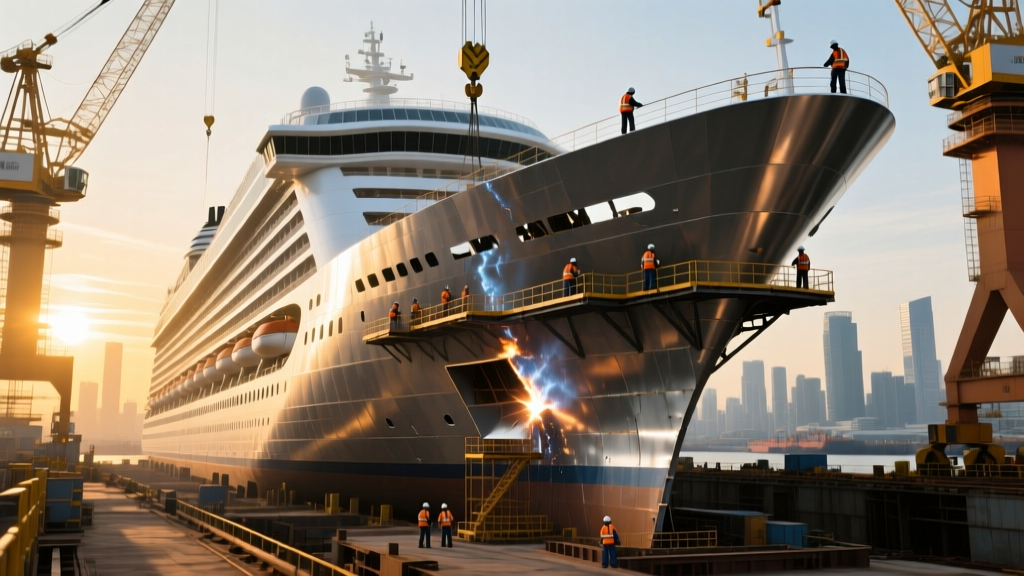
When evaluating capital expenditure in the maritime leisure sector, understanding how much do cruise ships cost to build requires looking far beyond the headline price tag. A modern mega-ship represents one of the most complex construction projects on earth, integrating advanced marine engineering, luxury hospitality fit-outs, and stringent environmental compliance systems. In 2026, the global shipbuilding landscape is defined by a distinct regional divide. European shipyards continue to dominate the high-end, high-complexity segment, while Asian conglomerates are aggressively scaling their capabilities to capture market share through aggressive cost structures. This regional price analysis breaks down the exact capital requirements, labor variables, and supply chain economics dictating cruise ship construction costs today.
The Global Shipyard Oligopoly and Regional Shifts
Historically, the construction of large cruise vessels (exceeding 100,000 Gross Tonnage) has been controlled by a European oligopoly: Fincantieri (Italy), Meyer Werft (Germany/Finland), and Chantiers de l'Atlantique (France). These yards benefit from decades of specialized knowledge in complex outfitting and passenger safety systems. However, the answer to how much do cruise ships cost to build is shifting as Asian heavyweights—specifically China State Shipbuilding Corporation (CSSC) and South Korea's Samsung Heavy Industries—enter the market. According to the UNCTAD Review of Maritime Transport, Asian shipyards now control over 90% of global commercial shipbuilding by tonnage, and their pivot into the passenger vessel sector is fundamentally altering regional pricing baselines.
Regional Cost Matrix: Europe vs. Asia
Shipbuilding costs are typically measured in Cost per Gross Ton (GT) or Cost per Lower Berth. The following matrix illustrates the 2026 regional pricing baselines for large cruise vessels (130,000+ GT).
| Region | Primary Shipyards | Avg Cost per GT (USD) | Avg Cost per Lower Berth | Labor Cost Index | Supply Chain Maturity |
|---|---|---|---|---|---|
| Western Europe | Fincantieri, Chantiers de l'Atlantique | $5,500 - $8,500 | $350,000 - $550,000 | High (€40-€65/hr) | Highly Integrated |
| Northern Europe | Meyer Werft, Meyer Turku | $6,000 - $9,000 | $400,000 - $600,000 | High (€45-€70/hr) | Highly Integrated |
| China | CSSC (Waigaoqiao) | $4,000 - $5,500 | $220,000 - $320,000 | Low ($12-$20/hr) | Rapidly Maturing |
| South Korea | Samsung Heavy, Hanwha Ocean | $4,800 - $6,500 | $280,000 - $380,000 | Medium ($25-$40/hr) | High (Commercial Focus) |
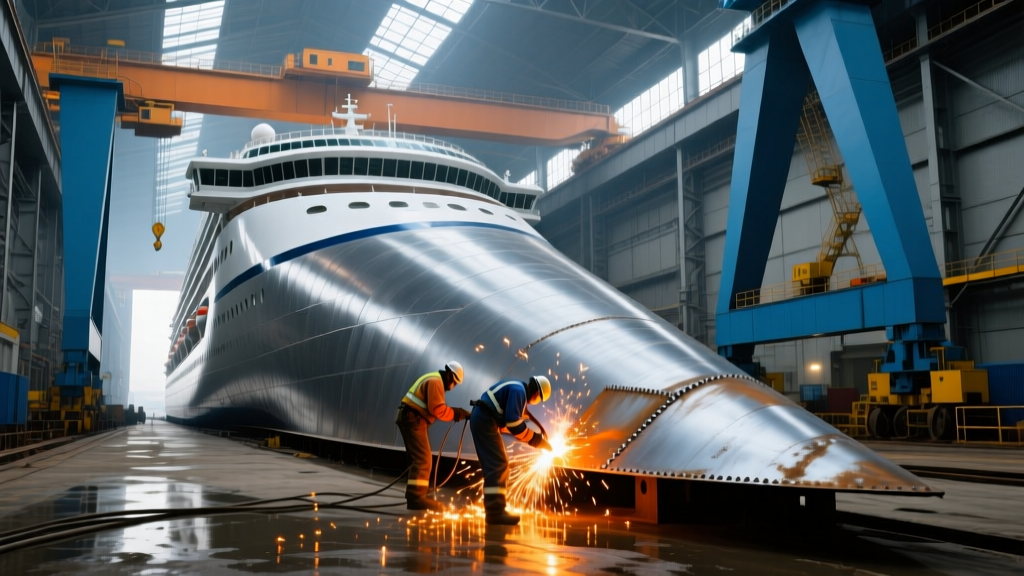
European Yards: The Premium Benchmark
European shipyards command a premium that reflects their unmatched expertise in passenger vessel integration. Building a ship like Royal Caribbean's Icon of the Seas (250,800 GT) at Meyer Turku in Finland required a capital outlay approaching $2 billion. The high costs in this region are driven by three primary factors:
- Strict Regulatory Compliance: European yards must adhere to rigorous EU environmental directives, including the integration of shore-power capabilities, advanced LNG/methanol dual-fuel propulsion systems, and complex HVAC heat-recovery networks.
- Specialized Labor: Marine outfitters, marine architects, and specialized welders in Germany and Finland command top-tier wages. The integration of miles of cabling and thousands of cabin modules requires a highly skilled workforce that cannot be easily scaled or replaced.
- Local Supply Clusters: The proximity to premium European interior fit-out suppliers (e.g., Italian marble fabricators, German marine HVAC manufacturers like Daikin) reduces logistics friction but maintains high material baselines.
Asian Shipyards: The Emerging Cost Disruptors
The narrative of how much do cruise ships cost to build changed permanently with the delivery of CSSC's Adora Magic City (135,500 GT). Priced at approximately $750 million to $800 million, the vessel demonstrated that Chinese shipyards could deliver large cruise ships at a 20% to 30% discount compared to European counterparts. However, this 'China discount' comes with specific caveats that procurement teams must factor into their total cost of ownership (TCO) models.
While raw labor costs in Shanghai are a fraction of those in Papenburg or Saint-Nazaire, the initial R&D and supply chain setup costs for Asian yards are immense. CSSC reportedly invested heavily in acquiring European design licenses and importing specialized interior modules. As Asian yards move past the steep learning curve of their first few hulls, the cost per GT is projected to stabilize around the $4,500 mark by late 2026, driven by the localization of the supply chain and state-subsidized steel procurement.
Material and Supply Chain Variables by Region
The physical materials required to construct a cruise ship represent roughly 25% to 30% of the total build cost, but regional pricing variations for these commodities are significant.
Marine-Grade Steel and Hull Fabrication
Cruise ships utilize specialized high-tensile marine steel (such as AH36 and DH36 grades) to reduce hull weight and improve fuel efficiency. According to World Steel Association pricing data, regional steel markets fluctuate based on local tariffs and production quotas. Chinese shipyards benefit from domestic proximity to the world's largest steel producers, securing AH36 plate at a 10% to 15% discount compared to European yards that must import or rely on consolidated European mills facing high energy costs.
Propulsion and Outfitting Logistics
The true cost differentiator is not the steel hull, but the outfitting. Azipod propulsion units (manufactured by ABB), advanced wastewater treatment systems, and theatrical rigging are predominantly produced in Europe or North America. When an Asian shipyard builds a cruise ship, these high-value components must be shipped globally, adding freight costs, import duties, and inventory holding expenses that partially erode the local labor advantage.
'A cruise ship is essentially a floating luxury hotel grafted onto a highly regulated power plant. The hull is cheap; it is the integration of the hotel systems with the marine engineering that dictates the final price tag.' — Maritime Procurement Analyst, Seatrade Cruise
Hidden Regional Costs in Procurement
When analyzing regional pricing, cruise line executives must look beyond the yard's initial bid. Several hidden variables drastically alter the final capital expenditure.
Currency Fluctuations and Financing
Shipbuilding contracts are typically denominated in US Dollars, but the yards incur costs in their local currencies (EUR, CNY, KRW). European yards often build currency hedging premiums into their contracts to protect against Euro appreciation. Conversely, Chinese yards, operating with a managed currency and state-backed export financing (via entities like Sinosure), can offer highly attractive, fixed-rate financing packages that lower the effective cost of capital for the cruise line.
Sea Trials, Delivery, and Repositioning
A ship built in Saint-Nazaire, France, destined for the Caribbean or Asian markets requires a trans-oceanic repositioning voyage. This involves fuel costs, crew provisioning, and insurance for a multi-week transit before the vessel can begin revenue-generating operations. A ship built in Singapore or Shanghai destined for the Asian market avoids these repositioning costs, providing a hidden regional advantage for operators focused on the APAC market.
Strategic Framework for Cruise Line Procurement
To determine the optimal regional shipyard for a newbuild program, procurement teams should apply the following decision framework:
- Define Vessel Complexity: If the design requires unprecedented engineering (e.g., LNG-powered mega-ships with novel entertainment venues), default to Northern/Western European yards. The risk of costly delays and rework at emerging yards outweighs the initial bid discount.
- Assess Fleet Deployment Strategy: If the vessel will be permanently deployed in Asia, prioritize CSSC or South Korean yards to eliminate repositioning costs and leverage regional supply chain synergies for ongoing maintenance.
- Evaluate Financing Packages: Compare the yard's base price against the state-backed financing terms offered. A slightly higher base price from a European yard might be offset by superior export credit agency (ECA) financing terms compared to an Asian bid.
- Audit the Local Supply Chain: Require the shipyard to provide a detailed vendor list for critical systems (HVAC, life-saving appliances, propulsion). Ensure that the regional yard has secured binding contracts with tier-1 maritime suppliers, rather than relying on unproven local alternatives that may fail classification society inspections.
Ultimately, the cost to build a cruise ship in 2026 is not a single global figure, but a highly variable metric dictated by the intersection of regional labor economics, supply chain maturity, and the technological ambition of the vessel design.
Written by
Sarah WhitfieldSarah Whitfield is a chartered quantity surveyor (MRICS) and construction cost analyst with 15 years of experience in material pricing, procurement strategy, and project budgeting. She earned her degree in Construction Management from the University of Reading (UK) and has worked on projects ranging from $2M custom homes to $180M mixed-use developments across North America and Europe. Sarah currently leads cost estimating for BuildMat Insight, maintaining a proprietary database of 4,000+ material price points updated quarterly. She is a frequent contributor to RSMeans cost data panels and has presented at the International Cost Engineering Council (ICEC) congress. Based in Denver, CO, Sarah is an avid trail runner and volunteer mentor for Women in Construction.
More from Sarah Whitfield
View all
Wood & Lumber
What Are the Different Types of Wood? A Builder's Guide
Compare structural softwoods, finish hardwoods, and engineered lumber. Analyze Janka ratings, MOE values, and 2026 pricing for construction.
Aug 4, 2026

Walls & Panels
Steel Framing vs Wood Framing: Corrosion and Moisture Defense
Compare steel framing vs wood framing for moisture resistance. Learn about galvanized coatings, condensation risks, and corrosion protection strategies.
Jul 21, 2026

Stone & Masonry
How to Cut Stone Veneer: Wet Saw vs Grinder Comparison
Compare the best tools for cutting stone veneer. We review wet saws, angle grinders, and chop saws to help you achieve clean, chip-free cuts.
Jul 21, 2026