How Much Does It Cost to Build a Custom House? Financing Guide
Discover how much it costs to build a custom house and how to finance it. Explore 2026 loan types, draw schedules, and hidden capital requirements.
The True Cost Breakdown: Beyond the Price Per Square Foot
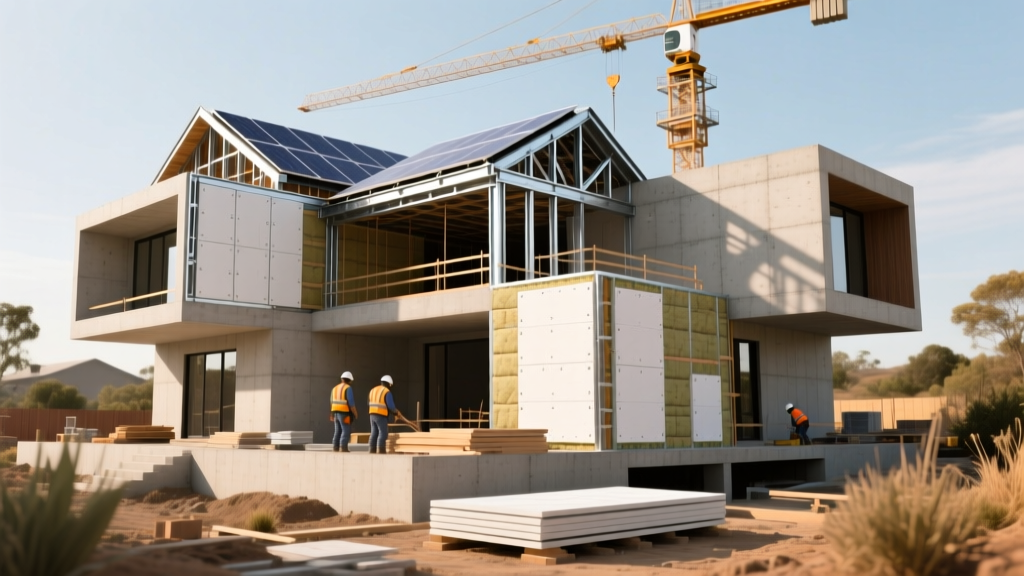
When homeowners ask, 'how much does it cost to build a custom house,' they are usually focused on the builder's hard costs. In 2026, national hard costs for a fully custom, stick-built home range from $175 to $325 per square foot, depending on regional labor rates and material selections. For a 2,500-square-foot home, that translates to $437,500 to $812,500. However, from a financing perspective, the builder's invoice is only one part of the capital stack.
Quick Cost & Financing Snapshot (2026)
- Hard Construction Costs: 75% - 80% of total budget (lumber, concrete, labor, finishes)
- Soft Costs: 10% - 15% (architectural fees, permits, engineering, soil testing)
- Land Acquisition: 10% - 25% (varies wildly by market; often financed separately or rolled into construction loan)
- Financing Reserves: 5% - 10% (contingency funds and interest reserves required by lenders)
Lenders evaluate your total project cost, not just the vertical construction. If you are financing the build, you must account for soft costs and an interest reserve. Construction loans are structured differently than traditional mortgages, requiring a deep understanding of how capital is deployed over a 9- to 14-month build cycle.
Matching Your Budget to the Right Construction Loan
The answer to how much it costs to build a custom house is directly tied to the financing vehicle you choose. Different loan products have varying limits, down payment requirements, and risk tolerances. Below is a comparison of the primary construction loan structures available to custom builders and owner-builders in the current market.
| Loan Type | Best For | Down Payment | 2026 Max Limits (Approx) | Key Advantage |
|---|---|---|---|---|
| Construction-to-Permanent (Single Close) | Most custom homebuyers | 20% - 25% | Conforming: ~$806,500 Jumbo: $2M+ |
Locks in a permanent mortgage rate at closing; only one set of closing costs. |
| Standalone Construction Loan | Complex builds, owner-builders | 25% - 30% | Varies by bank portfolio | More flexible underwriting for unique architectural designs or non-standard materials. |
| FHA One-Time Close (OTC) | Low down payment buyers | 3.5% | Base: ~$524,475 High-Cost: ~$1.2M |
Low down payment; see HUD FHA Mortgage Limits for county specifics. |
| VA Construction Loan | Eligible veterans/military | 0% | Conforming limits apply | Zero down payment; no PMI; highly favorable terms if builder is VA-registered. |
| USDA Construction-to-Perm | Rural land buyers | 0% | Income & loan limits vary | 100% financing for eligible rural tracts; check USDA Single Family Programs. |
The Lender's Draw Schedule: How Funds Are Actually Released
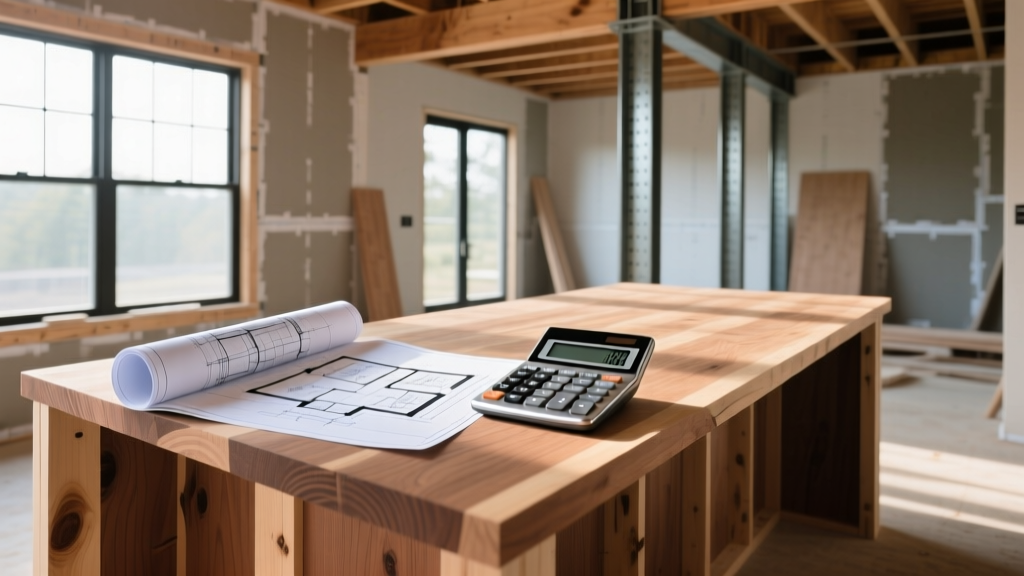
Unlike a standard mortgage where the lender wires the full purchase price to the seller on day one, construction lenders disburse funds in tranches, known as 'draws.' This protects the lender from builder default and ensures the physical progress matches the capital deployed. A standard custom home build utilizes a 5- to 7-draw schedule over 9 to 12 months.
Here is a standard 6-draw disbursement framework utilized by most regional and national construction lenders:
- Draw 1: Foundation & Site Work (15%)
Released after lot clearing, excavation, pouring of footings, and completion of the foundation walls or slab. Inspections must verify structural integrity. - Draw 2: Framing & Roof (20%)
Released when the home is 'dried in.' This includes floor joists, wall framing, roof trusses, sheathing, and the installation of windows and exterior doors. - Draw 3: Mechanical Rough-Ins (20%)
Disbursed after HVAC ductwork, plumbing supply/waste lines, and electrical wiring are roughed in and have passed municipal inspections. - Draw 4: Insulation & Drywall (15%)
Released once insulation is installed, drywall is hung, taped, and mudded, and the interior begins to take shape. - Draw 5: Interior & Exterior Finishes (20%)
Covers cabinetry, flooring, trim, painting, exterior siding, brickwork, and driveway pouring. - Draw 6: Final Completion & Landscaping (10%)
The final tranche is held until the Certificate of Occupancy (CO) is issued, final grading is complete, and all punch-list items are resolved.
Note: Lenders typically require a 10% 'holdback' on each draw, which is released only after the final inspection and lien waivers are collected from all subcontractors.
Hidden Financing Costs That Derail Custom Builds
When calculating how much it costs to build a custom house, borrowers frequently underestimate the 'cost of capital.' Construction loans carry unique financial burdens that do not exist in traditional real estate transactions.
- The Interest Reserve: During the build, you only pay interest on the funds drawn. However, lenders require you to pre-fund an 'interest reserve' at closing to cover these monthly payments. For a $600,000 loan at a 7.5% Federal Reserve benchmark rate, your interest reserve could require $25,000 to $35,000 in upfront cash, baked into the total loan amount.
- The Appraisal Gap Risk: Lenders will fund the lesser of the construction cost or the future appraised value. If your custom home costs $650,000 to build, but the appraiser determines the finished home will only be worth $600,000 in your specific neighborhood, the lender will only base the loan on $600,000. You must cover the $50,000 'appraisal gap' out of pocket. This is the number one reason custom builds stall mid-construction.
- Contingency Reserves: Lenders mandate a 10% to 15% contingency reserve for cost overruns, material price spikes, or weather delays. On a $500,000 build, that is $50,000 to $75,000 that must be accounted for in the loan size or your cash reserves. If unused, it is applied to the principal balance at the end of the construction phase.
- Double Closing Costs: If you opt for a standalone construction loan and later refinance into a permanent mortgage, you will pay closing costs, title insurance, and origination fees twice. Single-close (Construction-to-Perm) loans mitigate this.
Actionable Framework: Calculating Your Maximum Borrowing Power
To accurately determine your budget, work backward from your Debt-to-Income (DTI) ratio and available liquid assets. Use this framework before interviewing architects or builders:
The 28/36 Rule for Custom Builds:
Your future permanent mortgage payment (PITI) should not exceed 28% of your gross monthly income, and your total debt obligations should not exceed 36%. Calculate your maximum permanent loan amount based on current 30-year fixed rates, then subtract your available cash for the down payment and land. The remainder is your hard construction budget.
Step 1: Secure Land Equity. If you own your lot free and clear, its appraised value counts as your down payment. If the lot is worth $150,000 and your total project cost is $600,000, your land equity covers a 25% down payment requirement, minimizing out-of-pocket cash at closing.
Step 2: Calculate Soft Costs First. Allocate 15% of your total budget immediately to architectural plans, structural engineering, soil tests, and municipal impact fees. You cannot get an accurate builder bid without completed plans, and you cannot get a loan commitment without a builder bid.
Step 3: Factor in the Site Prep Variable. Raw land requires site development. Well drilling, septic system installation, bringing in municipal power, and grading can add $30,000 to $80,000 to your foundation draw. Ensure your lender's appraiser includes these site improvements in the future value appraisal.
Understanding how much it costs to build a custom house requires looking past the aesthetic finishes and focusing on the financial mechanics of the build. By aligning your architectural ambitions with the strict disbursement rules of construction lenders and preparing for appraisal gaps, you ensure your project is fully funded from the first excavation to the final certificate of occupancy.
Written by
Priya KapoorPriya Kapoor is a real estate market analyst and construction economics researcher with expertise in housing affordability, development feasibility, and infrastructure investment. She holds a Master of Regional Planning from Cornell University and previously worked as a senior analyst at CBRE's Investment Properties group, where she modeled returns for $4B in mixed-use development pipelines. Priya now runs an independent research practice advising developers, municipalities, and REITs on construction cost forecasting and market timing. She publishes the quarterly "BuildMat Market Pulse" report tracking material price indices across 12 commodity categories. Based in Austin, TX, Priya serves on the board of Habitat for Humanity Austin and is a marathon runner.
More from Priya Kapoor
View all
Construction Cost
Cost to Build a 1600 Sq Ft Home in 2026: Full Breakdown
Accurate 2026 cost to build a 1600 sq ft home—material, labor, and regional pricing breakdowns included. Plan your budget with real-time estimates.
Aug 11, 2026

Wood & Lumber
Name the Types of Wood for Pressure Treatment and Preservation
Learn how to name the types of wood best suited for pressure treatment. Compare species treatability, chemical retention levels, and 2026 preservation costs.
Aug 4, 2026

Stone & Masonry
Stone Veneer Suppliers Lindenhurst: 2026 Cost Analysis
Analyze 2026 stone veneer costs in Lindenhurst, NY. Compare local supplier pricing, delivery fees, and Suffolk County installation labor rates.
Aug 4, 2026