Budgeting the True Cost to Build a Shed: Complete Guide
Discover the true cost to build a shed in 2026. Get exact material prices, foundation costs, and a proven budget allocation framework.
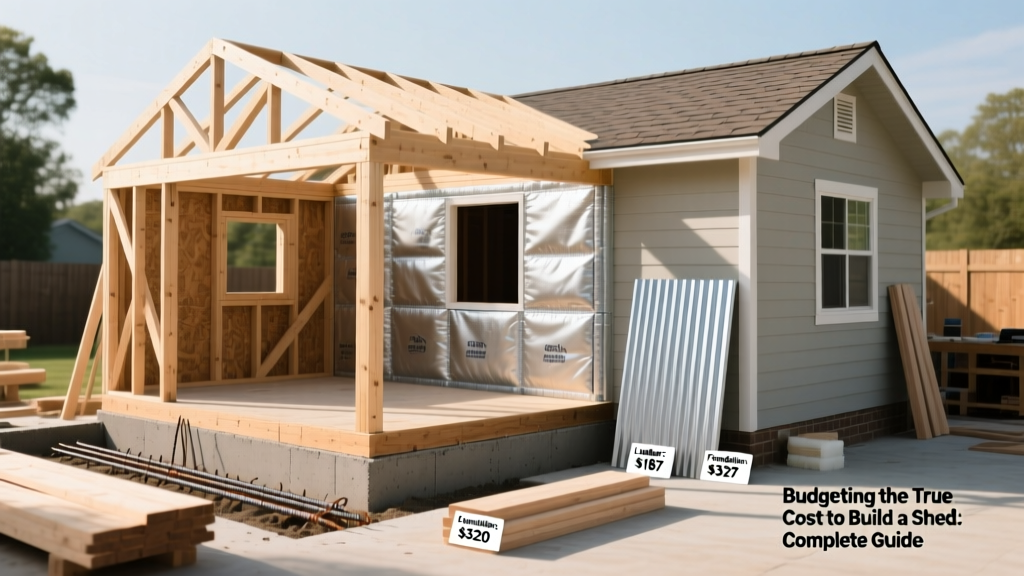
Shed Budgeting: Beyond the Basic Kit Price
When homeowners begin researching the cost to build a shed, they are often met with deceptively low sticker prices from big-box retailers. However, the landed and installed cost of a functional, code-compliant backyard structure involves a complex matrix of site preparation, foundation engineering, material selection, and labor. In 2026, fluctuating lumber indices and specialized fastener requirements mean that a realistic budget must account for the entire build lifecycle, not just the framing package. This guide provides a granular breakdown of shed construction costs, equipping you with the exact pricing data and decision frameworks needed to plan accurately.
Base Cost Matrix: Prefab Kits vs. Custom Stick-Built
The first major budget determinant is the construction methodology. Prefabricated kits offer predictable material costs but limit design flexibility, while custom stick-built sheds provide architectural integration at a premium. The table below outlines current average costs for a standard 120-square-foot (10x12) footprint.
| Shed Type | Material Cost Range | Labor & Site Prep | Total Estimated Cost | Cost Per Sq. Ft. |
|---|---|---|---|---|
| Resin/Plastic Prefab Kit | $1,200 - $2,500 | $300 - $600 | $1,500 - $3,100 | $12 - $25 |
| Steel Prefab Kit | $1,800 - $3,200 | $500 - $900 | $2,300 - $4,100 | $19 - $34 |
| Wood Prefab (T1-11 Siding) | $2,800 - $4,500 | $1,200 - $2,000 | $4,000 - $6,500 | $33 - $54 |
| Custom Stick-Built (LP SmartSide) | $4,500 - $7,000 | $2,500 - $4,500 | $7,000 - $11,500 | $58 - $95 |
| Custom Premium (Cedar Board/Batten) | $8,000 - $12,000 | $4,000 - $7,000 | $12,000 - $19,000 | $100 - $158 |
Material Deep Dive: Where Your Budget Actually Goes
For custom and semi-custom wood sheds, the exterior envelope and roofing systems consume the largest portion of the material budget. Selecting the right materials prevents premature rot and minimizes long-term maintenance costs.
Siding and Sheathing Selection
Traditional T1-11 plywood siding has largely been superseded by engineered wood products due to moisture vulnerability. The current industry standard for cost-effective, durable shed siding is LP SmartSide (specifically the ExpertFinish line). Priced at approximately $2.25 to $3.10 per square foot, LP SmartSide utilizes a zinc borate treatment process that resists fungal decay and termite damage. According to the American Wood Council, ensuring that wood-based siding products maintain proper ground clearance and utilize appropriate preservative treatments is critical for structural longevity. For a premium upgrade, 5/8-inch James Hardie fiber cement lap siding costs $4.50 to $6.00 per square foot and offers complete fire and rot immunity, though it requires specialized carbide-tipped blades for cutting and increases framing load requirements.
Roofing Systems
A shed roof must match or exceed the main home's roofing to maintain property value cohesion. Asphalt architectural shingles, such as GAF Timberline HDZ, remain the most budget-friendly option at $1.40 to $1.90 per square foot (installed). However, for low-pitch shed roofs (under 3:12 pitch), asphalt shingles violate building codes and void manufacturer warranties. In these scenarios, you must budget for a standing seam metal roof (24-gauge Galvalume), which costs $9.00 to $14.00 per square foot but provides superior water shedding and a 40-year lifespan.
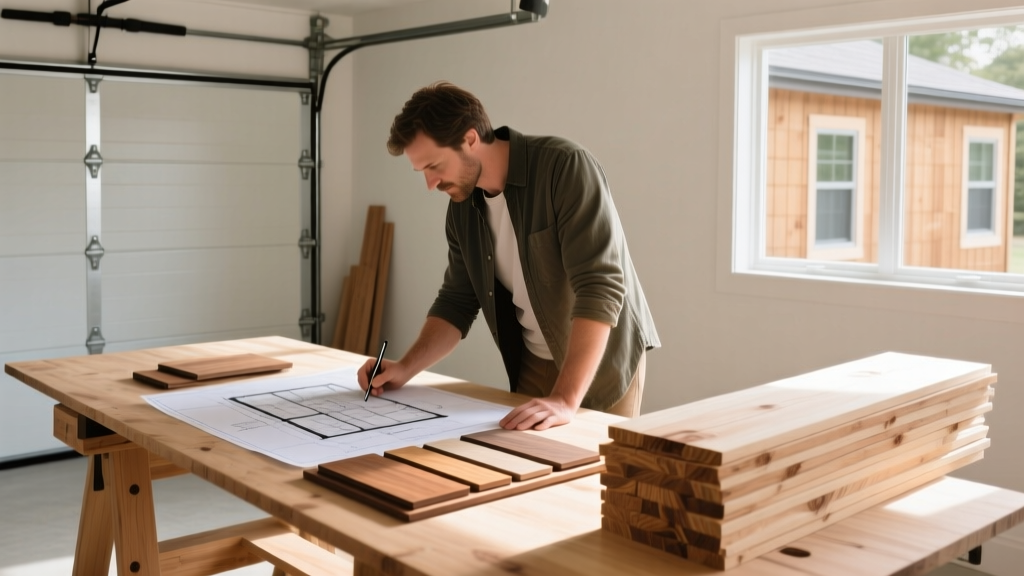
Foundation and Site Prep: The Hidden Budget Killers
The International Residential Code (IRC) generally exempts accessory structures under 200 square feet from requiring a full building permit, provided they do not contain plumbing or HVAC systems. However, local zoning boards still enforce strict setback requirements (often 5 to 10 feet from property lines). Always verify local IRC Chapter 3 building planning codes with your municipality before breaking ground to avoid costly relocation fines.
Site preparation is where shed budgets frequently collapse. A shed placed directly on bare soil will experience floor joist rot within 36 months due to capillary moisture action. You must choose between two primary foundation systems:
- Timber Perimeter and Gravel Pad: Ideal for structures under 160 square feet. This involves excavating 4 inches of topsoil, laying a geotextile fabric, and filling with #57 crushed stone. The perimeter is framed using pressure-treated 4x6 timbers secured with 24-inch steel rebar pins. Cost: $3.50 to $5.50 per square foot.
- Monolithic Concrete Slab: Required for heavy workshops or structures housing vehicles. A standard 4-inch thick slab using 3000 PSI concrete with a 6x6 W1.4xW1.4 welded wire mesh reinforcement costs $8.00 to $12.00 per square foot. Proper site grading is essential here; the EPA mandates strict stormwater runoff management during construction to prevent sediment displacement, which may require temporary silt fencing ($1.50 per linear foot) on larger lots.
The 50/30/20 Shed Budget Allocation Framework
To prevent mid-project funding shortfalls, professional estimators recommend applying the 50/30/20 rule to your total projected spend. This framework ensures that critical structural elements are fully funded while maintaining a buffer for unforeseen site conditions.
- 50% - Core Materials & Envelope: Lumber framing package, sheathing, siding, roofing, doors, and windows. Do not compromise on the structural envelope; upgrading from 2x4 to 2x6 wall framing for insulated workshops should come from this bucket.
- 30% - Site Prep, Foundation & Labor: Excavation, gravel or concrete, permit fees, and contractor labor. If you are DIYing the build, reallocate this 30% toward specialized tool rentals (e.g., a Skid-Steer for grading or a powder-actuated tool for concrete sill plates).
- 20% - Hardware, Finishing & Contingency: This covers the often-forgotten 'small' items that add up rapidly: Simpson Strong-Tie ZMAX galvanized hurricane ties, stainless steel exterior screws, interior electrical rough-ins, and a 10% contingency buffer for material waste and price fluctuations.
Real-World Cost Scenarios (2026 Pricing)
Scenario A: 10x12 Stick-Built Insulated Workshop
A homeowner requires a 120 sq. ft. workshop with 2x6 framed walls (R-19 insulation), an 8-foot garage-style roll-up door, and a concrete slab foundation. The build utilizes LP SmartSide siding and architectural shingles.
- Concrete Slab (120 sq ft @ $10/sq ft): $1,200
- Framing & Sheathing (2x6 SPF Lumber): $1,950
- Siding, Trim & Roofing: $1,400
- Garage Door & Hardware: $850
- Insulation & Interior (OSB walls): $600
- Contractor Labor (40 hours @ $65/hr): $2,600
- Total Project Cost: $8,600 ($71.66 per sq. ft.)
Scenario B: 8x10 Prefab Resin Garden Shed
A homeowner needs a simple 80 sq. ft. storage solution for landscaping tools. They opt for a high-density polyethylene (HDPE) resin kit from a major manufacturer, installed on a DIY gravel pad.
- Resin Shed Kit (includes integrated floor): $1,450
- Gravel Pad Materials (Fabric, #57 stone, 4x6 timbers): $280
- DIY Assembly (Weekend labor, no cost): $0
- Tool Rental (Plate compactor for gravel): $85
- Total Project Cost: $1,815 ($22.68 per sq. ft.)
Accurately forecasting the cost to build a shed requires moving past catalog prices and evaluating the specific load-bearing, moisture, and zoning requirements of your exact property. By utilizing the material matrices and allocation frameworks above, you can secure a structure that meets both your functional needs and your financial parameters without encountering mid-build budget failures.
Written by
Priya KapoorPriya Kapoor is a real estate market analyst and construction economics researcher with expertise in housing affordability, development feasibility, and infrastructure investment. She holds a Master of Regional Planning from Cornell University and previously worked as a senior analyst at CBRE's Investment Properties group, where she modeled returns for $4B in mixed-use development pipelines. Priya now runs an independent research practice advising developers, municipalities, and REITs on construction cost forecasting and market timing. She publishes the quarterly "BuildMat Market Pulse" report tracking material price indices across 12 commodity categories. Based in Austin, TX, Priya serves on the board of Habitat for Humanity Austin and is a marathon runner.
More from Priya Kapoor
View all
Construction Cost
Cost to Build a 1600 Sq Ft Home in 2026: Full Breakdown
Accurate 2026 cost to build a 1600 sq ft home—material, labor, and regional pricing breakdowns included. Plan your budget with real-time estimates.
Aug 11, 2026

Wood & Lumber
Name the Types of Wood for Pressure Treatment and Preservation
Learn how to name the types of wood best suited for pressure treatment. Compare species treatability, chemical retention levels, and 2026 preservation costs.
Aug 4, 2026

Stone & Masonry
Stone Veneer Suppliers Lindenhurst: 2026 Cost Analysis
Analyze 2026 stone veneer costs in Lindenhurst, NY. Compare local supplier pricing, delivery fees, and Suffolk County installation labor rates.
Aug 4, 2026