How Much Does a Dam Cost to Build? Size & Scope Breakdown
Discover how much a dam costs to build based on size, scope, and materials. Use our breakdown to estimate earthfill, concrete, and pond dam expenses.
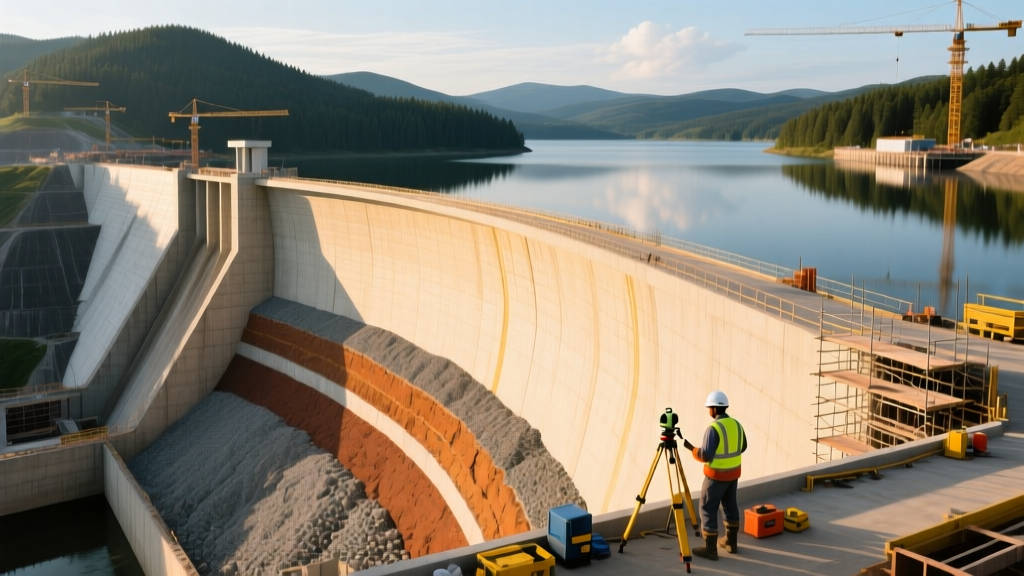
The Size & Scope Cost Matrix
Estimating the cost of a dam requires moving beyond simple square-footage metrics used in standard building construction. A dam is a highly engineered hydraulic structure where costs scale exponentially based on water volume, hazard classification, and geological conditions. Generally, you can expect to pay anywhere from $15,000 for a basic 1-acre farm pond dam to well over $50,000,000 for a multi-purpose municipal reservoir or hydroelectric facility.
To accurately calculate your budget, you must first define the physical scope and the regulatory hazard class. The following matrix provides baseline cost ranges based on the impoundment size and structural volume.
| Dam Classification | Typical Impoundment Size | Embankment Volume (Cubic Yards) | Estimated Cost Range | Primary Use Case |
|---|---|---|---|---|
| Small Farm / Pond Dam | 1 to 5 Acres | 2,000 - 10,000 CY | $15,000 - $75,000 | Livestock watering, irrigation, recreation |
| Medium Retention / Stormwater | 10 to 50 Acres | 15,000 - 60,000 CY | $250,000 - $1,200,000 | Municipal stormwater, golf courses, private lakes |
| Large Municipal / Hydroelectric | 100+ Acres | 150,000+ CY | $5,000,000 - $100M+ | Public water supply, flood control, power generation |
Material Selection: Earthfill vs. Concrete vs. Rockfill
The choice of construction material dictates both the unit cost per cubic yard and the required foundation preparation. According to the USDA Natural Resources Conservation Service (NRCS), material availability within a 5-mile haul distance is the single largest variable in earthfill dam economics.
1. Zoned Earthfill Dams
Earthfill dams are the most common and cost-effective option for small to medium projects. They utilize a zoned approach: an impermeable central clay core surrounded by a more permeable structural shell.
- Unit Cost: $15 to $35 per compacted cubic yard (CY).
- Engineering Requirement: The clay core must have a plasticity index (PI) between 15 and 30 and a hydraulic conductivity of less than 1x10^-5 cm/sec. If suitable clay is not available on-site, importing it will increase material costs by 40% to 60%.
2. Roller-Compacted Concrete (RCC)
For medium to large dams where suitable clay is absent or the valley profile is narrow and steep, RCC is the modern standard. RCC uses a zero-slump concrete mixture transported by conveyor belts and compacted with vibratory soil rollers.
- Unit Cost: $60 to $120 per CY.
- Scope Advantage: RCC dams have a much smaller footprint than earthfill dams, requiring less land clearing and allowing for overtopping during extreme flood events without immediate failure.
3. Rockfill with Asphalt or Concrete Facing
Utilized primarily in mountainous regions or seismic zones, rockfill dams rely on a massive weight of fractured rock for stability, with an upstream impermeable membrane.
- Unit Cost: $40 to $85 per CY.
- Scope Factor: Requires specialized quarrying and crushing equipment on-site, which inflates mobilization costs for projects under $2 million.
Hidden Scope Variables That Inflate Dam Budgets
Contractor bids for 'moving dirt' represent only 40% to 60% of the total project cost. The remaining budget is consumed by soft costs, geotechnical engineering, and regulatory compliance. FEMA's National Dam Safety Program mandates rigorous documentation for any structure impounding significant water volumes.
- Geotechnical Borings & Foundation Analysis ($5,000 - $25,000): Core drilling to bedrock is mandatory to ensure the foundation can support the dam's weight and prevent under-seepage. If bedrock is fractured, a grout curtain must be injected, adding $20,000 to $100,000+ to the scope.
- Hydrologic & Hydraulic (H&H) Modeling ($10,000 - $45,000): Engineers must model the watershed's runoff to determine the Probable Maximum Flood (PMF) or 100-year storm event, which dictates the required spillway capacity.
- Environmental Permitting ($15,000 - $60,000+): Dams alter navigable waters and wetlands, triggering Section 404 of the Clean Water Act. Mitigating impacted wetlands by purchasing off-site credits can cost upwards of $50,000 per acre depending on the region.
- Site Clearing & Grubbing ($2,000 - $8,000 per acre): All trees, stumps, and topsoil must be stripped from the dam footprint and the reservoir pool area to prevent future settling and internal voids.
Spillway and Outlet Works Sizing
A dam is only as strong as its spillway. The spillway safely routes excess water around or through the embankment during extreme rainfall. Undersizing the spillway is the leading cause of dam failures globally.
Hazard Potential Classifications
The U.S. Army Corps of Engineers (USACE) categorizes dams by hazard potential, which directly dictates spillway sizing and construction costs:
- Low Hazard: Breach causes minimal property damage. Spillway designed for 100-year storm. (Lower cost, simpler pipe or vegetated chute spillways).
- Significant Hazard: Breach causes major economic loss or interrupts critical infrastructure. Spillway designed for 1/2 PMF to full PMF.
- High Hazard: Breach will likely cause loss of human life. Spillway must pass the full Probable Maximum Flood (PMF). Requires massive, reinforced concrete chute or labyrinth spillways, often doubling the total project cost.
Spillway Type Cost Comparison
| Spillway Type | Best Application | Estimated Cost per CFS Capacity |
|---|---|---|
| Corrugated Metal Pipe (CMP) Drop | Small ponds, Low Hazard | $150 - $300 / CFS |
| Vegetated Earth Auxiliary | Medium retention, gentle slopes | $40 - $90 / CFS |
| Reinforced Concrete Chute | High Hazard, large volumes | $400 - $800 / CFS |
| Labyrinth Weir | Space-constrained concrete dams | $800 - $1,500 / CFS |
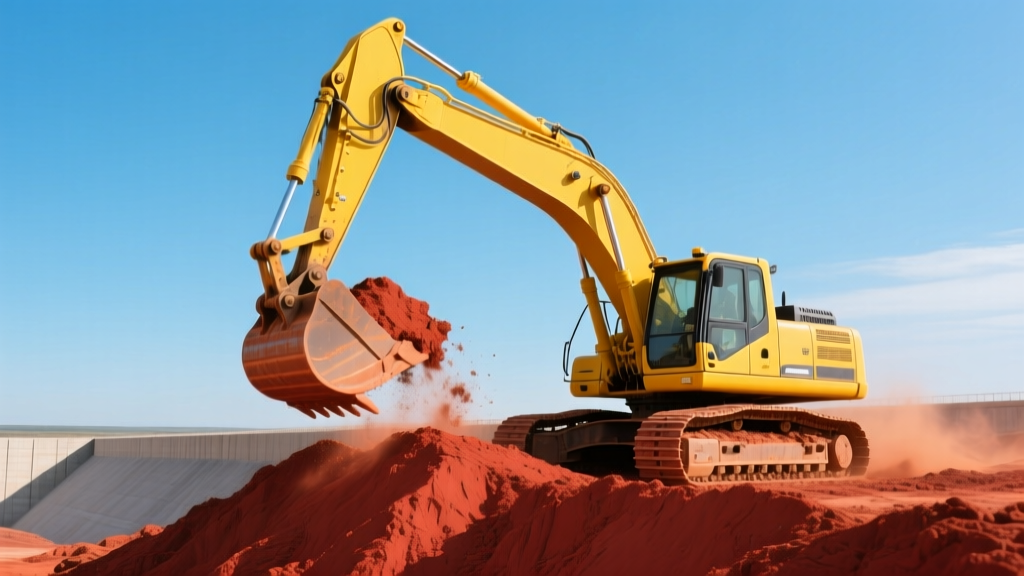
Step-by-Step Dam Cost Calculation Formula
To build a preliminary budget for your specific site, use the following scope-based calculation framework:
(A) Embankment Cost: Total CY of fill × Unit Material Cost (include 15% overage for settlement and shrinkage).
(B) Spillway & Outlet Works: Base concrete/pipe cost + excavation + energy dissipation basin.
(C) Foundation Treatment: Core trench excavation to bedrock + clay backfill + grouting (if required).
(D) Soft Costs: Add 25% to 40% of hard construction costs for engineering design, H&H modeling, geotechnical surveys, and state/federal permitting.
According to the Association of State Dam Safety Officials (ASDSO), the average cost to rehabilitate a high-hazard dam exceeds $1.5 million. Investing heavily in foundation preparation and spillway capacity during the initial build prevents exponential remediation costs decades later.
Long-Term Liability and Maintenance Scope
The financial scope of a dam extends far beyond the day construction ends. Dam owners are strictly liable for any damage or loss of life caused by a failure. When calculating the feasibility of your project, factor in these mandatory recurring costs:
- Annual Inspections: $1,500 to $5,000 per year for a licensed professional engineer to assess embankment settlement, seepage, and concrete deterioration.
- Emergency Action Plan (EAP): Required for Significant and High Hazard dams. Initial creation costs $3,000 to $10,000, with mandatory updates every 3 to 5 years.
- Vegetation & Rodent Control: Tree roots and burrowing animals (like beavers and groundhogs) compromise embankment integrity. Budget $2,000 to $4,000 annually for specialized mowing and pest management.
- Sediment Dredging: Reservoirs naturally fill with silt over 50 to 100 years. Dredging a 10-acre reservoir can cost $200,000 to $500,000, a capital expense that must be planned for in the facility's lifecycle.
By rigorously defining the size, hazard classification, and geological scope of your project upfront, you can accurately forecast the true cost of dam construction and avoid the catastrophic budget overruns that plague poorly planned hydraulic projects.
Written by
Sarah WhitfieldSarah Whitfield is a chartered quantity surveyor (MRICS) and construction cost analyst with 15 years of experience in material pricing, procurement strategy, and project budgeting. She earned her degree in Construction Management from the University of Reading (UK) and has worked on projects ranging from $2M custom homes to $180M mixed-use developments across North America and Europe. Sarah currently leads cost estimating for BuildMat Insight, maintaining a proprietary database of 4,000+ material price points updated quarterly. She is a frequent contributor to RSMeans cost data panels and has presented at the International Cost Engineering Council (ICEC) congress. Based in Denver, CO, Sarah is an avid trail runner and volunteer mentor for Women in Construction.
More from Sarah Whitfield
View all
Wood & Lumber
What Are the Different Types of Wood? A Builder's Guide
Compare structural softwoods, finish hardwoods, and engineered lumber. Analyze Janka ratings, MOE values, and 2026 pricing for construction.
Aug 4, 2026

Walls & Panels
Steel Framing vs Wood Framing: Corrosion and Moisture Defense
Compare steel framing vs wood framing for moisture resistance. Learn about galvanized coatings, condensation risks, and corrosion protection strategies.
Jul 21, 2026

Stone & Masonry
How to Cut Stone Veneer: Wet Saw vs Grinder Comparison
Compare the best tools for cutting stone veneer. We review wet saws, angle grinders, and chop saws to help you achieve clean, chip-free cuts.
Jul 21, 2026