How Much Does It Cost to Build a Driveway? Financing & Budget Guide
Discover how much it costs to build a driveway. Compare material prices, explore HELOCs, personal loans, and financing strategies for your project.
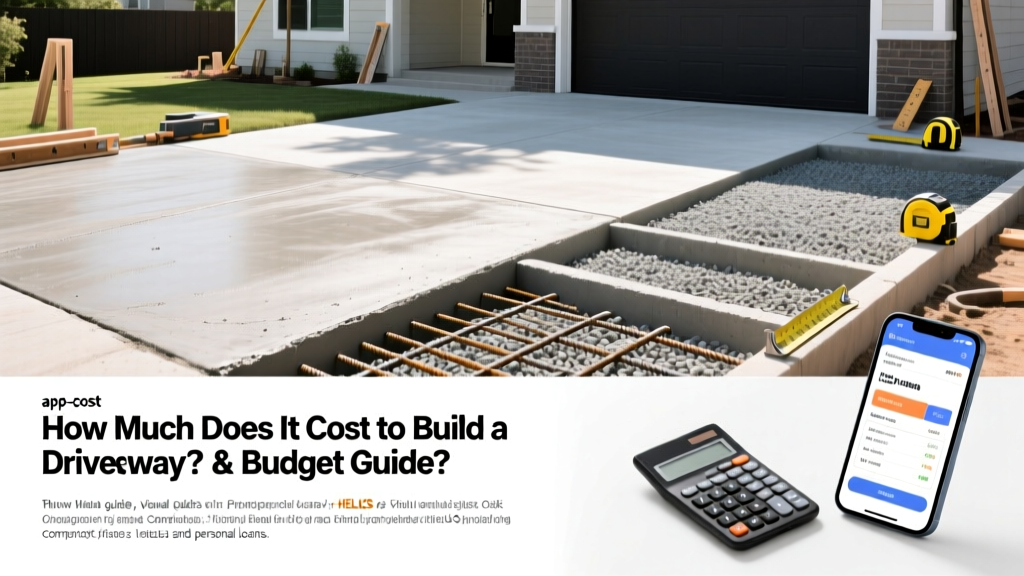
The True Price Tag: Breaking Down Driveway Costs
Determining how much cost to build a driveway requires looking beyond just the price per square foot of asphalt or concrete. The total financial commitment encompasses site preparation, material selection, labor, and long-term maintenance. For a standard 600-square-foot, two-car driveway, national averages place the total project cost between $3,000 and $15,000, depending heavily on the material chosen and the complexity of your terrain.
Before exploring financing options, you must establish a baseline budget. The table below outlines the expected costs for a standard 600-square-foot installation, incorporating both materials and professional labor.
| Material | Cost Per Sq. Ft. | Total Cost (600 Sq. Ft.) | Expected Lifespan | Best Financing Match |
|---|---|---|---|---|
| Gravel | $1.50 - $3.00 | $900 - $1,800 | 5 - 10 years | Cash / Savings |
| Asphalt | $7.00 - $13.00 | $4,200 - $7,800 | 15 - 20 years | Personal Loan |
| Poured Concrete | $8.00 - $18.00 | $4,800 - $10,800 | 25 - 30 years | HELOC / Home Equity |
| Pavers (Brick/Stone) | $15.00 - $30.00 | $9,000 - $18,000 | 25 - 50+ years | HELOC / Cash-Out Refi |
According to data compiled by HomeGuide, regional labor rates and soil conditions can shift these baselines by up to 20%. Urban areas with higher permitting fees and disposal costs will push your budget toward the upper end of these ranges.
The Lifespan-to-Loan-Term Ratio: A Decision Framework
Many homeowners make a critical financial error by financing a short-lived driveway material with a long-term loan. To avoid being underwater on your home improvement debt, apply the Lifespan-to-Loan-Term Ratio. This rule dictates that your loan repayment term should never exceed half the expected functional lifespan of the driveway material.
Matching Your Budget to the Right Financing Route
Once you know your total estimated cost and the lifespan of your chosen material, you must select the appropriate funding mechanism. The current lending environment requires a strategic approach to interest rates and borrowing limits.
1. Cash and Savings (The Zero-Interest Route)
Best for: Gravel, small asphalt repairs, or DIY paver installations under $5,000.
The Strategy: If your project falls under the $5,000 threshold, liquidating savings or using a high-yield savings account is the most mathematically sound choice. Borrowing $4,000 at a 12% APR for five years costs you an additional $1,334 in interest. Paying cash preserves your home equity and keeps your debt-to-income (DTI) ratio intact for future mortgage applications.
2. Home Equity Lines of Credit (HELOCs)
Best for: Poured concrete and premium paver installations ($8,000 - $20,000+).
The Strategy: A HELOC allows you to borrow against the equity you have built in your home. Because the loan is secured by your property, interest rates are significantly lower than unsecured personal loans. According to the Consumer Financial Protection Bureau (CFPB), HELOCs offer flexible draw periods, meaning you only pay interest on the money you actually use during the construction phase. This is ideal for high-end paver projects where material delivery and labor costs are staggered over several weeks.
3. Unsecured Personal Loans
Best for: Standard asphalt driveways ($4,000 - $8,000) when you lack sufficient home equity.
The Strategy: Personal loans provide lump-sum funding with fixed monthly payments and fixed APRs, typically ranging from 8% to 36% depending on your credit score. They do not require a home appraisal or closing costs, meaning you can secure funding and break ground within a week. The Federal Trade Commission (FTC) advises shopping around with at least three lenders, as APR discrepancies for identical credit profiles can vary by up to 5%, saving you hundreds over the life of the loan.
4. Contractor Financing and Retail Credit Cards
Best for: Emergency replacements when traditional financing is unavailable.
The Strategy: Many paving contractors offer in-house financing or partner with third-party lenders to offer '0% interest for 12 months' promotions. Treat these with extreme caution. These are typically deferred-interest plans. If you fail to pay the entire balance before the promotional period ends, you will be hit with retroactive interest—often hovering around 29.99% APR—applied to the original purchase date. Only use this route if you have the cash in hand to pay off the balance in month 11.
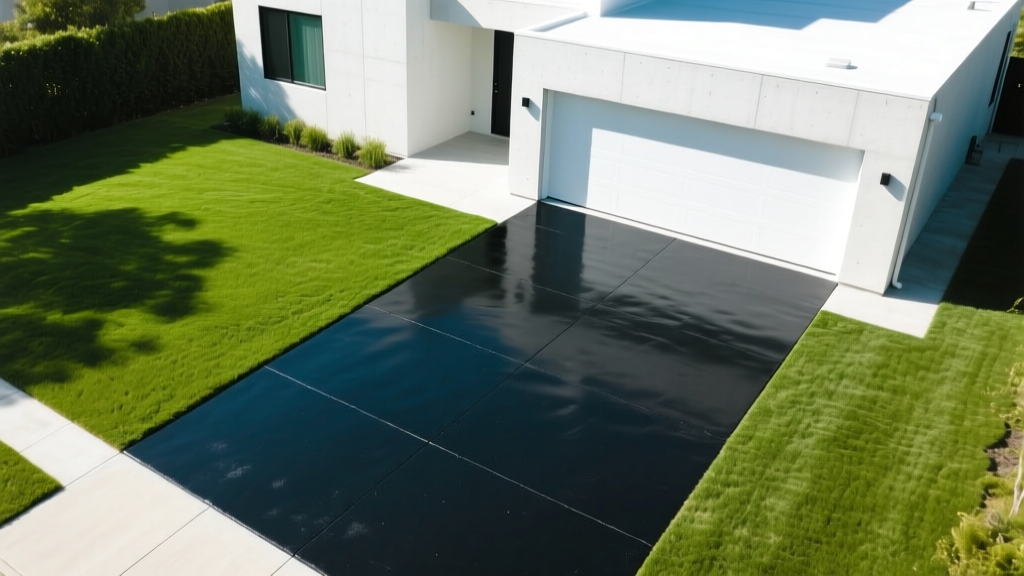
Hidden Costs That Derail Driveway Budgets
When calculating how much cost to build a driveway, contractors often provide estimates based on 'ideal conditions.' To protect your financing and avoid taking on secondary debt mid-project, budget an additional 15% to 25% contingency fund for these common hidden expenses:
- Excavation and Grading ($1 - $3 per sq. ft.): If your lot is sloped or heavily compacted, heavy machinery is required to achieve a proper sub-base. Removing old, multi-layered asphalt can double disposal fees.
- Tree Root and Stump Removal ($200 - $600 per stump): Roots extending under the proposed driveway path must be severed and extracted to prevent future heaving and cracking of concrete or asphalt.
- Drainage Solutions ($500 - $2,000): Installing a French drain, trench drain, or swale at the base of the driveway is mandatory in low-lying areas to prevent water from undermining the sub-base or flooding your garage.
- Municipal Permits and Apron Fees ($50 - $300): Most municipalities require a permit to alter the 'apron'—the section of the driveway that crosses the public right-of-way or sidewalk. Inspections may require specific reinforcement, such as thicker concrete or rebar grids.
Step-by-Step: Securing Your Driveway Financing
Follow this chronological sequence to ensure your funding is secured before the first shovel hits the dirt.
- Obtain Three Itemized Quotes: Do not accept a single lump-sum estimate. Require contractors to break down costs for demolition, grading, base material (e.g., 6 inches of crushed angular gravel), and the final surface layer.
- Calculate the Contingency: Multiply the highest quote by 1.20. This is your true target loan amount.
- Check Your Credit and Equity: Pull your FICO score. If it is above 720, personal loans become highly competitive. If you have over 20% equity in your home, request HELOC quotes from your current mortgage servicer and two local credit unions.
- Pre-Qualify Without Hard Inquiries: Use soft-pull pre-qualification tools from online lenders to gauge your APR and monthly payment without dinging your credit score.
- Lock the Rate and Fund: Once you select a lender, execute the hard pull and lock your interest rate. Ensure the funds are disbursed to your checking account at least 48 hours before the contractor's scheduled start date.
Frequently Asked Financing Questions
Does adding a new driveway increase my home's appraisal value?
A new driveway generally yields a 50% to 60% return on investment at resale. However, if you are replacing a severely degraded, pothole-ridden surface, the functional value and curb appeal can significantly accelerate the sale of your home, indirectly maximizing your financial return.
Can I use an FHA 203(k) loan to build a driveway?
Yes, but with strict limitations. The FHA 203(k) rehabilitation loan allows for driveway replacement if it is deemed a structural necessity or a safety hazard. However, it will not cover purely cosmetic upgrades, such as replacing functional asphalt with decorative cobblestone pavers.
Is it cheaper to pave over an existing driveway?
Overlaying (paving directly over existing concrete or asphalt) can save $1,500 to $3,000 in demolition and disposal costs. However, this is only viable if the existing base is structurally sound and free of deep fissures. If the sub-base is failing, an overlay will crack and mirror the underlying damage within 12 to 18 months, resulting in a total loss of your investment.
Written by
Sarah WhitfieldSarah Whitfield is a chartered quantity surveyor (MRICS) and construction cost analyst with 15 years of experience in material pricing, procurement strategy, and project budgeting. She earned her degree in Construction Management from the University of Reading (UK) and has worked on projects ranging from $2M custom homes to $180M mixed-use developments across North America and Europe. Sarah currently leads cost estimating for BuildMat Insight, maintaining a proprietary database of 4,000+ material price points updated quarterly. She is a frequent contributor to RSMeans cost data panels and has presented at the International Cost Engineering Council (ICEC) congress. Based in Denver, CO, Sarah is an avid trail runner and volunteer mentor for Women in Construction.
More from Sarah Whitfield
View all
Wood & Lumber
What Are the Different Types of Wood? A Builder's Guide
Compare structural softwoods, finish hardwoods, and engineered lumber. Analyze Janka ratings, MOE values, and 2026 pricing for construction.
Aug 4, 2026

Walls & Panels
Steel Framing vs Wood Framing: Corrosion and Moisture Defense
Compare steel framing vs wood framing for moisture resistance. Learn about galvanized coatings, condensation risks, and corrosion protection strategies.
Jul 21, 2026

Stone & Masonry
How to Cut Stone Veneer: Wet Saw vs Grinder Comparison
Compare the best tools for cutting stone veneer. We review wet saws, angle grinders, and chop saws to help you achieve clean, chip-free cuts.
Jul 21, 2026