How to Finance the Average Cost to Build a House in CT
Learn how to finance the cost to build a house in CT. Explore construction loans, land equity, and 2026 interest rate strategies for Connecticut builders.
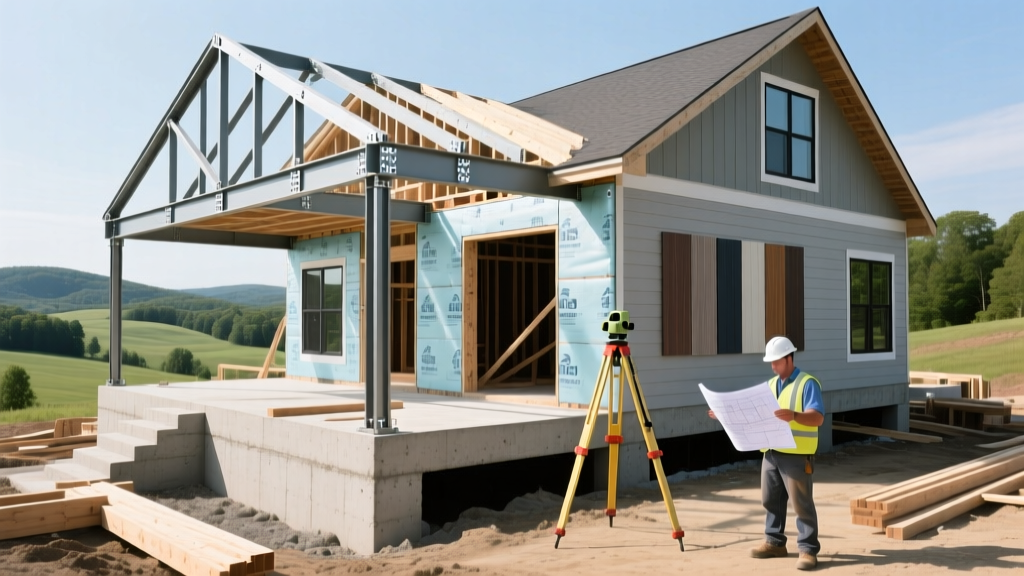
Connecticut Construction Costs: Regional Breakdown
Financing the cost to build a house in CT requires more than a standard mortgage pre-approval. Unlike purchasing an existing home, custom construction involves variable land prep, fluctuating material costs, and specialized lending products. In 2026, the baseline cost to build a custom single-family home in Connecticut ranges from $185 to $310 per square foot for the structure alone, excluding land acquisition and complex site work. A standard 2,500-square-foot build will require a construction loan covering $462,500 to $775,000.
However, Connecticut's diverse geography and municipal zoning laws create massive regional cost disparities. Lenders require precise, localized estimates before approving your draw schedule.
| CT Region | Avg. Cost Per Sq. Ft. | Primary Cost Drivers | Typical Site Prep Additions |
|---|---|---|---|
| Fairfield County | $260 - $400+ | Union labor premiums, strict coastal zoning, high-end finish expectations. | $45,000+ (Rock blasting, FEMA flood elevation) |
| Hartford / Tolland | $190 - $250 | Moderate labor rates, standard suburban lot sizing. | $25,000 (Standard septic/well, minor grading) |
| New Haven County | $210 - $280 | Coastal vs. inland variance, historic district compliance in some towns. | $35,000 (Wetlands mitigation, ledge removal) |
| Litchfield / Rural | $185 - $230 | Lower land costs, but high transportation fees for materials and crews. | $50,000+ (Long driveways, extensive well drilling, Title V septic) |
Choosing the Right Construction Loan Product
Standard 30-year fixed mortgages cannot fund ground-up construction. You must utilize specialized short-term financing that converts to a permanent mortgage or requires a secondary closing. According to the Consumer Financial Protection Bureau (CFPB), construction loans carry higher interest rates and stricter underwriting because the collateral (the house) does not yet exist.
1. Construction-to-Permanent (Single-Close) Loan
This is the most popular option for Connecticut custom builders. You close once, securing both the short-term construction financing and the long-term mortgage. During the 9-to-12-month build phase, you pay interest-only on the funds drawn. Upon completion, the loan automatically converts to a standard 30-year mortgage.
- Pros: Only one set of closing costs; locks in your permanent mortgage rate early, protecting against 2026 rate volatility.
- Cons: Requires a highly detailed, fixed-price contract with a licensed CT builder. Any major design changes mid-build require costly loan modifications.
2. Stand-Alone Construction Loan (Two-Close)
This covers only the construction phase. Once the certificate of occupancy (CO) is issued, you must apply for a completely new end-mortgage to pay off the construction loan.
- Pros: Maximum flexibility to change floor plans or builders mid-project; easier to qualify for if your debt-to-income (DTI) ratio will improve post-build.
- Cons: You pay closing costs twice. You also face the risk that your financial situation or market rates change before you can secure the end-mortgage.
3. FHA One-Time Close (OTC) Construction Loan
Backed by HUD Single Family Housing, this program allows borrowers with lower credit scores (typically 620+) and smaller down payments (as low as 3.5%) to finance land, construction, and the permanent mortgage in one transaction.
- Pros: Lowest barrier to entry regarding down payment and credit requirements.
- Cons: Strict limits on loan amounts (FHA county limits apply, which can be restrictive in high-cost areas like Greenwich or Darien); limited to primary residences only; requires FHA-approved builders.
The Draw Schedule: How Banks Release Funds
Construction lenders do not hand over $600,000 on day one. Funds are disbursed in 'draws' tied to specific completion milestones. A typical Connecticut build utilizes a 5-to-7 draw schedule. The bank sends an independent inspector to verify the work before releasing the next payment to your general contractor.
- Draw 1 (15%): Site clearing, excavation, and foundation footings.
- Draw 2 (20%): Foundation walls poured, waterproofed, and backfilled.
- Draw 3 (25%): Framing complete, roof dried-in, windows installed (The 'shell' stage).
- Draw 4 (20%): Rough plumbing, electrical, HVAC, and insulation passed municipal inspection.
- Draw 5 (15%): Drywall hung, interior trim, cabinets, and flooring installed.
- Draw 6 (5%): Final finishes, landscaping, driveway paved, and Certificate of Occupancy issued.
Hidden CT Site Costs That Derail Financing
The most common reason construction loans fall short is the underestimation of site preparation. In Connecticut, raw land often comes with hidden subterranean and regulatory costs that appraisers and lenders may not fully account for in the initial loan-to-cost (LTC) ratio.
Rock Blasting and Ledge Removal
Connecticut's bedrock is notoriously close to the surface in the western and northwestern hills. If your excavation contractor hits solid granite ledge where your foundation or septic field needs to go, you must hire a specialized blasting crew. Blasting permits, vibration monitoring for neighbors, and rock removal can easily add $25,000 to $60,000 to your site budget.
Septic Engineering and Title V Compliance
In rural towns without municipal sewer systems, you must install a private septic system governed by the Connecticut Public Health Code. If your soil percolation (perc) test fails, you may be forced to install an engineered alternative system (such as a mound system or Enviro-Septic), which costs between $35,000 and $55,000, compared to $15,000 for a conventional gravity-fed system.
Wetlands and Watercourse Buffers
Connecticut's Inland Wetlands and Watercourses Act strictly regulates building near seasonal streams or vernal pools. If your lot contains regulated wetlands, you will need an environmental consultant to map the boundaries, submit a mitigation plan to the local conservation commission, and potentially purchase off-site wetland credits, adding $10,000+ and months of delay to your project.

Action Plan: Securing Your Financing
To successfully finance the cost to build a house in CT, follow this sequential framework before purchasing land or hiring an architect:
- Assemble Your Team First: Lenders will not approve a construction loan without a licensed CT Home Improvement Contractor (HIC) or New Home Builder (NHB) registered with the Department of Consumer Protection. Secure your builder before applying.
- Use Land Equity as Down Payment: If you already own the lot free and clear, most single-close lenders will allow you to use 100% of the land's appraised value as your down payment, eliminating the need for liquid cash at closing.
- Lock Your Rate Early: With construction-to-permanent loans, you can often lock your 30-year fixed rate up to 12 months before the build is finished. Pay the slight premium for an extended rate lock to insulate your permanent mortgage from market spikes.
- Budget for Dual Carrying Costs: During the 9-to-12 month build, you must pay rent or your current mortgage plus the interest-only payments on the construction loan. Ensure your personal cash reserves can handle 12 months of dual housing payments.
Written by
Elena RodriguezElena Rodriguez is a civil engineer and technical writer specializing in concrete technology, masonry systems, and ASTM/ACI compliance. She earned her B.S. in Civil Engineering from Texas A&M University and spent a decade at a materials testing laboratory, performing over 2,000 concrete compressive strength tests and masonry prism evaluations. Elena is an ACI-certified Field Testing Technician (Grade I) and a member of ASTM Committee C12 on Natural Building Stone. She currently consults on forensic engineering cases involving concrete failures and moisture intrusion. Based in San Antonio, TX, Elena is a proud member of the Society of Women Engineers (SWE) and coaches her daughter's FIRST Robotics team.
More from Elena Rodriguez
View all
Walls & Panels
Cost Analysis: Light Gauge Steel Framing Advantages and Disadvantages
Evaluate light gauge steel framing advantages and disadvantages through a strict cost analysis lens, comparing material, labor, and lifecycle expenses.
Aug 4, 2026

Walls & Panels
Gypsum Board Types: Exact Specifications, Thickness & Dimensions
Compare standard, Type X, and moisture-resistant gypsum board types. Get exact specifications, thicknesses, dimensions, and ASTM standards for your project.
Aug 4, 2026

Fire Resistance
Best Fire-Resistant Outdoor Decking Materials: 2026 Buyer Guide
Discover the best fire-resistant outdoor decking materials for 2026. Compare Class A PVC, aluminum, and hardwood options for WUI compliance and safety.
Aug 4, 2026