Building Materials Price News: October 2025 Cost Guide
Analyze October 2025 building materials price news with our complete cost guide. Get exact lumber, steel, and concrete pricing for accurate estimating.
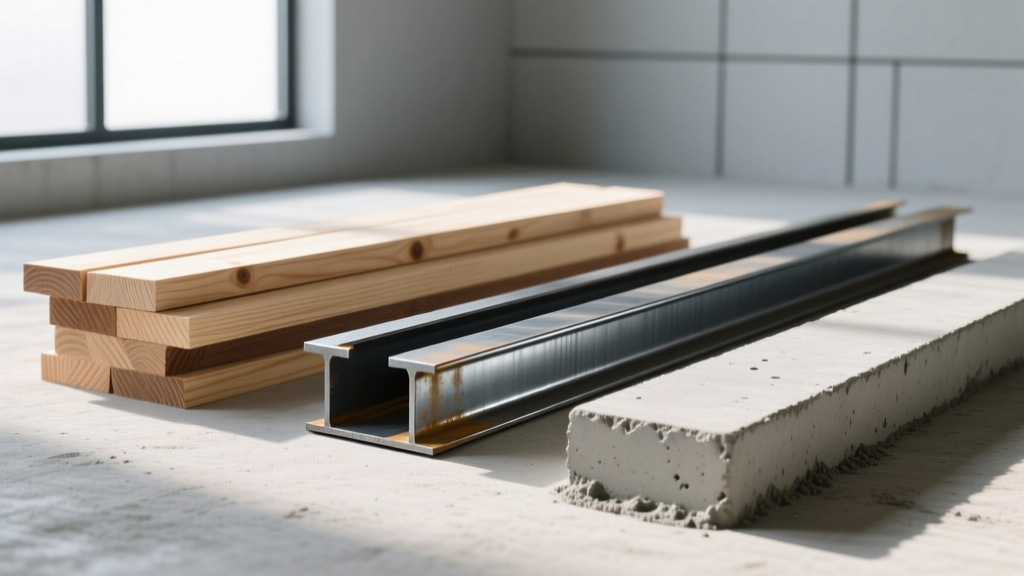
Market Snapshot: Decoding the October 2025 Price Shifts
The building materials price news from October 2025 signaled a critical pivot in construction economics, transitioning from the post-pandemic supply shocks into a phase of hyper-regionalized pricing and tariff-driven volatility. For estimators working on 2026 project pipelines, treating material costs as a static national average is a guaranteed path to margin erosion. The Producer Price Index (PPI) for construction materials, tracked by the U.S. Bureau of Labor Statistics, showed a divergence in October 2025: softwood lumber stabilized while structural metals and specialized concrete admixtures experienced sharp upward corrections.
This complete cost guide breaks down the exact pricing data from the October 2025 market reports, translating macroeconomic news into actionable, square-foot and linear-foot costs for residential and commercial estimating.
Lumber and Framing: The SPF and Engineered Wood Reality
October 2025 brought a much-needed stabilization to the Random Lengths framing composite, but the devil is in the specific grades and treatments. The national average for SPF (Spruce-Pine-Fir) #2 2x4 studs settled between $3.15 and $3.45 per piece. However, estimators must account for the widening spread between untreated framing and pressure-treated sill plates.
Engineered Wood Products (EWP) Premiums
The most critical takeaway from the October 2025 building materials price news was the 8% spike in Laminated Veneer Lumber (LVL) and I-joist pricing, driven by increased demand for open-concept residential builds requiring longer clear spans.
- LVL Beams (1.75" x 11.875", 2.0E Grade): Pricing from manufacturers like Boise Cascade and Weyerhaeuser averaged $1.95 to $2.25 per linear foot, up from $1.75 in early 2025.
- I-Joists (9.5" depth, 40/200 span rating): Delivered to site at $1.45 to $1.60 per linear foot.
- Rim Board (1.25" x 11.875"): OSB rim boards held steady at $1.10 per linear foot, while LSL (Laminated Strand Lumber) rim boards commanded a 15% premium at $1.35 per linear foot.
Concrete and Masonry: Regional Divergence and Type IL Cement
The transition to Portland-Limestone Cement (Type IL), which reduces the carbon footprint of concrete mixes, was largely complete by late 2025. However, the October 2025 data highlighted a persistent cost premium for Type IL mixes compared to legacy Type I/II mixes, alongside severe regional disparities in ready-mix delivery surcharges.
Ready-Mix and Admixture Pricing Matrix
According to data analyzed by the National Association of Home Builders (NAHB), concrete pricing is no longer a national metric. Below is the October 2025 regional breakdown for a standard 4,000 PSI, 3/4" aggregate, Type IL mix with standard air-entrainment (5-7%).
| Region | Base 4,000 PSI Mix (per CY) | Short-Load Fee (Under 5 CY) | Calcium Chloride Accelerator (per CY) |
|---|---|---|---|
| Northeast (NY/MA) | $165 - $185 | $120 - $150 | $18.00 |
| Southeast (FL/GA) | $140 - $155 | $90 - $110 | $15.50 |
| Midwest (IL/OH) | $135 - $150 | $85 - $100 | $14.00 |
| West Coast (CA/WA) | $175 - $210 | $150 - $180 | $22.00 |
Masonry Unit Adjustments: Standard 8x8x16 CMU (Concrete Masonry Units) with a medium weight specification averaged $2.15 to $2.40 per block delivered. Architectural split-face blocks continued to carry a 45% to 60% premium over standard gray block, averaging $3.80 to $4.10 per unit.
Structural Steel and Metals: The Tariff Factor
Hot-Rolled Coil (HRC) steel pricing experienced a sudden 6% increase in October 2025, stabilizing around $680 to $710 per short ton. This was directly attributed to renewed trade policy adjustments and increased domestic mill utilization rates. For estimators pricing commercial structures, this raw material spike translates directly to fabricated structural shapes and metal decking.
Fabricated Steel and Decking Costs
- Wide Flange Beams (W10x22 to W14x48): Fabricated, painted, and delivered to the job site, pricing ranged from $1.35 to $1.55 per pound. Complex connections requiring extensive coping or welding pushed the upper end of this range.
- Hollow Structural Sections (HSS 4x4x1/4): Commanded a higher premium due to secondary processing, averaging $1.75 to $1.95 per pound.
- Metal Decking (Vulcraft 2W or equivalent): 2-inch deep, 20-gauge galvanized roof deck was priced at $3.85 to $4.20 per square foot. Floor deck (composite, 2-inch, 18-gauge) averaged $4.90 to $5.40 per square foot.
"When estimating steel packages in the current market, always isolate the connection hardware. The cost of high-strength ASTM F3125 Grade A490 bolts and specialized shear studs has outpaced the cost of the primary W-shapes by nearly 4% over the last two quarters."

Finishes and Envelope: Drywall, Insulation, and Roofing
The interior finishes and building envelope sectors saw the least volatility in the October 2025 reports, but specific product substitutions offer significant cost-saving opportunities for value engineering.
Drywall and Insulation Specifics
Standard 1/2" regular gypsum board (e.g., USG Sheetrock or CertainTeed) remained highly competitive at $0.38 to $0.42 per square foot. However, for commercial corridors and garages requiring fire ratings, 5/8" Type X drywall pricing held firm at $0.55 to $0.62 per square foot.
In the insulation category, Owens Corning R-19 Kraft-faced fiberglass batts (for 2x6 exterior walls) were priced at $1.05 to $1.15 per square foot. Closed-cell spray foam (2.0 lb density) remained a premium option at $1.40 to $1.65 per board foot, making it crucial for estimators to clearly define the thermal envelope strategy early in the design phase to avoid massive budget overruns.
Estimator Action Plan: Adjusting 2026 Budgets
Relying on outdated 2024 or early 2025 cost databases will result in inaccurate bids. Based on the October 2025 building materials price news, estimators should implement the following framework when building out 2026 project budgets.
Risk and Contingency Matrix
- Wood-Framed Residential: Apply a 3% to 5% escalation specifically to the EWP (Engineered Wood) line items. Standard SPF framing requires only a 1% inflation buffer.
- Tilt-Up and Cast-in-Place Commercial: Increase concrete material allowances by 6% in West Coast and Northeast regions to account for Type IL cement premiums and localized aggregate shortages. Keep Midwest allowances flat.
- Structural Steel Warehouses: Apply a 7% contingency to the fabricated steel package to hedge against HRC volatility, but lock in metal decking pricing early with suppliers, as decking margins are currently compressing.
Strategic Procurement Tactics
To mitigate the risks identified in the late-2025 market data, shift from just-in-time delivery to strategic warehousing for high-volatility items. Purchasing LVL beams and structural steel connectors (e.g., Simpson Strong-Tie holdowns and joist hangers) 60 to 90 days ahead of the critical path can lock in pricing before seasonal spring demand drives spot prices up by an additional 4% to 8%. Always verify lead times for specialized admixtures and custom architectural CMU, as October 2025 reports indicated production bottlenecks extending delivery windows from 4 weeks to 7 weeks for non-standard masonry profiles.
Written by
Sarah WhitfieldSarah Whitfield is a chartered quantity surveyor (MRICS) and construction cost analyst with 15 years of experience in material pricing, procurement strategy, and project budgeting. She earned her degree in Construction Management from the University of Reading (UK) and has worked on projects ranging from $2M custom homes to $180M mixed-use developments across North America and Europe. Sarah currently leads cost estimating for BuildMat Insight, maintaining a proprietary database of 4,000+ material price points updated quarterly. She is a frequent contributor to RSMeans cost data panels and has presented at the International Cost Engineering Council (ICEC) congress. Based in Denver, CO, Sarah is an avid trail runner and volunteer mentor for Women in Construction.
More from Sarah Whitfield
View all
Wood & Lumber
What Are the Different Types of Wood? A Builder's Guide
Compare structural softwoods, finish hardwoods, and engineered lumber. Analyze Janka ratings, MOE values, and 2026 pricing for construction.
Aug 4, 2026

Walls & Panels
Steel Framing vs Wood Framing: Corrosion and Moisture Defense
Compare steel framing vs wood framing for moisture resistance. Learn about galvanized coatings, condensation risks, and corrosion protection strategies.
Jul 21, 2026

Stone & Masonry
How to Cut Stone Veneer: Wet Saw vs Grinder Comparison
Compare the best tools for cutting stone veneer. We review wet saws, angle grinders, and chop saws to help you achieve clean, chip-free cuts.
Jul 21, 2026