How Much Does It Cost to Build a Gaming PC? 2026 Regional Analysis
Discover how much it costs to build a gaming PC in 2026. We analyze regional price variations, state taxes, shipping premiums, and HVAC impacts.

The 2026 Bill of Materials (BOM) Baseline
Estimating the cost of a high-performance computing build requires the same rigorous Bill of Materials (BOM) methodology used in commercial construction. Before applying regional multipliers for taxes, logistics, and infrastructure, we must establish the national baseline for a premium 2026 enthusiast rig. This tier targets 4K/120fps performance and heavy local AI inference workloads.
- CPU: AMD Ryzen 9 9950X3D (16-core, 3D V-Cache) — $699
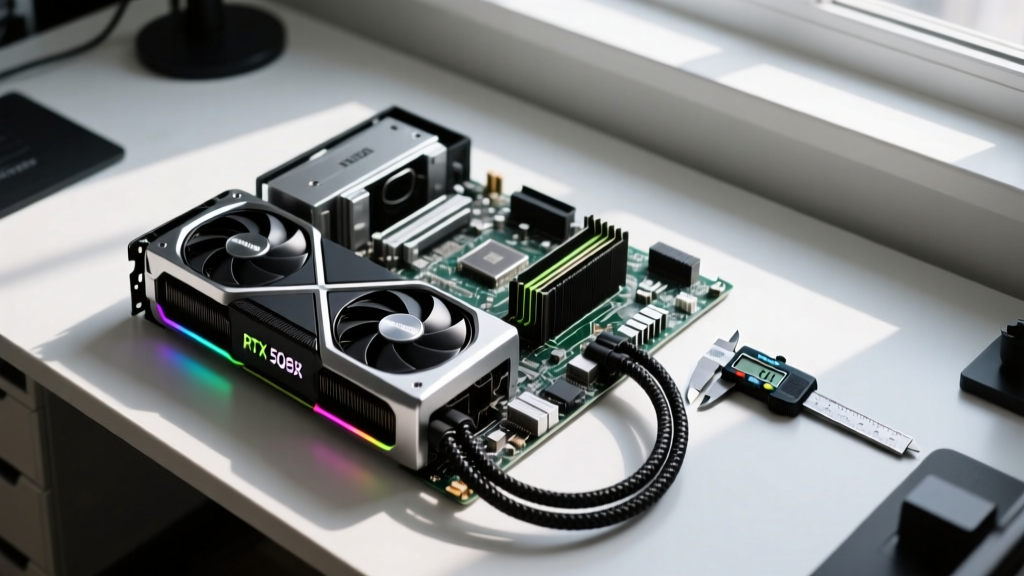
- GPU: NVIDIA GeForce RTX 5080 (16GB GDDR7) — $1,199
- Motherboard: X870E Chipset (PCIe 5.1 ready) — $450
- RAM: 64GB DDR5-8000 CL34 Kit — $280
- Storage: 4TB PCIe 5.0 NVMe SSD (e.g., Crucial T705) — $350
- Power Supply: 1200W ATX 3.1 Titanium Certified — $250
- Chassis & Cooling: Lian Li O11 Vision + 360mm AIO — $350
Total Baseline BOM: $3,578
While $3,578 represents the raw material cost, the final invoice is heavily dictated by your geographic location. Just as lumber and concrete prices fluctuate by zip code, silicon and heavy freight logistics introduce massive regional variances in PC building.
Regional Procurement: Taxes, Tariffs, and Freight
When calculating how much does it cost to build a gaming pc, amateur estimators often ignore the 'last mile' penalties and state-level taxation. A buyer in Portland, Oregon, will pay a fundamentally different final price than a buyer in rural Alaska or downtown Los Angeles, even when sourcing from the exact same national retailers.
| Region / State | Base BOM | Sales Tax Rate | Freight Surcharge | Final Est. Cost |
|---|---|---|---|---|
| Oregon (No Sales Tax) | $3,578 | 0.0% | $0 (Lower 48) | $3,578 |
| California (Urban) | $3,578 | ~9.50% | $0 (Lower 48) | $3,917 |
| Texas (Suburban) | $3,578 | ~8.25% | $0 (Lower 48) | $3,873 |
| Hawaii / Rural Alaska | $3,578 | 4.0% - 4.5% | +$145 (Air/Ocean) | $3,886 |
The Heavy Freight Penalty
Shipping costs for PC components are not uniform. Silicon (CPUs, RAM, SSDs) weighs mere ounces and ships via standard USPS or lightweight UPS ground. However, the 'structural' components—specifically ATX 3.1 power supplies (often 5+ lbs) and premium mid-tower cases (30+ lbs for dual-chamber glass designs)—trigger dimensional weight pricing from carriers like FedEx and UPS. For non-contiguous US states or rural zip codes lacking major distribution hubs, expect a $75 to $150 freight surcharge just for the chassis and PSU.
Infrastructure Overhead: Electrical and HVAC Load Estimation
In construction cost estimating, the building is only half the project; the supporting infrastructure is the other. A 2026 flagship gaming PC pulling 800W under transient loads requires a dedicated evaluation of your home's electrical and thermal infrastructure.
According to Tom's Hardware's GPU power scaling analysis, modern high-end graphics cards exhibit massive transient power spikes that can trip older residential breakers. If your home office is on a shared 15-amp circuit with a space heater or window AC unit, you risk tripping the breaker mid-session. Upgrading a residential panel or pulling a dedicated 20-amp circuit to a specific room typically costs between $250 and $600, depending on local electrician rates and drywall repair.
Thermal Load and HVAC Adjustments
Every watt of electricity consumed by a PC is converted into heat. Using the standard conversion (1 Watt = 3.412 BTU/hr), an 800W gaming rig under load generates approximately 2,730 BTU/hr of thermal output. This is equivalent to running a large window air conditioner in reverse. If you are building out a dedicated gaming room or enclosed home office, this continuous heat load must be factored into your residential Manual J HVAC calculation. Failing to account for this can lead to inadequate cooling in the summer months, requiring a costly mini-split ductless installation later (averaging $1,500 - $3,000).
Estimator's Note: When calculating the operational cost of the rig, consult the U.S. Energy Information Administration (EIA) for your state's average kilowatt-hour rate. Running an 800W rig for 5 hours a day in California ($0.33/kWh) costs roughly $48/month, whereas the same usage in Louisiana ($0.11/kWh) costs just $13/month.
Strategic Procurement Framework
To minimize regional markups and optimize your build budget, follow this procurement sequence:
- Leverage Tax-Free Forwarding: If you reside in a high-tax state (e.g., CA, NY, IL), utilize package forwarding services based in Oregon or Delaware. While you pay a forwarding fee ($20-$40) and secondary shipping, the 9%+ tax savings on a $3,500 BOM yields a net positive of over $250.
- Consolidate Heavy Freight: Order your case, power supply, and AIO cooler from a single vendor (e.g., Amazon, Newegg, or a local Micro Center) to trigger free shipping thresholds and avoid multiple dimensional weight surcharges.
- Source Silicon Locally: For CPUs and RAM, utilize local brick-and-mortar electronics stores if available. This eliminates the risk of porch piracy and bypasses shipping delays for high-theft-category items.
- Verify ATX 3.1 Compliance: Do not substitute a cheaper ATX 2.0 power supply to save $80. The 12V-2x6 connector native to ATX 3.1 is structurally required to handle the power excursions of RTX 50-series GPUs safely. For detailed assembly protocols, reference the PCMag comprehensive PC building guide.
Ultimately, answering the question of how much it costs to build a gaming pc requires looking past the MSRP of the silicon. By treating the build as a micro-construction project—accounting for regional taxation, freight logistics, electrical circuit capacity, and thermal HVAC loads—you can accurately forecast the true capital expenditure required for a flagship 2026 system.
Written by
Sarah WhitfieldSarah Whitfield is a chartered quantity surveyor (MRICS) and construction cost analyst with 15 years of experience in material pricing, procurement strategy, and project budgeting. She earned her degree in Construction Management from the University of Reading (UK) and has worked on projects ranging from $2M custom homes to $180M mixed-use developments across North America and Europe. Sarah currently leads cost estimating for BuildMat Insight, maintaining a proprietary database of 4,000+ material price points updated quarterly. She is a frequent contributor to RSMeans cost data panels and has presented at the International Cost Engineering Council (ICEC) congress. Based in Denver, CO, Sarah is an avid trail runner and volunteer mentor for Women in Construction.
More from Sarah Whitfield
View all
Wood & Lumber
What Are the Different Types of Wood? A Builder's Guide
Compare structural softwoods, finish hardwoods, and engineered lumber. Analyze Janka ratings, MOE values, and 2026 pricing for construction.
Aug 4, 2026

Walls & Panels
Steel Framing vs Wood Framing: Corrosion and Moisture Defense
Compare steel framing vs wood framing for moisture resistance. Learn about galvanized coatings, condensation risks, and corrosion protection strategies.
Jul 21, 2026

Stone & Masonry
How to Cut Stone Veneer: Wet Saw vs Grinder Comparison
Compare the best tools for cutting stone veneer. We review wet saws, angle grinders, and chop saws to help you achieve clean, chip-free cuts.
Jul 21, 2026