How Much Does It Cost to Build a Hotel? 2026 Size & Scope Guide
Calculate exactly how much it costs to build a hotel in 2026. Break down per-key and per-square-foot costs by tier, scope, and region.

The 'Per-Key' vs. 'Per-Square-Foot' Paradigm
When evaluating how much does it cost to build a hotel, commercial developers abandon the residential 'price-per-square-foot' metric in favor of the 'per-key' (per-room) calculation. A hotel is not just a collection of rooms; it is a complex machine requiring back-of-house (BOH) operations, commercial kitchens, lobby spaces, and specialized mechanical systems. According to the CBRE Construction Cost Index, hard costs for hospitality projects have stabilized in 2026, but specialized labor for MEP (Mechanical, Electrical, and Plumbing) systems continues to command a premium.
To use this size and scope calculator effectively, you must first determine your Gross Square Footage (GSF) per key. A standard limited-service hotel might require 600 GSF per key (including hallways and lobby), while a luxury full-service resort can easily exceed 1,200 GSF per key due to expansive banquet halls, spas, and high staff-to-guest ratio BOH areas.
Hotel Construction Cost Matrix by Tier (2026 Estimates)
The scope of your project dictates the baseline cost. Below is the current cost matrix based on national averages for new ground-up construction, excluding land acquisition.
| Hotel Tier | Avg. Keys | GSF per Key | Cost per Key | Cost per GSF |
|---|---|---|---|---|
| Select-Service (e.g., Tru, Fairfield) | 90 - 120 | 550 - 650 | $160k - $230k | $260 - $320 |
| Midscale (e.g., Hampton, HIX) | 100 - 150 | 600 - 750 | $250k - $340k | $340 - $420 |
| Upscale (e.g., Marriott, Hyatt) | 150 - 300 | 750 - 950 | $420k - $650k | $480 - $620 |
| Luxury (e.g., Ritz, Four Seasons) | 100 - 250 | 1,000 - 1,400 | $900k - $1.8M+ | $750 - $1,100+ |
Tier 1: Select-Service & Budget Scope
Select-service hotels are the most cost-efficient to build. They utilize wood-frame or light-gauge steel construction (up to 4-5 stories) and rely on decentralized HVAC systems, specifically PTAC (Packaged Terminal Air Conditioner) units mounted directly in the guestroom walls. There are no full-service restaurants, banquet halls, or room service kitchens. The primary cost drivers here are land grading, asphalt parking lots (often requiring 1.2 spaces per key), and basic exterior EIFS (Exterior Insulation and Finish Systems) or HardiePlank siding.
Tier 2: Midscale & Extended Stay Scope
Midscale properties introduce structural complexity. Expect concrete podiums with wood framing above, or full light-gauge steel structures. The scope expands to include larger breakfast pavilions, fitness centers, and centralized rooftop HVAC units or VRF (Variable Refrigerant Flow) systems. Extended-stay variants (like Residence Inn) increase the per-key cost by 15-20% due to the addition of in-room kitchenettes, which require upgraded plumbing stacks, 240V electrical drops for ranges, and specialized fire suppression in cabinetry.
Tier 3: Upscale & Full-Service Scope
Full-service hotels require a massive leap in MEP infrastructure. You are no longer using PTACs; you are installing central chiller plants, cooling towers, and complex building automation systems (BAS). The scope includes commercial kitchens, ballrooms with divisible air-walls, and multi-story atriums. According to research from the Cornell Center for Hospitality Research, full-service properties also carry significantly higher soft costs due to the need for specialized acoustic engineering, lighting designers, and extensive franchise Property Improvement Plan (PIP) compliance reviews.
Tier 4: Luxury & Ultra-Luxury Scope
Luxury hotel construction is essentially custom commercial building. The GSF per key skyrockets because the back-of-house must support a staff-to-guest ratio of 1.5:1 or higher. This means massive employee cafeterias, specialized laundry facilities, and secure loading docks. Finishes include imported stone, custom millwork, and smart-room automation integrations (like Lutron or Crestron systems) that require low-voltage IT contractors to work in tandem with high-voltage electricians.
Hard Costs vs. Soft Costs: Where the Budget Actually Goes
To build an accurate size and scope calculator, you must allocate your capital stack correctly. A common mistake among first-time hospitality developers is undercapitalizing soft costs and pre-opening expenses.
- Hard Costs (65% - 72%): Site work, foundation, superstructure, MEP rough-ins, drywall, flooring, and exterior envelope. In 2026, structural steel and concrete remain volatile, making early procurement contracts essential.
- FF&E and OS&E (10% - 15%): FF&E includes beds, casegoods, and lobby seating. OS&E (Operating Supplies and Equipment) includes linens, glassware, uniforms, and smallwares. For a 100-key upscale hotel, expect to spend $15,000 to $22,000 per key purely on FF&E.
- Soft Costs (12% - 18%): Architectural and engineering fees (typically 6-9% of hard costs), legal, franchise application fees (often $50,000 to $100,000 upfront), and permits.
- Pre-Opening & Working Capital (3% - 5%): Staff hiring, marketing, initial inventory, and the cash reserve required to operate the hotel until it reaches stabilization (usually 6-12 months post-opening).
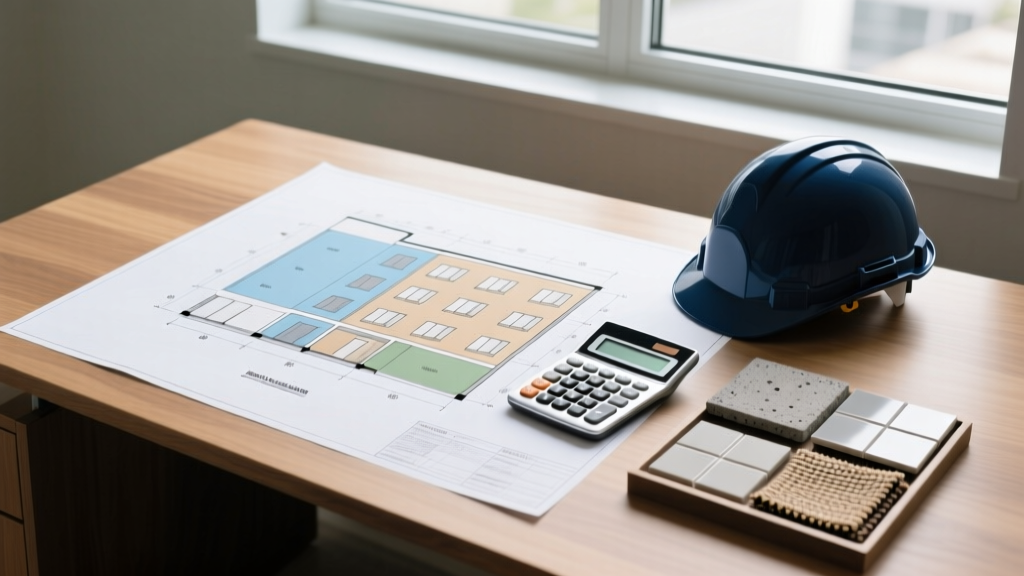
Step-by-Step Scope Calculator: Estimating Your Project
Use this framework to generate a baseline pro-forma budget for your specific site.
- Calculate Total GSF: Multiply your target key count by the GSF-per-key ratio for your chosen tier. (e.g., 120 keys × 650 GSF = 78,000 GSF).
- Apply Base Hard Cost: Multiply Total GSF by the regional Cost per GSF. (e.g., 78,000 × $340 = $26,520,000).
- Add FF&E / OS&E: Multiply key count by the tier-specific FF&E per-key allowance. (e.g., 120 keys × $12,000 = $1,440,000).
- Calculate Soft Costs: Multiply the Hard Cost total by 15% for standard architectural, engineering, and legal fees.
- Apply the Contingency Multiplier: Add a 7% to 10% hard cost contingency for unforeseen site conditions (e.g., rock excavation, soil remediation).
Regional Cost Multipliers for 2026
National averages are useless if your project is in a high-cost labor market. The American Hotel & Lodging Association (AHLA) tracks regional development disparities that heavily impact final budgets. Apply these multipliers to your base hard costs to localize your estimate.
| Region / Metro | 2026 Cost Multiplier | Primary Cost Driver |
|---|---|---|
| San Francisco / Bay Area | 1.45x | Union labor, seismic engineering, strict Title 24 energy codes |
| New York City (Boroughs) | 1.55x | Logistics, staging limitations, prevailing wage laws |
| Chicago / Midwest Urban | 1.15x | Winter construction premiums, deep foundations |
| Atlanta / Southeast | 0.95x | Favorable labor market, minimal seismic requirements |
| Dallas / Sunbelt Suburbs | 0.90x | Expansive land, easy staging, non-union labor availability |
Final Scope Considerations: Site Work and Entitlements
The calculator above assumes a 'pad-ready' site. If your land requires extensive grading, retaining walls, or the extension of municipal water and sewer lines, site work costs can easily consume 10% to 15% of your total hard budget. Furthermore, urban infill hotel projects often face severe entitlement delays and neighborhood opposition, which can inflate soft costs (legal and consulting) by an additional 3% to 5%. Always conduct a thorough geotechnical survey and zoning analysis before locking in your per-key capital stack.
Written by
Elena RodriguezElena Rodriguez is a civil engineer and technical writer specializing in concrete technology, masonry systems, and ASTM/ACI compliance. She earned her B.S. in Civil Engineering from Texas A&M University and spent a decade at a materials testing laboratory, performing over 2,000 concrete compressive strength tests and masonry prism evaluations. Elena is an ACI-certified Field Testing Technician (Grade I) and a member of ASTM Committee C12 on Natural Building Stone. She currently consults on forensic engineering cases involving concrete failures and moisture intrusion. Based in San Antonio, TX, Elena is a proud member of the Society of Women Engineers (SWE) and coaches her daughter's FIRST Robotics team.
More from Elena Rodriguez
View all
Walls & Panels
Cost Analysis: Light Gauge Steel Framing Advantages and Disadvantages
Evaluate light gauge steel framing advantages and disadvantages through a strict cost analysis lens, comparing material, labor, and lifecycle expenses.
Aug 4, 2026

Walls & Panels
Gypsum Board Types: Exact Specifications, Thickness & Dimensions
Compare standard, Type X, and moisture-resistant gypsum board types. Get exact specifications, thicknesses, dimensions, and ASTM standards for your project.
Aug 4, 2026

Fire Resistance
Best Fire-Resistant Outdoor Decking Materials: 2026 Buyer Guide
Discover the best fire-resistant outdoor decking materials for 2026. Compare Class A PVC, aluminum, and hardwood options for WUI compliance and safety.
Aug 4, 2026