How Much Did the ISS Cost to Build? Regional Agency Breakdown
Discover how much the ISS cost to build through a regional price analysis of NASA, Roscosmos, ESA, JAXA, and CSA contributions and launch expenses.

The Ultimate Mega-Project: Quantifying the Orbital Price Tag
When construction estimators and aerospace analysts evaluate the upper limits of capital expenditure, one question consistently arises: how much did the iss cost to build? The International Space Station (ISS) remains the most expensive single construction project in human history. Assembled in low Earth orbit (LEO) over two decades, the station's historical price tag is widely cited at approximately $150 billion USD. However, applying standard construction inflation indices to adjust this figure to 2026 dollars pushes the total capitalized cost well past $230 billion.
Executive Cost Summary (2026 Adjusted)
- Total Capitalized Cost: ~$235 Billion USD
- Total Mass: ~420,000 kg (925,000 lbs)
- Pressurized Volume: 916 cubic meters (32,333 cubic feet)
- Cost per Kilogram to Orbit: ~$559,000 USD
- Cost per Pressurized Cubic Meter: ~$256 Million USD
Unlike terrestrial mega-projects where regional price variations are driven by local labor rates and material availability, the ISS required a multinational consortium. Analyzing the station through a 'regional price analysis' lens means examining how the manufacturing origins, local aerospace economies, and specific launch infrastructures of five distinct space agencies dictated the final cost per module.
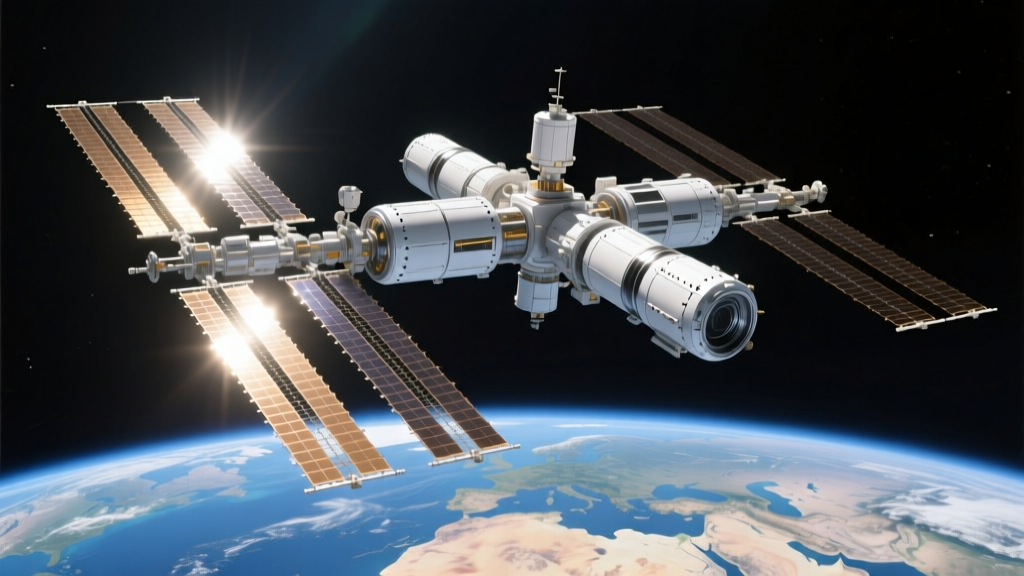
Regional Price Analysis: Financial Contributions by Agency
The financial burden of the ISS was distributed among 15 nations, primarily managed through five core space agencies. The cost disparities between these regions highlight how legacy infrastructure and launch vehicle economics drastically alter mega-project budgets.
| Agency / Region | Primary Modules | Historical Cost | 2026 Adj. Cost | Primary Cost Drivers |
|---|---|---|---|---|
| NASA (USA) | Destiny, Harmony, Node 3, Truss | $100.0B | $156.0B | Space Shuttle launch costs, high-tolerance US fabrication |
| Roscosmos (Russia) | Zarya, Zvezda, Rassvet | $12.0B | $18.7B | Legacy Mir tooling, lower regional labor, Proton rockets |
| JAXA (Japan) | Kibo (JEM), HTV Cargo | $10.0B | $15.6B | Precision electronics, Shuttle transport fees |
| ESA (Europe) | Columbus, ATV Cargo, Cupola | $8.0B | $12.5B | Distributed manufacturing across member states |
| CSA (Canada) | Canadarm2, Dextre | $2.0B | $3.1B | Advanced robotics R&D, low physical mass |
Note: Data synthesized from historical budget allocations and adjusted using standard aerospace inflation multipliers. For ongoing operational frameworks, refer to the NASA International Space Station portal.
Manufacturing and Launch Site Cost Differentials
To understand the regional price variations, estimators must separate the cost of building a module from the cost of delivering it to the construction site (orbit). The delivery mechanism was the single largest variable in the ISS budget.
The US Segment: High-Tolerance Fabrication and Shuttle Economics
The United States bore the brunt of the financial burden, primarily due to its reliance on the Space Shuttle for heavy module deployment. While the Shuttle was a marvel of engineering, its operational economics were disastrous for construction budgets. Each Shuttle mission cost between $1.2 billion and $1.5 billion (inflation-adjusted). Because the US segments (like the Destiny laboratory and the massive Integrated Truss Structure) required the Shuttle's unique cargo bay and robotic deployment capabilities, NASA paid an exorbitant 'launch tax.' Furthermore, US aerospace manufacturing in the 1990s and 2000s involved stringent, newly developed quality assurance protocols for long-duration habitation, driving up regional fabrication costs compared to legacy systems.
The Russian Segment: Legacy Infrastructure and Expendable Launch Savings
Roscosmos achieved a remarkably low cost-per-kilogram for its segments by leveraging existing Soviet-era infrastructure. The Zarya (Functional Cargo Block) and Zvezda (Service Module) were direct descendants of the Salyut and Mir space stations. Because the tooling, engineering schematics, and regional manufacturing supply chains in Korolyov and Moscow were already amortized, the fabrication costs were a fraction of NASA's. Additionally, Russia utilized the Proton-M and Soyuz-U expendable launch vehicles. A Proton launch cost roughly $80 million to $100 million, making the Russian regional delivery cost less than 10% of the US Shuttle delivery cost per mission.
European and Japanese Modules: Specialized Fabrication Premiums
The European Space Agency (ESA) and the Japan Aerospace Exploration Agency (JAXA) faced a unique regional pricing paradox. Their physical manufacturing costs for the Columbus and Kibo modules were highly competitive, benefiting from specialized regional tech sectors (e.g., precision optics in Germany, advanced robotics in Japan). However, because neither agency possessed a heavy-lift crewed vehicle capable of delivering these massive pressurized modules to the ISS, they were forced to barter with or pay NASA for Space Shuttle transport. Consequently, while their regional fabrication costs were moderate, their logistical delivery costs were artificially inflated by US launch pricing. Detailed contribution metrics for specialized robotics and external payloads are further documented by the Canadian Space Agency and ESA Exploration divisions.
Orbital vs. Terrestrial: Cost Per Cubic Meter Comparison
Translating orbital construction costs into terrestrial metrics provides vital context for commercial real estate and industrial estimators. The ISS contains approximately 916 cubic meters of pressurized, climate-controlled volume. At a 2026-adjusted cost of $235 billion, the station costs roughly $256.5 million per cubic meter of usable space.
The Orbital Premium: A state-of-the-art terrestrial Class 10 ISO 4 cleanroom—featuring extreme HVAC redundancy, vibration dampening, and strict particulate control—costs approximately $15,000 to $25,000 per cubic meter to construct. The ISS represents a 10,000x to 17,000x cost multiplier over the most expensive specialized commercial construction on Earth, driven entirely by the energy required to escape Earth's gravity well and the necessity of closed-loop life support systems.
Key Takeaways for Terrestrial Mega-Project Estimators
While few estimators will bid on orbital habitats, the ISS provides extreme-case data points that inform risk management and supply chain analysis for terrestrial mega-projects (e.g., deep-sea habitats, Antarctic research stations, and hyper-loop infrastructure).
- Logistics Can Eclipse Fabrication: The Russian vs. US cost disparity proves that the method of transport to a remote site often dictates the total budget more than the raw materials. When estimating remote terrestrial builds, prioritize modularization that fits standard, low-cost transport over custom, high-cost fabrication.
- The Danger of Amortizing R&D into Construction: NASA's budget included the development of entirely new metallurgical processes and life-support scrubbers. Estimators must strictly separate capital R&D expenditures from baseline construction costs to prevent severe budget overruns in first-of-their-kind builds.
- Redundancy Multipliers: The ISS utilizes triple-redundant life support and micrometeoroid shielding (Whipple shields). In terrestrial projects requiring high reliability (nuclear containment, subsea tunneling), estimators should apply a 2.5x to 4x multiplier to baseline MEP (Mechanical, Electrical, Plumbing) costs to account for necessary fail-safes and physical shielding.
- International Supply Chain Friction: The ISS required the integration of US-standard (imperial/standard) and Russian-standard (metric) docking mechanisms and power grids, necessitating expensive custom adapter nodes (like the Pressurized Mating Adapters). Cross-border mega-projects must budget 5-8% of total capital for interface resolution and standardization engineering.
Written by
Elena RodriguezElena Rodriguez is a civil engineer and technical writer specializing in concrete technology, masonry systems, and ASTM/ACI compliance. She earned her B.S. in Civil Engineering from Texas A&M University and spent a decade at a materials testing laboratory, performing over 2,000 concrete compressive strength tests and masonry prism evaluations. Elena is an ACI-certified Field Testing Technician (Grade I) and a member of ASTM Committee C12 on Natural Building Stone. She currently consults on forensic engineering cases involving concrete failures and moisture intrusion. Based in San Antonio, TX, Elena is a proud member of the Society of Women Engineers (SWE) and coaches her daughter's FIRST Robotics team.
More from Elena Rodriguez
View all
Walls & Panels
Cost Analysis: Light Gauge Steel Framing Advantages and Disadvantages
Evaluate light gauge steel framing advantages and disadvantages through a strict cost analysis lens, comparing material, labor, and lifecycle expenses.
Aug 4, 2026

Walls & Panels
Gypsum Board Types: Exact Specifications, Thickness & Dimensions
Compare standard, Type X, and moisture-resistant gypsum board types. Get exact specifications, thicknesses, dimensions, and ASTM standards for your project.
Aug 4, 2026

Fire Resistance
Best Fire-Resistant Outdoor Decking Materials: 2026 Buyer Guide
Discover the best fire-resistant outdoor decking materials for 2026. Compare Class A PVC, aluminum, and hardwood options for WUI compliance and safety.
Aug 4, 2026