The True Cost to Build a Pergola: 2026 Regional Price Guide
Discover the true cost to build a pergola in 2026. Compare regional labor rates, material prices, and hidden fees to budget your backyard project accurately.
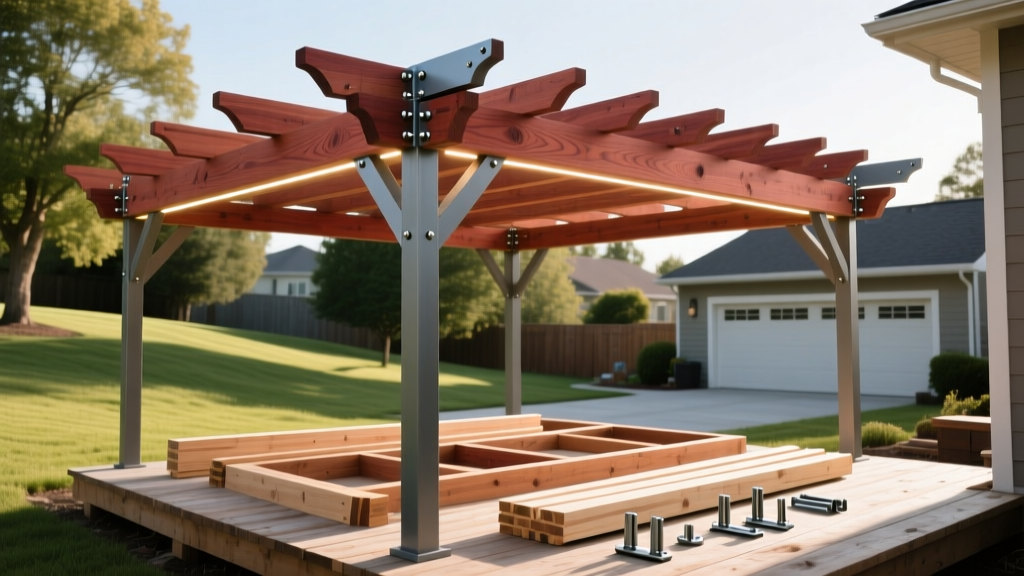
The National Baseline: What to Expect in 2026
Calculating the exact cost to build a pergola requires moving beyond national averages and examining localized labor rates, material availability, and soil conditions. In 2026, the national average for a standard 120-square-foot (10x12) attached or freestanding pergola ranges from $4,200 to $6,800. However, this baseline fluctuates wildly depending on your zip code. A structural shift toward composite and aluminum materials, coupled with a 14% increase in specialized outdoor carpentry labor rates over the last three years, means regional context is the most critical factor in your budget.
• National Average: $5,500
• Low-End (DIY / Basic Pine): $1,800 - $2,500
• High-End (Custom Aluminum / Fiberglass): $9,000 - $14,000+
Regional Price Analysis: Labor and Material Matrix
Labor accounts for 40% to 60% of your total project cost. The prevailing wage for licensed outdoor carpenters and general contractors varies significantly by region, driven by local demand, insurance requirements, and the cost of living. Below is a 2026 regional breakdown for a professionally installed, mid-grade cedar pergola (120 sq. ft.).
| Region | Avg. Labor Rate (Per Hr) | Estimated Total Cost | Primary Cost Driver |
|---|---|---|---|
| Northeast (NY, MA, CT) | $95 - $145 | $6,800 - $9,200 | High union labor rates, strict zoning permits, deep frost-line footings. |
| Southeast (TX, FL, GA) | $65 - $105 | $4,500 - $6,500 | Hurricane tie-down requirements, sandy soil stabilization. |
| Midwest (OH, IL, MI) | $75 - $115 | $5,200 - $7,100 | Extreme freeze-thaw cycles requiring 42-inch sonotube footings. |
| West (CA, WA, CO) | $105 - $160 | $7,500 - $11,000 | Seismic bracing codes, high material transport costs, wildfire-rated materials. |
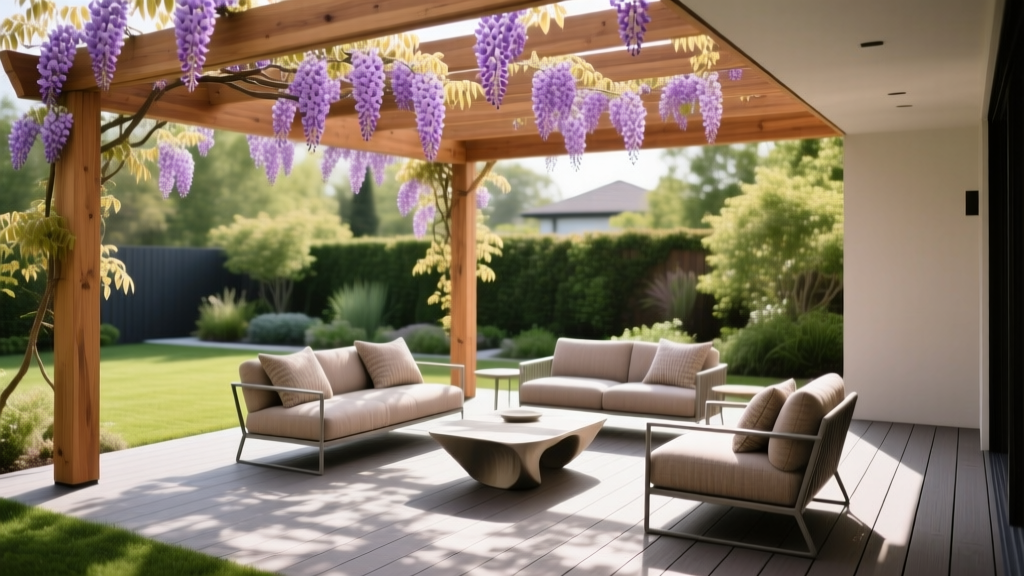
Material Deep Dive: Cost Per Square Foot & Lifespan
Your choice of material dictates not only the upfront cost to build a pergola but also the long-term maintenance budget. According to data from the USDA Forest Products Laboratory, wood decay and insect resistance vary drastically by species, which is directly reflected in market pricing and longevity.
1. Pressure-Treated Southern Yellow Pine
- Cost: $15 - $25 per sq. ft.
- Lifespan: 10 - 15 years.
- Expert Insight: Must be paired with hot-dipped galvanized or ZMAX-coated fasteners (like Simpson Strong-Tie) to prevent the copper-based preservatives from corroding standard steel nails and joist hangers.
2. Western Red Cedar & Redwood
- Cost: $30 - $45 per sq. ft.
- Lifespan: 20 - 25 years.
- Expert Insight: Naturally resistant to rot and insects due to high tannin content. Requires UV-blocking penetrating oil every 2-3 years to prevent the wood from silvering and checking (splitting along the grain).
3. Cellular PVC & Vinyl (e.g., Trex, Azek)
- Cost: $40 - $65 per sq. ft.
- Lifespan: 25 - 30+ years.
- Expert Insight: Zero maintenance, but lacks the structural rigidity of wood. Requires internal aluminum or steel armatures in the rafters to prevent sagging over spans wider than 8 feet.
4. Extruded Aluminum (e.g., Alumawood)
- Cost: $50 - $85 per sq. ft.
- Lifespan: Lifetime.
- Expert Insight: Ideal for coastal regions where salt spray destroys wood and steel. Ensure the powder-coat finish meets AAMA 2604 standards for UV fade resistance to avoid chalking after a few seasons.
Hidden Variables: Site Prep, Footings, and Permits
Contractor quotes often exclude site-specific variables that can inflate the final invoice by 15% to 30%. Understanding these edge cases is vital for an accurate budget.
Warning: Never assume a pergola is exempt from building codes simply because it has an open roof. Most municipalities require structural permits for any attached structure, and freestanding units over 200 square feet. Always verify local setback requirements with your zoning office before pouring concrete.
The Frost Line Factor
In northern climates, structural posts cannot simply be buried in the dirt or set in shallow concrete pancakes. They must be anchored to concrete footings that extend below the local frost line to prevent frost heave from lifting and destroying the structure. In Minnesota, this means digging 60-inch deep holes and using heavy-duty sonotubes, adding $600 to $1,200 in excavation and 4000-PSI concrete costs compared to a shallow 12-inch footing in Florida.
Electrical and Integration
Running a dedicated 20-amp underground circuit for integrated LED lighting, ceiling fans, or motorized louvers adds $450 to $900. This includes trenching to a depth of 18 inches, PVC conduit, and a licensed electrician's labor to tie into your main panel.
DIY vs. Professional Installation: The ROI Breakdown
While DIY pergola kits from big-box retailers cost between $1,200 and $3,000, they often use undersized 4x4 posts and lightweight hardware that fail under heavy snow or wind uplift loads. Professional installation, as tracked by industry platforms like Angi and HomeAdvisor, ensures proper load distribution, wind uplift resistance, and strict code compliance. A professionally built, permitted pergola typically yields a 50% to 70% return on investment at resale by enhancing usable outdoor living square footage, whereas a poorly executed DIY kit can become a structural liability during a home inspection.
Frequently Asked Questions
Does adding a pergola increase property taxes?
In most jurisdictions, a freestanding pergola without a solid roof or permanent utilities is considered a temporary landscaping feature and does not trigger a property tax reassessment. Attached pergolas with solid roofs, motorized louvers, or electrical hookups may be classified as permanent additions, potentially increasing your assessed value.
What is the maximum span for pergola rafters without sagging?
For standard 2x8 wooden rafters placed on edge, the maximum unsupported span is 12 feet. If your design requires a 16-foot span to cover a large patio, you must upgrade to 2x10 or 2x12 lumber, or utilize structural steel tubing hidden inside the wood fascia to maintain a clean aesthetic without deflection.
How do I protect wood posts from ground rot?
Never bury wood directly in concrete, as the concrete acts as a sponge for moisture, accelerating rot at the base. Use elevated galvanized steel post bases (such as the Simpson Strong-Tie ABU44Z) that anchor into the concrete footing while keeping the bottom of the wood post at least one inch above the concrete surface to allow for water drainage and critical airflow.
Written by
Marcus ChenMarcus Chen is a licensed structural engineer (PE) and building materials analyst with over 12 years of experience across residential, commercial, and industrial construction. He holds a Master of Science in Civil Engineering from UC Berkeley and spent six years at Thornton Tomasetti before transitioning to independent consulting and technical writing. Marcus specializes in material selection for seismic-prone regions, concrete reinforcement strategies, and lifecycle cost analysis. His work has been cited by the American Concrete Institute (ACI) and the Structural Engineers Association of California (SEAOC). When he is not on a job site or at his desk, you will find him hiking the Sierra Nevada or restoring a 1920s craftsman bungalow in Oakland, CA.
More from Marcus Chen
View all
Construction Cost
How Much Did the Eiffel Tower Cost to Build?
How much did the Eiffel Tower cost to build in 1889? We adjust for inflation and compare its budget to modern skyscraper construction.
Aug 4, 2026

Fire Resistance
What Is a Fire Resistant Material? Testing & Certification Guide
Discover what is a fire resistant material through ASTM and UL testing. Learn how fire ratings, certifications, and assemblies work in construction.
Aug 4, 2026

Construction Cost
How Much Did the Burj Khalifa Cost to Build?
How much did the Burj Khalifa cost to build? We break down the $1.5B project and extract 5 money-saving strategies for your next build.
Jul 30, 2026