Average Labor Cost to Build a Deck: 2026 Pricing Guide
Discover the true average labor cost to build a deck in 2026. Breakdowns by size, material, complexity, and hidden contractor fees to budget accurately.
The 2026 Baseline: Average Labor Cost to Build a Deck by Size
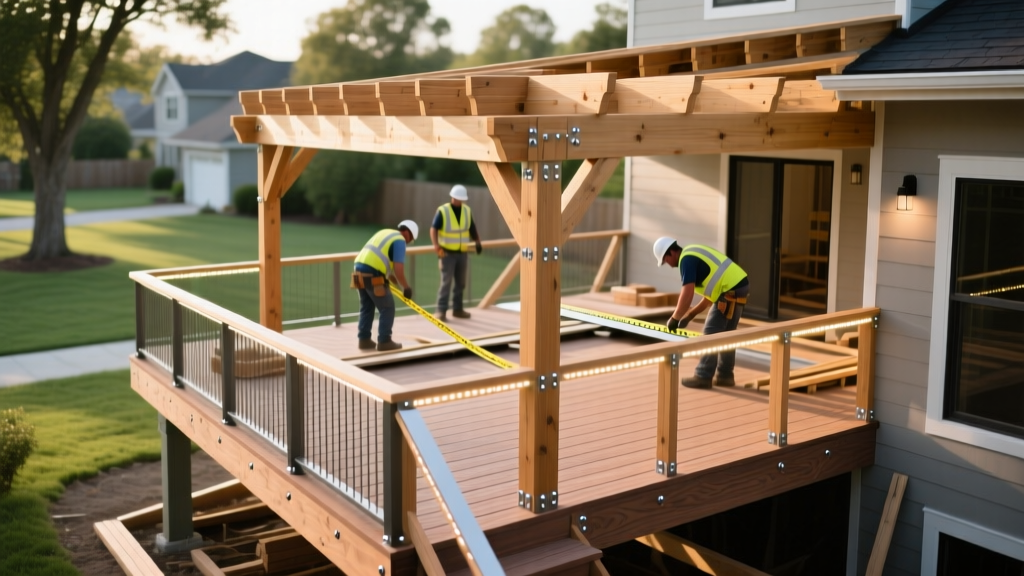
When budgeting for an outdoor living space, material costs often dominate the conversation, but the average labor cost to build a deck is the variable that most frequently derails project budgets. In 2026, the national average labor cost to build a deck ranges from $18 to $38 per square foot. For a standard 300-square-foot ground-level deck, this translates to $5,400 to $11,400 in pure labor expenses, completely separate from the cost of lumber, composite boards, fasteners, and concrete.
Labor rates are not static; they scale non-linearly based on project footprint, site accessibility, and structural complexity. A smaller deck often carries a higher per-square-foot labor rate due to fixed mobilization costs, while larger footprints benefit from economies of scale in framing and joist installation.
| Deck Dimensions (Sq. Ft.) | Basic Wood Framing Labor | Premium Composite Labor | Complex Multi-Level Labor |
|---|---|---|---|
| 10x10 (100 sq. ft.) | $2,200 - $3,000 | $2,800 - $3,800 | $4,500 - $6,000 |
| 12x16 (192 sq. ft.) | $3,800 - $5,200 | $4,800 - $6,500 | $7,500 - $9,800 |
| 16x20 (320 sq. ft.) | $5,800 - $7,600 | $7,200 - $9,500 | $11,000 - $14,500 |
| 20x30 (600 sq. ft.) | $10,500 - $13,800 | $13,000 - $17,500 | $19,000 - $26,000 |
Material-Specific Labor Multipliers
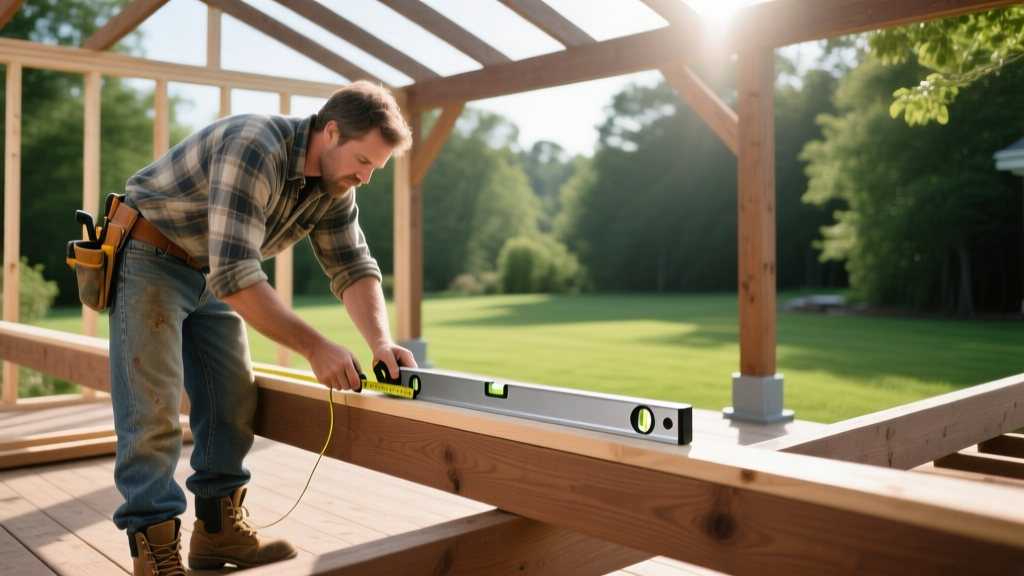
The physical properties of your chosen decking material directly dictate the speed and precision required by the installation crew. Contractors adjust their labor bids based on the following material tiers:
Pressure-Treated Wood (Baseline Multiplier: 1.0x)
Southern yellow pine or Douglas fir remains the baseline for labor estimation. Carpenters can frame and face-screw wood decking rapidly. Standard joist spacing is 16 inches on center (OC), and minor cutting errors or board warping can be forced into alignment using a board straightener or brute force. Face-nailing or screwing requires minimal specialized tooling.
Capped Composite (Labor Multiplier: 1.15x to 1.25x)
Installing capped composite boards, such as Trex Transcend or TimberTech Terrain, requires a 15% to 25% labor premium. This increase is driven by three factors:
- Joist Spacing: Most composite manufacturers mandate 12-inch OC joist spacing for diagonal patterns and some stair treads, requiring 30% more framing lumber and cutting time.
- Hidden Fastener Systems: Utilizing systems like Tiger Claw or Trex Hideaway requires precise routing or grooving and meticulous alignment, slowing down the board-laying process by roughly 20 minutes per 100 square feet compared to face-screwing.
- Thermal Expansion: Composite boards expand and contract significantly. Installers must leave exact 1/4-inch gaps at butt joints and end cuts, requiring rigorous measuring and blocking installation.
Advanced PVC and Aluminum (Labor Multiplier: 1.35x to 1.50x)
Materials like TimberTech Advanced PVC or AridDeck aluminum demand the highest labor rates. PVC is highly susceptible to thermal expansion and requires specialized carbide-tipped blades to prevent melting and burring on cut edges. Aluminum decking requires metal-cutting chop saws, strict structural framing tolerances (often 12-inch or 10-inch OC), and specialized interlocking fasteners. Any framing deviation exceeding 1/8 inch will cause aluminum boards to rattle or fail to lock, forcing carpenters to work at a significantly slower, more deliberate pace.
The Staircase and Railing Labor Sinks
The main deck platform is often the most straightforward part of the build. The labor costs escalate dramatically when stairs and railings are introduced.
Staircase Labor: $150 to $350 Per Tread
Building code-compliant stairs require precise stringer cutting. A standard 4-foot wide staircase with 5 treads will add $750 to $1,750 in pure labor. If you opt for closed stringers with composite riser boards and hidden fasteners, expect the labor time per stair to double. Furthermore, landings required at the bottom of stairs to meet International Residential Code (IRC) egress requirements add an entirely separate micro-framing and footing labor cost.
Railing Systems: The Hidden Time Trap
Not all railings are created equal in the eyes of a carpenter.
- Composite Balusters: Pre-assembled composite railing sections (e.g., Trex Signature) are the fastest to install, averaging $25 to $40 per linear foot in labor.
- Horizontal Cable Railing: Systems like Feeney CableRail require drilling precise holes through every single post, tensioning turnbuckles, and swaging terminals. Labor costs for cable railing frequently range from $60 to $110 per linear foot, often costing more in labor than the materials themselves.
- Tempered Glass Panels: Requires heavy lifting, specialized suction grips, and absolute plumb perfection in post setting. Labor rates for glass railings start at $90 per linear foot and climb steeply for second-story installations.
Site Preparation and Foundation Labor
Before a single piece of lumber is cut, the site must be prepped. Foundation labor is highly dependent on soil conditions and local frost line depths.
Concrete Sonotubes vs. Helical Piles
Traditional poured concrete footings require digging below the local frost line (often 36 to 48 inches in northern climates), hauling away soil, setting cardboard forms, and pouring concrete. This manual labor is back-breaking and time-consuming, typically costing $150 to $250 per footing in labor.
Alternatively, helical piles (such as Techno Metal Post or Diamond Pier) are hydraulically driven into the ground. While the material cost per pile is higher, the labor time is reduced by 70%. A crew can install 15 helical piles in a single morning, eliminating concrete curing wait times and allowing framing to begin immediately. For difficult-to-access backyards where wheelbarrowing wet concrete is a logistical nightmare, helical piles actually reduce the overall foundation labor cost.
5 Hidden Labor Fees Contractors Rarely Disclose
To protect your budget, scrutinize your contractor's proposal for these frequently omitted labor line items:
- Old Deck Demolition and Haul-Away: Tearing down an existing 300 sq. ft. deck and paying for dump fees adds $1,200 to $2,500 in labor and disposal costs.
- Material Hoisting: If you are building a second-story deck or live on a steep slope, moving 4,000 lbs of composite decking and framing lumber by hand adds days of labor. Crane rentals or material elevator setups can add $1,500+ to the bill.
- Permit Pulling and Inspection Coordination: Contractors charge for the administrative labor of drafting code-compliant plans, submitting them to the local building department, and waiting on-site for framing and footing inspections.
- Flashing and Ledger Board Waterproofing: Properly installing self-adhering flashing tape (like Trex RainEscape or Grace Vycor) over the ledger board and joists is tedious but critical. Budget an extra $400 to $800 in labor for comprehensive weatherproofing.
- Skirting and Lattice Enclosure: Closing off the space beneath a raised deck with lattice or vertical composite skirting requires building a separate secondary frame to attach the material, adding $15 to $30 per linear foot in labor.
Regional Carpenter Wage Variations
The average labor cost to build a deck is heavily influenced by local prevailing wages. According to data tracked by the U.S. Bureau of Labor Statistics for carpenter wages, regional disparities drastically alter your final bid. In high-cost-of-living areas like the Northeast and Pacific Northwest, union and prevailing wage requirements, combined with high insurance premiums, push deck labor rates toward the $35 to $45 per square foot mark. Conversely, in the Southeast and Midwest, where frost lines are shallower (reducing foundation labor) and non-union labor is more prevalent, rates frequently hover between $16 and $24 per square foot.
The 2026 Deck Labor Decision Matrix
Use this framework to determine if a contractor's labor bid is fair:
- Under $15/sq. ft.: Red flag. Likely unlicensed, uninsured, or planning to cut corners on joist spacing and structural connections.
- $18 - $28/sq. ft.: The sweet spot for professional, insured crews building standard single-level composite decks.
- $30 - $45/sq. ft.: Expected for multi-level decks, complex staircases, second-story structural builds, or premium PVC/aluminum materials.
- Over $50/sq. ft.: Only justified for custom architectural designs, integrated lighting, heavy timber framing, or extreme site-access challenges.
Understanding the granular breakdown of the average labor cost to build a deck empowers you to evaluate contractor bids accurately. As noted in Remodeling Magazine's Cost vs. Value Report, a well-constructed deck recoups a significant portion of its investment at resale, but only if the structural framing and flashing are executed flawlessly. Paying a premium for skilled, meticulous labor ensures your outdoor space remains safe, level, and code-compliant for decades, ultimately protecting your material investment from premature rot or structural failure.
Written by
James ThorntonJames Thornton is a construction industry veteran with 25 years of hands-on experience in wood framing, lumber grading, and residential building codes. He started as a framing carpenter in rural Oregon, earned his ICC Residential Building Inspector certification, and eventually became a senior plan reviewer for the City of Portland Bureau of Development Services. James holds a B.S. in Wood Science & Technology from Oregon State University and is a certified lumber grader through the West Coast Lumber Inspection Bureau (WCLIB). He has inspected over 3,000 residential construction sites and authored the city's internal guide on advanced framing techniques (2x6 at 24" O.C.). James lives in Bend, OR, where he builds custom timber-frame cabins and competes in lumberjack sports.
More from James Thornton
View all
Insulation
Best Home Insulation Materials: Complete 2026 Guide
Compare top home insulation materials for 2026. Find R-values, installed costs per square foot, and best uses for fiberglass, spray foam, and mineral wool.
Aug 4, 2026

Sustainable Building
Certify Your Green Building Material for LEED and WELL
Step-by-step guide to certifying a green building material for LEED v5 and WELL v2. Master EPDs, HPDs, and VOC limits for 2026 project specifications.
Aug 4, 2026

Stone & Masonry
Veneer Stacked Stone Panels: Interior Design & Style Showcase
Discover how veneer stacked stone panels transform interiors. Explore modern design profiles, material pairings, and technical installation specs.
Aug 4, 2026