Top Deck Railing Materials Barnstable Homeowners Choose
Compare the best deck railing materials for Barnstable homes. Expert analysis on salt-spray resistance, local codes, and 2026 coastal pricing.

The Barnstable Microclimate: Why Standard Railings Fail
Building an outdoor living space in Barnstable, Massachusetts, requires navigating a unique set of environmental stressors. Situated on Cape Cod, properties here are subjected to relentless salt spray, high-humidity fog banks, severe Nor'easter wind loads, and aggressive freeze-thaw cycles. Standard galvanized steel or untreated wood railings that perform adequately in inland New England will typically exhibit catastrophic failure within three to five years in this coastal microclimate.
According to the FEMA Coastal Construction Manual, structures within 1,500 feet of the coastline must utilize materials specifically rated for high-chloride environments. Salt aerosols accelerate galvanic corrosion, while intense UV radiation degrades uncapped polymers and wood finishes. When selecting deck railing materials, Barnstable homeowners must prioritize marine-grade corrosion resistance, structural wind-load ratings, and compliance with local historic district aesthetics.
Material Comparison Matrix: Coastal Durability vs. Cost
The following matrix breaks down the primary railing materials used in Cape Cod coastal construction, reflecting 2026 installed pricing and performance metrics specific to marine environments.
| Material Type | Salt-Spray Resistance | Wind Load Rating | 2026 Installed Cost (per LF) | Maintenance Cycle |
|---|---|---|---|---|
| Marine-Grade Aluminum | Exceptional (AAMA 2604) | Up to 150 mph | $95 - $140 | 10+ Years |
| Capped Composite | High (Polymer Shell) | Up to 110 mph | $75 - $120 | Annual Cleaning |
| 316 Stainless Steel Cable | Exceptional (Marine Grade) | Up to 130 mph | $130 - $185 | Bi-annual Tensioning |
| Cellular PVC | Moderate (UV Dependent) | Up to 100 mph | $85 - $135 | 3-5 Year Repaint |
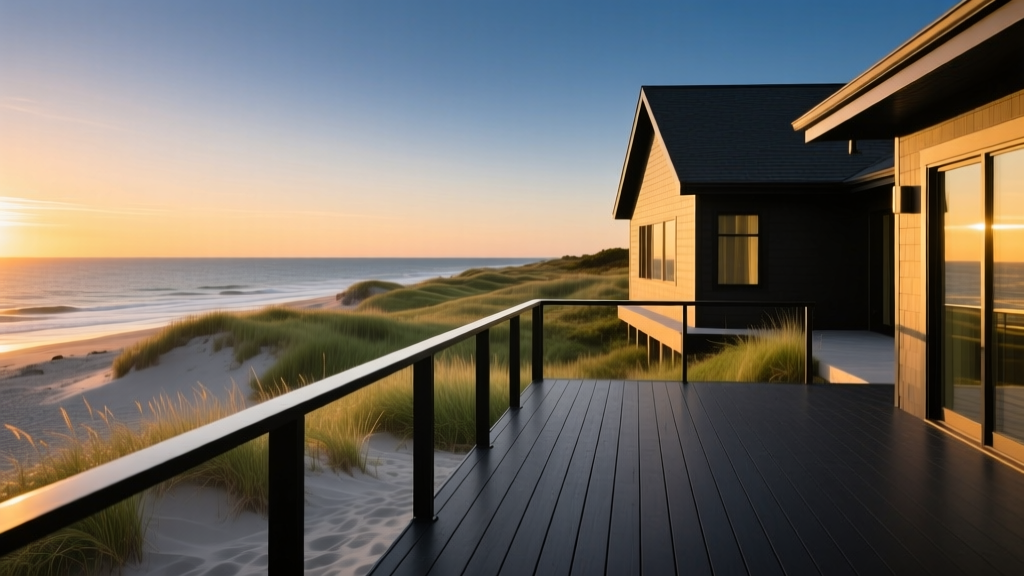
Top Deck Railing Materials for Barnstable Homes
Marine-Grade Aluminum (The Coastal Standard)
Powder-coated aluminum remains the undisputed workhorse for Cape Cod deck railings. However, not all aluminum is created equal. For Barnstable properties, specify extrusions finished with an AAMA 2604 or 2605 fluoropolymer powder coat. This specification ensures the finish will not chalk, fade, or peel despite continuous UV and salt exposure.
Top Product Pick: Westbury Tuscany or Fortress Fe26. Both feature multi-stage pre-treatment processes that prevent sub-surface oxidation.
Never install aluminum railing posts directly into pressure-treated lumber (which contains copper-based preservatives like ACQ or MCQ) without a physical barrier. The copper will induce rapid galvanic corrosion in the aluminum. Always use heavy-duty rubber or PVC post isolators, or upgrade to 316 stainless steel mounting brackets.
Capped Composite (The Aesthetic Compromise)
For homeowners seeking the warm, textured look of wood without the rot, capped composite railings offer a viable alternative. The outer polymer shell completely encapsulates the wood-fiber core, preventing moisture intrusion and salt absorption.
Failure Mode to Avoid: Composite materials expand and contract significantly with temperature fluctuations. Barnstable summers can push deck surface temperatures past 140°F, while winter drops plunge below freezing. If installers do not leave the manufacturer-specified 1/8-inch expansion gaps at every butt joint and bracket connection, the rails will buckle or snap their mounting hardware during the July heat.
316 Stainless Steel Cable (The View Preserver)
For waterfront properties along Barnstable Harbor or Sandy Neck, preserving the ocean view is paramount. Stainless steel cable railings provide an unobstructed sightline while meeting code requirements.
Critical Specification: You must specify Type 316 marine-grade stainless steel (which contains molybdenum for chloride resistance). Type 304 stainless steel, often sold as standard by big-box retailers, will develop surface rust (tea-staining) within a single season in a Cape Cod salt-air environment. Ultra-Tec V5 fittings are the industry standard here, featuring a swageless design that allows for on-site tension adjustments—a necessity because cables will stretch and contract during New England freeze-thaw cycles.
Cellular PVC (The Historic District Favorite)
In areas like the Barnstable Village Historic District, modern metal railings may clash with traditional Cape Cod or Greek Revival architecture. Cellular PVC (such as Azek Premier) can be milled to replicate traditional wood balusters and wide top rails while resisting rot and insect damage.
The Catch: PVC becomes brittle in extreme cold and can sag under heavy snow loads if the bottom rail spans exceed 6 feet without intermediate support. Furthermore, dark colors absorb heat and cause PVC to warp; you are generally restricted to white or very light pastel paints, which aligns well with historic commission mandates.
Navigating Barnstable Zoning and Historic District Codes
Before purchasing materials, you must cross-reference your property's zoning status. The International Residential Code (IRC) Chapter 3 mandates that deck guards must be at least 36 inches high for residential decks, and the balusters must not allow a 4-inch sphere to pass through (to prevent child entrapment).
Historic Commission Overlay: If your home falls within a designated Barnstable historic district, the local historical commission holds jurisdiction over exterior alterations. According to guidelines aligned with the Massachusetts Historical Commission, replacing original wood railings with modern black aluminum or glass panels will likely be denied. Cellular PVC painted in historically accurate colors (e.g., Cape Cod Gray or Clam Shell White) is usually the only approved alternative to natural wood.
Installation Edge Cases: Fasteners and Footings in Sandy Soil
The material of the railing is only half the battle; the hardware securing it to the deck frame is where most coastal installations fail. Barnstable's soil is predominantly sandy and loamy, which affects how deck footings handle lateral wind loads transferred by the railings.
- Fastener Grade: Discard standard hot-dipped galvanized (HDG) screws. In a salt-spray zone, HDG zinc coatings degrade rapidly. Use 316 stainless steel structural screws (such as FastenMaster FlatLOK or Simpson Strong-Tie 316-SS) for all post-to-rim connections.
- Post Tensioning: A 50 mph gust hitting a 36-inch high railing exerts massive leverage on the post base. Surface-mounted post bases are insufficient for coastal wind loads. Use through-bolted structural post anchors (like the Simpson Strong-Tie DTT2Z) that tie the railing post directly into the deck's internal joist framing, not just the rim board.
- Sleeve Anchors in Concrete: If mounting to a concrete patio or masonry stoop, use epoxy-set threaded rods rather than mechanical wedge anchors, which can crack the concrete in freeze-thaw cycles and allow saltwater to infiltrate the hole.
Decision Framework: Which Material Fits Your Barnstable Property?
Use this practical decision tree to finalize your material selection based on your specific property constraints:
1. Is your property in a Historic District?
Yes: Choose Cellular PVC or naturally rot-resistant hardwoods (Ipe/Mahogany) painted in approved historic colors.
No: Proceed to step 2.
2. Is the deck facing direct ocean front (unobstructed South/North exposure)?
Yes: Choose 316 Stainless Steel Cable (for views) or AAMA 2605 Powder-Coated Aluminum (for maximum wind/salt deflection). Avoid dark-colored composites, which will fade and warp under direct, unshaded UV exposure.
No (Shielded by trees or neighboring structures): Proceed to step 3.
3. What is your maintenance tolerance?
Zero Maintenance: Marine-Grade Aluminum. It requires only an occasional rinse with a garden hose to remove salt buildup.
Willing to clean annually: Capped Composite. Requires a soft-bristle brush and mild soap to prevent mildew in the shaded, humid pockets common in wooded Cape Cod lots.
By matching the specific micro-environmental stressors of your Barnstable lot with the correct material specifications and marine-grade hardware, you can ensure your outdoor space remains safe, code-compliant, and visually striking for decades.
Written by
James ThorntonJames Thornton is a construction industry veteran with 25 years of hands-on experience in wood framing, lumber grading, and residential building codes. He started as a framing carpenter in rural Oregon, earned his ICC Residential Building Inspector certification, and eventually became a senior plan reviewer for the City of Portland Bureau of Development Services. James holds a B.S. in Wood Science & Technology from Oregon State University and is a certified lumber grader through the West Coast Lumber Inspection Bureau (WCLIB). He has inspected over 3,000 residential construction sites and authored the city's internal guide on advanced framing techniques (2x6 at 24" O.C.). James lives in Bend, OR, where he builds custom timber-frame cabins and competes in lumberjack sports.
More from James Thornton
View all
Insulation
Best Home Insulation Materials: Complete 2026 Guide
Compare top home insulation materials for 2026. Find R-values, installed costs per square foot, and best uses for fiberglass, spray foam, and mineral wool.
Aug 4, 2026

Sustainable Building
Certify Your Green Building Material for LEED and WELL
Step-by-step guide to certifying a green building material for LEED v5 and WELL v2. Master EPDs, HPDs, and VOC limits for 2026 project specifications.
Aug 4, 2026

Stone & Masonry
Veneer Stacked Stone Panels: Interior Design & Style Showcase
Discover how veneer stacked stone panels transform interiors. Explore modern design profiles, material pairings, and technical installation specs.
Aug 4, 2026