Most Heat Resistant Decking Materials Compared (2026)
Compare the most heat resistant decking materials for 2026. Analyze aluminum, PVC, and composite surface temperatures, SRI ratings, and costs.
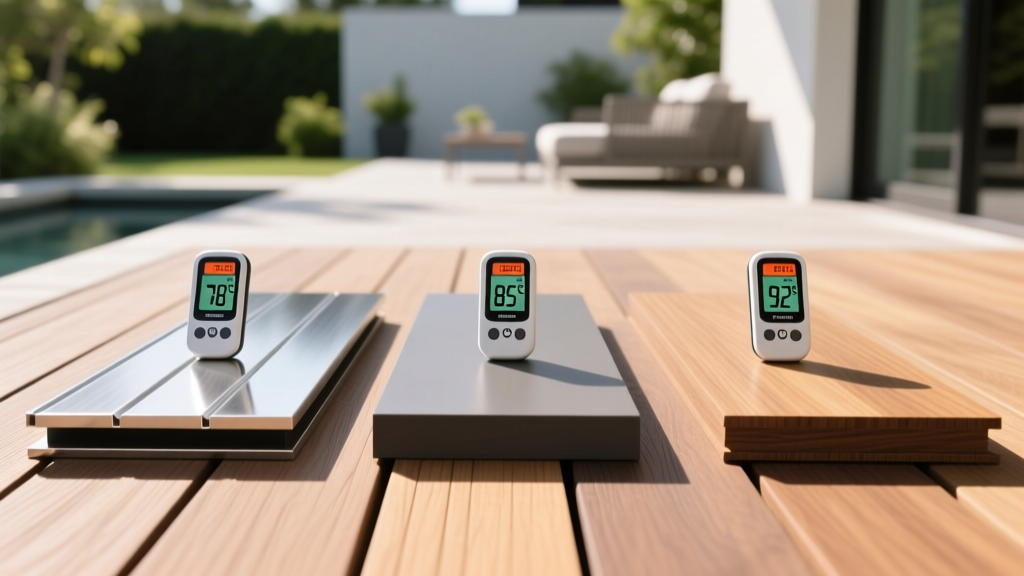
The Physics of Barefoot Comfort: SRI and Thermal Mass
When ambient summer temperatures exceed 95°F, standard dark-capped composite decking can reach surface temperatures of 155°F to 170°F—hot enough to cause third-degree burns in under two seconds. Selecting the most heat resistant decking materials requires understanding two distinct physical properties: Solar Reflectance Index (SRI) and thermal conductivity. According to the EPA Heat Island Effect guidelines, SRI measures a surface's ability to reject solar heat, combining both reflectance and emittance into a single metric (0 to 100+). However, SRI alone does not dictate barefoot comfort. Thermal conductivity determines how rapidly a material transfers absorbed heat to the soles of your feet. A material with low thermal mass and high conductivity (like aluminum) will dissipate heat rapidly, while dense cellular structures (like wood) act as insulators, keeping the surface cooler to the touch despite lower SRI ratings.
2026 Heat-Resistant Decking Material Matrix
The following matrix compares the thermal performance, cost, and physical characteristics of the top decking substrates engineered for high-heat climates like Arizona, Texas, and Florida.
| Material Substrate | Surface Temp (95°F Day) | SRI Range (Light Colors) | Material Cost (per sq ft) | Thermal Expansion Rate |
|---|---|---|---|---|
| Powder-Coated Aluminum | 98°F - 108°F | 45 - 55 | $16.00 - $22.00 | Very Low |
| Advanced PVC (Cellular) | 115°F - 125°F | 35 - 45 | $11.00 - $14.00 | Moderate |
| IR-Reflective Capped Composite | 120°F - 130°F | 25 - 35 | $9.00 - $12.00 | High |
| Thermally Modified Hardwood | 110°F - 120°F | 15 - 25 | $13.00 - $17.00 | Low |
Aluminum Decking: The Undisputed Temperature Champion
For extreme heat zones where barefoot traffic is non-negotiable, marine-grade extruded aluminum remains the absolute benchmark. Brands like Wahoo Decks (AridDek) and Dexerdry utilize 6063-T6 aluminum alloy with a specialized AAMA 2604 powder-coat finish. This finish is critical; bare aluminum has a low SRI and high glare, but modern matte-finish powder coatings in colors like 'Sandstone' or 'Desert Clay' push the SRI into the 50s while eliminating glare.
Why Aluminum Stays Cool
Aluminum's high thermal conductivity (approx. 205 W/m·K) means it does not trap heat in its core. When a cloud passes over or a breeze hits the deck, the heat dissipates almost instantly. Furthermore, aluminum decking extrusions are typically hollow or feature deep vertical ribs. This creates an air gap beneath the walking surface, providing passive ventilation that prevents heat from radiating back up from the joists.
Advanced PVC and 'Cool-Touch' Composites
If the industrial aesthetic of aluminum does not fit your architectural style, advanced polymers are the next best option. The industry has shifted heavily toward infrared (IR) reflective pigment technology in 2026.
Advanced PVC: TimberTech Landmark Collection
Cellular PVC, such as the TimberTech Advanced PVC Landmark Collection, features a highly reflective polymer cap. Because PVC lacks the wood-flour core found in traditional composites, it has a lower thermal mass. Colors like 'French White Oak' and 'Coastal Cedar' utilize specialized titanium dioxide (TiO2) and IR-reflective pigments that bounce near-infrared radiation back into the atmosphere. On a 95°F day, these light-toned PVC boards typically max out around 118°F—warm, but generally tolerable for brief barefoot contact.
Capped Composite: Trex Transcend Lineage
Traditional wood-plastic composites are notorious heat sinks. However, the Trex Transcend Lineage series was specifically engineered to combat this. By integrating heat-mitigating technology into the high-density polyethylene (HDPE) cap layer, Trex reduced surface temperatures by up to 40°F compared to their older generations. The 'Biscayne' and 'Carmel' colorways are mandatory for hot climates; selecting 'Jasper' or darker tones will negate the IR-reflective benefits, pushing surface temperatures back above 140°F.
Thermally Modified Wood and Tropical Hardwoods
Natural wood possesses a cellular structure filled with microscopic air pockets, making it a natural thermal insulator. According to research published by the USDA Forest Products Laboratory, the thermal conductivity of dense hardwoods is exponentially lower than that of plastics or metals.
- Thermally Modified Ash (e.g., Thermory): Heated to over 400°F in an oxygen-deprived kiln, the wood's sugars and hemicellulose are baked out. This process not only stabilizes the wood against moisture but slightly alters its thermal properties, resulting in a surface that stays remarkably cool (110°F - 115°F on a hot day). Cost: $14 - $17 per sq ft.
- Ipe (Brazilian Walnut): With a Janka hardness rating of 3,680 lbf, Ipe is incredibly dense. While its dark brown color absorbs visible light, its low thermal conductivity prevents that heat from transferring rapidly to the surface. However, Ipe requires annual UV-inhibitor oiling in high-sun zones to prevent surface checking and silvering.
Climate-Specific Selection Framework
Choosing the right material requires mapping your local microclimate to the material's physical limitations. Use this decision framework to finalize your 2026 decking purchase:
Zone 1: Extreme Desert (AZ, NV, Southern CA)
Verdict: Powder-Coated Aluminum or Light PVC.
Why: Ambient temps regularly exceed 110°F. Composites will suffer from extreme thermal expansion, leading to buckling if joist spacing exceeds 12 inches on-center. Aluminum's structural rigidity and heat dissipation are mandatory here.
Zone 2: High Humidity & High Heat (FL, TX, Gulf Coast)
Verdict: Advanced PVC or Thermally Modified Wood.
Why: UV radiation is paired with intense moisture and salt air. Aluminum is excellent but can be slippery when wet. Advanced PVC offers superior moisture resistance and mold immunity compared to wood-flour composites, which can harbor mildew in the embossed wood-grain textures.
Zone 3: Seasonal Heat (Midwest, Northeast, Pacific Northwest)
Verdict: IR-Reflective Capped Composite.
Why: Peak heat only lasts for 3-4 weeks. The cost premium of aluminum or advanced PVC is harder to justify. A high-quality capped composite in a mid-tone color provides adequate summer comfort while handling winter freeze-thaw cycles perfectly.
Critical Installation Adjustments for High-Heat Zones
Even the most heat resistant decking materials will fail if the substructure is not prepped for extreme thermal loads. When building in high-heat regions, you must adapt your framing and fastening methods.
1. Joist Protection is Non-Negotiable
In direct sunlight, the surface of your decking might reach 125°F, but the heat radiating downward into the joist bays can bake the tops of your pressure-treated pine joists at 145°F+. This accelerates the drying and checking of the lumber, leading to premature rot and fastener pull-through. Apply a high-grade butyl flashing tape (such as Trex Protect or G-Tape) to the top edge of every joist and beam before laying the deck boards.
2. Hidden Fastener Systems and Lateral Movement
According to structural guidelines referenced by the Building America Solution Center, composite and PVC materials expand and contract significantly along their length. In regions with 80-degree diurnal temperature swings (e.g., 40°F nights to 120°F days), a 20-foot composite board can expand by nearly 3/8 of an inch. You must use hidden fastener systems (like the Camo Edge Fastening System or brand-specific concealed clips) that allow for lateral movement. Face-screwing the boards will restrict this movement, resulting in warped boards or popped screw heads by mid-July.
3. Substructure Ventilation
Trapped heat beneath the deck accelerates the degradation of both the joists and the underside of the decking boards. If your deck is low-to-grade (under 24 inches of clearance), install lattice skirting with a minimum of 15% open ventilation area, or utilize specialized deck skirting vents to ensure cross-breezes can flush out the trapped thermal mass beneath the deck.
Written by
David NakamuraDavid Nakamura is a licensed architect (AIA) and construction technology writer focused on sustainable building methods, mass timber engineering, and high-performance building envelopes. He holds a Master of Architecture from the University of Washington and is a certified Passive House Consultant (CPHC). David spent eight years at the Seattle firm Mithun, where he led the design of three LEED Platinum projects, before founding his own practice specializing in net-zero residential design. He serves on the editorial advisory board of GreenBuilder Magazine and has authored peer-reviewed papers on cross-laminated timber (CLT) connections for the Journal of Structural Engineering. In his spare time, David teaches woodworking at Pratt Fine Arts Center and kayaks the Puget Sound.
More from David Nakamura
View all
Construction Cost
Labor Cost to Build a Deck Per Sq Ft: 2026 Installation Guide
Discover the exact labor cost to build a deck per sq ft in 2026. This installation guide breaks down contractor rates, complexity factors, and hidden fees.
Aug 4, 2026

Construction Cost
How Much Does It Cost to Build a 3 Bedroom House? Financing Guide
Learn exactly how much it costs to build a 3 bedroom house and explore 2026 financing options, construction loan types, and budget frameworks for your build.
Aug 4, 2026

Construction Cost
Cost to Build a Tennis Court: 2026 Guide
How much does it cost to build a tennis court in 2026? Breakdowns for asphalt, concrete, and synthetic surfaces plus fencing and lighting.
Jul 30, 2026