Class A Decking Selection: Fire-Rated Material Taxonomy for WUI Zones
Navigate Class A decking materials for WUI zones. Compare aluminum, mineral-based composites, and fire-rated PVC with costs and ASTM E84 data.
The Regulatory Baseline: ASTM E84 and Chapter 7A
When building in wildfire-prone regions, standard composite or pressure-treated wood decks are no longer viable. The regulatory threshold for exterior decking in the Wildland-Urban Interface (WUI) is the Class A fire rating. According to the ASTM E84 standard (also known as UL 723), a Class A material must demonstrate a Flame Spread Index (FSI) of 0 to 25 and a Smoke Developed Index (SDI) of less than 450. As of 2026, jurisdictions adopting the International Wildland-Urban Interface Code (IWUIC) and California Building Code Chapter 7A strictly enforce these metrics. However, specifying Class A decking requires navigating a complex taxonomy of materials, as the term "Class A" applies to both the raw material and the tested assembly.
Material Taxonomy: What Actually Achieves Class A?
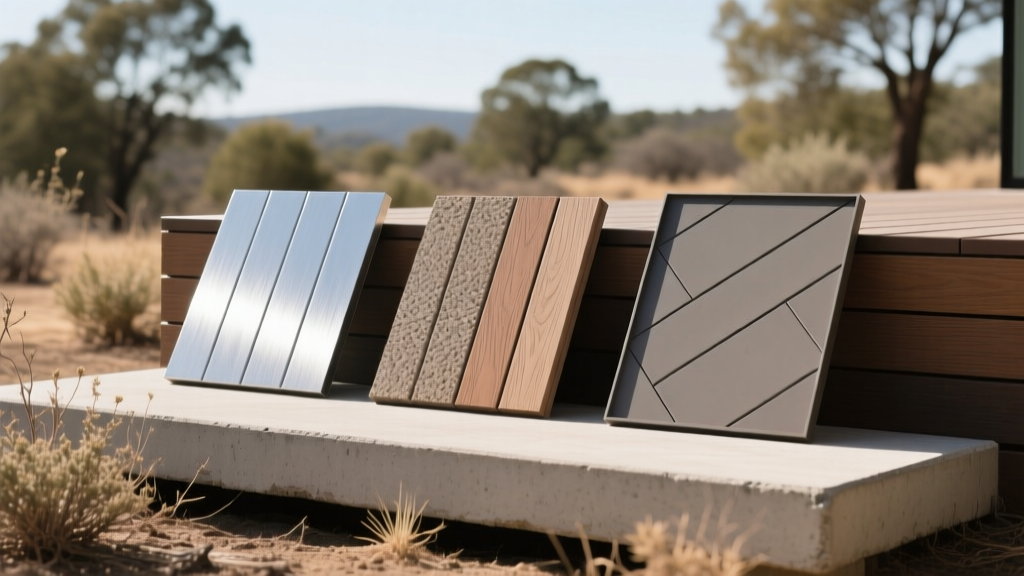
The market for fire-rated decking has expanded significantly, moving beyond basic non-combustible metals into advanced polymer and mineral composites. Below is the technical breakdown of the four primary material categories that achieve Class A status.
1. Extruded Aluminum Decking
Aluminum is the only decking material that is inherently non-combustible, yielding an FSI of 0. Products like Wahoo Decks (Ariddek) and LockDry utilize marine-grade 6061-T6 aluminum extrusions with interlocking watertight channels.
- Thermal Performance: Bare aluminum can reach surface temperatures exceeding 140°F in direct summer sun. Modern 2026 iterations utilize specialized Kynar 500® or powder-coat finishes with infrared-reflective pigments to reduce heat retention by up to 20%.
- Structural Span: Aluminum decking can typically span 24 inches on center (OC), reducing the required substructure joist count compared to wood or composite (which usually require 16 inches OC).
- Cost: $16.00 to $24.00 per square foot (material only).
2. Mineral-Based Composites (MBC)
Mineral-based composites represent the newest tier of fire-resistant decking. By replacing traditional wood flour fillers with magnesium oxide or fly-ash minerals, manufacturers eliminate the cellulose that fuels fires. Deckorators MBC lines are a prime example, achieving Class A ratings without relying on chemical fire retardants that can leach over time.
- Dimensional Stability: MBC expands and contracts roughly 40% less than traditional wood-plastic composites (WPC), allowing for tighter installation tolerances.
- Weight: Significantly heavier than PVC or aluminum, requiring robust structural framing and heavy-duty hidden fastener systems.
- Cost: $11.00 to $15.00 per square foot.
3. Fire-Retardant Capped PVC
Standard PVC decking is highly flammable and melts rapidly. However, specific formulations engineered with intumescent fire-retardant core technologies can achieve Class A ratings. AZEK’s Landmark collection with FireResist technology utilizes a proprietary core that chars and expands when exposed to extreme heat, cutting off oxygen to the flame front.
- Aesthetics: Offers the most realistic wood-grain emulation among non-wood options, utilizing wire-brushed surface textures.
- Vulnerability: While the surface resists ignition, the underlying PVC can still compromise structurally under prolonged, extreme radiant heat from an adjacent structure fire.
- Cost: $9.50 to $13.50 per square foot.
4. Dense Hardwoods (The Assembly Caveat)
Tropical hardwoods like Ipe (Tabebuia spp.) and Cumaru naturally possess high density and low resin content, granting them favorable fire resistance. However, raw Ipe typically yields an FSI of 35-45 (Class B). To achieve Class A, hardwoods must be pressure-impregnated with fire-retardant salts (e.g., Fireline-treated lumber) or installed as part of a highly specific, tested assembly that includes non-combustible sub-ventilation meshes and specific joist spacing. Relying on untreated Ipe for strict WUI compliance is a frequent specification error.
A common failure point in WUI inspections is confusing a Class A material rating with a Class A assembly rating. The California OSFM WUI Approved Materials List explicitly requires that decking be installed exactly as tested. If a composite board achieved its Class A rating using a specific 2x6 pressure-treated joist and a 1/4-inch steel mesh underlayment, substituting standard joists or omitting the mesh voids the fire rating and will fail municipal inspection.
WUI Compliance Selection Matrix
The following matrix provides a comparative baseline for architects and builders selecting materials for high-hazard fire zones.
| Material Type | Flame Spread Index (FSI) | Ember Intrusion Risk | Thermal Expansion | Est. Material Cost (2026) |
|---|---|---|---|---|
| Extruded Aluminum | 0 (Non-Combustible) | Low (if interlocking) | High (Requires expansion gaps) | $16 - $24 / sq. ft. |
| Mineral-Based Composite | 15 - 25 | Moderate (Surface texture) | Very Low | $11 - $15 / sq. ft. |
| Fire-Retardant PVC | 20 - 25 | Low (Smooth surface) | Moderate | $9.50 - $13.50 / sq. ft. |
| FR-Treated Hardwood | 20 - 25 | High (Checking/splitting) | Low | $14 - $19 / sq. ft. |
Substructure and Fastener Vulnerabilities
Selecting a Class A deck board is only 50% of the fire-mitigation equation. The substructure and fastening mechanisms introduce severe vulnerabilities if ignored during the specification phase.
The Joist and Beam Threat
In a WUI event, wind-blown embers (firebrands) frequently accumulate in the gaps between deck boards. If the underlying joists are standard untreated SPF (Spruce-Pine-Fir) lumber, the deck can ignite from beneath, regardless of the Class A rating of the surface boards. Best practice for 2026 WUI construction mandates the use of fire-retardant-treated (FRT) wood framing, light-gauge steel joists (LGS), or the application of intumescent joist tape (such as Trex Protect or Butyl-based alternatives) over the top edge of every wooden joist to prevent ember ignition at the board-to-joist interface.
Hidden Fastener Systems
Top-down face screws create small depressions where embers can pool and smolder. Hidden fastener systems (e.g., Trex Hideaway or CAMO Edge) are mandatory for minimizing ember accumulation. However, the fastener clips themselves must be rated for high heat. Standard plastic composite clips will melt at approximately 350°F, causing the deck boards to detach and expose the substructure to direct flame. Specify stainless steel or high-temperature polymer (e.g., PEEK) hidden clips for all Class A assemblies.
Procurement and Lead Time Considerations
Unlike standard composite decking, which is heavily stocked at big-box retailers, true Class A WUI-compliant materials operate on specialized supply chains. Extruded aluminum decking and specialized MBC boards are frequently manufactured to order or held in limited regional distribution centers. For commercial projects or large custom residential builds in California, Colorado, or Oregon, procurement lead times for WUI-approved materials currently average 8 to 14 weeks. Builders must integrate decking specifications into the initial foundation and framing permit sets to ensure materials arrive before the exterior envelope inspection deadlines.
Final Specification Checklist for WUI Projects
Before finalizing your material schedule, verify the following parameters against your local building department's specific WUI amendments:
- Verify the Exact SKU: Ensure the specific product color and SKU is listed on the state or county’s approved WUI materials database. A brand may have Class A approval for their gray boards, but the dark brown variant may fail due to heat-absorption characteristics altering the test results.
- Specify the Under-Deck Mesh: Include 1/8-inch or 1/4-inch non-combustible metal mesh over the joists in the architectural plans to block embers from entering the sub-floor cavity.
- Mandate FRT or Steel Framing: Eliminate raw, untreated dimensional lumber from the deck framing schedule.
- Detail the Perimeter: Specify non-combustible skirting (such as fiber-cement or metal lath with stucco) to enclose the under-deck area, preventing wind-blown debris from accumulating beneath the structure.
By treating Class A decking not as a single product purchase, but as a holistic, code-driven assembly, builders can deliver outdoor spaces that survive the most stringent fire inspections and, more importantly, the realities of modern wildfire behavior. For ongoing guidance on defensible space and material integration, refer to the NFPA Firewise USA program resources.