Cost of Labor to Build a Deck: Installation Phase Breakdown
Discover the true cost of labor to build a deck. We break down installation pricing by phase, material complexity, and hidden contractor multipliers.
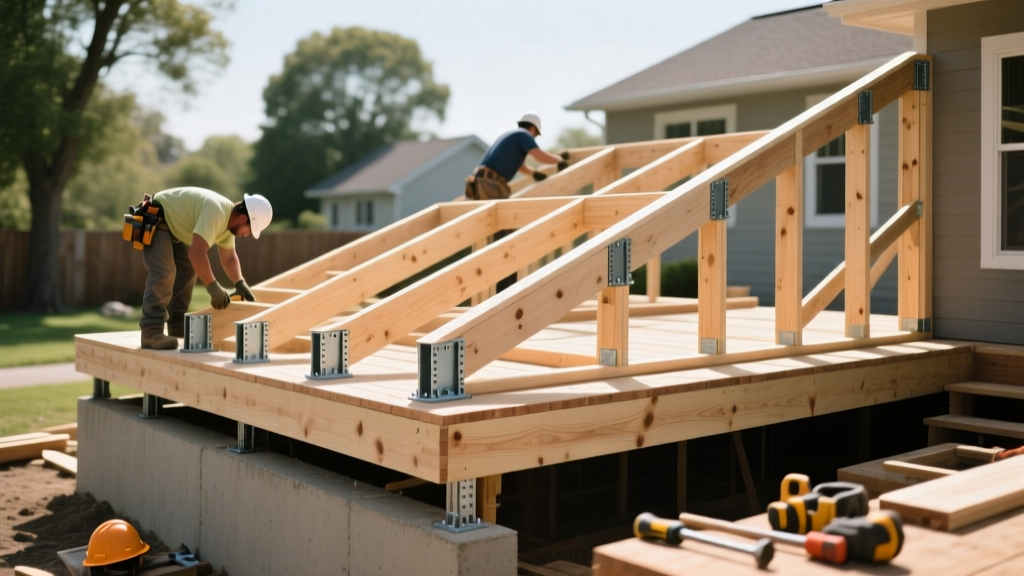
The Anatomy of Deck Labor Costs
When budgeting for an outdoor living space, materials often dominate the initial conversation, but the cost of labor to build a deck typically accounts for 40% to 60% of the total project price. Unlike material costs, which are relatively fixed based on square footage, labor rates fluctuate wildly based on site topography, structural complexity, and regional demand. According to comprehensive industry data from HomeGuide, the national average labor cost for deck installation ranges from $15 to $45 per square foot, but this broad metric obscures the specific financial drivers within each construction phase.
Understanding how contractors allocate their hours is the only way to accurately evaluate a bid, identify padded estimates, and make informed decisions about design modifications that directly impact the bottom line.
2026 National Labor Rate Benchmarks
- General Carpenter: $45 - $75 per hour
- Specialized Deck Builder: $65 - $120 per hour
- Average Crew Size: 3 to 4 professionals for a standard 400 sq. ft. build
- Standard Timeline: 5 to 10 working days from excavation to final railing install
Labor Cost Breakdown by Installation Phase
A professional deck build is not a single continuous task; it is a sequenced series of specialized trades. Below is a detailed matrix showing how labor hours and costs are distributed across the four primary construction phases.
| Installation Phase | % of Labor Budget | Avg Labor Cost (per sq. ft.) | Primary Time Drivers |
|---|---|---|---|
| Site Prep & Footings | 15% - 20% | $3.00 - $8.00 | Soil conditions, frost line depth, demolition |
| Framing & Joists | 30% - 35% | $5.00 - $12.00 | Beam spans, blocking, ledger board flashing |
| Decking & Fascia | 25% - 30% | $4.00 - $14.00 | Fastener type, board pattern, picture framing |
| Railings & Stairs | 15% - 25% | $4.00 - $15.00 | Stringer cutting, glass/cable tensioning |
Phase 1: Site Prep and Footing Excavation
Labor costs in this phase are entirely dictated by what lies beneath the soil. Digging below the frost line (which can be 36 to 48 inches deep in northern climates) to pour traditional concrete sonotubes is highly labor-intensive. A crew might spend 12 to 16 hours just hand-digging and hauling away soil for a standard 12x16 deck.
Pro Insight: Many modern contractors are pivoting to helical piles (such as Techno Metal Post). While the material cost per pile is higher, a hydraulic drive machine can install a pile to load-bearing depth in 15 minutes. This eliminates digging, curing time, and concrete mixing, effectively cutting footing labor costs by up to 40%.
Phase 2: Structural Framing
The American Wood Council emphasizes strict adherence to structural spans and ledger board connections. Framing labor spikes when designs require complex load transfers. For instance, attaching a ledger board to a house with masonry or stucco siding requires careful demolition, custom flashing integration, and masonry anchors, adding 4 to 6 hours of specialized labor compared to bolting directly into a standard wood-framed rim joist. Furthermore, installing mid-span blocking (required for composite decking to prevent sagging and ensure hidden fastener alignment) adds roughly 15% to the framing labor time.
Phase 3: Decking Installation
The laying of the deck boards is where design choices most visibly impact the cost of labor to build a deck. Running boards parallel to the house is the baseline. However, opting for a diagonal pattern increases labor time by 25% due to the continuous measuring, angled cutting, and increased material waste.
Additionally, 'picture framing' the perimeter of the deck—which hides the end grains of composite boards and provides a finished look—requires precise 45-degree miter cuts and the installation of extra perimeter joist blocking. Expect to pay a 20% to 30% labor premium for picture-framed composite decks.
Hidden Labor Multipliers That Inflate Your Bill
Contractors build contingencies into their bids when they spot specific site challenges. If your property features any of the following, expect your labor estimate to reflect these multipliers:
- Second-Story Hoisting: If your deck is elevated and lacks ground-level access, materials must be hoisted. Manual hoisting of 20-foot composite boards and steel beams adds 10-15 hours of labor. Crane rentals can sometimes be cheaper than paying a crew for three days of manual lifting.
- Steep Slope Grading: Building on a slope requires stepped footings and retaining wall integration. Scaffold erection for elevated framing also slows down the crew's mobility, reducing overall efficiency by up to 20%.
- Old Deck Demolition: Tearing down an existing structure, pulling old concrete footings, and hauling the debris to a landfill typically costs $5 to $10 per square foot in labor and disposal fees alone.
- Utility Rerouting: If HVAC lines, gas meters, or main electrical conduits run along the planned framing path, licensed tradespeople must be hired to reroute them before the deck crew can begin.
Material Complexity vs. Labor Hours
Not all decking materials install at the same speed. The fastening system dictates the pace of the crew. According to the Trex Installation Guide, utilizing hidden fastener systems requires precise joist spacing (often strictly 16 inches on-center) and specific gapping tools, which slows down the initial installation compared to face-screwing pressure-treated pine.
Pressure-Treated Wood
Labor Speed: Fast
Method: Face-screwing or top-nailing.
Insight: Boards can be cut and fastened rapidly without specialized clips. However, post-installation labor for sanding and staining adds 2-3 days of work if contracted out.
Capped Composite
Labor Speed: Moderate
Method: Hidden clips (e.g., Trex Hideaway) or color-matched top screws.
Insight: Requires router bits for grooved edges if not pre-grooved. Thermal expansion gapping must be strictly monitored, slowing down the crew.
PVC / Aluminum
Labor Speed: Slow
Method: Proprietary track systems or specialized pneumatic fasteners.
Insight: Aluminum decking (like Dexerdry) requires a watertight interlocking installation. Mistakes in the sub-structure leveling cause loud squeaks and water leaks, demanding highly meticulous framing.
DIY vs. Pro Installation: Where to Draw the Line
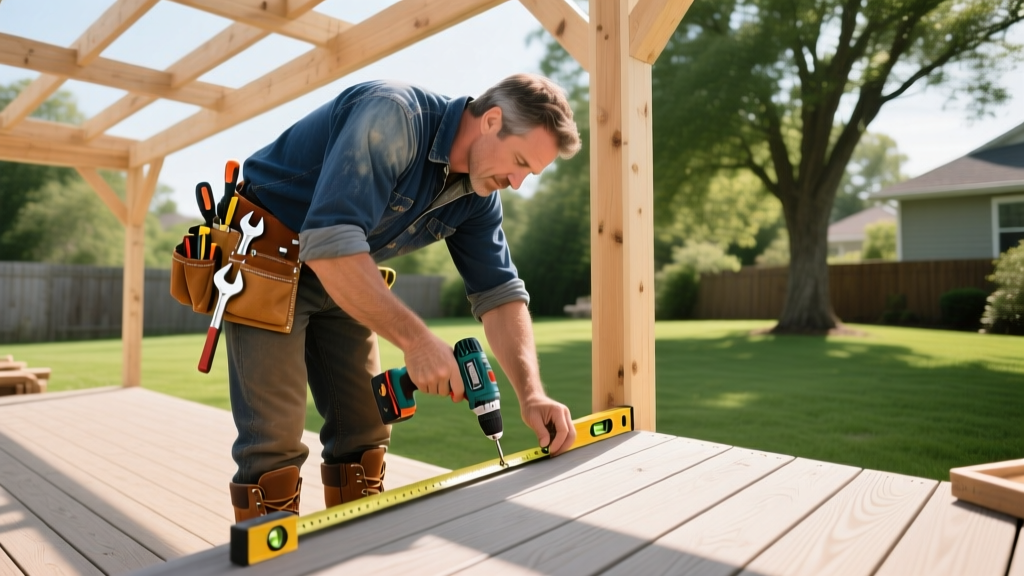
Homeowners looking to reduce the cost of labor to build a deck often consider a hybrid approach. While taking on the entire project requires advanced carpentry skills and knowledge of local load-bearing codes, specific phases can be safely outsourced to the homeowner to shave thousands off the final bill.
- Demo and Haul-Away (DIY Safe): Renting a dumpster and spending a weekend dismantling the old deck saves $1,500 to $3,000 in contractor labor.
- Footing Excavation (DIY Safe): If you choose poured concrete footings, digging the holes yourself and having the contractor form and pour them is a massive labor saver.
- Structural Framing (Pro Required): Never DIY the ledger board attachment or beam splicing. Structural failure here risks catastrophic collapse and voids home insurance coverage.
- Finishing & Staining (DIY Safe): If building with wood, applying the sealant or stain yourself saves $2 to $4 per square foot in finishing labor.
"The most expensive mistake a homeowner can make is attempting to save on labor by hiring an unlicensed handyman for the structural framing, only to fail the municipal building inspection. The cost to tear down non-compliant framing and hire a certified deck builder to redo it will triple your original labor budget."
How to Vet and Negotiate Deck Builder Quotes
When evaluating bids, do not simply look at the bottom line. A professional contractor should provide a line-item breakdown separating materials, labor, permit fees, and site cleanup.
To ensure you are getting a fair rate, ask the contractor these three specific questions:
- "Does this labor quote include the installation of mid-span blocking and joist tape?" (Joist tape protects the framing from rot; omitting it is a common way contractors artificially lower bids).
- "How are you handling the ledger board flashing?" (The correct answer involves peeling back the house siding, installing a continuous metal flashing membrane, and integrating it with the weather-resistant barrier. If they say 'caulk and screw', walk away).
- "Is site grading and final cleanup included in the labor rate?" (Ensure you won't be hit with a $500 surprise charge for soil removal or power-washing the finished composite boards).
By dissecting the cost of labor to build a deck into its constituent phases and understanding the mechanical realities of the materials involved, you transition from a passive buyer to an informed project manager, ensuring your outdoor space is built efficiently, safely, and within budget.
Written by
Sarah WhitfieldSarah Whitfield is a chartered quantity surveyor (MRICS) and construction cost analyst with 15 years of experience in material pricing, procurement strategy, and project budgeting. She earned her degree in Construction Management from the University of Reading (UK) and has worked on projects ranging from $2M custom homes to $180M mixed-use developments across North America and Europe. Sarah currently leads cost estimating for BuildMat Insight, maintaining a proprietary database of 4,000+ material price points updated quarterly. She is a frequent contributor to RSMeans cost data panels and has presented at the International Cost Engineering Council (ICEC) congress. Based in Denver, CO, Sarah is an avid trail runner and volunteer mentor for Women in Construction.
More from Sarah Whitfield
View all
Wood & Lumber
What Are the Different Types of Wood? A Builder's Guide
Compare structural softwoods, finish hardwoods, and engineered lumber. Analyze Janka ratings, MOE values, and 2026 pricing for construction.
Aug 4, 2026

Walls & Panels
Steel Framing vs Wood Framing: Corrosion and Moisture Defense
Compare steel framing vs wood framing for moisture resistance. Learn about galvanized coatings, condensation risks, and corrosion protection strategies.
Jul 21, 2026

Stone & Masonry
How to Cut Stone Veneer: Wet Saw vs Grinder Comparison
Compare the best tools for cutting stone veneer. We review wet saws, angle grinders, and chop saws to help you achieve clean, chip-free cuts.
Jul 21, 2026