Deck Brush Brand Deep-Dive: Malco, DeckWise, and OXO Compared
Compare top deck brush brands including Malco, DeckWise, and OXO. Learn which bristle types safely clean wood, composite, and PVC decking.
The Engineering Behind Professional Deck Brushes
Selecting the correct deck brush is a critical variable in outdoor surface maintenance, directly impacting the longevity of both wood and capped-composite materials. While consumer-grade brushes often rely on uniform, straight-cut nylon bristles that either fail to agitate embedded dirt or aggressively scratch polymer caps, professional-grade product lines engineer specific bristle diameters, Shore D hardness ratings, and tip configurations for distinct decking substrates. In 2026, with composite decking manufacturers utilizing thinner, more realistic polymer cap layers (often between 1.5mm and 2.0mm thick), using an overly aggressive brush can permanently micro-scratch the surface, creating microscopic grooves that trap organic matter and accelerate mold growth.
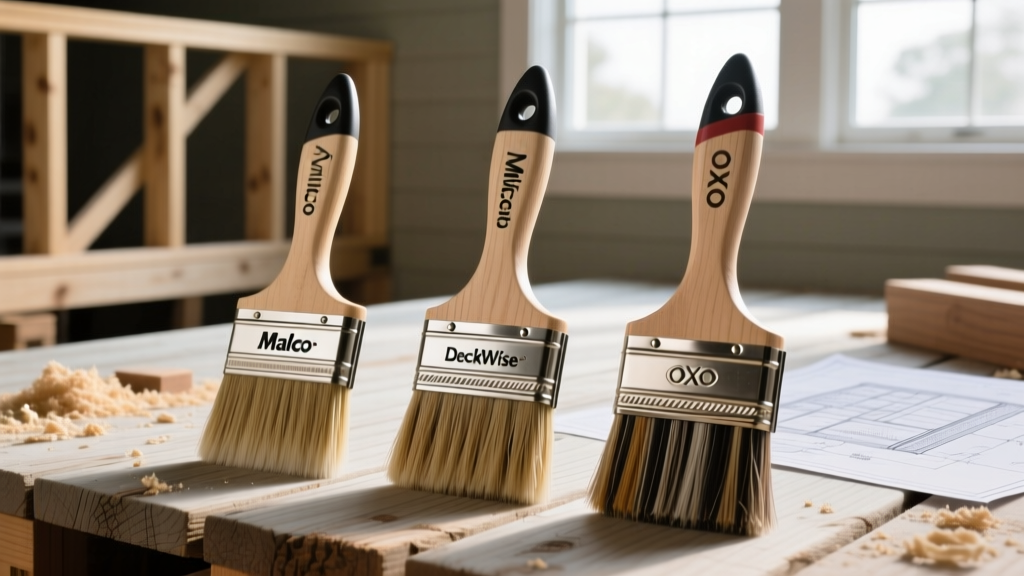
This deep-dive analyzes three dominant brands in the deck care space—Malco, DeckWise, and OXO Good Grips—breaking down their specific product lines, bristle engineering, and optimal use cases for pressure-treated lumber, tropical hardwoods, and modern composite decking.
Bristle Architecture: Flag-Tipped vs. Straight-Cut
Before evaluating specific brands, it is essential to understand bristle architecture, which dictates a brush's agitation profile and liquid retention.
- Flag-Tipped Bristles: The ends of these synthetic bristles are mechanically or chemically split into fine, feather-like tips. This design increases the surface area, allowing the brush to hold more cleaning solution (like sodium percarbonate mixtures) and providing a softer, more forgiving scrubbing action. Flag-tipped brushes are mandatory for capped composite and PVC decking.
- Straight-Cut Bristles: These bristles feature a blunt, flat edge. They provide maximum downward stiffness and aggressive scraping power, making them ideal for stripping oxidized wood fibers from weathered pressure-treated pine or lifting embedded mill glaze from new Ipe and Tigerwood.
Brand Deep-Dive: Malco, DeckWise, and OXO
Malco: The Heavy-Duty Polypropylene Workhorse
Malco Products is a staple in the professional restoration and contracting industry. Their deck brush line, particularly the Malco 10-Inch and 18-Inch Heavy-Duty Poly Scrub Brushes, is engineered for high-impact agitation on natural wood.
Key Specifications & Engineering:
- Bristle Material: Extruded polypropylene with a high Shore D hardness rating, designed to resist splaying when subjected to heavy downward pressure.
- Block Construction: Solid hardwood blocks with a reinforced metal bracket for standard threaded poles. The staple-set bristle anchoring is dense, preventing the brush from bottoming out on the block during aggressive scrubbing.
- Best Application: Pressure-treated southern yellow pine, cedar, and redwood. It excels at agitating brighteners (oxalic acid) and wood cleaners into the deep grain of rough-sawn lumber.
- 2026 Pricing: $22 to $38 depending on the block width (10" vs 18").
DeckWise: The Composite-Safe Specialist
DeckWise approaches deck maintenance from the perspective of modern composite and PVC material science. Their DeckWise Composite Deck Cleaning Brush is specifically calibrated to clean without compromising the aesthetic embossing of synthetic boards.
Key Specifications & Engineering:
- Bristle Material: Soft, flag-tipped nylon. The bristles are intentionally designed to flex and bend, allowing them to reach into the micro-crevices of embossed wood-grain patterns without acting as a cutting tool.
- Block Construction: Lightweight, chemical-resistant resin block. Unlike wood blocks that can harbor mildew if left damp on a deck, the resin block can be sanitized and dries rapidly.
- Best Application: Capped composite (Trex, Fiberon) and advanced PVC (TimberTech, AZEK). As noted in the TimberTech Care Guide, gentle agitation with soft bristles is required to lift pollen and organic stains without marring the PVC cap.
- 2026 Pricing: $28 to $35.
OXO Good Grips: Ergonomic Scrubbing for Spot Treatments
While Malco and DeckWise focus on broad-surface area cleaning, the OXO Good Grips Deck & Patio Scrub Brush dominates the localized stain removal category. It is engineered for the homeowner dealing with specific, high-traffic messes like BBQ grease drips, spilled tannins from potted plants, or localized bird droppings.
Key Specifications & Engineering:
- Bristle Material: Medium-stiffness thermoplastic elastomer (TPE) and nylon blend. It offers a middle-ground stiffness suitable for spot-cleaning both sealed wood and composite without requiring a telescopic pole.
- Ergonomics: The signature Santoprene rubber handle provides a non-slip grip even when wet and soapy, reducing wrist strain during targeted, high-pressure hand scrubbing.
- Best Application: Spot treatment of grease, sap, and localized organic stains on all decking types, as well as scrubbing deck railing spindles and fascia boards where a wide block brush cannot reach.
- 2026 Pricing: $14 to $18.
Compatibility Matrix: Matching Brush to Deck Material
Using the wrong brush profile is the leading cause of DIY deck restoration failures. Use the matrix below to match the brand and bristle type to your specific decking substrate.
| Decking Material | Recommended Brand / Line | Bristle Type | Agitation Risk |
|---|---|---|---|
| Pressure-Treated Pine | Malco Heavy-Duty Poly | Straight-Cut Polypropylene | Low (Wood is soft, but requires aggressive mill-glaze removal) |
| Tropical Hardwood (Ipe, Cumaru) | Malco Heavy-Duty Poly | Straight-Cut Polypropylene | None (Hardwood Janka rating > 2000 resists scratching) |
| Capped Composite (Trex, Fiberon) | DeckWise Composite Brush | Flag-Tipped Soft Nylon | High if wrong brush used (Polymer cap is easily scoured) |
| Advanced PVC (AZEK, TimberTech) | DeckWise Composite Brush | Flag-Tipped Soft Nylon | High (PVC scratches will trap dirt and appear as dark streaks) |
| Localized Grease / Sap Spots | OXO Good Grips Deck Scrub | Medium TPE / Nylon Blend | Medium (Use only with targeted degreaser, avoid broad dry-scrubbing) |
Pro-Tier Application Techniques and Dwell Times
The mechanical action of the brush is only half of the cleaning equation. The USDA Forest Products Laboratory emphasizes that chemical dwell time and proper agitation sequencing are required to lift tannins, mildew, and oxidation without damaging wood fibers or polymer caps.
The Sequential Agitation Method
- Pre-Wet the Surface: Always saturate the deck and surrounding landscaping with plain water before applying any cleaner. This prevents the decking from absorbing the chemical too deeply, which can lead to uneven bleaching on wood or chemical pooling on composite.
- Apply and Dwell: Apply your chosen cleaner (e.g., a sodium percarbonate-based oxygenated cleaner for wood, or a mild dish-soap and warm water solution for composite). Allow the solution to dwell for 10 to 15 minutes. Never let the cleaner dry on the surface.
- Directional Brushing: Agitate the surface using the deck brush. For natural wood, always brush parallel to the grain direction to avoid cross-grain scratching and fiber fraying. For composite decking, brush parallel to the embossed grain pattern to ensure the bristles reach into the textured grooves.
- Overlapping Strokes: Use a consistent overlapping pattern (e.g., 50% overlap on each pass) to ensure uniform agitation. Inconsistent brushing on wood will result in visible "striping" once the deck dries and is sealed.
- Low-PSI Rinse: Rinse the deck thoroughly. If using a pressure washer to assist the rinse, keep the PSI below 1,500 for composite and 2,000 for wood, utilizing a 40-degree fan tip held at least 12 inches from the surface.
"The most common mistake contractors make with composite decking is assuming that because the material is 'low maintenance,' it can withstand aggressive mechanical agitation. The polymer cap is essentially a hardened plastic shell; treating it like pressure-treated pine with a stiff poly brush will create micro-abrasions that permanently alter the light-refraction of the board, leaving dull, scuffed patches that cannot be buffed out."
Brush Maintenance and Longevity
To maximize the lifespan of your deck brush and prevent cross-contamination of mold spores between projects, proper tool sanitation is required. After every use, rinse the bristles thoroughly with a high-pressure hose to dislodge trapped wood fibers, dirt, and degraded polymer dust. For Malco hardwood-block brushes, store them in a dry, ventilated area off the ground to prevent the wooden block from warping or rotting. For DeckWise and OXO resin/rubber components, a quick wipe with a 10% bleach solution will kill any residual mildew spores trapped in the bristle base, ensuring your brush does not become a vector for spreading black mold across your next cleaning project.