Deck Plus Tan Ceramic Exterior Screws: Lifespan & Durability Analysis
Analyze the lifespan, corrosion resistance, and structural durability of Deck Plus tan ceramic exterior screws for pressure-treated decks.
The Engineering Behind Deck Plus Ceramic Coatings
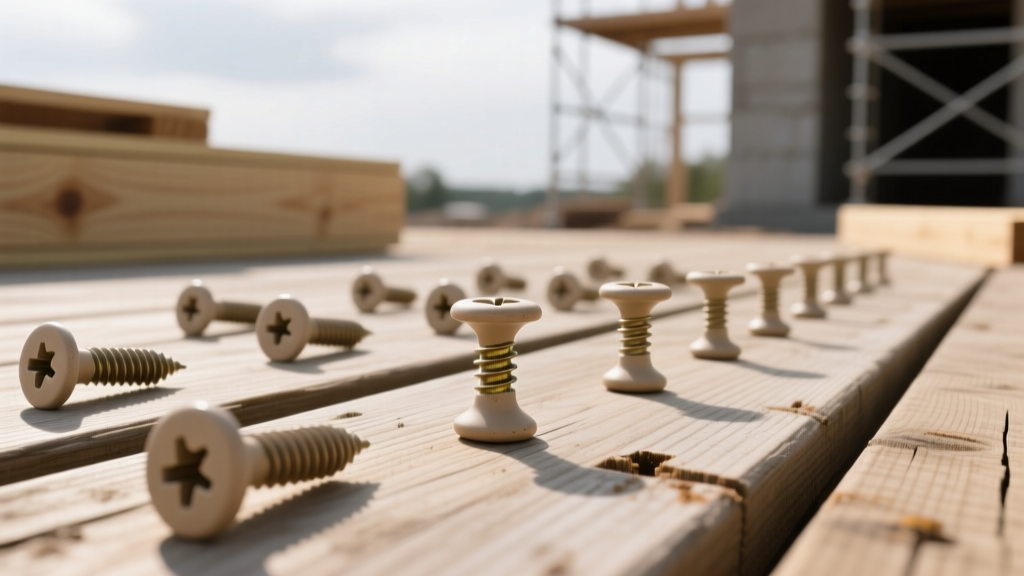
When constructing an outdoor living space with pressure-treated lumber, the fastener represents the single most vulnerable structural component. The FastenMaster Deck Plus tan ceramic exterior screw addresses this vulnerability through a proprietary four-layer coating architecture. Unlike standard galvanized screws that rely on a single sacrificial zinc layer, the Deck Plus system utilizes a carbon steel core, an electroplated zinc base, a mid-layer epoxy barrier, and an exterior UV-resistant ceramic topcoat. This tan-colored topcoat is specifically formulated to blend with the natural weathering tones of alkaline copper quaternary (ACQ) and copper azole (CA-C) pressure-treated pine, while providing a dielectric barrier against the highly alkaline environment of modern treated wood.
- Core Material: Hardened carbon steel (Type 17 auger point)
- Coating System: 4-layer ceramic/epoxy/zinc composite
- Drive Type: T20 / T25 Torx (Star) recess
- Shank Diameter: #9 (0.138 inches) and #10 (0.190 inches)
- Approved For: ACQ, CA-C, MicroPro, and standard treated lumber
Corrosion Resistance in ACQ and CA-C Treated Lumber
Modern pressure-treated lumber relies on copper and high alkalinity (pH levels often between 8.0 and 9.5) to deter fungal decay and insect infestation. According to the American Wood Protection Association (AWPA), this alkaline moisture acts as a catalyst for galvanic corrosion when in direct contact with standard zinc coatings. The alkalinity rapidly depletes the zinc, exposing the steel core to red rust, which compromises the screw's shear strength and causes unsightly streaking on the deck boards.
The Deck Plus ceramic coating prevents this galvanic reaction by isolating the zinc and steel from the wood's alkaline moisture. In standardized ASTM B117 salt spray (fog) testing, standard hot-dipped galvanized (HDG) screws typically exhibit red rust between 300 and 500 hours. In contrast, the Deck Plus ceramic exterior screws consistently exceed 1,000 hours of continuous salt spray exposure without red rust formation, effectively matching the corrosion resistance of 304-grade stainless steel in non-coastal environments.
| Fastener Type | Salt Spray Hours to Red Rust | ACQ/CA-C Compatibility | Estimated Lifespan (Inland) |
|---|---|---|---|
| Standard Bright Zinc | 15 - 50 hours | Not Approved | 2 - 5 years |
| Hot-Dipped Galvanized (HDG) | 300 - 500 hours | Marginal (Thick coat only) | 10 - 15 years |
| Deck Plus Tan Ceramic | 1,000+ hours | Fully Approved | 25+ years |
| 305 Stainless Steel | No Red Rust (Pitting possible) | Fully Approved | 50+ years |
Structural Integrity: Shear, Tensile, and Withdrawal Strength
Corrosion resistance is irrelevant if the fastener lacks mechanical strength. The Deck Plus line utilizes a heat-treated carbon steel core that provides superior shear and tensile strength compared to softer stainless steel alternatives. A standard #9 x 3-inch Deck Plus screw yields a shear strength of approximately 1,650 lbs, while the #10 structural variants can exceed 2,200 lbs. This is critical for ledger board connections and joist hanger fastening where lateral loads are highest.
Withdrawal Resistance in Dense Hardwoods and PT Pine
The aggressive Type 17 auger point and deep, asymmetrical threading are engineered to maximize withdrawal resistance. In Southern Yellow Pine (the most common species for pressure treatment), a #9 Deck Plus screw achieves roughly 350 lbs of withdrawal resistance per inch of thread engagement. When securing 5/4x6 decking boards to joists, the 3-inch length ensures a minimum of 1.75 inches of thread embedment into the joist, providing over 600 lbs of uplift resistance per screw. This effectively prevents board cupping and popping over the deck's lifespan, a common failure point noted in Fine Homebuilding's deck fastener analyses.
Known Failure Modes and Environmental Limitations
While highly durable, ceramic-coated exterior screws are not impervious to all environmental stressors. Understanding their failure modes is essential for proper application.
Deck Plus tan ceramic screws are not recommended for structures located within 3,000 feet of a saltwater coastline, or for docks and boardwalks directly over brackish water. In these environments, airborne chlorides can penetrate microscopic fissures in the ceramic coating caused by driving torque. For coastal applications, 316 marine-grade stainless steel remains the mandatory standard to prevent catastrophic stress-corrosion cracking.
Edge Case 1: Uncapped End Grains. When driving screws near the cut ends of pressure-treated joists without applying a copper naphthenate end-cut preservative, the concentrated alkaline moisture wicking from the end grain can degrade the coating at the screw head. Always seal cut ends before fastening.
Edge Case 2: Over-Torquing and Head Stripping. The ceramic coating adds a fractional millimeter to the screw head dimensions. If an installer uses an impact driver with excessive torque, the T20/T25 bit can fracture the ceramic layer at the drive recess, exposing the underlying zinc to moisture and initiating localized rust at the head.
Cost-Benefit Matrix: Ceramic vs. Stainless Steel
For contractors and homeowners budgeting a 1,200-square-foot deck (requiring approximately 3,500 fasteners for the decking alone), the choice between ceramic and stainless steel significantly impacts the bottom line. Based on current 2026 bulk pricing models, here is the financial breakdown.
| Material | Cost Per Screw (Avg) | Driveability / Cam-out Risk | |
|---|---|---|---|
| Deck Plus Ceramic (#9x3') | $0.16 | $160.00 | Excellent (T25 Torx, zero cam-out) |
| 305 Stainless Steel (#9x3') | $0.42 | $420.00 | Moderate (Softer metal, prone to snapping) |
| 316 Marine Stainless (#9x3') | $0.65 | $650.00 | Poor (Very soft, requires pre-drilling) |
The Deck Plus ceramic option provides an 85% cost reduction compared to 305 stainless steel while delivering an equivalent inland lifespan. Furthermore, the hardened steel core of the ceramic screw drastically reduces the incidence of sheared screw shafts during installation, a frequent and costly issue when working with softer stainless steel fasteners in dense, kiln-dried-after-treatment (KDAT) lumber.
Installation Parameters for Maximum Lifespan
To ensure the 25+ year lifespan of the Deck Plus coating system, installation must adhere to specific mechanical parameters. Consult the FastenMaster technical resources for comprehensive ICC-ES evaluation reports, but adhere to these field rules:
- Bit Selection: Use only high-quality, hardened steel T20 or T25 Torx bits. Worn bits will strip the ceramic coating inside the drive recess. Replace bits every 150-200 drives.
- Clutch Setting: Set the impact driver to a medium torque setting. The screw should sit flush with the deck board surface. Driving the head below the wood surface (countersinking too deeply) breaks the wood fibers around the head, creating a moisture cup that will eventually degrade the coating.
- Pilot Holes: While the Type 17 point eliminates the need for pilot holes in standard pressure-treated pine, pre-drilling a 1/8-inch pilot hole is mandatory when fastening within 1 inch of a board end to prevent splitting, and highly recommended when working with exotic hardwoods or bamboo composite alternatives.
- Clearance Holes for Composites: If using these screws to fasten PVC or capped composite decking (though color-matching is less ideal), a 5/32-inch clearance hole through the top board is required to allow for thermal expansion and prevent the composite material from mushrooming around the screw head.
Final Verdict on Long-Term Durability
For inland residential and commercial deck builds utilizing ACQ, CA-C, or MicroPro pressure-treated lumber, Deck Plus tan ceramic exterior screws represent the optimal intersection of structural reliability, corrosion resistance, and cost-efficiency. The four-layer dielectric coating successfully neutralizes the alkaline threat of modern wood preservatives, while the hardened carbon steel core provides shear strengths that softer stainless alternatives cannot match. Provided they are kept out of direct saltwater splash zones and installed with proper torque limits, these fasteners will reliably outlast the pressure-treated decking boards themselves.