Deck Privacy Screen Cost Calculator & 2026 Pricing Guide
Calculate your deck privacy screen costs for 2026. Compare wood, composite, and metal panel pricing, quantities, and installation labor rates.
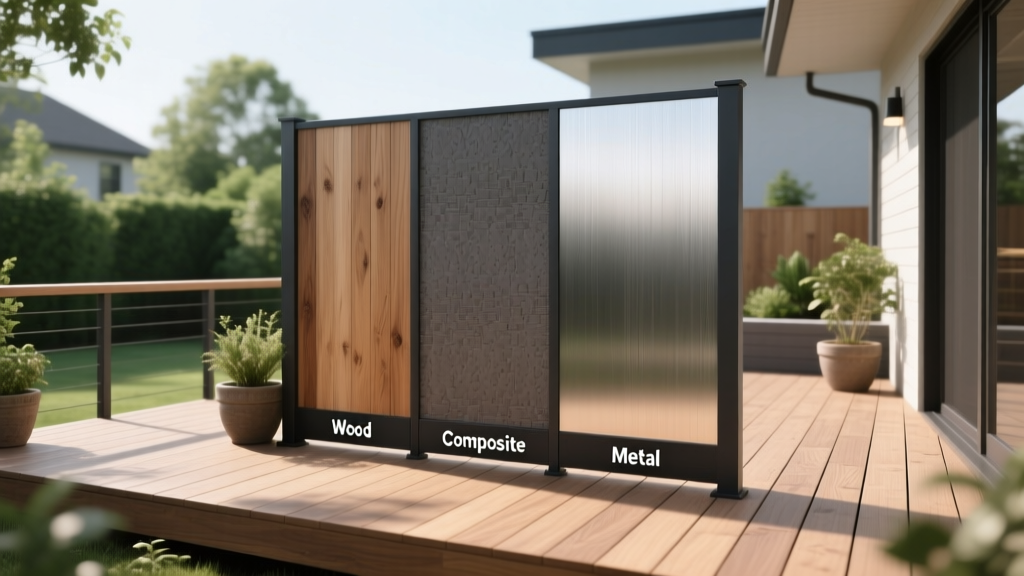
The True Cost of Deck Privacy Screens in 2026
Adding a deck privacy screen transforms an exposed outdoor platform into a secluded living space, but it also introduces significant structural loads and material variables. In 2026, the national average cost to build a custom deck privacy screen ranges from $1,800 to $6,500 for a standard 10-foot by 6-foot section. This wide variance is driven by material selection, local wind-load engineering requirements, and whether you opt for modular composite panels or custom stick-built wood framing.
Quick Cost Snapshot (Per 10' x 6' Screen)
- Pressure-Treated Pine: $850 – $1,400
- Western Red Cedar: $1,600 – $2,400
- Modular Composite (e.g., Trex Seclusions): $2,800 – $4,200
- Powder-Coated Aluminum: $3,500 – $5,800
Note: Prices include materials, structural post bases, and standard fasteners. Labor adds 40% to 60% to these totals.
Material Breakdown: Price Per Square Foot & Linear Foot
Choosing the right material requires balancing upfront capital expenditure against long-term maintenance and structural weight. Composite and aluminum systems are heavier and more expensive initially but eliminate the annual sealing and staining required for natural wood.
| Material Type | Cost per Sq. Ft. | Lifespan | Maintenance Profile |
|---|---|---|---|
| Pressure-Treated Pine (1x4 slats) | $14 – $22 | 10–15 years | Annual sealing, high warp risk |
| Western Red Cedar (Horizontal) | $26 – $40 | 15–25 years | Biennial UV oil, moderate stability |
| Composite Panels (TimberTech/Trex) | $55 – $85 | 25–30+ years | Soap and water wash only |
| Aluminum Louvers (Trex Signature) | $75 – $110 | Lifetime | Zero maintenance, rust-proof |
Quantity Calculator: How to Measure and Order
Miscalculating quantities is the most common budget-killer in screen projects. Because privacy screens require precise spacing for slats or exact dimensions for modular panels, use the following framework to calculate your material requirements.
Step 1: Calculate Gross Square Footage
Multiply the total linear length of your screen by the desired height. For a 12-foot long, 6-foot high screen, your gross area is 72 square feet.
Step 2: Apply the Waste & Off-Cut Factor
- Stick-Built Wood (Cedar/Pine): Add 15% for off-cuts, bowed boards, and splitting. (72 sq ft x 1.15 = 82.8 sq ft of material).
- Modular Composite Panels: Add 5% to 8%. Modular panels come in fixed widths (usually 6 or 8 feet). If your span is 13 feet, you will need to rip-cut a panel, generating waste.
- Aluminum Louver Systems: Add 2%. These are typically custom-ordered to exact linear dimensions from the manufacturer.
Step 3: Fastener and Hardware Quantification
For horizontal wood slat screens using 1x4 boards, you need two fasteners per slat at every stud intersection. If your studs are spaced 16 inches on-center (O.C.), a 12-foot screen has 9 stud bays. Calculate the total linear inches of slats, divide by 16, and multiply by 2 to get your exact screw count. Always use 304 or 316 stainless steel trim-head screws for cedar and composite to prevent tannin bleed and rust streaks.
Pro-Tip: The "Sail Effect" and Structural Framing
A solid 6-foot by 10-foot deck privacy screen has 60 square feet of sail area. According to ASCE 7-22 minimum design load standards, a basic 115 mph wind event generates over 1,500 pounds of lateral shear force against that solid surface.
The Failure Mode: Most DIY screens fail because the 4x4 posts are bolted only to the deck boards or the outer rim joist, which cannot handle the uplift and shear.
The Fix: Posts must be anchored directly to the internal deck joists using heavy-duty post bases like the Simpson Strong-Tie ABU44Z. You must also install solid 2x8 joist blocking directly beneath the post locations to prevent the joists from twisting under wind load.
Labor vs. DIY: Installation Cost Matrix
If you are hiring a licensed deck contractor in 2026, expect labor to represent a significant portion of your invoice. The complexity of the screen design directly dictates the labor hours required.
| Screen Style | Avg. Labor Rate | Time per 10 LF | Complexity Factors |
|---|---|---|---|
| Vertical Board-on-Board | $65 - $95 / hr | 6 - 8 hours | Requires precise spacing jigs, high fastener count. |
| Horizontal Slats (1x4) | $65 - $95 / hr | 8 - 12 hours | Requires blocking, leveling every row, mitred corners. |
| Modular Composite Panels | $75 - $110 / hr | 4 - 6 hours | Heavy panels require 2-3 people, specialized composite blades. |
| Aluminum Louver Kits | $85 - $120 / hr | 5 - 7 hours | Requires metal-cutting saws, exact post plumb tolerances. |
Wood Treatment and Code Compliance
If you choose natural wood for your privacy screen, you must adhere to specific treatment standards to prevent premature rot, especially at the post-to-deck connection points. The American Wood Protection Association (AWPA) categorizes treated lumber by use-case. For deck screen posts that are exposed to the weather but not embedded in concrete, you must specify UC4A (Ground Contact) or higher treated lumber, even if the post is sitting on a metal base above the deck. Standard UC3B (Above Ground) lumber will wick moisture from the deck surface and rot at the base within 3 to 5 years in humid climates.
Final Budgeting Checklist
Before finalizing your 2026 deck privacy screen budget, verify these often-missed line items:
- Permitting Fees: Most municipalities require a permit for screens over 4 feet tall due to wind-load implications. Budget $150 to $400 for structural review.
- Joist Blocking & Sistering: If your existing deck joists are not reinforced, add $300 to $600 in lumber and structural screws (like Simpson SDWS) to stiffen the framing.
- Concrete Footings (Alternative): If your deck framing cannot support the wind load, you may need to cut holes in the deck and pour independent concrete sonotube footings for the screen posts. Add $250 per post for this structural upgrade.
- Lighting Integration: If you plan to integrate low-voltage LED strip lighting into the screen cap-rail, add $15 to $25 per linear foot for marine-grade wiring channels and transformers.
By calculating your exact square footage, applying the correct material waste factors, and engineering the sub-frame for ASCE 7 wind loads, you can accurately forecast your deck privacy screen costs and avoid the catastrophic structural failures that plague poorly planned outdoor projects.