The Complete Deck Sealer Maintenance Playbook: Testing, Prepping, and Reapplying
Master your deck sealer maintenance with our expert playbook. Learn water-drop testing, surface prep, and exact reapplication steps for wood decks.
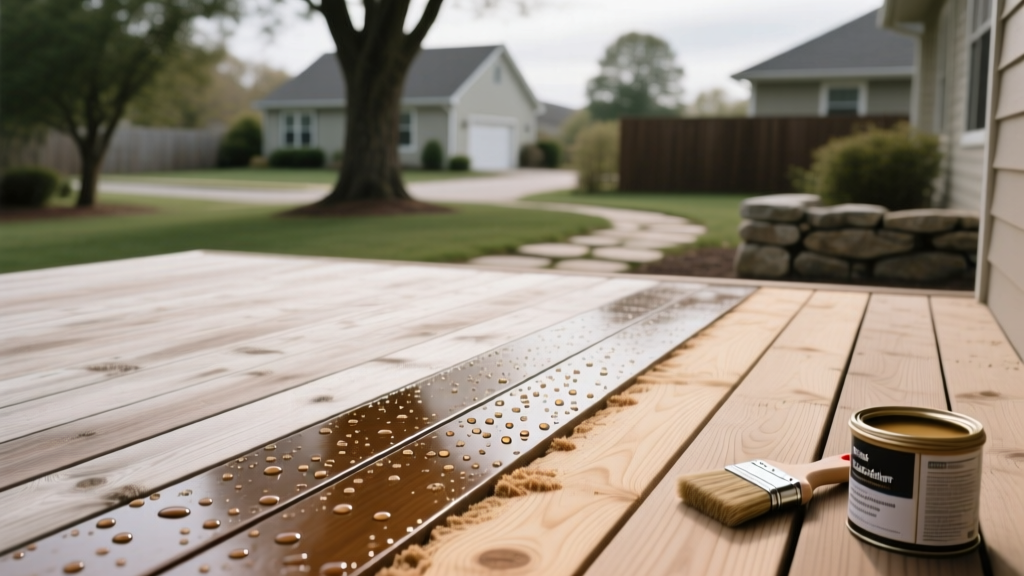
Maintaining a wood deck requires a strategic approach to moisture and ultraviolet (UV) management. A high-quality deck sealer is your primary defense against dimensional instability, lignin degradation, and fungal decay. However, applying a sealer over improperly prepared wood or at the wrong time in the degradation cycle leads to premature failure, peeling, and trapped moisture. This playbook provides a rigorous, data-driven framework for testing, preparing, and reapplying deck sealers to maximize coating lifespan and structural integrity.
The Science of Deck Sealer Degradation
Wood is a hygroscopic material that constantly exchanges moisture with its environment. When unsealed, dimensional swelling and shrinking cause checking, cupping, and splintering. Furthermore, UV radiation breaks down lignin—the structural polymer that binds wood fibers together. According to research from the USDA Forest Products Laboratory, UV degradation creates a weak, friable surface layer that prevents coatings from achieving mechanical adhesion.
A deck sealer must accomplish two distinct tasks:
- Hydrophobicity: Repelling liquid water while allowing water vapor to escape (breathability), maintaining the wood's moisture content (MC) between 8% and 14%.
- UV Blocking: Utilizing trans-iron oxide pigments or specialized UV absorbers to scatter radiation without completely obscuring the wood grain.
Diagnostic Phase: When to Reseal Your Deck
Relying solely on visual inspection or a calendar schedule is a common maintenance error. Use this two-tier diagnostic protocol to determine if your deck requires resealing.
1. The Splash Test (Coating Repellency)
Pour a cup of water onto three distinct areas of the deck (high traffic, shaded, and sun-exposed). If the water beads up and retains a high contact angle, the existing hydrophobic resins are intact. If the water darkens the wood and absorbs within 60 seconds, the sealer's water repellents have degraded, and reapplication is required.
2. The Moisture Meter Test (Application Readiness)
The splash test indicates if you need to seal; the moisture meter dictates when you can seal. After cleaning and rinsing, use a pin-type or pinless moisture meter. According to Penn State Extension, wood moisture content must drop below 15% before applying any penetrating or film-forming sealer. Applying over damp wood traps moisture, leading to osmotic blistering and fungal growth beneath the coating.
Maintenance Matrix: Penetrating vs. Film-Forming Sealers
Selecting the correct deck sealer chemistry dictates your future maintenance burden. Film-forming sealers offer superior UV protection but require intensive prep for reapplication, while penetrating sealers fade gracefully but require more frequent upkeep.
| Sealer Class | Binder Chemistry | Expected Lifespan | Primary Failure Mode | Reapplication Prep |
|---|---|---|---|---|
| Clear Penetrating | Alkyd / Linseed Oil | 6 - 12 Months | UV Graying / Water Absorption | Light wash, no sanding |
| Semi-Transparent | Acrylic-Oil Hybrid | 2 - 3 Years | Fading / Mildew | Chemical strip (if peeling), wash |
| Solid Color | 100% Acrylic Emulsion | 4 - 6 Years | Flaking / Peeling | Aggressive power washing, sanding |
The 4-Step Surface Preparation Protocol
Adhesion failure accounts for over 80% of deck sealer complaints. Proper preparation removes mill glaze, dirt, oxidized lignin, and alkaline residues.
- Alkaline Cleaning: Apply a sodium percarbonate-based deck cleaner. Avoid sodium hypochlorite (bleach), which destroys wood cellulose and leaves behind salts that interfere with coating adhesion. Agitate with a stiff bristle brush and allow a 15-minute dwell time.
- Acid Brightening (Crucial Step):strong> Cleaners raise the wood's pH to 9 or 10. Sealers require a slightly acidic environment (pH 4.5 to 5.5) to cure properly. Apply an oxalic acid-based wood brightener to neutralize the surface, dissolve tannin stains, and open the wood pores.
- High-Volume Rinse: Rinse thoroughly with a garden hose or a pressure washer set to a maximum of 1,200 PSI with a 40-degree fan tip. High pressure will fuzz the wood grain and create physical barriers to penetration.
- Drying and Verification: Allow 48 to 72 hours of dry weather. Verify with a moisture meter that the MC is below 15% before proceeding.
Applying a deck sealer too thickly does not increase protection; it guarantees failure. Penetrating sealers must soak into the wood fibers. If excess product is left on the surface, it forms a weak, glossy film that will peel within months. Always back-brush excess sealer into the wood grain within 10 minutes of application.
Application Playbook: Mil Thickness and Weather Windows
Environmental conditions during application dictate the cross-linking and curing process of the sealer's resins.
- Temperature Window: Apply only when ambient and surface temperatures are between 50°F and 85°F. Temperatures below 50°F prevent acrylic emulsions from coalescing, resulting in a chalky, weak film.
- Sunlight Management: Never apply deck sealer in direct, hot sunlight. The heat flashes off the solvents or water carriers before the resins can penetrate the wood pores. Work in the shade, following the sun across the deck structure.
- Mil Thickness: For film-forming solid color sealers, target a wet film thickness of 1.5 to 2.0 mils. Use a wet mil gauge if applying via sprayer to ensure uniform coverage. Penetrating sealers should be applied to the point of refusal, wiping away any puddles.
Frequently Asked Questions
Can I apply a water-based acrylic sealer over an old oil-based sealer?
No. Water-based acrylics will not adhere properly to residual oil or alkyd resins. If you are switching from an oil-based penetrating sealer to a water-based film-forming sealer, you must use a specialized chemical stripper to remove all traces of the previous coating, followed by aggressive sanding to bare wood.
Why is my newly sealed deck turning black in the shaded areas?
Black discoloration is typically mildew growing on top of the sealer or underneath it. If it's on top, the sealer lacked sufficient mildewcides (look for products containing zinc pyrithione). If it's underneath, the wood was not properly cleaned with an oxalic acid brightener, or the wood moisture content was too high during application, trapping spores beneath the coating.
How do I maintain a deck sealer between full reapplications?
Sweep the deck weekly to remove abrasive dirt and organic debris. Wash the deck bi-annually using a mild, pH-neutral soap and a soft bristle brush. Avoid using harsh chemical de-icers in the winter, as calcium chloride and rock salt will break down the sealer's hydrophobic resins and cause localized peeling.