How Much Does It Cost to Build a 10x10 Deck in 2026?
Discover how much it costs to build a 10x10 deck in 2026. Compare material prices, labor rates, and hidden fees using our selection framework.

The 100-Square-Foot Baseline: What a 10x10 Actually Requires
When homeowners ask how much does it cost to build a 10x10 deck, they are usually picturing a simple 100-square-foot platform. However, the final invoice is dictated by the structural skeleton, material grades, and site-specific variables. In 2026, the national average for a professionally installed 10x10 deck ranges from $2,800 to $6,500, translating to $28 to $65 per square foot. A DIY build using pressure-treated lumber can drop this cost to $1,200 to $1,800, assuming you already own the necessary power tools and hardware.
Material Selection Matrix: Cost vs. Longevity
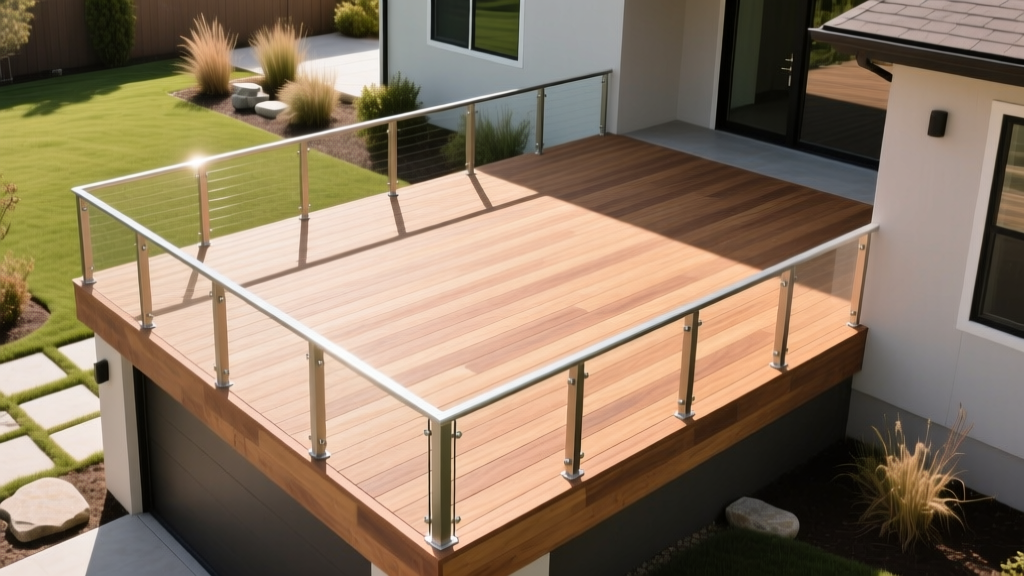
Choosing your decking surface is the most significant variable in your budget. The table below breaks down the 2026 material costs for a 100-square-foot surface, factoring in a standard 10% waste allowance for cuts and defects.
| Material Type | Material Cost (100 sq ft) | Installed Cost (Total) | 25-Yr Maintenance |
|---|---|---|---|
| Pressure-Treated Pine | $350 - $500 | $1,800 - $2,800 | $1,200+ (Staining/Sealing) |
| Cedar / Redwood | $700 - $1,100 | $3,200 - $4,500 | $900+ (Oils/Sealers) |
| Composite (e.g., Trex Enhance) | $900 - $1,400 | $4,000 - $5,500 | $150 (Cleaning only) |
| PVC (e.g., Azek Landmark) | $1,300 - $1,800 | $5,200 - $7,000 | $100 (Cleaning only) |
For a comprehensive look at current composite and PVC options, review the product lines available on the Trex official decking catalog, which outlines the specific thickness and capping technologies that drive these price tiers.
Substructure Economics: Framing and Hardware
The surface boards get the glory, but the framing dictates the deck's lifespan. In 2026, building codes in most municipalities strictly enforce the use of hot-dipped galvanized or stainless steel hardware when in contact with modern pressure-treated lumber, which contains high levels of copper-based preservatives (like ACQ or CA-C).
- Lumber Costs: Framing a 10x10 deck requires approximately 180 linear feet of 2x8 or 2x10 joists, plus beam material. Expect to spend $450 to $650 on pressure-treated framing lumber.
- Fasteners and Hangers: Do not use standard lag bolts for the ledger board. Modern structural engineering favors 3.5-inch structural screws (like GRK RSS or Simpson Strong-Drive SDWS), which cost roughly $1.25 per screw but eliminate the need for pre-drilling and prevent wood splitting. You will also need roughly 28 joist hangers (e.g., Simpson LUS26) at $1.15 each.
- Hidden vs. Face Fasteners: If using grooved composite boards, hidden clip systems (like Trex Hideaway) cost about $1.60 per square foot ($160 total for a 10x10). Face-screwing with color-matched composite screws is slightly cheaper at $90 but leaves visible screw heads on the surface.
The Hidden Cost Variables That Break Budgets
Contractor quotes often exclude site-specific anomalies. When calculating how much it costs to build a 10x10 deck, you must account for the following variables that frequently trigger change orders:
A 10x10 deck typically requires 4 to 6 concrete footings. If your local frost line is 48 inches deep, digging these holes by hand in clay or rocky soil is a massive labor sink. Contractors charge $150 to $250 per hole for mechanical augering. If you hit bedrock or have poor load-bearing soil, you may need helical piles, which cost $250 to $400 per pile installed, instantly adding $1,000+ to your substructure budget.
Railing and Stair Multipliers:
Base square-foot pricing rarely includes railings. A 10x10 deck attached to a house requires approximately 30 linear feet of railing. Pressure-treated wood railings cost $25 to $35 per linear foot, while composite or aluminum railings (like Trex Signature or Fiberon) range from $75 to $120 per linear foot. This single addition can add $750 to $3,600 to your final bill. Furthermore, if your deck is more than 30 inches above grade, code requires a stairway. A standard 3-to-4 step stringer kit with treads and risers will add $400 to $800 in materials and labor.
Permits, Codes, and Inspections
According to the American Wood Council's technical resources and the International Residential Code (IRC), any deck attached to a home or elevated over 30 inches requires a building permit. Permit fees for a 100-square-foot footprint generally range from $75 to $250, depending on your local jurisdiction. Skipping this step risks fines and can complicate future home sales. Always consult your local building department's specific span tables, as they dictate your maximum joist spacing and beam sizing.
The Decision Framework: Which 10x10 Build Fits Your Profile?
Use this selection framework to align your budget, maintenance tolerance, and aesthetic goals. Industry data from HomeAdvisor's deck cost guides confirms that aligning material choices with long-term ownership plans prevents buyer's remorse.
Profile A: The Budget-Conscious DIYer
Target Cost: $1,500 - $2,200
Material Stack: Pressure-treated pine framing, standard PT decking boards, face-screwed with 3-inch deck screws, PT post-cap railings.
Best For: Homeowners planning to move within 5 years, or those with the time and tools to commit to annual power washing and bi-annual sealing. You must be comfortable digging footing holes and mixing concrete by hand to keep labor costs at zero.
Profile B: The Balanced Upgrader (Most Common)
Target Cost: $4,000 - $5,500
Material Stack: Pressure-treated framing, mid-tier composite decking (e.g., Trex Enhance or Deckorators Voyage), hidden fasteners, and aluminum balusters with composite top rails.
Best For: Homeowners who want the look of premium wood without the splinters or annual staining. Hiring a professional contractor is recommended here to ensure the hidden fastener system is installed flawlessly and the ledger board is properly flashed to prevent home water damage.
Profile C: The Premium Low-Maintenance Seeker
Target Cost: $6,500 - $8,500+
Material Stack: Light-gauge steel framing (e.g., Trex Elevate) or heavy-duty PT, premium PVC decking (e.g., Azek Landmark), stainless steel hidden fasteners, and glass or cable railings.
Best For: Coastal environments, high-humidity zones, or luxury outdoor living spaces where the deck is an extension of the interior. Steel framing prevents the joist warping that can cause PVC boards to buckle over time, a critical detail often missed by standard contractors.
Final Procurement Strategy
Do not buy your entire 10x10 material list from a big-box store without cross-referencing local lumber yards. While big-box stores offer convenience, specialized lumber yards often provide volume discounts on composite bundles and possess deeper knowledge of local code requirements for footing hardware. Order your materials 4 to 6 weeks in advance during the spring building rush to avoid project delays caused by backordered specific colorways or railing components.
Written by
Elena RodriguezElena Rodriguez is a civil engineer and technical writer specializing in concrete technology, masonry systems, and ASTM/ACI compliance. She earned her B.S. in Civil Engineering from Texas A&M University and spent a decade at a materials testing laboratory, performing over 2,000 concrete compressive strength tests and masonry prism evaluations. Elena is an ACI-certified Field Testing Technician (Grade I) and a member of ASTM Committee C12 on Natural Building Stone. She currently consults on forensic engineering cases involving concrete failures and moisture intrusion. Based in San Antonio, TX, Elena is a proud member of the Society of Women Engineers (SWE) and coaches her daughter's FIRST Robotics team.
More from Elena Rodriguez
View all
Walls & Panels
Cost Analysis: Light Gauge Steel Framing Advantages and Disadvantages
Evaluate light gauge steel framing advantages and disadvantages through a strict cost analysis lens, comparing material, labor, and lifecycle expenses.
Aug 4, 2026

Walls & Panels
Gypsum Board Types: Exact Specifications, Thickness & Dimensions
Compare standard, Type X, and moisture-resistant gypsum board types. Get exact specifications, thicknesses, dimensions, and ASTM standards for your project.
Aug 4, 2026

Fire Resistance
Best Fire-Resistant Outdoor Decking Materials: 2026 Buyer Guide
Discover the best fire-resistant outdoor decking materials for 2026. Compare Class A PVC, aluminum, and hardwood options for WUI compliance and safety.
Aug 4, 2026