Most Durable Deck Skirting Material: Lifespan and Failure Modes
Compare the lifespan and durability of top deck skirting materials. Discover failure modes, moisture resistance, and the best long-lasting options.

The most durable deck skirting materials are composite panels, corrugated corten steel, and masonry veneers, which offer lifespans exceeding 25 years with minimal degradation. This guide is designed for homeowners, deck builders, and property managers evaluating deck skirting materials for long-term structural protection and aesthetic performance. We analyze material lifespans, specific failure modes, and maintenance requirements to help you select the optimal enclosure for your elevated outdoor space.
- Composite and PVC skirting materials last 25 to 30 years but require specific ventilation to prevent heat warping.
- Pressure-treated wood costs 40% less upfront but suffers from a 15-year maximum lifespan due to soil-contact rot.
- Corrugated metal offers a 50-year lifespan but requires a 1-inch clearance gap to prevent galvanic corrosion.
Top Deck Skirting Materials: Lifespan and Durability
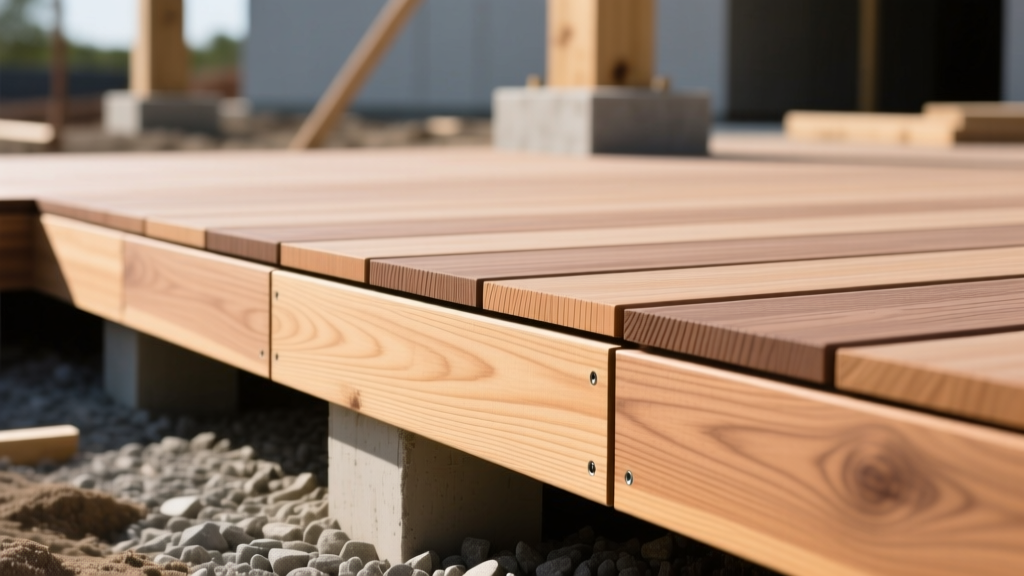
Composite and Polyvinyl Chloride (PVC) Skirting
Composite deck skirting materials consist of wood fibers encased in a polymer shield, providing a 25 to 30-year lifespan. According to the North American Decking and Railing Association, modern capped composites resist moisture absorption rates below 1%. However, dark-colored composite panels can reach surface temperatures of 150°F in direct summer sunlight, leading to thermal expansion. Installers must leave a 3/16-inch expansion gap per 12-foot section to prevent panel buckling.
Pressure-Treated Wood and Western Red Cedar
Natural wood remains a popular choice, though its lifespan is strictly limited by ground contact. Pressure-treated southern yellow pine skirting typically lasts 10 to 15 years before structural decay begins. The American Wood Protection Association mandates UC4A or higher treatment standards for lumber in direct ground contact. Western red cedar offers natural rot resistance for 15 to 20 years but requires annual sealing to prevent ultraviolet degradation and surface graying.
Corrugated Corten Steel and Aluminum
Metal deck skirting materials provide the highest durability, with corrugated corten steel lasting over 50 years. Corten steel develops a stable, rust-like patina that protects the core metal from further corrosion. Aluminum skirting weighs 65% less than steel and will not rust, but it is susceptible to galvanic corrosion if installed directly against pressure-treated wood without a rubberized membrane barrier.
Common Failure Modes in Deck Skirting
Moisture Entrapment and Rot
The primary failure mode for organic skirting is capillary action drawing soil moisture into the material. When deck skirting materials lack a 2-inch clearance from the soil grade, moisture content exceeds 20%, triggering fungal wood decay. The United States Forest Products Laboratory notes that keeping wood moisture below 19% effectively halts rot progression. Installing a gravel trench or concrete curb beneath the skirting eliminates this wicking pathway.
Pest Intrusion and Ventilation Deficits
Enclosing a deck without adequate cross-ventilation creates a microclimate ideal for carpenter ants and subterranean termites. Building codes generally require 1 square foot of net free ventilation area for every 150 square feet of under-deck space. Skirting materials with solid profiles trap humidity, accelerating joist degradation and attracting pests seeking damp cellulose. Incorporating lattice sections or louvered vents every 8 feet ensures adequate airflow.
Deck Skirting Material Decision Matrix
Use this comparison framework to align your material choice with your budget and climate requirements.
| Material | Lifespan | Cost per Linear Foot | Primary Failure Mode | Maintenance Frequency |
|---|---|---|---|---|
| Capped Composite | 25-30 Years | $12 - $18 | Thermal warping | Annual washing |
| Pressure-Treated Pine | 10-15 Years | $4 - $7 | Soil-contact rot | Biennial sealing |
| Corten Steel | 50+ Years | $15 - $22 | Galvanic corrosion | Decade inspection |
| PVC Lattice | 15-20 Years | $6 - $9 | UV degradation | Annual washing |
Frequently Asked Questions
What are the cheapest deck skirting materials?
Definition: Deck Skirting is the architectural material used to enclose the open vertical space between the bottom of a deck's joist structure and the ground. It provides aesthetic finishing, prevents pest intrusion, and conceals under-deck storage while requiring specific ventilation to maintain structural health.
Pressure-treated wood lattice and corrugated plastic panels are the cheapest deck skirting materials, costing between $2 and $5 per linear foot. While budget-friendly, these materials typically require replacement every 5 to 7 years due to ultraviolet degradation and physical impact damage from landscaping equipment.
How do I ventilate solid deck skirting materials?
Install continuous soffit vents or discrete louvered inserts directly into solid panels. The International Residential Code specifies that under-floor ventilation must provide a minimum of 1 square foot of open area per 150 square feet of crawlspace or deck footprint to prevent moisture accumulation.
Which deck skirting materials deter termites best?
Masonry veneers, corrugated steel, and composite materials with non-cellulosic cores effectively deter termites. Subterranean termites require soil contact and cellulose to survive; eliminating wood-to-ground contact and using inorganic barriers disrupts their foraging pathways entirely.
Final Selection and Next Steps
Selecting the right deck skirting materials requires balancing upfront budget against long-term failure modes like moisture wicking and thermal expansion. Composite panels and corrugated steel provide the most reliable lifespans exceeding 25 years when installed with proper ground clearance and ventilation. Your next step is to measure your deck's linear perimeter and calculate the required ventilation square footage to order the correct materials for your specific climate zone.
Written by
David NakamuraDavid Nakamura is a licensed architect (AIA) and construction technology writer focused on sustainable building methods, mass timber engineering, and high-performance building envelopes. He holds a Master of Architecture from the University of Washington and is a certified Passive House Consultant (CPHC). David spent eight years at the Seattle firm Mithun, where he led the design of three LEED Platinum projects, before founding his own practice specializing in net-zero residential design. He serves on the editorial advisory board of GreenBuilder Magazine and has authored peer-reviewed papers on cross-laminated timber (CLT) connections for the Journal of Structural Engineering. In his spare time, David teaches woodworking at Pratt Fine Arts Center and kayaks the Puget Sound.
More from David Nakamura
View all
Construction Cost
Labor Cost to Build a Deck Per Sq Ft: 2026 Installation Guide
Discover the exact labor cost to build a deck per sq ft in 2026. This installation guide breaks down contractor rates, complexity factors, and hidden fees.
Aug 4, 2026

Construction Cost
How Much Does It Cost to Build a 3 Bedroom House? Financing Guide
Learn exactly how much it costs to build a 3 bedroom house and explore 2026 financing options, construction loan types, and budget frameworks for your build.
Aug 4, 2026

Construction Cost
Cost to Build a Tennis Court: 2026 Guide
How much does it cost to build a tennis court in 2026? Breakdowns for asphalt, concrete, and synthetic surfaces plus fencing and lighting.
Jul 30, 2026