Cost of Materials to Build a Deck: 2026 Price Breakdown
Discover the exact cost of materials to build a deck in 2026. Compare pressure-treated wood, composite, and PVC pricing per square foot with hidden fees.

The Real Cost of Materials to Build a Deck in 2026
Calculating the exact cost of materials to build a deck requires moving beyond basic per-square-foot averages. While surface-level estimates often quote $15 to $35 per square foot for total materials, these figures obscure the massive price variances between substructure components, fastening systems, and specific decking tiers. In 2026, supply chain stabilization has leveled out extreme lumber volatility, but premium composite and PVC manufacturers have adjusted their MSRP to reflect advanced polymer technologies and capped-board manufacturing processes.
To build an accurate budget, you must decouple the decking surface from the framing, fasteners, and railings. According to Angi's comprehensive deck cost analysis, material costs typically account for 40% to 50% of a professional build, but for DIYers, materials represent 100% of the out-of-pocket expense. This breakdown isolates every line item required to construct a standard 400-square-foot (20x20 ft) ground-level or elevated deck.
Core Decking Material Costs: Wood vs. Composite vs. PVC
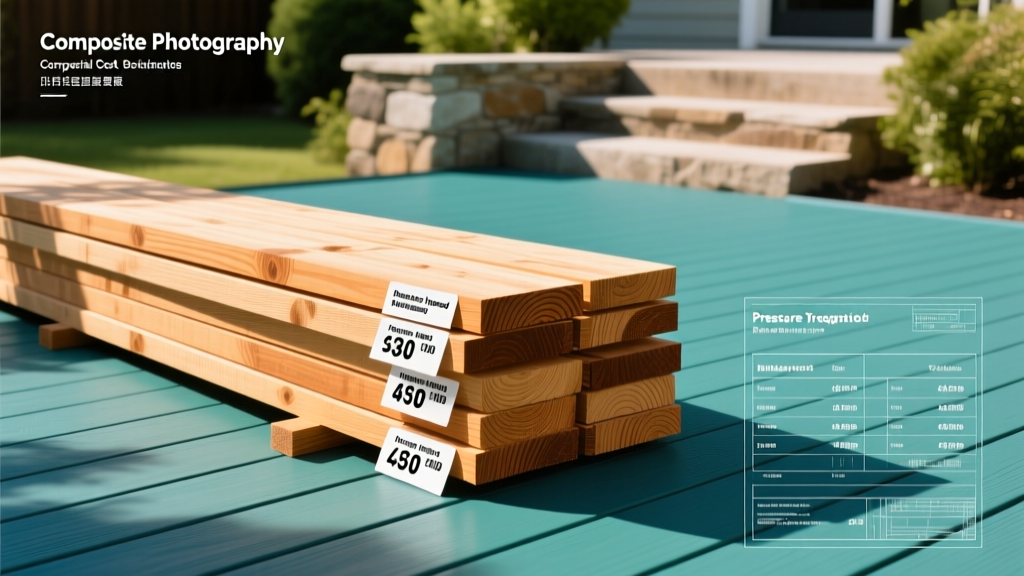
The decking boards themselves represent the most visible expense. Pricing below reflects 2026 retail averages for standard-length boards (16 ft to 20 ft) at major lumber yards and big-box retailers. Square-groove boards designed for hidden fasteners carry a 10% to 15% premium over standard edge-groove or ungrooved boards.
| Material Type | Specific Product Line (2026) | Cost per Sq Ft (Boards Only) | Total Cost (400 sq ft) | Expected Lifespan |
|---|---|---|---|---|
| Pressure-Treated Pine | YellaWood #2 Grade (MCA Treated) | $3.50 - $4.80 | $1,400 - $1,920 | 15 - 20 Years |
| Entry-Level Composite | Trex Select / TimberTech Prime | $7.50 - $9.20 | $3,000 - $3,680 | 25 - 30 Years |
| Premium Capped Composite | Trex Transcend Lineage / AZEK Landmark | $11.50 - $14.80 | $4,600 - $5,920 | 30 - 50 Years |
| Cellular PVC | AZEK Vintage / Wolf Serenity | $13.00 - $17.50 | $5,200 - $7,000 | 50+ Years |
| Exotic Hardwood | Ipe / Cumaru (FSC Certified) | $9.00 - $13.50 | $3,600 - $5,400 | 40 - 75 Years |
While Ipe and Cumaru board costs look competitive with premium composites, exotic hardwoods require specialized stainless steel fasteners (adding ~$800 to a 400 sq ft project) and pre-drilling for every single hole. Furthermore, end-cuts must be sealed with products like Anchorseal ($35/gallon) to prevent checking, adding both material and labor costs.
Framing and Substructure Material Pricing
The substructure is where budgets frequently fail. A 400-square-foot deck requires approximately 400 linear feet of joists (spaced 16 inches on center), double-ply beams, and structural posts. In 2026, pressure-treated (PT) Southern Yellow Pine remains the standard for framing, but the cost of heavy dimensional lumber has outpaced standard 2x4s and 2x6s.
Substructure Line-Item Breakdown (400 sq ft Deck)
- Joists (2x8x12 PT): ~34 boards required. At $14.50 per board = $493
- Beams (2x10x16 PT, doubled): ~6 boards required. At $22.00 per board = $132
- Posts (6x6x8 PT): ~8 posts required. At $38.00 per post = $304
- Footings (Sonotubes & Concrete): 8 footings. Sonotubes ($14/ea) + 3 bags 60lb concrete ($6/bag) per hole = $256
- Post Bases & Joist Hangers: Simpson Strong-Tie ZMAX galvanized hardware = $185
Total Framing Material Cost: ~$1,370 ($3.42 per square foot)
For builders looking to bypass concrete pouring, helical pile systems or heavy-duty ground screws (such as Pylex ground screws at $55 each) offer an alternative. While the upfront material cost is higher (~$440 for 8 screws), it eliminates the cost of concrete, sonotubes, and the physical labor of digging below the frost line.
Hidden Material Costs That Blow Up Budgets
Basic material calculators rarely account for the critical components that ensure structural longevity and code compliance. Ignoring these will result in premature joist rot or failed inspections.
1. Joist Flashing Tape
Applying flashing tape to the top of PT joists prevents water intrusion and protects the wood from the corrosive effects of composite decking minerals and ACQ/MCA preservatives. Grace Vycor Deck Protector (butyl-based) costs approximately $0.85 per linear foot. For 400 linear feet of joists, budget $340. Avoid cheaper asphalt-based tapes; butyl adhesives maintain their bond in extreme temperature fluctuations and do not degrade when in contact with treated lumber chemicals.
2. Fastening Systems
The choice of fastener drastically alters the final price tag. For a 400-square-foot deck using 5.5-inch wide boards, you will need roughly 650 fastening points.
- Standard Deck Screws: GRK RSS or Simpson Strong-Tie SDWS structural screws cost about $0.45 each. Total: $292.
- Hidden Fastener Clips: Trex Hideaway or TigerClaw systems cost $1.10 to $1.40 per square foot. Total: $440 - $560.
- Top-Down Hidden Systems: Cortex plugs and screws (for PVC or premium composite) cost roughly $1.80 per square foot. Total: $720.
3. Structural Screws for Framing
Modern building codes increasingly favor structural screws over traditional nails for ledger boards and joist hangers where nails cannot be fully driven. A box of 50 Simpson Strong-Tie SDWS 3-inch structural screws costs around $32. Expect to spend $120 to $180 on structural screws for a standard ledger-attached deck.
Railings and Stairs: The Multiplier Effect
Railing costs are calculated per linear foot (LF), not per square foot. A 20x20 deck with stairs on one side typically requires 60 LF of railing. According to Remodeling Magazine's Cost vs. Value data, upgrading railings yields high visual impact but carries a steep material premium.
| Railing System | Material Cost per Linear Foot | Total Cost (60 LF) | Maintenance Requirement |
|---|---|---|---|
| Pressure-Treated Wood (2x4 top rail, 2x2 balusters) | $18 - $25 | $1,080 - $1,500 | High (Annual staining/sealing) |
| Composite Sleeve System (Trex Transcend) | $65 - $85 | $3,900 - $5,100 | Low (Soap and water) |
| Aluminum with Square Balusters (Trex Signature) | $80 - $110 | $4,800 - $6,600 | None |
| Cable Railing (Stainless steel cables, PT wood posts) | $75 - $130 | $4,500 - $7,800 | Medium (Cable tensioning) |
Stair materials introduce another variable. Stringers (PT 2x12s) cost about $28 each. However, if you are using composite tread caps or fascia boards to wrap the stair risers, you must purchase specialized stair-starters and fascia trimming, which can add $400 to $800 to the stair material budget alone.
Material Optimization Framework: How to Cut Costs Without Cutting Corners
When the total material estimate exceeds your budget, avoid downgrading structural components or flashing. Instead, use this decision framework to optimize your spend:
- Mix Material Tiers: Use premium capped composite (like Trex Transcend) for the main deck surface and high-traffic areas, but use entry-level composite or PT wood for the stair treads and fascia boards where premium capping is less visually critical.
- Optimize Board Lengths: Decking boards are sold in 12, 16, and 20-foot lengths. Design your deck dimensions to match 16-foot boards. If your deck is 17 feet wide, you will be forced to buy 20-foot boards and cut off 3 feet of waste, instantly increasing your decking material cost by 25%.
- Standardize Joist Spacing: While some premium composites allow for 24-inch on-center (OC) joist spacing, designing your frame for 16-inch OC allows you to purchase cheaper, thinner composite boards or traditional wood without risking sagging or bounce.
- Picture-Framing vs. Fascia: Instead of buying expensive composite fascia boards to wrap the perimeter of the deck (which requires specialized ventilation gaps and hidden fasteners), use a 'picture-frame' border technique with standard decking boards and drop the framing slightly to hide the joists.
'The most expensive mistake in deck building isn't buying the wrong composite brand; it's failing to budget for the substructure protection. Spending $350 on butyl joist tape will save you $2,500 in framing replacement costs a decade down the line.' — Industry standard best practice per Trex official installation guidelines.
Final Material Budget Summary
For a 400-square-foot elevated deck in 2026, a realistic material-only budget ranges from $4,500 for a basic pressure-treated build with wood railings, to $12,500+ for a premium PVC build with aluminum railings and hidden fasteners. By isolating the costs of framing, fastening, and finishing, you can accurately forecast your expenses and allocate funds toward the materials that dictate the longevity and daily performance of your outdoor space.
Written by
Sarah WhitfieldSarah Whitfield is a chartered quantity surveyor (MRICS) and construction cost analyst with 15 years of experience in material pricing, procurement strategy, and project budgeting. She earned her degree in Construction Management from the University of Reading (UK) and has worked on projects ranging from $2M custom homes to $180M mixed-use developments across North America and Europe. Sarah currently leads cost estimating for BuildMat Insight, maintaining a proprietary database of 4,000+ material price points updated quarterly. She is a frequent contributor to RSMeans cost data panels and has presented at the International Cost Engineering Council (ICEC) congress. Based in Denver, CO, Sarah is an avid trail runner and volunteer mentor for Women in Construction.
More from Sarah Whitfield
View all
Wood & Lumber
What Are the Different Types of Wood? A Builder's Guide
Compare structural softwoods, finish hardwoods, and engineered lumber. Analyze Janka ratings, MOE values, and 2026 pricing for construction.
Aug 4, 2026

Walls & Panels
Steel Framing vs Wood Framing: Corrosion and Moisture Defense
Compare steel framing vs wood framing for moisture resistance. Learn about galvanized coatings, condensation risks, and corrosion protection strategies.
Jul 21, 2026

Stone & Masonry
How to Cut Stone Veneer: Wet Saw vs Grinder Comparison
Compare the best tools for cutting stone veneer. We review wet saws, angle grinders, and chop saws to help you achieve clean, chip-free cuts.
Jul 21, 2026