Decoding Brand Deck Images: 2026 Product Line Guide
Learn how to decode official brand deck images to select the right composite and PVC product lines for your 2026 outdoor build, with real pricing and SKUs.
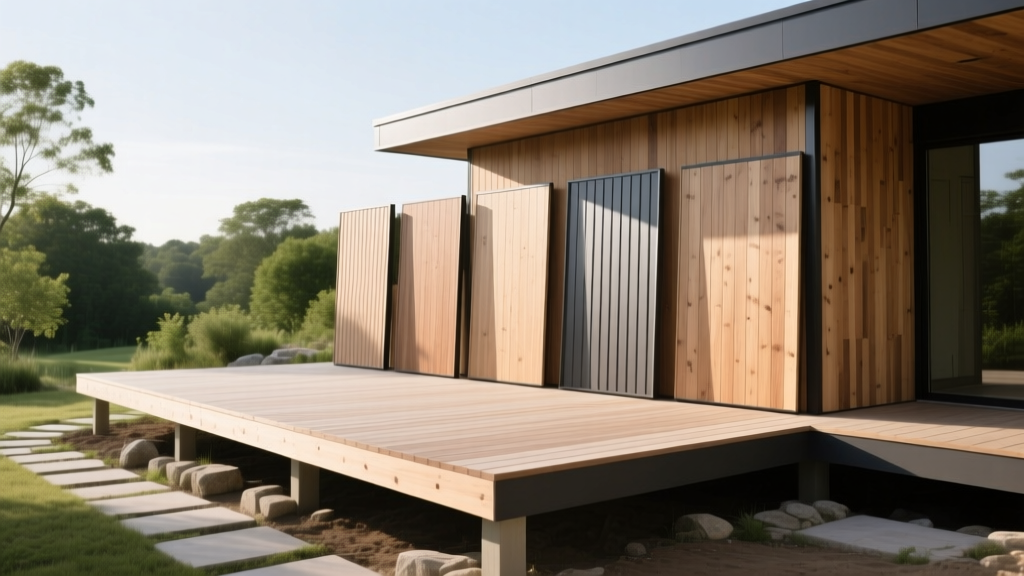
The Visual Trap: What Curated Deck Images Hide
When homeowners and contractors browse manufacturer portfolios, the official deck images presented are masterclasses in visual marketing. Lighting is optimized, stains are digitally removed, and color saturation is pushed to the absolute limit. While these deck images provide excellent inspiration for spatial layout and railing pairings, they frequently obscure the physical realities of the underlying product lines. Understanding the gap between a curated 2D render and a 3D material installation is critical for accurate budgeting and expectation management in 2026.
Professional builders know that the pristine, screw-free surfaces seen in brand deck images require specific hidden fastening systems that add $2.50 to $3.50 per square foot to material costs. Furthermore, the seamless perimeter edges showcased in these galleries almost always utilize "picture framing" techniques. This design choice, while visually striking, requires additional structural blocking, specific fascia board SKUs, and increased labor time, adding roughly $4.00 to $6.00 per linear foot to the framing budget. To build accurately, you must learn to read between the pixels of these marketing assets and translate them into concrete purchase orders.
Trex Transcend Lineage: Solar Reflectance in Photography
The Trex Transcend Lineage collection is heavily featured in the brand’s sun-drenched deck images. Photographers intentionally shoot this line during peak midday sunlight to highlight its primary engineering advantage: solar-reflective pigmentation. Unlike standard composite boards that absorb infrared radiation and become too hot for bare feet, the Lineage series (available in Biscayne, Jasper, Rainier, and Carmel) utilizes specialized cap-layer formulations that reflect UV and IR rays.
According to independent thermal testing, these lighter-toned boards can remain up to 40°F cooler than traditional dark walnut or slate composites under direct summer sun. However, what the deck images rarely show is the surface texture trade-off. To achieve this reflectivity, the protective polymer shell is slightly smoother than the deep-embossed wood grains found on the standard Transcend lineup.
Nearly 80% of high-end deck images feature a contrasting picture-framed perimeter. To replicate this using Trex Lineage, you cannot simply turn the boards sideways. You must order the specific Trex Universal Fascia boards (SKU: TF01) to cover the rim joists. Failing to account for fascia in your material takeoff will result in exposed, unattractive end-grains that ruin the seamless look promised by the portfolio photos.
Lineage Specifications and Pricing
- Dimensions: 1.0 in. x 5.5 in. (Actual: 0.94 in. x 5.4 in.)
- Lengths: 12 ft., 16 ft., and 20 ft. grooved edges
- 2026 Material Cost: $11.85 - $13.20 per linear foot
- Hidden Fastener Requirement: Trex Hideaway Universal Connectors (adds ~$2.80/sq. ft.)
TimberTech Advanced PVC: Landmark Collection Textures
TimberTech’s Advanced PVC Landmark collection dominates their luxury deck images. The visual focus in these galleries is always the "cathedral" wood grain pattern. Unlike composite boards that blend wood flour and plastic, Landmark is 100% cellular PVC. The deck images highlight the deep, wire-brushed embossing that mimics the rift-sawn grain of premium hardwoods like Brazilian Cherry and French White Oak.
The critical detail missing from these static deck images is how the PVC reacts to moisture. Because PVC is completely impervious to water absorption, it does not swell or warp. However, the deep grain embossing can hold surface water tension, making the boards appear significantly darker and richer when wet than they do in the dry, sunlit portfolio photos. Builders must advise clients in high-rainfall or poolside environments that the deck's color profile will shift dynamically with the weather.
Structurally, the Advanced PVC lines require strict adherence to joist spacing. While standard composites can span 16 inches on center (OC), the North American Deck and Railing Association (NADRA) and manufacturer guidelines strongly recommend 12-inch OC spacing for PVC boards installed diagonally to prevent sagging over time, a deflection issue that is never visible in staged marketing photography.
Fiberon Promenade: High-Contrast PVC and UV Stability
Fiberon’s Promenade deck images are characterized by high-contrast, stark color palettes like Sea Salt Gray and Warm Sienna. The visual marketing leans heavily into the modern, minimalist architectural trend. The Promenade line utilizes a co-extruded PVC cap layer that provides exceptional resistance to UV degradation.
Older generations of PVC decking, often seen in deck images from five to ten years ago, suffered from "chalking"—a powdery white residue that appeared on the surface as UV stabilizers broke down. Fiberon’s current Promenade formulation integrates advanced acrylic stabilizers directly into the cap layer, virtually eliminating the chalking effect. When reviewing their deck images, pay close attention to the edge profiles. The Promenade boards feature a squared, non-grooved edge option that requires face-screwing with color-matched Cortex fasteners, meaning the "invisible fastener" look requires meticulous plug-setting labor that adds 15-20% to installation time.
Material Translation Matrix: From Deck Images to Purchase Orders
Use the following matrix to translate the visual promises of brand deck images into accurate 2026 material specifications and budget allowances.
| Brand & Line | Image Color Profile | Real-World Visual Behavior | Est. Price / Sq. Ft. (Boards Only) | Required Joist Spacing |
|---|---|---|---|---|
| Trex Transcend Lineage | Bright, highly reflective, uniform tone | Maintains color well; smoother texture shows scuffs more easily than deep-grain boards. | $9.50 - $10.80 | 16 in. OC (Straight) |
| TimberTech Landmark PVC | Deep, rich cathedral grain, high contrast | Darkens noticeably when wet; excellent stain resistance due to non-porous PVC core. | $11.20 - $12.90 | 12 in. OC (Diagonal) |
| Fiberon Promenade PVC | Stark, modern, solid-color aesthetics | Minimal fading; squared edges require face-screws and plugs for a clean perimeter finish. | $8.90 - $10.10 | 16 in. OC (Straight) |
Bridging the Gap: Physical Sample Testing Protocols
Relying solely on digital deck images is a critical error in material selection. The International Code Council (ICC) and local building departments require materials to meet specific structural and fire-rating standards (such as ASTM D7032 for composite decking), none of which can be verified through a photograph. To ensure the physical product matches the visual promise of the deck images, implement the following three-step sample testing protocol on-site before finalizing the purchase order:
- The Hydration Test: Submerge the physical sample in a bucket of water for 10 minutes, then remove it and place it in direct sunlight. This simulates a post-rainstorm environment. Observe how long the water beads in the embossed grain and how significantly the color shifts. If the board turns muddy or excessively dark, it will not match the bright deck images you selected during a rainy spring season.
- The Thermal Load Test: Place the sample on a dark surface in direct, midday sunlight for two hours. Use an infrared thermometer to measure the surface temperature. Compare this reading against the manufacturer’s published solar reflectance index (SRI). This is especially vital for south-facing decks where barefoot traffic is expected.
- The Abrasion and Stain Test: Drag a steel wire brush lightly across the sample to simulate moving heavy patio furniture. Then, apply a mixture of mustard and charcoal grease, letting it sit for 24 hours. Wash it off with standard deck cleaner. High-quality PVC and capped composites will release the stain without ghosting, whereas lower-tier boards will retain a shadow, permanently altering the pristine look seen in the brand’s gallery.
By treating brand deck images as conceptual starting points rather than literal guarantees, and by rigorously testing physical samples against real-world environmental stressors, builders and homeowners can achieve outdoor spaces that look just as exceptional in person as they do on the screen.