How Much Would It Cost to Build a Privacy Fence? 2026 Install Guide
Discover exactly how much it would cost to build a privacy fence in 2026. Get material pricing, labor rates, and step-by-step installation cost factors.

Baseline Pricing: How Much Would It Cost to Build a Privacy Fence?
When homeowners ask how much would it cost to build a privacy fence, the answer depends heavily on material selection, linear footage, and site topography. For a standard 150-linear-foot backyard enclosure, the national average ranges from $2,800 to $5,200 fully installed. This translates to roughly $18 to $35 per linear foot for a 6-foot-tall structure. However, breaking down the costs by installation phase reveals where your budget actually goes and where you can optimize spending without sacrificing structural integrity.
According to industry data tracked by Angi's fencing cost guides, labor typically accounts for 40% to 50% of the total project cost, while materials make up the remainder. Below is a detailed matrix of material costs versus professional installation labor for 2026.
| Material Type (6-ft Height) | Material Cost (Per Linear Ft) | Labor Cost (Per Linear Ft) | Total Installed Cost (Per Linear Ft) | Expected Lifespan |
|---|---|---|---|---|
| Pressure-Treated Pine | $8 - $14 | $10 - $15 | $18 - $29 | 15 - 20 years |
| Western Red Cedar | $15 - $25 | $12 - $18 | $27 - $43 | 20 - 30 years |
| Vinyl (PVC) | $20 - $35 | $15 - $22 | $35 - $57 | 30+ years |
| Composite (e.g., Trex) | $35 - $55 | $18 - $25 | $53 - $80 | 25 - 30 years |
Step-by-Step Installation Cost Breakdown
To accurately estimate your project, you must evaluate the costs associated with each distinct phase of fence construction. Skipping proper preparation is the leading cause of premature fence failure, particularly frost heave and wood rot at the ground line.
Phase 1: Layout, Utility Checks, and Excavation
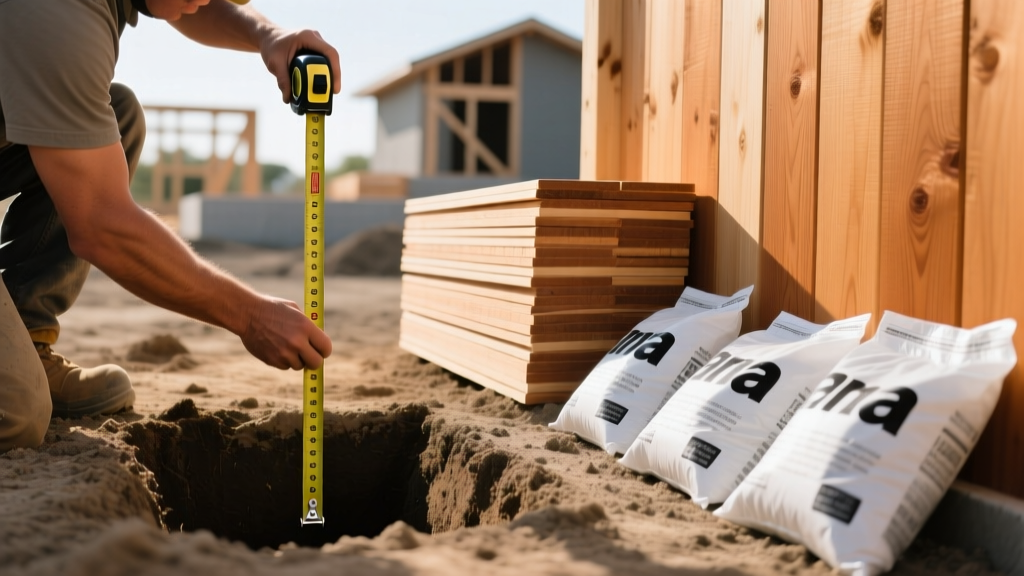
Before breaking ground, you must have underground utilities marked. This is a free service provided by calling 811 in the United States. Failing to use the national 811 service can result in striking gas or water lines, leading to thousands of dollars in fines and repair costs. Once marked, layout involves running masonry string lines and using batter boards to ensure perfectly square corners.
- Equipment Rental: Renting a two-man gas-powered earth auger costs $60 to $95 per day. For 150 linear feet of fencing with posts spaced 8 feet apart, you will dig approximately 20 post holes.
- Hole Dimensions: A 6-foot privacy fence requires 8-foot or 9-foot posts. Holes must be 10 to 12 inches in diameter and 24 to 30 inches deep, depending on your local frost line.
- Drainage Gravel: Budget $40 to $60 for crushed gravel. Placing 4 inches of gravel at the base of each hole is non-negotiable; it prevents water from pooling under the post and accelerates drainage.
Phase 2: Setting Posts and Concrete Requirements
The structural integrity of a privacy fence relies entirely on the post-footing connection. For a standard 10-inch diameter hole that is 24 inches deep, you will need approximately 1.5 to 2 bags of 50-lb fast-setting concrete mix per post. As outlined in the Quikrete post-setting guide, dry-pouring fast-setting concrete and adding water directly into the hole is an acceptable method for fence posts, saving hours of mixing time.
- Concrete Costs: Fast-setting concrete mix averages $6.50 to $8.00 per 50-lb bag. For 20 posts at 1.5 bags each, expect to spend $195 to $240 on concrete.
- Bracing Materials: You will need 1x4 wooden stakes and temporary bracing to keep posts perfectly plumb while the concrete cures. Budget $30 for bracing lumber and duplex nails.
Phase 3: Rails, Pickets, and Hardware
Once the concrete has cured for at least 24 hours, horizontal rails and vertical pickets are attached. The hidden costs in this phase are fasteners and staining materials. Standard electroplated nails will rust and streak your wood within a single season. You must use hot-dipped galvanized or stainless steel ring-shank nails (such as Maze Storm Guard or Grip-Rite 2-3/8 inch) to resist wind uplift and prevent corrosion streaks.
- Fasteners: A 150-foot fence requires roughly 1,200 picket nails and 300 rail screws. Budget $80 to $120 for high-grade, polymer-coated or stainless steel fasteners.
- Stain and Sealant: If using pine or cedar, a penetrating oil-based stain (like TWP 100 Series or Cabot Semi-Transparent) is required. Coverage is roughly 150 to 200 square feet per gallon. A 6-foot tall, 150-foot fence (both sides) equals 1,800 square feet, requiring 10 to 12 gallons of stain at $55 to $75 per gallon.
If your property sits on a slope, you must choose between 'stepping' the fence (which requires custom-cut pickets and increases labor by 20%) or 'racking' it (which follows the contour but leaves triangular gaps at the bottom that require additional lattice or gravel-board fillers). Additionally, always verify local HOA architectural guidelines and municipal setback laws. Fines for building a fence 2 inches into a neighbor's property or violating a 5-foot height restriction in a front yard can force a complete teardown.
DIY vs. Professional Installation: The ROI Matrix
Deciding whether to hire a contractor or tackle the project yourself requires an honest assessment of your physical capability, tool inventory, and available time. Digging 20 holes by hand in clay-heavy soil can take a weekend and result in severe physical fatigue, whereas a professional crew with a skid-steer auger attachment will complete the excavation in three hours.
| Factor | DIY Installation | Professional Installation |
|---|---|---|
| Total Cost (150 ft, Cedar) | $2,500 - $3,200 | $4,500 - $6,000 |
| Time to Completion | 3 - 5 Weekends | 2 - 4 Days |
| Tool Requirements | Auger rental, miter saw, nail gun, post level | None (Contractor supplies all) |
| Warranty | Material warranty only | Material + 1 to 5-year labor warranty |
| Permit Handling | Homeowner must pull and schedule inspections | Contractor manages permitting and utility locates |
Permitting and Legal Setbacks
Most municipalities require a building permit for privacy fences over 4 feet tall in the front yard or over 6 feet tall in the backyard. Permit fees typically range from $50 to $150. During the planning phase, request a plot plan from your county assessor's office to verify your exact property lines. Building directly on the property line often grants your neighbor shared ownership rights under local fence laws, meaning they could legally demand you alter or remove the structure later. The safest installation practice is to set the finished face of the fence 2 to 4 inches inside your property boundary.
Expert Tips to Reduce Your Privacy Fence Budget
- Optimize Post Spacing: While 8-foot spans are standard for wood, reducing the span to 6 feet increases material costs but drastically reduces wind-load sag over a decade. If you live in a high-wind zone, the extra lumber cost prevents costly rebuilds later.
- Use a Jig for Pickets: Instead of measuring and leveling every single picket, build a simple wooden jig that hooks over the top rail. This guarantees uniform spacing and keeps the tops perfectly level, saving hours of labor and reducing material waste from miscuts.
- Buy Unstained Cedar: Pre-stained privacy panels from big-box stores carry a 30% to 40% premium. Buying raw, kiln-dried cedar boards and applying a high-quality penetrating oil stain yourself yields a superior finish that lasts twice as long as factory-applied coatings.
Written by
David NakamuraDavid Nakamura is a licensed architect (AIA) and construction technology writer focused on sustainable building methods, mass timber engineering, and high-performance building envelopes. He holds a Master of Architecture from the University of Washington and is a certified Passive House Consultant (CPHC). David spent eight years at the Seattle firm Mithun, where he led the design of three LEED Platinum projects, before founding his own practice specializing in net-zero residential design. He serves on the editorial advisory board of GreenBuilder Magazine and has authored peer-reviewed papers on cross-laminated timber (CLT) connections for the Journal of Structural Engineering. In his spare time, David teaches woodworking at Pratt Fine Arts Center and kayaks the Puget Sound.
More from David Nakamura
View all
Construction Cost
Labor Cost to Build a Deck Per Sq Ft: 2026 Installation Guide
Discover the exact labor cost to build a deck per sq ft in 2026. This installation guide breaks down contractor rates, complexity factors, and hidden fees.
Aug 4, 2026

Construction Cost
How Much Does It Cost to Build a 3 Bedroom House? Financing Guide
Learn exactly how much it costs to build a 3 bedroom house and explore 2026 financing options, construction loan types, and budget frameworks for your build.
Aug 4, 2026

Construction Cost
Cost to Build a Tennis Court: 2026 Guide
How much does it cost to build a tennis court in 2026? Breakdowns for asphalt, concrete, and synthetic surfaces plus fencing and lighting.
Jul 30, 2026