Chain Link Fence Post Durability: Galvanized vs Coated
Compare the lifespan of galvanized, vinyl-coated, and aluminum chain link fence posts. Learn how zinc classes, soil pH, and gauge affect longevity.
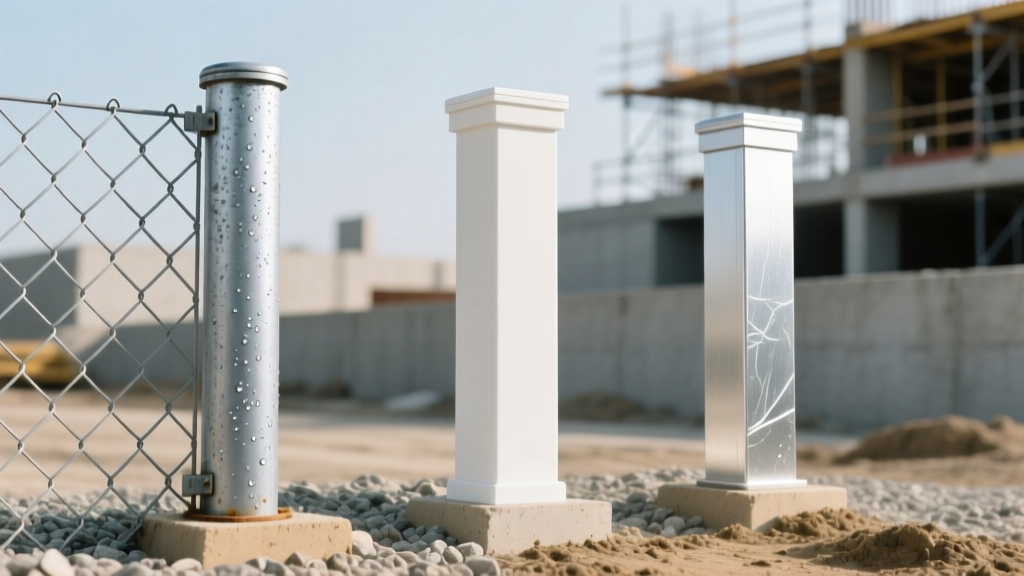
The Structural Reality of Chain Link Fence Posts
The chain link mesh is the visible barrier, but the chain link fence post is the structural skeleton. When a perimeter fence fails, it is rarely the fabric that gives way first. Failure almost always originates at the post—either through structural bending under wind load or subsurface corrosion snapping the steel at the ground line. Selecting the correct post material, coating weight, and pipe schedule is the single most critical decision in determining whether a fence will last 15 years or 50 years.
In 2026, with steel alloy prices stabilizing but advanced polymer coatings becoming more accessible, contractors and property owners have distinct choices. However, marketing terms like 'rust-proof' often obscure the engineering realities of galvanic cells, soil pH, and yield strength. This analysis breaks down the exact durability metrics of modern chain link fence posts.
The Anatomy of Post Failure: Ground-Line Corrosion
The most vulnerable point of any chain link fence post is the ground-line interface. This zone creates a perfect electrochemical cell for corrosion. Below ground, the post is deprived of oxygen but exposed to moisture and soil electrolytes. Above ground, it has abundant oxygen but less moisture. At the exact intersection of soil and air, the differential aeration cell accelerates oxidation.
A common installation error is pouring a concrete collar that extends above the soil grade and slopes inward toward the steel post. This creates a moisture trap where water pools against the zinc coating. Over time, the zinc sacrifices itself to protect the steel, and once depleted, the core pipe rots from the outside in. Always slope concrete collars away from the post to shed water.
Material Showdown: Lifespan and Cost Matrix
Not all chain link fence posts are manufactured equally. The lifespan of a post is dictated by its base metal and the thickness of its protective barrier. Below is a comparative analysis of the primary post types available in the current market, factoring in 2026 material costs for a standard 8-foot line post (2-3/8 inch Outer Diameter).
| Material Type | Coating Specification | Expected Lifespan | 2026 Avg. Cost (8ft Line) | Best Application |
|---|---|---|---|---|
| Galvanized Steel | Class 1 Zinc (0.28 oz/ft²) | 15 - 20 Years | $22 - $28 | Temporary or low-budget residential |
| Galvanized Steel | Class 3 Zinc (0.80 oz/ft²) | 30 - 40 Years | $34 - $42 | Commercial, industrial, high-moisture |
| Vinyl-Coated Steel | Extruded PVC over Class 1 | 30 - 50 Years | $45 - $60 | Residential aesthetics, pool enclosures |
| Aluminum Alloy | None (Naturally oxide layer) | 50+ Years | $55 - $75 | Coastal salt-spray zones, light duty |
Decoding Zinc Coatings: Class 1 vs. Class 3
When sourcing galvanized chain link fence posts, the industry standard governing the zinc coating is ASTM A641. The most critical distinction buyers must understand is the difference between Class 1 and Class 3 coatings.
- Class 1 Coating: Contains a minimum of 0.28 ounces of zinc per square foot. This is the standard 'hardware store' grade. It provides adequate protection in dry, inland climates but will begin to show red rust at the ground line within a decade in high-humidity or acidic soil environments.
- Class 3 Coating: Contains a minimum of 0.80 ounces of zinc per square foot—nearly three times the protective mass of Class 1. According to the Chain Link Fence Manufacturers Institute (CLFMI), Class 3 is the specified minimum for commercial, industrial, and high-security applications. The zinc acts as a sacrificial anode; having 300% more mass directly translates to a proportional increase in the time it takes for the underlying steel to be exposed to oxygen.
While Class 3 posts carry a 30% to 40% upfront premium over Class 1, the lifecycle cost is significantly lower. Replacing a single terminal post set in concrete requires heavy equipment or extensive manual labor, often costing $150 to $250 per post in labor alone.
The Vinyl-Coated Caveat: Extruded vs. Bonded
Vinyl-coated posts offer excellent corrosion resistance and aesthetic blending, but the manufacturing method dictates durability. Avoid 'dipped' or 'liquid-bonded' PVC coatings. These thin layers are prone to micro-tearing during installation and can delaminate when exposed to UV degradation, trapping moisture against the steel core and accelerating hidden rust.
Instead, specify extruded PVC coatings. In this process, a thick sleeve of UV-inhibited PVC is mechanically pulled over the galvanized post and heat-shrunk to bond tightly. If the extruded layer is scratched, the underlying galvanized steel (which should still be at least Class 1 coated) provides secondary protection.
Structural Integrity: Gauge, Schedule, and Wind Load
Durability is not solely about rust; it is also about structural yield. A post that bends under a 60 mph wind load has failed just as surely as one that has rusted through. Pipe thickness is measured in Outside Diameter (OD) and wall thickness (Schedule).
- Line Posts: Minimum 2-3/8 inch OD. For fences over 6 feet tall, upgrade to Schedule 40 wall thickness (approx. 0.154 inches) rather than the standard Schedule 20 (0.120 inches).
- Terminal / Corner / Gate Posts: These bear the entire tension load of the stretched fabric. Minimum 2-7/8 inch OD for residential; 3-1/2 inch OD for commercial. Always use Schedule 40 for terminal posts.
Aluminum posts, while immune to rust, present a structural challenge. Standard 6063 aluminum alloy has a significantly lower yield strength than steel. In high-wind regions, aluminum line posts must be spaced closer together (e.g., 8 feet on-center instead of 10 feet) or reinforced with internal steel stiffeners to prevent permanent deformation.
Installation Variables That Dictate Longevity
Even a Class 3 galvanized or extruded vinyl post will fail prematurely if installed incorrectly. Soil chemistry and drainage protocols must be managed during the excavation phase.
- Test the Soil pH: Highly acidic soils (pH below 5.5) or highly alkaline soils (pH above 8.5) aggressively attack zinc and concrete. If extreme pH is detected, specify a heavy-duty bituminous coating on the subsurface portion of the post before setting.
- The Gravel Drainage Bed: Never set a post directly on undisturbed clay. Drill the post hole 6 inches deeper than the required frost line and fill the bottom with 3/4-inch crushed gravel. This prevents hydrostatic pressure from pushing the post upward during freeze-thaw cycles and allows subsurface water to drain away from the steel base.
- Concrete Mix Selection: Use a standard 4,000 PSI concrete mix. Avoid rapid-setting fence post mixes that contain high levels of chlorides or unreacted calcium, which can induce galvanic corrosion against the zinc coating. The American Fence Association (AFA) recommends allowing standard concrete to cure fully before applying tension to the chain link fabric to prevent post lean.
Expert Verdict: Which Post Should You Specify?
For temporary enclosures, dog runs, or low-budget residential projects in arid climates, Class 1 galvanized steel remains a cost-effective baseline. However, for any permanent perimeter, commercial facility, or property located in coastal or high-humidity regions, Class 3 galvanized steel is the mandatory standard.
If aesthetics and ultimate corrosion resistance are paramount, and the budget allows, extruded vinyl-coated posts over a Class 1 galvanized core provide the highest balance of visual appeal and multi-decade longevity. Reserve aluminum posts strictly for direct oceanfront properties where salt spray destroys steel within years, provided the fence height does not exceed 4 feet and wind loads are carefully calculated.
'A chain link fence is only as strong as its terminal posts. Skimping on the zinc coating weight or pipe schedule of your corner and gate posts guarantees a catastrophic tension failure long before the mesh itself degrades.' — Industrial Perimeter Security Guidelines