Metal Fence Posts Selection: Steel vs Aluminum Gauges and Profiles
Compare metal fence posts by material, gauge, and profile. Expert guide on steel vs aluminum, coating lifespans, and structural selection frameworks.
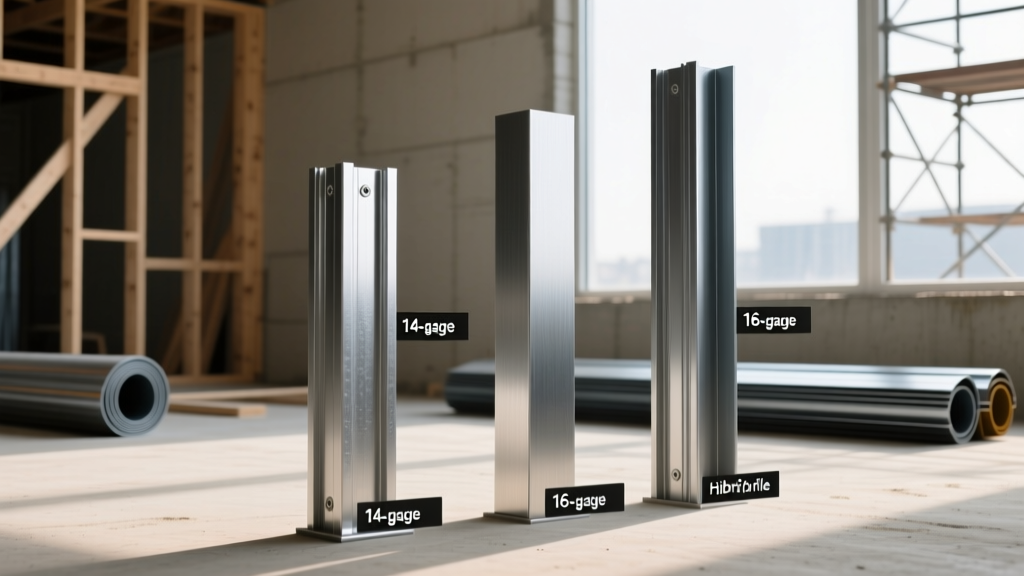
The Anatomy of Metal Fence Posts: Core Material Taxonomy
Selecting the correct metal fence post requires moving beyond basic material labels into specific metallurgical and structural classifications. The modern fencing industry relies on two primary metal categories, each governed by distinct manufacturing standards and performance characteristics.
- Ferrous (Steel): Carbon steel and High-Strength Low-Alloy (HSLA) steel, typically manufactured to ASTM A500 specifications for structural tubing.
- Non-Ferrous (Aluminum): Extruded or drawn alloys, primarily 6063-T5 for architectural applications and 6061-T6 for high-load structural demands.
Steel vs. Aluminum: The Primary Decision Matrix
The choice between steel and aluminum hinges on three variables: structural load requirements, environmental corrosion risks, and budget constraints. Steel offers superior tensile strength and rigidity, making it mandatory for high-wind zones and heavy privacy panels. Aluminum provides inherent corrosion resistance without secondary coatings, ideal for coastal environments and ornamental applications.
| Feature | Galvanized Steel | Extruded Aluminum |
|---|---|---|
| Tensile Strength | High (46,000+ PSI for Grade B) | Moderate (17,000 - 35,000 PSI) |
| Weight per 8ft Post | 28 - 42 lbs (depending on gauge) | 9 - 16 lbs |
| Corrosion Resistance | Dependent on zinc/coating integrity | Inherent (forms protective oxide layer) |
| Best Application | Wood privacy, chain link, vinyl inserts | Ornamental, coastal, lightweight panels |
Decoding Gauge Thickness and Wall Dimensions
The most common error in post selection is misunderstanding the gauge system. In sheet and tubular steel, a lower gauge number indicates a thicker, stronger wall. Relying on 18-gauge steel for a 6-foot solid wood privacy fence will result in catastrophic torsional failure under wind loads.
The Gauge Paradox: Thickness Specifications
- 12-Gauge (0.1046 inches): Commercial grade. Required for terminal posts, gate hinges, and fences exceeding 8 feet in height or situated in 130+ mph wind zones.
- 14-Gauge (0.0747 inches): Heavy residential. The minimum acceptable thickness for supporting solid wood or composite privacy panels. Offers the optimal balance of rigidity and cost.
- 16-Gauge (0.0598 inches): Standard residential. Suitable for chain link, welded wire, and open-picket designs where wind shear is minimal.
- 18-Gauge (0.0478 inches): Light duty. Strictly for temporary fencing, lightweight garden enclosures, or internal sleeve supports.
Always verify the actual wall thickness on the manufacturer's spec sheet. Some import manufacturers label posts as '14-gauge equivalent' while actually rolling 0.065-inch steel. For structural integrity, demand strict adherence to ASTM A500 tolerances.
Profile Shapes and Structural Mechanics
The cross-sectional geometry of a metal fence post dictates how it distributes mechanical stress. Selecting the wrong profile compromises the entire fence line.
Round Tubing (OD 2-3/8" and 2-7/8")
Round posts offer uniform multi-directional strength, making them the undisputed standard for chain link and tensioned wire fences. The 2-3/8-inch Outside Diameter (OD) is used for line posts, while the heavier 2-7/8-inch OD is mandated for terminal, corner, and gate posts to handle the concentrated pull of the tension bands.
Square and Rectangular Tubing
Square posts (2x2, 3x3, 4x4) resist torsion and twisting far better than round posts, making them essential for rigid panel attachments and vinyl sleeve inserts. Rectangular flanged posts, such as the PostMaster Plus system, feature a unique U-channel design that hides the metal behind wood pickets while providing the structural backbone of steel.
Coating Technologies: Galvanized vs. Powder-Coated
Raw steel will oxidize and fail within a few seasons. The longevity of a steel fence post is entirely dependent on its protective envelope. According to the American Galvanizers Association, the thickness of the zinc layer dictates the time-to-first-maintenance.
- G90 Galvanizing (0.90 oz/sq ft): Standard commercial coating. Provides 15-20 years of rust protection in moderate climates. Susceptible to white rust if stored in damp conditions before installation.
- G185 Hot-Dip Galvanizing (1.85 oz/sq ft): Premium heavy-duty coating. Recommended for coastal areas, high-humidity zones, and agricultural applications where soil acidity accelerates corrosion. Can last 40+ years before red rust appears.
- Polyester Powder Coat (AAMA 2604): A thermoset polymer applied over a galvanized base. Provides UV resistance and color matching for ornamental fences. Ensure the underlying steel is galvanized; powder coating over bare steel will result in sub-film corrosion and peeling within 3 years.
Application-Specific Selection Framework
Wood Privacy Fences (6 to 8 feet)
Traditional 4x4 wood posts rot at the soil line due to moisture wicking. The modern standard is to use 14-gauge galvanized rectangular steel posts (like PostMaster) driven 36 inches into the ground, with wood pickets screwed directly to the steel flanges. This eliminates ground-contact rot and withstands 115 mph wind loads without snapping.
Vinyl and Composite Fences
Vinyl lacks the structural rigidity to support itself in high winds. Installers must use 16-gauge or 14-gauge 2x2 square steel inserts inside the hollow vinyl posts. The steel post is set in concrete, and the vinyl sleeve slides over it, combining the aesthetics of PVC with the structural yield strength of carbon steel.
Chain Link and Welded Wire
Adhere strictly to the American Fence Association guidelines: use 16-gauge 2-3/8" round posts for line runs, and step up to 14-gauge 2-7/8" round posts for corners and gates. Never use square posts for chain link, as the flat surfaces do not accommodate standard tension band hardware correctly.
Installation Variables: Soil Types and Concrete Footings
The strongest metal post will heave or lean if the footing is engineered poorly. Footing depth must extend below the local frost line (e.g., 36 inches in Climate Zone 5, 48 inches in Zone 6).
For soil backfill, native clay expands and contracts, pushing posts out of plumb. Always use a 4000 PSI concrete mix with a 4-inch slump. Create a 'bell' shape at the bottom of the hole by over-digging the base by 2 inches; this locks the concrete anchor into the earth, preventing frost-jacking. For gravel or sandy soils, increase the hole diameter by 20% to distribute the lateral load.
2026 Cost Breakdown and Sourcing Data
Pricing for structural steel and aluminum fluctuates with global commodity markets. The following estimates reflect early 2026 contractor pricing for 8-foot posts, excluding concrete and labor.
| Post Type & Specification | Approx. Unit Cost | Primary Use Case |
|---|---|---|
| 16ga 2-3/8" Round Steel (G90) | $18 - $24 | Residential Chain Link |
| 14ga 2-7/8" Round Steel (G185) | $35 - $48 | Terminal/Gate Posts |
| 14ga Rectangular Flanged (PostMaster) | $55 - $72 | Wood Privacy Fences |
| 16ga 2x2 Square Steel Insert | $22 - $30 | Vinyl Sleeve Support |
| 6063-T5 2x2 Aluminum Square | $45 - $65 | Ornamental / Coastal |
Sourcing and Quality Verification
When procuring metal fence posts in bulk, require the supplier to provide Mill Test Reports (MTRs) for steel tubing. This documentation verifies the chemical composition and yield strength of the metal batch. For powder-coated products, request the AAMA certification number to ensure the coating was baked at the correct temperature and thickness to prevent UV chalking and premature delamination.