Aircon Floor Maintenance: The Complete Cleaning Playbook for Raised HVAC Plenums
Master the aircon floor maintenance playbook. Learn daily surface cleaning, annual plenum deep-cleans, and structural audits for raised HVAC access floors.
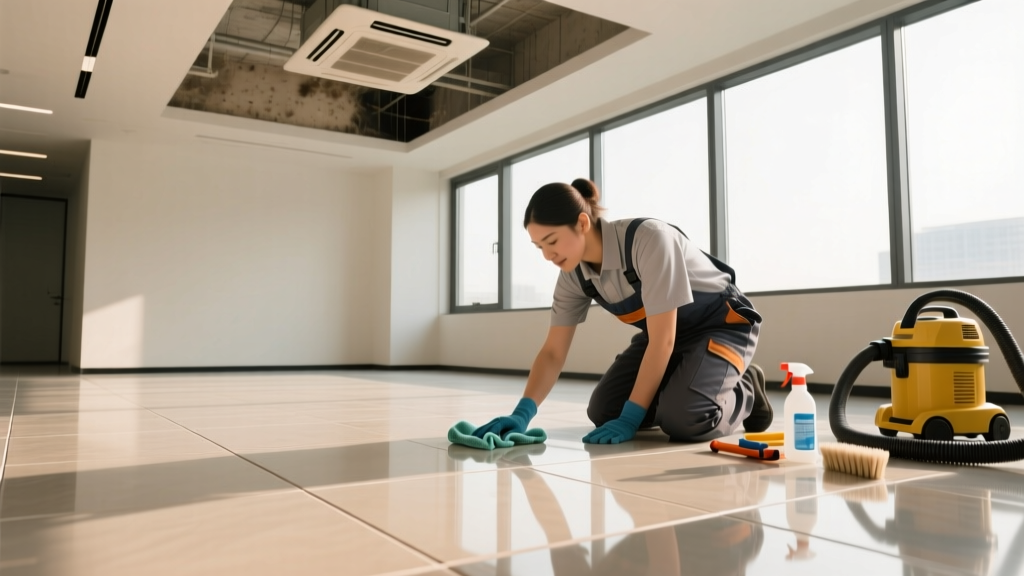
The Operational Reality of Underfloor Air Distribution (UFAD)
An aircon floor—technically known as a raised access floor functioning as an Underfloor Air Distribution (UFAD) plenum—serves a dual purpose in modern commercial and data center environments. It provides a structural walking surface while simultaneously acting as a pressurized supply air chamber. Because the void beneath the panels is an active HVAC pathway, maintenance and cleaning protocols must go far beyond standard janitorial routines. Neglecting an aircon floor does not just result in a dirty appearance; it directly degrades indoor air quality (IAQ), increases fan energy consumption by up to 15% due to static pressure drops, and introduces severe fire hazards from accumulated particulate matter.
This playbook provides facility managers and maintenance technicians with exact, actionable protocols for maintaining both the surface finish and the critical plenum infrastructure of an aircon floor system.
Surface Cleaning Protocol: Daily and Weekly Playbook
The surface of an aircon floor is typically finished with high-pressure laminate (HPL), vinyl, or low-pile carpet tiles. Because the joints between panels are potential air leakage points, surface cleaning must strictly control moisture and particulate ingress.
Daily Dry Soil Removal
- Equipment: Use only commercial HEPA-filtered backpack vacuums (e.g., ProTeam Super CoachVac 10) equipped with soft-bristle floor brushes. Never use vacuums with rotating beater bars, which can fray carpet tiles or scratch HPL finishes.
- Technique: Vacuum in overlapping, unidirectional strokes. Pay special attention to the 1/16-inch seams between panels, as these gaps act as magnets for fine silicate dust that can eventually migrate into the plenum.
Weekly Damp Mopping (Hard Surfaces Only)
When mopping HPL or vinyl aircon floors, the primary objective is to clean without forcing liquid into the plenum void.
- Solution Preparation: Mix a neutral-pH commercial floor cleaner (strictly between pH 7.0 and 8.0) with distilled or filtered water. Alkaline cleaners (pH > 9) will degrade the conductive properties of anti-static HPL finishes used in server rooms.
- Moisture Control: Use a microfiber flat mop wrung out until it is barely damp. The mop should leave a microscopic film of moisture that evaporates within 30 seconds. Never use a string mop or auto-scrubber, as standing water will inevitably seep through panel joints and rust the underlying steel stringers.
Never use steam cleaners, wet vacuums, or high-pressure washers on an aircon floor. If liquid breaches the panel seams, it can cause the high-density particleboard core (common in standard access panels) to swell, permanently ruining the dimensional tolerance of the panel and causing structural rocking. If a spill occurs, extract it immediately using a dry vacuum and lift the affected panels to inspect the pedestal bases for corrosion.
The Annual Plenum Deep-Clean and Structural Audit
The plenum void is the most critical component of the aircon floor. Over 12 months, construction dust, skin cells, and zinc whiskers (from galvanized steel components) accumulate. According to EPA guidelines on commercial indoor air quality, unmanaged plenum debris becomes a primary vector for airborne pathogens and particulate pollution. An annual deep-clean requires a systematic, zoned approach.
Step-by-Step Plenum Maintenance Flow
- Zone Isolation: Divide the floor plan into 500-square-foot zones. Shut down the local UFAD supply fans to prevent dust from becoming airborne and migrating into the occupied space during panel removal.
- Safe Panel Lifting: Use specialized dual-cup suction lifters (rated for at least 150 lbs) to remove panels. Rule of thumb: Never remove more than two adjacent panels at a time. Removing large sections compromises the lateral stability of the pedestal grid, risking a catastrophic collapse of the remaining floor structure.
- HEPA Plenum Vacuuming: Vacuum the concrete subfloor, pedestal bases, and stringers using a HEPA canister vacuum with a crevice tool. Do not sweep with a broom, as this suspends fine particulates into the air where they will settle on sensitive IT equipment or clog downstream HVAC filters.
- Structural Torque Audit: Using a calibrated torque wrench, check the pedestal base anchor bolts and stringer connection screws. The industry standard requires 15 to 20 ft-lbs of torque. Loose stringers are the primary cause of panel 'rocking' and the resulting 'whistling' noise caused by air escaping through unsealed joints.
- Gasket and Firestop Inspection: Inspect the neoprene air-sealing gaskets on the underside of the panels. If the gaskets are flattened, cracked, or missing, replace them to maintain the airtight integrity of the UFAD system. Verify that all cable cutouts are sealed with fire-rated putty or specialized access floor grommets.
Key UFAD Performance Metrics to Monitor
- Target Static Pressure: 0.05 to 0.10 inches w.g. (water gauge) in the plenum. Drops below this indicate massive air leakage at panel joints.
- Filter Change Interval: UFAD terminal units require filter changes every 3-6 months. If filters are clogging faster, your plenum cleaning frequency must increase.
- Plenum Temperature: Supply air should remain between 60°F and 65°F. Higher temperatures suggest the plenum is absorbing heat from the concrete slab or unsealed power cables.
Troubleshooting Matrix: Common Aircon Floor Defects
Facility teams must be able to diagnose aircon floor anomalies quickly. The matrix below maps common symptoms to their root causes and required corrective actions.
| Symptom | Root Cause Analysis | Corrective Action |
|---|---|---|
| Panel rocking or 'clacking' when walked on | Stringer screws have vibrated loose, or pedestal head is not level. | Retorque stringer screws to 15 ft-lbs. Adjust pedestal height nut and apply thread-locking fluid. |
| High-pitched whistling noise at floor level | Air escaping through degraded panel edge gaskets or unsealed cable cutouts. | Replace neoprene edge gaskets. Install airtight brush grommets on all cable penetrations. |
| Noticeable drop in room airflow / hot spots | Plenum static pressure loss due to massive debris buildup or disconnected flex ducts. | Perform full plenum HEPA vacuuming. Inspect and re-seat all UFAD diffuser flex connections. |
| White powdery residue on black pedestal bases | Zinc whisker growth on electro-galvanized steel components (common in pre-2015 builds). | Wipe with isopropyl alcohol. Coat with encapsulating polyurethane paint or replace with hot-dipped galvanized pedestals. |
Compliance, Standards, and Cost Benchmarks
Maintaining an aircon floor is not just an operational preference; it is a compliance requirement. The GSA PBS-P100 Facilities Standards mandate strict structural and fire-rating criteria for raised access floors in federal and commercial buildings. Furthermore, ASHRAE Standard 62.1 dictates that any space used as a supply air plenum must be kept free of contaminants that could degrade ventilation effectiveness.
Budgeting for Aircon Floor Maintenance
When planning your annual facility maintenance budget, use these 2026 cost benchmarks for raised access floor care:
- In-House Surface Cleaning: $0.15 - $0.25 per sq. ft. annually (labor and HEPA consumables).
- Professional Plenum Deep-Clean: $0.85 - $1.50 per sq. ft. Outsourcing is recommended for data centers or environments requiring certified cleanroom protocols, as specialized technicians use negative-air containment tents to prevent cross-contamination during panel lifting.
- Gasket & Hardware Replacement: Budget approximately $3.50 per panel for replacement neoprene edge seals and stainless steel stringer screws during the 5-year major overhaul cycle.
By treating the aircon floor as a vital piece of HVAC machinery rather than just a walking surface, facility teams can extend the lifespan of the flooring infrastructure, ensure optimal thermal comfort, and maintain strict compliance with modern indoor air quality standards.