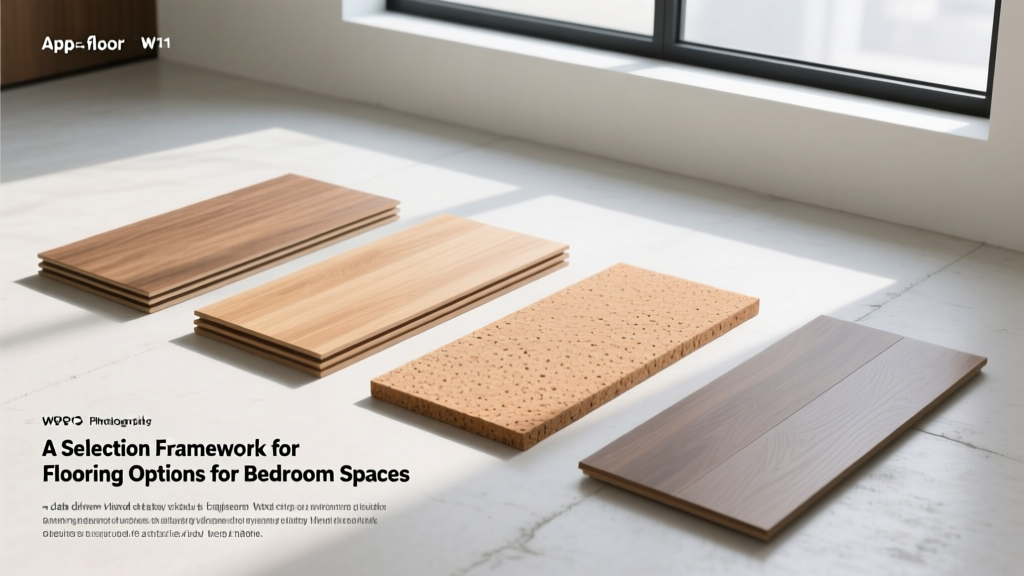
A Selection Framework for Flooring Options for Bedroom Spaces
Discover a data-driven selection framework for flooring options for bedroom spaces. Compare WPC, engineered wood, cork, and carpet for acoustics and IAQ.
The Bedroom Flooring Decision Matrix
Selecting the right surface for a sleep environment requires prioritizing entirely different metrics than high-traffic zones. While kitchens demand extreme moisture resistance and entryways require high abrasion tolerance, the bedroom is a low-impact, high-comfort environment. The ideal choice must balance acoustic dampening, thermal effusivity (how warm the material feels to bare feet), and indoor air quality (IAQ).
1. Acoustics: Achieving an Impact Insulation Class (IIC) of 55+ to minimize footstep and structural noise transfer.
2. IAQ & Allergens: Minimizing Volatile Organic Compounds (VOCs) and eliminating dust mite harborage zones.
3. Thermal Comfort: Selecting materials with low thermal conductivity to prevent the "cold shock" effect on bare feet.
Material Analysis: What Actually Works
WPC Luxury Vinyl Plank (The Acoustic Winner)
When evaluating hard surface flooring options for bedroom use, Wood Plastic Composite (WPC) luxury vinyl consistently outperforms Stone Plastic Composite (SPC). SPC features a dense limestone core that, while highly durable, transfers impact noise and feels cold underfoot. WPC utilizes an expanded polymer core that acts as a built-in acoustic buffer.
- Specification Target: Look for a 20-mil wear layer (overkill for bedrooms, but ensures longevity) and an attached 1.5mm IXPE or cork underlayment pad.
- Acoustic Performance: WPC with an attached cork pad routinely achieves IIC ratings of 65+, making it ideal for second-story bedrooms or multi-family units.
- Installed Cost: $5.50 – $9.00 per square foot.
Engineered Hardwood (The ROI & Aesthetic Choice)
Solid hardwood is prone to seasonal gapping and cupping in bedrooms where humidity can fluctuate wildly between closed-door sleeping hours and open-house ventilation. Engineered hardwood, with its cross-plywood core, provides dimensional stability while delivering the authentic thermal warmth and visual depth of real timber.
- Specification Target: Demand a minimum 3mm to 4mm veneer wear layer to allow for at least one future sanding. For bedrooms with radiant heating systems, specify quartersawn white oak, which expands and contracts at roughly half the rate of plain-sawn wood.
- Acclimation: According to the National Wood Flooring Association (NWFA), engineered wood must be acclimated to the bedroom's specific living conditions (typically 30-50% relative humidity) for 48-72 hours prior to installation.
- Installed Cost: $9.00 – $16.00 per square foot.
Natural Wool Carpet (The Thermal & Tactile Choice)
While hard surfaces dominate modern design trends, carpet remains the undisputed leader in thermal insulation and sound absorption. However, material selection is critical for IAQ. Synthetic carpets can off-gas VOCs and trap allergens. Natural wool fibers are hygroscopic (they absorb and release ambient moisture), naturally fire-resistant, and repel dust mites.
"For patients with severe asthma, hard surfaces are generally recommended to allow for easy HEPA vacuuming. However, if carpet is desired, tightly woven, low-pile wool certified by Green Label Plus is the safest compromise." — American Lung Association Guidelines on Indoor Air Quality.
- Specification Target: 100% wool loop or low-pile cut. Avoid high-pile synthetics that trap dander. Pair with a low-VOC synthetic felt pad, avoiding recycled rubber pads which can off-gas sulfur compounds.
- Installed Cost: $8.00 – $15.00 per square foot.
Cork Flooring (The Eco-Acoustic Alternative)
Cork is harvested from the bark of the cork oak tree without felling it, making it a highly renewable resource. Structurally, cork is composed of millions of air-filled cells, giving it unparalleled natural thermal and acoustic insulation properties without the need for synthetic underlayments.
- Specification Target: Floating click-lock cork planks with a high-density fiberboard (HDF) core and a minimum 3mm top cork veneer. Ensure the finish is a UV-cured water-based polyurethane to prevent yellowing and maintain zero-VOC emissions.
- Installed Cost: $6.50 – $11.00 per square foot.
Comparative Cost & Performance Matrix
| Material | Installed Cost (sq.ft.) | IIC Rating (System) | Thermal Comfort | Allergen Risk |
|---|---|---|---|---|
| WPC Vinyl | $5.50 - $9.00 | 65+ (with cork pad) | Moderate | Very Low |
| Engineered Wood | $9.00 - $16.00 | 50-55 (needs acoustic pad) | High | Very Low |
| Wool Carpet | $8.00 - $15.00 | 70+ (Excellent) | Very High | Moderate (requires HEPA vac) |
| Floating Cork | $6.50 - $11.00 | 60+ (Inherent) | Very High | Low (antimicrobial) |
Scenario-Based Selection Flowchart
Use this decision logic to narrow down the optimal material based on your specific household constraints:
- IF you have severe dust mite or pet dander allergies → Choose Engineered Hardwood or WPC Vinyl. Avoid carpet entirely, and ensure hard surface seams are tightly locked to prevent subfloor dust from migrating upward.
- IF the bedroom is located above a noisy living space or in an HOA with strict sound codes → Choose Floating Cork or WPC Vinyl with an attached 2mm cork underlayment. Ensure the total floor assembly meets ASTM E492 testing standards for impact noise.
- IF the bedroom utilizes hydronic radiant floor heating → Choose Quartersawn Engineered Wood or WPC Vinyl. Warning: Verify the LVP manufacturer's maximum temperature threshold; many rigid core products will warp or off-gas if surface temperatures exceed 85°F (29°C).
- IF you prioritize barefoot warmth and have a ground-floor bedroom over an unheated crawlspace → Choose Wool Carpet or Cork. Both materials possess natural cellular structures that trap air, acting as a thermal break against cold subfloors.
The Hidden Variable: Underlayment Specifications
The most common mistake when installing hard surface flooring in bedrooms is treating the underlayment as an afterthought. The underlayment dictates the acoustic performance, moisture protection, and subfloor bridging capabilities of the floor.
If your bedroom is on a ground-level concrete slab, moisture vapor emission is a primary failure mode for wood and LVP. You must use a 6-mil polyethylene vapor barrier or an underlayment with an integrated moisture membrane (e.g., 3-in-1 underlayments with a built-in lip-and-tape seal). Standard felt paper will not stop alkaline moisture from degrading adhesive bonds or causing engineered wood veneers to delaminate.
For wood subfloors (OSB or plywood), prioritize acoustic underlayments made from virgin cork or recycled rubber composite. Virgin cork (typically 3mm to 6mm thick) offers superior compression resistance, meaning it will not flatten out over time under the weight of heavy bedroom furniture like solid oak dressers or king-sized bed frames. Foam underlayments, while cheap, suffer from permanent compression deflection, eventually causing click-lock LVP joints to snap under point loads.
Frequently Asked Questions
Is SPC (Stone Plastic Composite) vinyl a good choice for bedrooms?
While SPC is incredibly durable and waterproof, its rigid limestone core makes it highly reflective to sound. In a quiet bedroom, footsteps on SPC can sound hollow and loud. Unless you invest in a premium acoustic underlayment, WPC is structurally superior for sleep environments due to its sound-absorbing expanded core.
How does bedroom flooring affect home resale value?
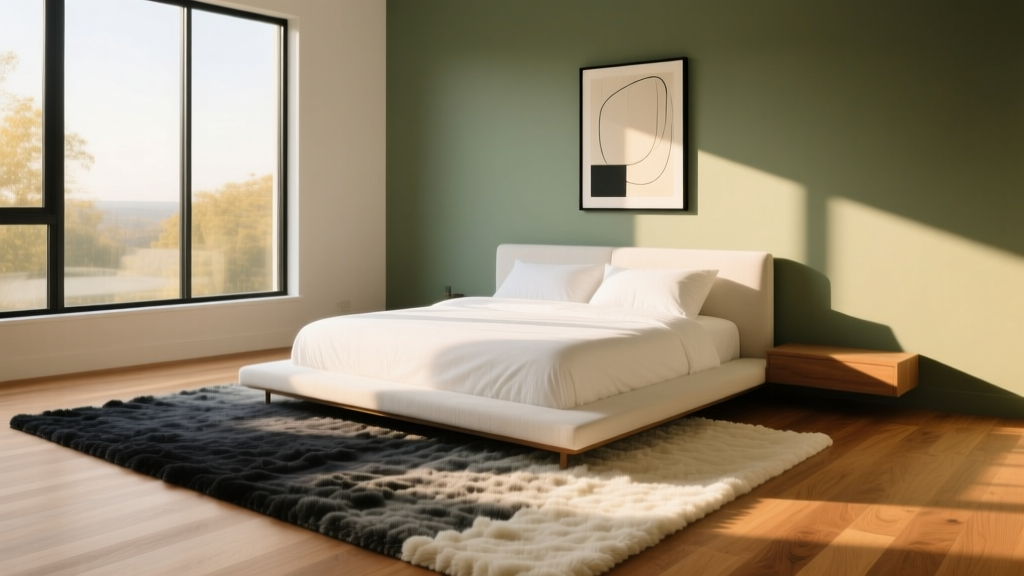
Hardwood (solid or engineered) consistently yields the highest return on investment, often recouping 70% to 80% of its cost at resale. Buyers generally expect hard surfaces in primary suites. If you prefer carpet for comfort, a common compromise is installing engineered hardwood wall-to-wall and utilizing a high-quality, large-format wool area rug to define the sleeping space.
Written by
Marcus ChenMarcus Chen is a licensed structural engineer (PE) and building materials analyst with over 12 years of experience across residential, commercial, and industrial construction. He holds a Master of Science in Civil Engineering from UC Berkeley and spent six years at Thornton Tomasetti before transitioning to independent consulting and technical writing. Marcus specializes in material selection for seismic-prone regions, concrete reinforcement strategies, and lifecycle cost analysis. His work has been cited by the American Concrete Institute (ACI) and the Structural Engineers Association of California (SEAOC). When he is not on a job site or at his desk, you will find him hiking the Sierra Nevada or restoring a 1920s craftsman bungalow in Oakland, CA.
More from Marcus Chen
View all
Construction Cost
How Much Did the Eiffel Tower Cost to Build?
How much did the Eiffel Tower cost to build in 1889? We adjust for inflation and compare its budget to modern skyscraper construction.
Aug 4, 2026

Fire Resistance
What Is a Fire Resistant Material? Testing & Certification Guide
Discover what is a fire resistant material through ASTM and UL testing. Learn how fire ratings, certifications, and assemblies work in construction.
Aug 4, 2026

Construction Cost
How Much Did the Burj Khalifa Cost to Build?
How much did the Burj Khalifa cost to build? We break down the $1.5B project and extract 5 money-saving strategies for your next build.
Jul 30, 2026