Should You Rent a Floor Sanding Machine? Wood Taxonomy Guide
Learn when to rent a floor sanding machine based on wood species, floor condition, and material taxonomy. Expert selection guide for drum and orbital sanders.
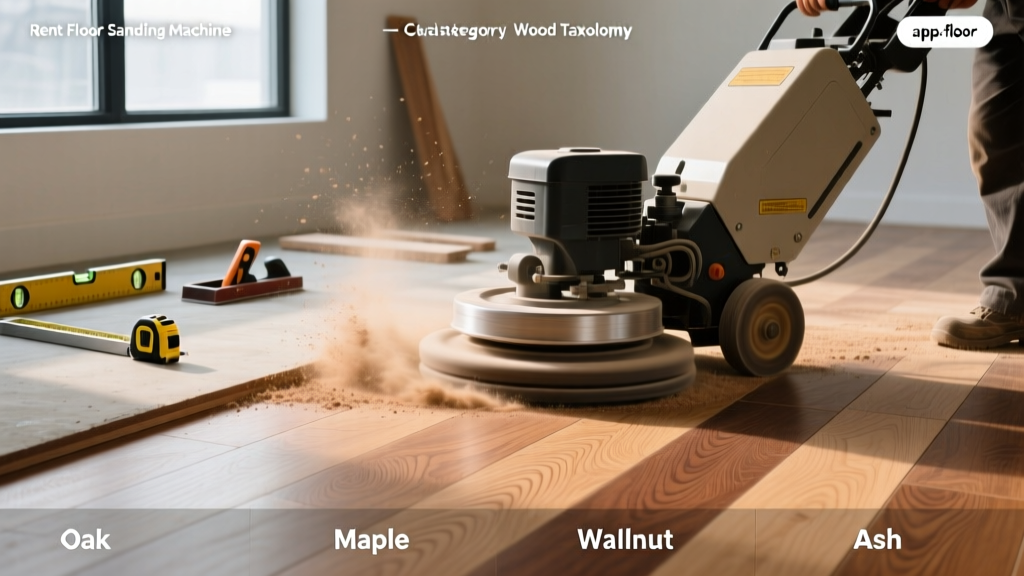
The Hardwood Taxonomy: Matching Material to Machine
Deciding to rent a floor sanding machine requires a precise understanding of your existing floor's material taxonomy. Hardwood is not a monolith; the cellular density, milling profile, and structural composition of your floor dictate exactly which abrasive machinery will restore it and which will destroy it. Before visiting a rental center, you must classify your floor into one of two primary structural categories.
Solid Hardwood (3/4-Inch Profile)
Traditional solid hardwood features a uniform 3/4-inch thickness from top to bottom. Because the wear layer extends the full depth of the board, solid wood can typically withstand 5 to 7 full drum-sanding cycles over its lifespan. If your floor is solid oak, maple, or hickory, it is an ideal candidate for aggressive material removal using a rental drum sander.
Engineered Hardwood (Veneer Lamella)
Engineered flooring consists of a plywood or HDF core topped with a real wood lamella (veneer). The sandability of engineered wood is strictly limited by the thickness of this top layer. Use digital calipers at a floor register or baseboard to measure the lamella.
Wood Species Density and the Janka Hardness Scale
The Janka hardness test measures the force required to embed a 0.444-inch steel ball halfway into a wood specimen. This metric directly influences your machine selection and abrasive grit sequence. Dense woods require heavier machines and slower grit progression to prevent burnishing (polishing the wood so much that stain cannot penetrate).
| Wood Species | Janka Hardness (lbf) | Recommended Rental Machine | Optimal Grit Progression |
|---|---|---|---|
| Black Walnut | 1,010 | Random Orbital / U-Sand | 50 → 80 → 100 |
| Red Oak | 1,290 | Drum Sander + Edger | 36 → 60 → 80 → 100 |
| Hard Maple | 1,450 | Drum Sander + Edger | 36 → 50 → 80 → 100 |
| Hickory | 1,820 | Heavy-Duty Drum Sander | 24 → 36 → 60 → 80 |
| Brazilian Walnut (Ipe) | 3,680 | Pro-Grade Planer/Drum | 24 → 36 → 50 → 80 |
Source: National Wood Flooring Association (NWFA) technical guidelines on wood hardness and finishing.
Machine Taxonomy: Which Sander to Rent
Big-box hardware stores and specialty rental yards offer distinct machine classes. Selecting the wrong machine for your material taxonomy is the primary cause of DIY refinishing failures.
The Drum Sander (Aggressive Material Removal)
The standard rental drum sander (such as the Clarke EZ-8) features an 8-inch rotating cylinder wrapped in sandpaper. It is designed for leveling uneven floors, removing thick polyurethane buildup, and flattening cupped boards.
- Best for: Solid hardwood with heavy finish buildup, deep scratches, or uneven board heights.
- Failure Mode: 'Gouging.' If the operator lowers the drum lever while the machine is stationary, the spinning cylinder will instantly dig a half-moon trench into the wood. The drum must be in forward motion before engagement.
The Random Orbital / U-Sander (Forgiving Finishing)
Unlike the drum, an orbital sander vibrates in randomized micro-circles. It does not flatten floors or remove deep gouges, but it is vastly more forgiving for novices.
- Best for: Engineered hardwood with a 2mm+ wear layer, lightly worn solid floors, and final fine-sanding passes.
- Advantage: Eliminates the risk of cross-grain scratching and directional chatter marks common with drum sanders.
The Edge Sander (Perimeter Cutting)
A 7-inch disc sander used exclusively for the 12-inch perimeter of the room where the drum cannot reach. The Clarke Super 7R is the industry standard. It must be kept in constant, sweeping motion; pausing will create circular dish-outs in the floor edges.
The Selection Decision Tree: Screen vs. Full Sand
Before committing to the labor and dust of a full sand, perform the water-drop and scratch tests to determine if your floor merely requires a screen-and-recoat.
- The Water Test: Place two drops of water on a high-traffic area. If the water beads up, the finish is intact. If it soaks in and darkens the wood within 3 minutes, the finish is compromised and requires a full sand.
- The Tape Test: Lightly scuff a 2x2 inch area with 120-grit paper. Apply painter's tape over it and rip it off quickly. If the old finish flakes off onto the tape, the existing polyurethane has lost adhesion and must be fully sanded off.
- The Decision: If both tests pass, skip the drum sander. Rent a floor buffer with a 120-grit screening pad to abrade the topcoat, then apply two fresh coats of polyurethane.
2026 Cost Breakdown: DIY Rental vs. Professional Refinishing
Understanding the true cost of renting a floor sanding machine requires factoring in abrasives, dust containment, and consumables, not just the daily machine rate. Below is a comparative analysis for a standard 500-square-foot living area.
| Cost Category | DIY Rental (500 sq ft) | Professional Refinisher (500 sq ft) |
|---|---|---|
| Machine Rental (3 Days) | $280 - $350 | Included |
| Abrasives & Edger Discs | $180 - $250 | Included |
| Dust Containment (4-mil poly, HVAC seals) | $75 - $120 | Included (Bona Dust Containment System) |
| Finish (Water-based 2-part commercial) | $250 - $350 | Included |
| Labor & Time | 30-45 Hours (Novice) | 3-4 Days (Crew) |
| Total Estimated Cost | $785 - $1,070 | $3,250 - $4,500 |
Note: Professional pricing reflects 2026 regional averages for dustless containment systems and commercial-grade waterborne finishes like Bona Traffic HD.
Critical Edge Cases and Environmental Hazards
Pre-1978 Homes and Lead Dust
If your home was built before 1978, the existing floor finish or underlying paint on the baseboards likely contains lead. Sanding these surfaces aerosolizes toxic lead particulate that standard rental cloth dust-bags cannot contain. According to the Environmental Protection Agency (EPA), disturbing lead paint requires certified renovation practices. If your floor tests positive for lead via a swab kit, do not rent a sander; hire an EPA-certified lead abatement contractor.
Cupping and Moisture Imbalance
If your floorboards exhibit 'cupping' (edges higher than the center), this indicates a moisture differential between the top and bottom of the wood. Renting a drum sander to flatten cupped boards is a temporary and destructive fix. Once the sander removes the high edges, the floor will look flat. However, when the moisture levels eventually equalize, the boards will 'crown' (center higher than edges), ruining the floor. You must resolve the ambient humidity or subfloor moisture issue using a pinless moisture meter before sanding.
Chatter Marks and Drum Wheel Wear
Rental drum sanders endure heavy abuse. Before leaving the rental yard, inspect the rubber tire on the drive wheel. If the rubber is worn unevenly, cracked, or missing chunks, the machine will transfer rhythmic 'chatter marks' across your floor. These washboard-like ripples are nearly impossible to remove without professional planetary sanders. Always demand a machine with pristine, smooth drive wheels.
Never skip more than one grit step during your sanding sequence. Jumping from 36-grit directly to 80-grit will leave deep 36-grit scratches that the finer 80-grit paper cannot cut through. These hidden scratches will violently reveal themselves when you apply wood stain, resulting in dark, unsightly streaks across the grain.
Final Selection Matrix
To summarize your equipment selection based on material taxonomy:
- Solid Oak/Maple with heavy damage: Rent Drum Sander, Edger, and Buffer. Sequence: 36/60/80/100.
- Solid Walnut/Pine in good condition: Rent Random Orbital and Edger. Sequence: 50/80/100.
- Engineered Hardwood (2mm+ wear layer): Rent Random Orbital only. Sequence: 60/80/100.
- Engineered Hardwood (<2mm wear layer): Do not sand. Rent a buffer for a screen-and-recoat only.