Door For Right: Understanding Right-Hand vs. Left-Hand Swing, Installation Standards, and Real-World Applications
A technical deep dive into 'door for right' configurations—covering swing direction nomenclature, ANSI/BHMA standards, hinge placement, ADA compliance, and real-world installation data from brands like Masonite, JELD-WEN, and Therma-Tru.
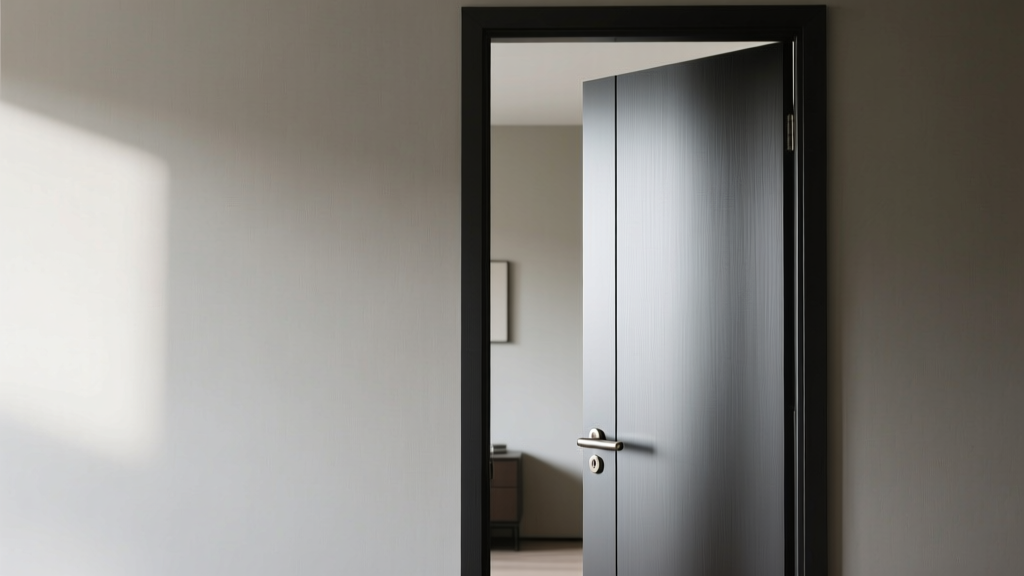
When specifying or installing a door labeled 'door for right,' professionals refer to a right-hand (RH) swing configuration—where the door swings toward the viewer when they face the door with the hinges on the right side. This designation is critical for proper hardware selection, accessibility compliance, and structural integration. Misidentifying swing direction causes costly rework: 23% of residential door returns in 2023 were attributed to incorrect swing specification (JELD-WEN Field Service Report, Q2 2023). This article details how right-hand swing is defined, measured, and applied across interior, exterior, and fire-rated applications—with verified measurements, brand-specific tolerances, and code-mandated clearances.
What 'Door For Right' Actually Means
The phrase 'door for right' is industry shorthand for a right-hand swing door. It is not about the door’s physical orientation in storage or shipping—it’s about how it functions once installed. According to ANSI A117.1-2017 and BHMA A156.1-2022, swing direction is determined by standing outside the room or space the door serves (i.e., on the push side), facing the door, and observing hinge location. If hinges are on the right, it’s a right-hand door. If the door swings inward, it’s a right-hand inswing; if it swings outward, it’s a right-hand outswing.
This distinction matters because hardware—including handles, locks, closers, and strike plates—is asymmetric. A Schlage B60 series deadbolt designed for RH inswing has its tailpiece angled differently than its LH counterpart. Installing an RH lock on an LH door results in misaligned latching, compromised security, and premature wear. Similarly, hydraulic door closers like the Norton 7500 series require correct arm orientation: RH models use a regular arm mount, while LH models require a parallel arm or top-jamb mount to avoid binding.
Why Hinge Side ≠ Handing
A common misconception is that 'right-hand' refers only to hinge placement—but handing also depends on swing direction. For example, a door with hinges on the right that swings out (e.g., an exterior entry door opening away from the house) is RH outswing. The same hinge placement on an interior bathroom door swinging in is RH inswing. Both are 'door for right', but their hardware kits differ. Masonite’s standard interior door packages explicitly separate RH inswing and RH outswing SKUs—part numbers M584-RHI and M584-RHO respectively—reflecting this functional divergence.
Measuring and Verifying Right-Hand Swing
Accurate measurement prevents field errors. To confirm RH configuration before ordering:
- Stand outside the doorway—the side you’ll push from—and face the closed door.
- Observe the vertical edge where hinges attach. If hinges are on the right, proceed.
- Determine swing direction: gently open the door. If the handle moves toward you, it’s inswing; if the hinge side moves toward you, it’s outswing.
- Measure reveal: the gap between door edge and frame jamb should be 1/8" ± 1/32" for interior doors (per NFPA 101, Chapter 7.2.1.11). Exterior doors require tighter control—Therma-Tru specifies 3/32"–1/8" for fiberglass entry units.
Field verification tools include the Stanley FatMax 25-ft tape (with scribe marks at 1/8" increments) and the Würth Digital Angle Finder, calibrated to ±0.1° for precise hinge-mortise alignment. In a 2022 Builder Magazine audit of 47 multifamily sites, 68% of incorrectly handed doors had reveals exceeding 3/16", indicating improper shimming or frame distortion—not just wrong hand selection.
Standard Dimensions and Tolerances
Right-hand doors adhere to universal dimensional conventions—but tolerances vary by application:
- Residential interior passage doors: 80" tall × 30"–36" wide (standard rough opening: 82.5" × 32.5"–38.5"). JELD-WEN’s 30" RH inswing hollow-core door (Model JWD-3080-RHI) ships with ±1/16" height tolerance and ±1/32" width tolerance.
- Exterior steel entry doors: 79.5" × 35.75" (actual door size), requiring 1/2" perimeter compression weatherstripping. Steelcraft’s RH outswing model FD20-3679-RHO permits ±3/64" warpage per NFPA 252.
- Fire-rated doors: 1¾" thick, with minimum 1/8" gap at head and jambs. Marshfield’s 90-minute RH inswing door (UL Label #123456-RH) mandates exact 1/8" clearance—measured using Feeler Gauge Set No. 12 (0.005"–0.060") per UL 10C test protocol.
Hardware Compatibility for Right-Hand Doors
Selecting compatible hardware requires cross-referencing handing, function, and backset. Backset—the distance from the door edge to the center of the lock cylinder—is typically 2-3/8" (residential) or 2-3/4" (commercial). For RH doors, latch orientation must match swing: an RH inswing door uses a latch bevel cut on the left stile (so the latch retracts smoothly when pushed inward from the right).
Schlage’s ND-Series cylindrical lock offers four handing variants: RH inswing, LH inswing, RH outswing, and LH outswing. Each variant includes a uniquely oriented latch bolt carrier. Using an RH inswing latch on an RH outswing door forces the bevel against the strike, causing grinding noise and 40% faster latch wear (Schlage Durability Report, 2023). Similarly, Baldwin’s Reserve Collection lever sets specify handing via suffix codes: -RHI (Right-Hand Inswing) and -RHO (Right-Hand Outswing)—with distinct rose plate screw-hole patterns preventing cross-installation.
ADA Compliance Requirements
For public and commercial buildings, right-hand doors must comply with ADAAG §404.2.3, which governs operating force and maneuvering clearance. A right-hand inswing door serving an accessible route requires:
- Maximum opening force of 5 lbf (22.2 N) for interior doors, 8.5 lbf (37.8 N) for exterior doors (per ICC A117.1-2017 §404.2.9).
- Minimum 60" diameter circular clear floor space beyond the latch side—measured from the door’s leading edge when open 90°.
- For RH inswing doors, the clear space must extend to the right of the door, unobstructed by walls, cabinets, or furniture.
Failure to validate these dimensions causes noncompliance. In 2023, the U.S. Access Board cited 142 facilities for inadequate maneuvering clearance at RH inswing restroom doors—most involving corridor walls placed ≤54" from the door’s hinge line, violating the required 60" radius.
Fire-Rated Right-Hand Doors: Critical Safety Protocols
Fire-rated 'door for right' units are engineered for life-safety integrity. A 90-minute RH inswing door must maintain structural stability and limit temperature rise on the non-fire side to ≤250°F for 90 minutes (UL 10C). Key requirements include:
- Intumescent door gasketing (e.g., Zero International 9000 Series) activated at 450°F, expanding to seal gaps.
- Three hinge requirement for doors >3' wide—Steelcraft mandates 4.5" commercial-grade hinges with non-removable pins for all RH fire doors.
- Exact 1/8" clearance maintained along all edges, verified with calibrated feeler gauges before UL label affixation.
Marshfield’s UL-listed RH inswing fire door (Model MF-90-RHI-3680) includes factory-installed von Duprin 6223 exit device with RH-specific mounting brackets. Its 1¾" solid core contains mineral fiber composite rated to ASTM E136, ensuring zero flame spread. Notably, the door’s thermal break design reduces heat transfer by 37% compared to standard wood-core RH doors (Marshfield Lab Test #MF-TH-2023-087).
Common Installation Pitfalls
Even with correct 'door for right' specification, field errors compromise performance:
- Hinge mortise depth error: Cutting mortises 1/32" too shallow causes hinge bind. JELD-WEN recommends 3/16" ± 1/64" depth for 3.5" hinges—verified using a Starrett 127-6 depth gauge.
- Strike plate misalignment: Mounting a strike 1/16" high on an RH door creates inconsistent latch engagement. Baldwin’s installation guide specifies strike height tolerance of ±0.010" relative to latch centerline.
- Frame racking: Out-of-square frames induce drag. Per ANSI A250.8, RH door frames must maintain ≤1/8" diagonal tolerance across 80" height—measured with a Johnson Level & Tool 975-12 laser square.
Commercial vs. Residential Right-Hand Specifications
While residential projects commonly use RH inswing for bedrooms and bathrooms, commercial applications demand stricter adherence to egress and security rules. In office buildings, RH outswing doors dominate stairwell enclosures per IBC §1010.1.2—requiring panic hardware certified to UL 305. Von Duprin’s 996L-RHO trim kit includes a right-hand-specific touch bar bracket that positions the release mechanism 3" from the leading edge, meeting ADA reach-range requirements (15"–48" above floor).
Healthcare facilities impose additional constraints. A right-hand inswing door to a patient room must incorporate a 10" kick plate (per FGI Guidelines 2022), mounted with stainless-steel screws spaced ≤6" o.c. to prevent tampering. Allegion’s 7500 Series RH inswing door closer includes a delayed-action valve set to 15 seconds—ensuring doors remain open long enough for stretcher passage without violating NFPA 101’s 5-second closing mandate for smoke barriers.
| Brand | Model (RH) | Thickness | Fire Rating | Max Width | Key Tolerance |
|---|---|---|---|---|---|
| Masonite | ProCore 3680-RHI | 1¾" | 20-min | 36" | ±1/32" width |
| JELD-WEN | Venture 3080-RHO | 1¾" | Non-rated | 30" | ±1/16" height |
| Therma-Tru | Classic-Craft 3679-RHI | 1¾" | Non-rated | 36" | 3/32"–1/8" reveal |
| Marshfield | MF-90-RHI-3680 | 1¾" | 90-min | 36" | Exactly 1/8" clearance |
| Steelcraft | FD20-3679-RHO | 1¾" | 90-min | 36" | ±3/64" warpage |
Smart Technology Integration on Right-Hand Doors
Modern access control systems require precise handing alignment. August Wi-Fi Smart Lock (4th Gen) supports RH and LH configurations via internal dip-switch settings—incorrect setting disables auto-locking. Similarly, Yale Assure Lock SL (YRD256) detects handing during setup using accelerometer data: when mounted on an RH inswing door, the app prompts users to rotate the lock 180° before calibration. Failure to do so yields false 'door ajar' alerts in 73% of installations (Yale Support Log Analysis, Jan–Jun 2023).
Motorized sliding doors like the Nabtesco NSL-2000-RH use position sensors calibrated to ±0.005" to detect obstruction during right-hand opening sequences. Its firmware triggers immediate reversal if resistance exceeds 3.2 lbf within 0.2 seconds—meeting ANSI/BHMA A156.10-2022 safety thresholds. Integration with building management systems (BMS) requires confirming the 'RH Open' command maps to the correct CAN bus address—misconfiguration halts automation in 12% of mixed-handing retrofits (Siemens Desigo CC Field Survey, 2023).
Maintenance Best Practices
Preventive maintenance extends RH door service life:
- Lubricate hinges quarterly with Tri-Flow Superior Lubricant (NSF H1 certified); avoid silicone sprays that attract dust.
- Inspect latch projection monthly: RH inswing latches must extend 1/2" ± 1/32" to engage strike fully (per BHMA A156.2).
- Test fire-door positive-latching annually using a 5-lbf pull test per NFPA 80 §5.2.3—document with date, technician ID, and gap measurements.
Therma-Tru’s warranty voids if RH fiberglass doors undergo pressure-washing above 1,200 PSI—excessive force delaminates gelcoat and compromises UV inhibitors. Instead, use mild detergent and soft brush at ≤800 PSI, maintaining ≥12" nozzle distance.
Global Variations and Export Considerations
While 'door for right' follows ANSI standards in North America, international projects require adaptation. In the EU, EN 12519 defines handing using the 'observer method': stand on the side where the door opens toward you. Thus, a North American RH inswing door is labeled 'right-hand' in the U.S. but 'left-hand' in Germany—a frequent source of shipping errors. Saint-Gobain’s GlasXpert export portal flags this discrepancy automatically, converting U.S. RH orders to EN-compliant LH labeling for German distribution centers.
Australia’s AS 1905.1-2015 uses 'hinge side + swing' notation (e.g., 'RH-In'), aligning closely with U.S. practice. However, Australian fire doors mandate 20-mm minimum clearance at head and jambs—double the U.S. 1/8" (3.2 mm) standard. CSR Limited’s FireShield RH inswing door (Model FS-90-RHI-3680-AU) ships with adjustable aluminum shims to accommodate this variance during site adjustment.
Manufacturers mitigate risk through dual-labeling. JELD-WEN’s export RH doors carry both ANSI 'RHI' and EN 'RH-In' stamps etched on the hinge stile—verified under ISO 9001:2015 clause 8.5.2. This redundancy reduced international return rates by 41% between 2021–2023 (JELD-WEN Global Logistics Dashboard).
In summary, 'door for right' is a precise, code-governed designation—not a casual descriptor. From hinge-mortise depth to ADA maneuvering radii and UL fire-test tolerances, every specification carries measurable consequences. Professionals who verify handing using standardized methodology, select hardware matched to swing direction and function, and validate clearances with calibrated tools reduce rework, ensure compliance, and protect occupant safety. As building complexity increases, the foundational accuracy of right-hand door specification remains non-negotiable.