Penny Floor Durability: Lifespan, Failure Modes, and Topcoat Guide
Analyze penny floor durability and lifespan. Discover topcoat options, failure modes, epoxy vs polyurethane, and maintenance for copper coin floors.
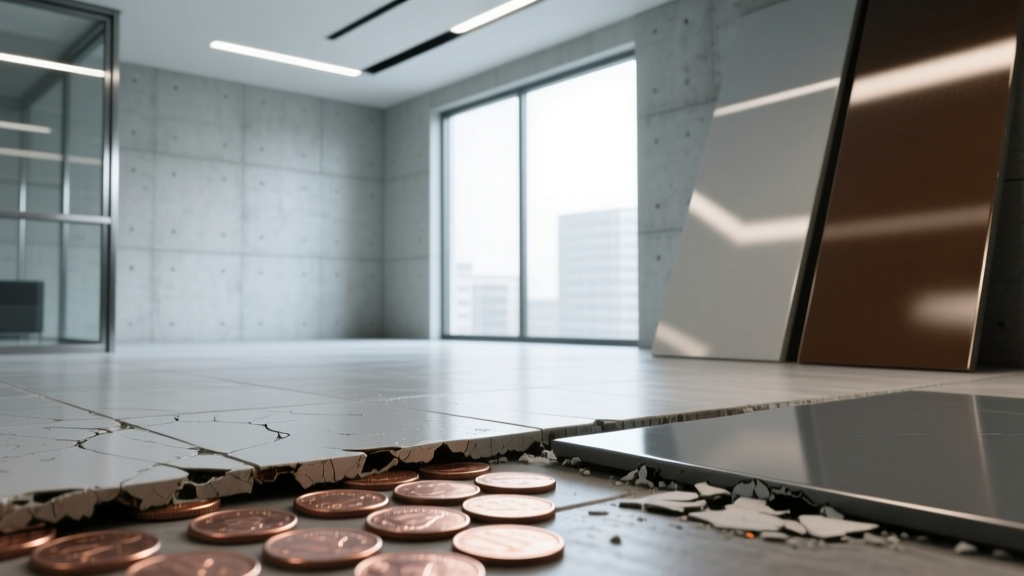
The Metallurgical Reality of Copper Coin Flooring
A penny floor is frequently dismissed as a novelty, but when engineered correctly, it functions as a highly durable, mosaic-style metallic surface. The lifespan of a real copper penny floor—often exceeding 30 years in residential settings—is entirely dependent on two factors: the metallurgical composition of the coins used and the chemical stability of the topcoat system.
The most critical mistake DIYers make is ignoring the mint date of the pennies. According to the United States Mint, pennies minted before 1982 are composed of 95% copper and 5% zinc, weighing 3.11 grams each. Pennies minted after 1982 are 97.5% zinc with a mere 2.5% copper plating, weighing only 2.5 grams.
If a post-1982 zinc-core penny suffers a micro-scratch through its copper plating, and moisture penetrates the topcoat, galvanic corrosion occurs. The zinc core will rapidly oxidize and expand, creating a blister under the epoxy that eventually cracks the topcoat and ruins the surrounding seal. For a floor designed to last decades, you must sort and use exclusively pre-1982 copper pennies, or utilize solid copper blanks.
Subfloor Deflection: The Hidden Lifespan Killer
Copper and epoxy are rigid materials. Wood subfloors are dynamic, expanding and contracting with seasonal humidity changes. If the subfloor deflects under load, the epoxy matrix will fracture, leading to delamination and moisture ingress.
Industry standards for rigid floor coverings mandate a maximum joist deflection of L/360. For a penny floor, you must exceed this baseline. The required subfloor assembly is:
- Joist Spacing: Maximum 16 inches on center (12 inches preferred).
- Subfloor Base: Minimum 3/4-inch tongue-and-groove plywood, glued and screwed to joists.
- Underlayment: 1/2-inch exterior-grade plywood or an uncoupling membrane (like Schlüter-DITRA) to isolate the epoxy from lateral wood movement.
Lifespan Breakdown by Topcoat System
The pennies themselves will outlast the structure of the house; the topcoat is the actual wear layer. Selecting the correct chemical system dictates the maintenance cycle and ultimate lifespan of the floor.
| Topcoat Material | UV Stability | Abrasion Resistance | Expected Lifespan | Recoat Interval |
|---|---|---|---|---|
| 100% Solids Epoxy | Poor (Yellows) | High | 7–12 Years | N/A (Requires sanding) |
| Aliphatic Polyurethane | Excellent | Very High | 10–15 Years | 8–10 Years |
| Moisture-Cured Urethane | Good | Extreme | 15–20+ Years | 12–15 Years |
The Optimal Hybrid Approach
For maximum durability, professionals use a hybrid system. A 100% solids epoxy (such as Epox-Tech or Liquid Glass) is used as the flood coat to encapsulate the pennies, fill the interstitial gaps, and provide structural rigidity. Once cured and sanded with 120-grit silicon carbide, two topcoats of aliphatic polyurethane are applied. This provides the gap-filling benefits of epoxy with the UV-stability and scratch-resistance of polyurethane. Be mindful of off-gassing during application; the EPA notes that VOCs from solvent-based urethanes require aggressive cross-ventilation and respirator use during the curing phase.
Real-World Application Failure Modes
Even with pre-1982 pennies and premium resins, penny floors frequently fail due to improper application chemistry. Recognizing these failure modes allows for immediate troubleshooting.
Failure Mode 1: Amine Blush
Symptom: A waxy, greasy film appears on the surface of the epoxy flood coat, preventing the polyurethane topcoat from adhering.
Cause: Epoxy hardeners react with ambient humidity and carbon dioxide during the curing process, forming a carbamate layer on the surface.
Fix: Wash the fully cured epoxy with warm water and a mild abrasive pad (like Scotch-Brite) to emulsify and remove the blush. Wipe dry with lint-free towels before applying the topcoat.
Failure Mode 2: Penny Buoyancy (Lift)
Symptom: Pennies float to the surface of the epoxy flood coat, creating an uneven, sharp texture rather than a smooth, glass-like finish.
Cause: Pouring a low-viscosity (thin) epoxy too deeply in a single pass. The displacement of the resin pushes the lightweight copper coins upward.
Fix: Apply a thin "tack coat" of epoxy to glue the pennies to the subfloor. Allow it to reach a gel state (usually 4-6 hours at 70°F) before pouring the final 1/8-inch flood coat. The tack coat anchors the coins against buoyant forces.
Failure Mode 3: Fish-Eyes and Cratering
Symptom: Small, circular craters form in the wet topcoat, pulling away from specific spots on the floor.
Cause: Silicone contamination. This is almost always caused by walking on the floor with shoes treated in silicone-based polishes, or using aerosol furniture polish (like Pledge) in the room prior to coating.
Fix: Sand the affected area down to the bare epoxy. Wipe the entire surface with denatured alcohol and a clean microfiber cloth. Add a silicone-defying flow agent to the topcoat mixture before reapplying.
Maintenance Protocol for Maximum Longevity
The chemical reactivity of copper dictates strict limitations on how a penny floor can be cleaned. Copper is highly susceptible to acidic and alkaline corrosion, which will permanently etch the coins if the topcoat is compromised.
- Daily Dusting: Use a microfiber dust mop. Avoid stiff-bristled brooms that can micro-scratch the polyurethane wear layer over time.
- Wet Cleaning: Use only pH-neutral cleaners (pH 7.0). Products like Bona Hardwood Floor Cleaner or specific natural stone cleaners are safe.
- Chemical Prohibitions: Never use vinegar, ammonia, bleach, or citrus-based cleaners. Ammonia, in particular, reacts violently with copper to form soluble copper-amine complexes, which will cloud the metal beneath the resin.
- Impact Protection: While the topcoat resists abrasion, it is vulnerable to point-impact. Attach felt pads to all furniture legs. Dropping a heavy cast-iron pan can crack the epoxy matrix, requiring a localized routing and patch repair.
Cost vs. Lifespan ROI Analysis
Building a real penny floor is labor-intensive and material-heavy. Understanding the financial commitment is necessary before starting.
- Material Cost (Pennies): Sourcing pre-1982 pennies requires buying from coin dealers or sorting bulk bank boxes. Expect to pay $30 to $45 per square foot just for the sorted copper pennies.
- Resin Cost: High-quality 100% solids epoxy and aliphatic polyurethane cost between $8 and $12 per square foot.
- Total Installed Cost: $45 to $65 per square foot (DIY) or $90 to $130+ per square foot (Professional).
While the upfront cost rivals high-end marble or exotic hardwoods, the lifespan of a properly encapsulated copper penny floor effectively outlasts the home itself. Unlike hardwood, which requires sanding and refinishing every 10 years, or tile, which suffers from grout degradation, a hybrid epoxy-polyurethane penny floor requires only a light screening and a fresh polyurethane topcoat every 12 to 15 years to maintain its structural integrity and visual brilliance.