Shark Carpet Xpert Application Guide for Post-Install Care
Master post-installation carpet care with the Shark Carpet Xpert. Learn precise extraction procedures, adhesive cure times, and fiber grooming.
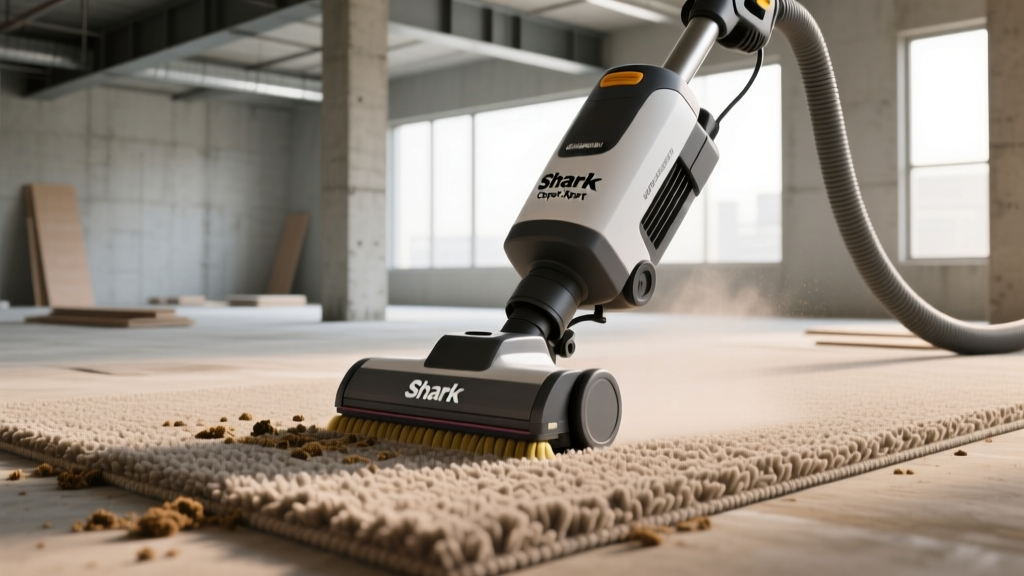
The Critical Role of Post-Installation Extraction
Installing new carpet introduces a complex matrix of chemicals and particulates into the indoor environment. Between the latex-based adhesives used for tack-down, the volatile organic compounds (VOCs) off-gassing from synthetic backings, and the residual "mill finish" (sizing and lubricants left from the tufting process), newly laid flooring requires immediate and precise intervention. According to the U.S. Environmental Protection Agency, proper ventilation and surface extraction are critical in the first 72 hours to mitigate indoor air quality degradation from VOCs.
The Shark Carpet Xpert series—specifically engineered for deep-pile extraction and localized stain elimination—provides a highly controlled application procedure for post-installation cleanup. Unlike standard commercial truck-mounts that can over-wet newly installed padding and compromise adhesive bonds, the Shark Carpet Xpert utilizes a calibrated, low-moisture extraction system. This guide details the exact application procedures, chemical parameters, and hardware configurations required to safely transition a carpet from the installation phase to long-term service.
Hardware Specifications: Selecting the Right Configuration
Before initiating the extraction protocol, verify your hardware configuration. The Shark Carpet Xpert line offers two primary models, each suited for different post-installation scenarios. The Carpet and Rug Institute (CRI) recommends using machines with controlled water flow rates to prevent pad saturation.
| Specification | Shark Carpet Xpert (IC205) | Shark Carpet Xpert Pro (IC207) |
|---|---|---|
| Clean Tank Capacity | 0.5 Gallons | 0.8 Gallons |
| Dirty Tank Capacity | 0.8 Gallons | 1.0 Gallons |
| Hose Length | 18 Feet | 22 Feet |
| Specialized Tools | Standard Upholstery Tool | Clean & Extract Stain Eliminator Wand |
| Ideal Post-Install Use | Single-room installations, spot treatments | Multi-room whole-house extraction, stairways |
Phase 1: Subfloor and Adhesive Curing Verification
The most common failure mode in post-installation carpet care is premature wet extraction. Latex-based carpet adhesives and seam tapes require a specific cross-linking period to achieve maximum shear strength.
- Verify Adhesive Cure Time: Standard latex adhesives require a minimum of 24 to 72 hours to fully cure, depending on ambient humidity and subfloor porosity. Extracting before 24 hours can re-emulsify the adhesive, leading to seam peaking and delamination.
- Measure Ambient Conditions: Ensure room temperature is maintained between 65°F and 80°F, with relative humidity below 65%. High humidity drastically extends adhesive cure times and increases the risk of mold growth in the polyurethane padding.
- Perform a Seam Tug Test: Gently apply lateral pressure to the carpet near the seams. If the seam exhibits any lifting or tackiness, halt the extraction process and allow an additional 24 hours of cure time.
Phase 2: The Shark Carpet Xpert Application Protocol
Once the adhesive has fully cured, proceed with the extraction protocol. The goal is to remove mill finish and installation debris without stripping the factory-applied fluoropolymer stain guard.
Step 1: Dry Soil Agitation and Removal
Never apply liquid solution to dry construction debris. Drywall dust, wood shavings, and subfloor grit will turn into a cement-like sludge when wet.
- Use a commercial upright vacuum with a beater bar to agitate the pile.
- Vacuum in a north-south, then east-west grid pattern to ensure 100% coverage.
- Pay special attention to the perimeter where baseboards meet the carpet, as installation dust heavily accumulates in the tack-strip gap.
Step 2: Solution Chemistry and Preparation
New carpet fibers are treated with mill-applied stain resistors (typically Teflon or Scotchgard). These treatments are highly sensitive to alkalinity. Using a high-pH cleaner (pH > 9.0) will permanently strip the stain guard.
Only use pH-neutral cleaning solutions (pH 6.5 to 7.5) for post-installation extraction. Fill the Shark Carpet Xpert clean tank with warm water (maximum 140°F) and the manufacturer-recommended neutral extraction formula. Do not use ammonia-based or heavy degreasing agents.
Step 3: Deep Extraction and FastDry Activation
The mechanical application of the Shark Carpet Xpert requires a specific stroke cadence to balance soil removal with moisture recovery.
- Forward Stroke (Injection): Depress the trigger to release the cleaning solution and engage the brush roll. Move the machine forward at a rate of 1 foot per second. The brush roll agitates the pile, driving the neutral solution down to the primary backing.
- Backward Stroke (Extraction): Release the trigger and pull the machine backward slowly. This engages the high-suction vacuum channel, pulling the suspended mill finish and VOC-laden moisture into the dirty tank.
- Overlap Protocol: Overlap each extraction pass by 50% to prevent "cleaning lanes" and ensure uniform moisture distribution.
- Activate FastDry Mode: On the final pass over any given section, engage the FastDry mode (if equipped on your specific model variant). This increases the vacuum motor RPM, maximizing air wattage and pulling residual moisture from the pad. This reduces standard dry times from 12 hours down to 2–4 hours, which is critical for preventing microbial growth in newly installed padding.
Utilizing the Clean & Extract Stain Eliminator Wand
During installation, adhesive or seam sealer occasionally bleeds through the primary backing, resulting in localized brown spots. The IC207 Pro model includes the Clean & Extract Stain Eliminator wand specifically for this scenario.
- Isolate the adhesive bleed spot.
- Press the wand directly against the fiber and depress the trigger to inject a micro-dose of targeted solvent.
- Allow a 60-second dwell time to break down the latex emulsion.
- Depress the extraction trigger to vacuum the dissolved adhesive immediately, preventing it from wicking back to the surface as the carpet dries.
Troubleshooting Post-Installation Anomalies
Even with precise application procedures, newly installed carpet can present specific anomalies. Use this decision framework to address them using the Shark Carpet Xpert.
| Anomaly | Root Cause | Corrective Application Procedure |
|---|---|---|
| Wicking / Browning | Adhesive or jute backing tannins migrating to the fiber tip during the drying phase. | Re-extract the area using the Shark Carpet Xpert with plain, acidified water (pH 4.0) to neutralize the alkaline adhesive. Use FastDry mode to accelerate evaporation. |
| Seam Peaking | Over-wetting during extraction caused the hot melt seam tape to soften. | Stop extraction immediately. Place weighted, flat objects over the seam and direct high-velocity air movers at the area. Do not re-wet. |
| Crushing / Matting | Heavy foot traffic or furniture placement before the pile has fully bloomed post-extraction. | Use a carpet rake or the dry brush roll of the Shark Carpet Xpert (without solution) to mechanically lift and groom the crushed fibers back to a vertical position. |
Transitioning to Long-Term Maintenance
Once the initial post-installation extraction is complete and the carpet has fully dried (verify with a moisture meter; padding should read below 15% moisture content), the flooring transitions from the installation phase to the operational phase. The Institute of Inspection, Cleaning and Restoration Certification (IICRC) dictates that the first routine maintenance extraction should not occur for at least 6 to 12 months, depending on traffic volume.
During this interim period, rely on daily dry vacuuming and immediate spot treatment using the Shark Carpet Xpert's handheld wand for isolated spills. By strictly adhering to the adhesive cure times, pH-neutral chemistry, and controlled moisture extraction protocols outlined above, you ensure the structural integrity of the installation and the longevity of the mill-applied warranties.