Stuga Greta Modern Wide Plank Flooring: Material Taxonomy & Selection
Explore the material taxonomy of Stuga Greta modern wide plank flooring. Compare specs, installation methods, and costs for your 2026 renovation.
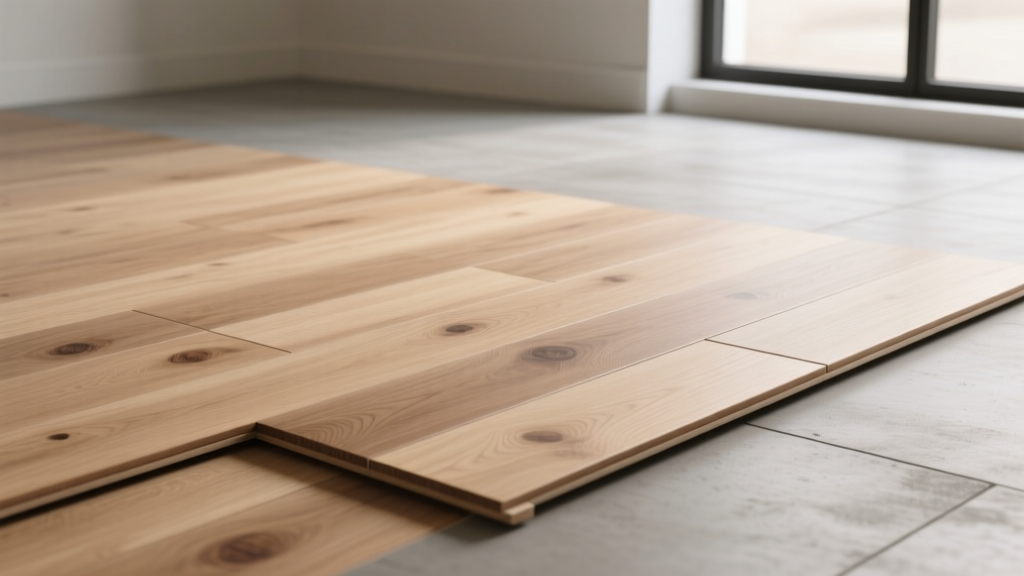
Decoding the Stuga Greta Profile in Modern Flooring Taxonomy
When navigating the complex taxonomy of premium flooring, the Stuga Greta modern wide plank flooring line occupies a highly specific intersection of Scandinavian design aesthetics and advanced structural engineering. Unlike traditional solid hardwoods that rely on sheer mass for stability, or rigid core luxury vinyl planks (LVP) that mimic wood visuals through photographic layers, the Greta collection is classified as a premium engineered European Oak. In 2026, as supply chains for old-growth solid timber continue to tighten, high-performance engineered wide planks have become the definitive choice for modern architectural projects requiring widths exceeding 7 inches.
The 'Greta' profile specifically refers to a 9-inch wide, low-gloss, wire-brushed European Oak veneer designed to replicate the authentic, lived-in patina of reclaimed Scandinavian timber. However, selecting this material requires a deep understanding of its layered anatomy, subfloor prerequisites, and how it performs against competing material categories in the wide-plank taxonomy.
Core Material Anatomy: What Makes the Greta Collection Unique?
To evaluate the Stuga Greta line accurately, we must dissect its cross-sectional anatomy. The performance of any wide plank engineered floor is dictated by the relationship between its wear layer, core substrate, and balancing backer.
Stuga Greta Technical Specifications
- Total Thickness: 3/4" (19mm)
- Top Wear Layer: 4mm plain-sawn European Oak (allows for 2-3 professional sandings)
- Core Substrate: 9-ply cross-banded Baltic Birch plywood
- Finish: UV-cured matte polyurethane with aluminum oxide abrasion resistance
- Plank Dimensions: 9" width x 72" variable lengths
- Edge Profile: Micro-beveled on all four sides to mask seasonal subfloor deflection
The critical differentiator here is the plain-sawn 4mm veneer. Many lower-tier engineered floors utilize rotary-peeled veneers, which yield a stretched, unnatural grain pattern and are highly susceptible to lathe-checking (micro-fractures in the wood grain). By employing a plain-sawn cut, the Greta collection preserves the traditional 'cathedral' grain pattern characteristic of solid sawn lumber. Furthermore, the 9-ply Baltic Birch core provides superior dimensional stability compared to MDF or HDF cores, which are prone to catastrophic swelling if exposed to liquid water.
Stuga Greta vs. Competing Wide Plank Categories
How does the Greta engineered oak compare to other materials in the wide plank taxonomy? The table below maps the physical and financial characteristics of the top three categories for 9-inch wide planks.
| Feature | Stuga Greta (Engineered Oak) | Solid Sawn Wide Plank Oak | Rigid Core LVP (Wood-Look) |
|---|---|---|---|
| Dimensional Stability | Excellent (Cross-banded core) | Poor (High lateral expansion) | Superior (100% Waterproof) |
| Installation Method | Glue-down or Float | Nail/Staple (Wood subfloor only) | Click-lock Floating |
| Refinishing Potential | 2 to 3 Cycles | 5+ Cycles | None (Replace only) |
| Average Material Cost (2026) | $8.50 - $11.20 / sq. ft. | $12.00 - $18.00 / sq. ft. | $4.50 - $7.00 / sq. ft. |
For homeowners and designers prioritizing authentic tactile feedback and acoustic warmth without the severe cupping risks associated with 9-inch solid wood, the Stuga Greta engineered profile offers the optimal compromise.
Acclimation and Moisture Protocols
The most common failure mode for wide plank engineered flooring is improper acclimation. According to the National Wood Flooring Association (NWFA), engineered planks must be acclimated to the environment's equilibrium moisture content (EMC). For the Stuga Greta line, this requires unboxing the planks and cross-stacking them in the installation room for a minimum of 72 hours. The HVAC system must be operational and maintained at the home's standard living temperature (65°F–75°F) with relative humidity between 35% and 55%.
Expert Warning: Never rely solely on ambient room temperature. You must use a pinless moisture meter (such as the Wagner Orion 770) to test both the subfloor and the flooring. The moisture content of the Stuga Greta planks must be within 2% of the plywood subfloor, or within 4% of a concrete subfloor, before any adhesive is applied.
Subfloor Tolerances and Installation Mechanics
Wide plank flooring acts as a magnifying glass for subfloor imperfections. A 9-inch plank will bridge minor dips, but severe undulations will cause the tongue-and-groove joints to fatigue, leading to audible squeaking and eventual delamination of the wear layer.
- Tolerance Check: The subfloor must be flat to within 1/8" over a 10-foot radius, and 3/16" over a 20-foot radius. Use a 10-foot aluminum straightedge to map deviations.
- Leveling: For concrete slabs, use a cementitious self-leveling underlayment (SLU). For wood subfloors, plane down high spots and fill low spots with a Portland cement-based patching compound. Avoid gypsum-based patches in moisture-prone areas.
- Adhesive Selection: For glue-down installations over concrete, utilize a moisture-curing urethane adhesive with an integrated vapor retarder, such as Bostik GreenForce or Pallmann P8. These adhesives mitigate vapor transmission up to 10 lbs per 1,000 sq. ft. per 24 hours.
Cost Breakdown and Procurement Strategy
Budgeting for the Stuga Greta modern wide plank flooring requires looking beyond the per-square-foot material cost. A comprehensive 2026 project budget must account for substrate preparation, premium adhesives, and specialized labor.
- Material (Stuga Greta): $8.50 – $11.20 per sq. ft.
- Waste Factor: Add 10-15% for wide plank diagonal layouts or complex room geometries.
- Subfloor Prep (SLU & Patching): $1.50 – $3.00 per sq. ft.
- Premium Urethane Adhesive: $1.20 – $1.80 per sq. ft.
- Professional Installation Labor: $3.50 – $5.50 per sq. ft. (glue-down wide plank requires specialized troweling and rolling techniques).
Total Installed Cost Expectation: $14.70 to $21.50 per square foot. Procurement should ideally be sourced through authorized architectural flooring distributors to ensure batch consistency, as European Oak dye lots can vary slightly between production runs.
Environmental Certifications and Sourcing
Modern material selection heavily weighs environmental impact. The European Oak utilized in premium lines like the Greta collection is typically sourced from sustainably managed forests. When specifying this material for LEED-certified projects or environmentally conscious builds, verify that the product carries Forest Stewardship Council (FSC) certification. FSC certification ensures the timber is harvested in a way that maintains the forest's biodiversity, productivity, and ecological processes, a critical factor given the slow growth rate of European Oak species.
Final Selection Framework: Is Stuga Greta Right for Your Project?
Use this decision matrix to determine if the Stuga Greta engineered wide plank aligns with your specific project parameters:
- Choose Stuga Greta IF: You are installing over a concrete slab or radiant heating system, desire authentic 9-inch wide wood visuals with a matte finish, and require a floor that can be refinished at least once during its lifespan.
- Choose Solid Wide Plank IF: You are nailing into a traditional wooden joist subfloor, demand a floor that can be sanded 5+ times over a century, and the indoor relative humidity is strictly controlled year-round.
- Choose Rigid Core LVP IF: The installation area is a high-moisture environment (full bathrooms, below-grade basements with hydrostatic pressure risks), or the budget strictly prohibits the $14+ per sq. ft. installed cost of engineered hardwood.
By understanding the precise material taxonomy and structural anatomy of the Stuga Greta modern wide plank flooring, architects and homeowners can confidently specify a product that delivers uncompromising Scandinavian aesthetics backed by rigorous dimensional engineering.